Beaufort Co.’s COVID-19 trends improve, but experts fear months ahead: ‘It’s pretty scary’
COVID-19 cases are devastating the Upper Midwest. Outbreaks are growing around Europe. The United States on Friday reported its highest daily total of new infections nationwide.
The novel coronavirus, SARS-CoV-2, for all intents and purposes, is not going away.
So why are COVID-19 trends still improving in Beaufort County? And how long will that last?
As of Friday, only three coronavirus-positive patients were admitted at Beaufort Memorial Hospital. None was in the medical center’s intensive care unit.
The county’s seven-day average of positive COVID-19 tests dropped below 4% earlier this week. While it had ticked up to 6% by Thursday, that’s still far below July levels.
Daily case counts are regularly in the single digits, and the county’s two-week incidence rate, or infections per 100,000 people, has fallen into a “moderate” range. State health officials Thursday also classified the county as having a “low” level of recent disease activity.
Beaufort County was the only area listed in that category statewide.
“We’re in a little bit of a reprieve,” said Dr. Kurt Gambla, chief medical officer at Beaufort Memorial Hospital. “On the COVID side, it’s been amazingly good in the last week to two weeks.
“This is the best we’ve seen in months.”
The area’s outbreak looks more like it did in May, before the summer surge hit South Carolina.
Gambla, though, like other experts, worries about what’s to come.
Dr. Michael Sweat, a professor at the Medical University of South Carolina who leads the COVID-19 Epidemiology Intelligence Project, said the holidays and cooler months could trigger a surge of new infections around the Palmetto State.
“We really need to brace ourselves,” Sweat said.
‘It’s pretty scary’
Unlike Beaufort County, the state’s seven-day average of positive COVID-19 tests has hovered above 10% for weeks. It was about 12% on Wednesday.
That’s far too high for comfort, Sweat said. And the virus isn’t restricted by county or city borders.
The World Health Organization has suggested that governments reopen only after the percentage of positive tests remains at 5% or lower for at least two weeks.
Enough people in the Lowcountry have been following public health guidelines to drive COVID-19 case rates down, Sweat said.
But the state’s high percentage of positive tests illustrates how the disease continues to freely circulate around communities.
As cooler weather sets in, that could be a problem, said Michael Schmidt, a microbiology and immunology professor at MUSC.
The country’s outbreaks in the Upper Midwest and Mountain West have coincided with lower temperatures, Sweat said. People are going indoors, where ventilation is worse.
While North Dakota’s winters are obviously more severe than South Carolina’s, climate effects could still spark flare-ups around the Palmetto State, Sweat said, especially given the current level of disease spread.
Holiday travel and family gatherings might also play a factor in increased transmission.
Europe’s new wave of cases is troubling, too. Outbreaks there have exploded “shockingly fast,” Sweat said. One “superspreader” event could spell disaster for South Carolina.
In North Myrtle Beach, The Sun News recently confirmed at least 20 coronavirus infections related to a local shag dancing event.
A ZIP code in the area saw a spike in COVID-19 cases around that time, outpacing other spots in Horry County with higher populations.
Pandemic “fatigue” is beginning to wear people down, Sweat said.
“It’s pretty scary,” Schmidt added.
Expert recommendations
Another surge coinciding with flu season could overwhelm health systems. Small medical centers in the Midwest are already strained as COVID-19 hospitalizations spike.
Sweat said it’s crucial that people in Beaufort County, and others around the Lowcountry, continue to follow public health recommendations until effective SARS-CoV-2 vaccines are available.
“It’s like a marathon,” he said. “The last part of the marathon is the hardest.”
It could be a while, though, before vaccines are distributed at a large enough scale to squash the pandemic.
Dr. Robert Redfield, director of the Centers for Disease Control and Prevention, during a recent Senate hearing said that most Americans likely won’t have access to a vaccine until the “late second quarter, third quarter of 2021.”
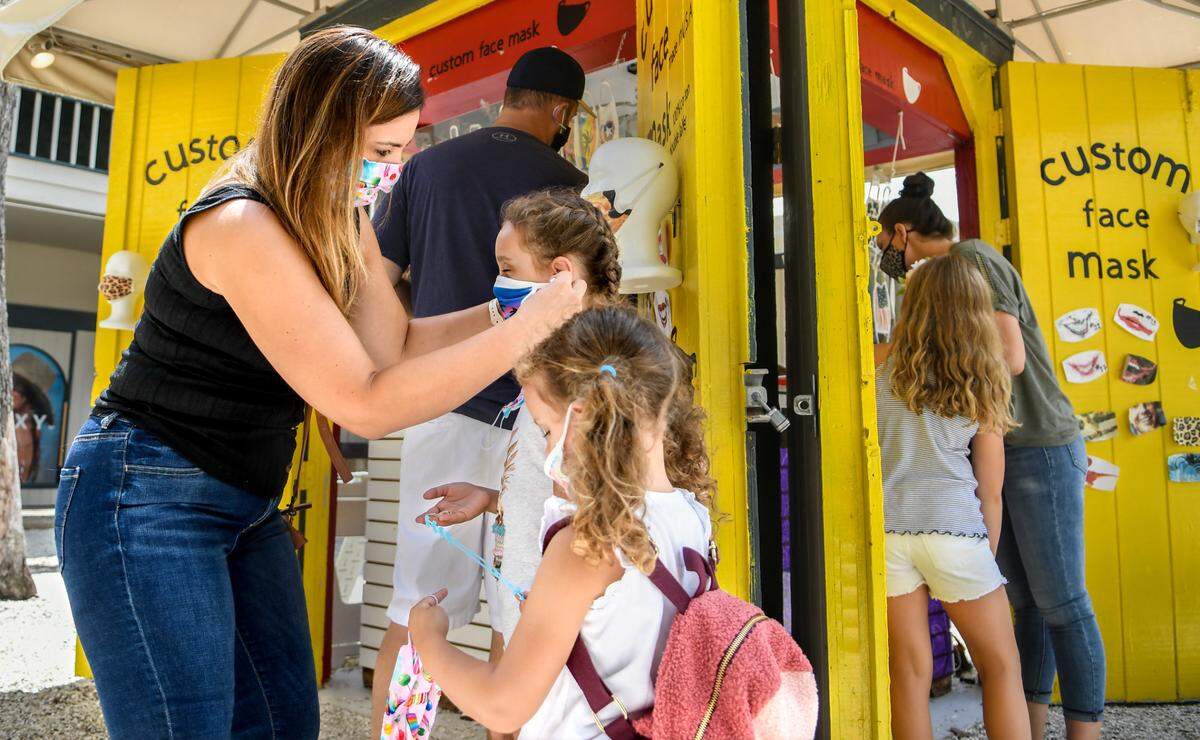
State health officials, in the meantime, are continuing to urge residents to practice social distancing, wear a face mask in public and get a flu shot.
“We’re hoping that everybody stays the course,” said Gambla, of Beaufort Memorial Hospital.