Bluffton tried to pass new rules for shoppers during coronavirus. Here’s why it failed
A plan to create new rules for Bluffton businesses and shoppers during the coronavirus pandemic failed on Tuesday.
On the heels of South Carolina Gov. Henry McMaster’s announcement that some retail stores may start reopening, the town of Bluffton created a plan urging residents to wear masks when shopping and requiring businesses to follow a strict set of rules if they wish to reopen.
On Tuesday, the majority of town council was against the sweeping ordinance, with most members saying it put too much of a burden on residents and local businesses. Instead, council will reconvene Thursday to consider a revised plan.
The proposed law, which failed without a vote Tuesday, was the town’s effort to “decrease the risk of exposure to COVID-19 when shopping or visiting retail stores.”
The plan’s failure illustrates the divide among elected officials, business owners and residents about how to adequately stop the spread of coronavirus while still protecting businesses. Facebook comments during the meeting showed that several residents felt council was overreaching its powers and hurting businesses by trying to pass the ordinance.
“We’re not doing anything to be big government,” Mayor Lisa Sulka said after reading some of those comments. “I see it in this Facebook and it really kind of upsets me a bit. We’re just trying to figure out what the playbook is. We’re trying to figure it out. Give us a little break. Give us ideas on how to have solutions. Let’s try not beating up everybody because somebody may have a different opinion from somebody else. We’re just trying to get through this new normal.”
Several residents spoke out against the ordinance on Facebook and during public comment.
Tina Toomer, co-owner of Bluffton Oyster Company and wife of council member Larry Toomer, said the proposed law questioned the intelligence of local business owners.

“This is a personal decision and should be left up to the individual businesses,” she said. “If the entire county was recommending this, I might change my mind.”
Larry Toomer said that although he did not know about his wife’s comment “until a little while ago,” he agreed that the ordinance put an unnecessary burden on businesses in Bluffton since the same rules aren’t being applied in other Beaufort County municipalities.
“Doing one thing on one side of the road and letting it not be a regulation on the other side is not equal and it’s not fair,” he said. “I can’t agree with this.”
Wearing a mask?
The failed ordinance followed guidelines set by the town of Hilton Head Island, which voted last week to recommend residents wear masks while shopping, and the city of Charleston, which passed a list of a rules for retail stores.
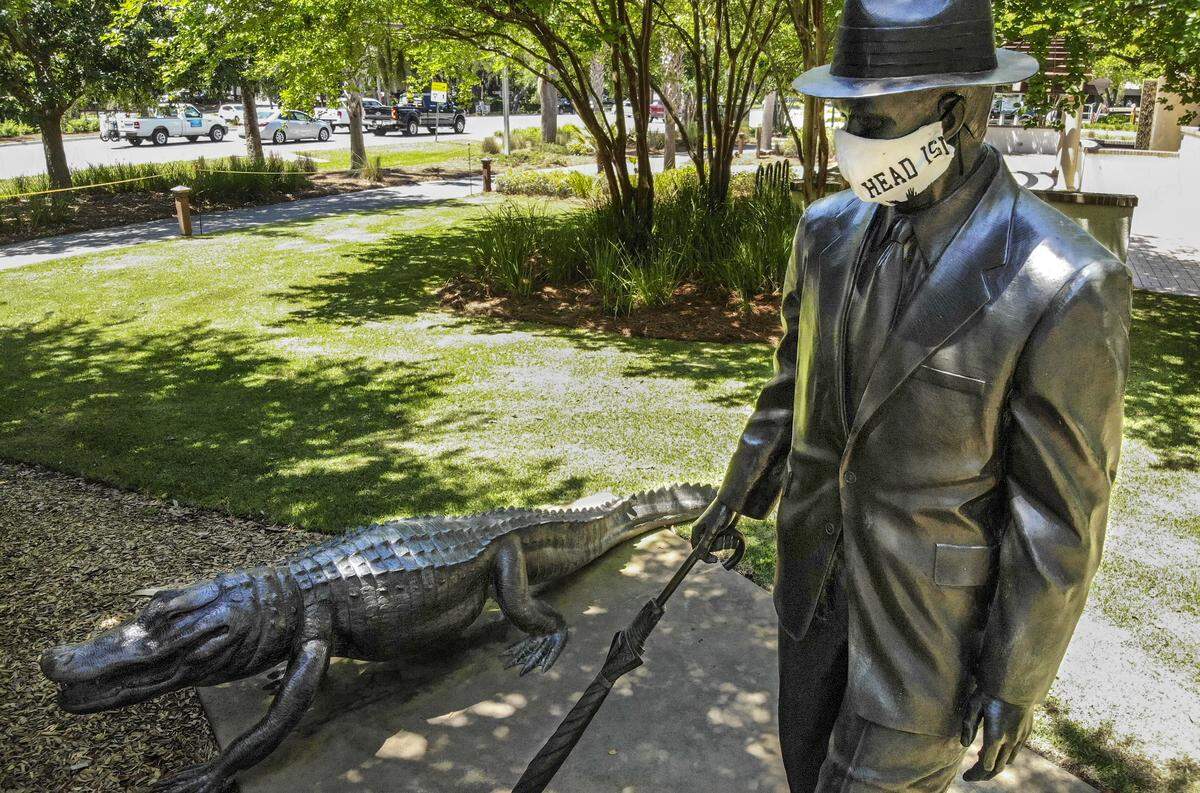
Under the proposed ordinance, Bluffton residents would be “encouraged and urged to wear protective face masks and use other recommended safety measures when shopping and visiting retail stores.”
As on Hilton Head, the face mask law would not be punishable, but instead sets a social precedent that masks should be worn in public. The ordinance did not specify the type of mask.
The other portion of the failed ordinance, which council members and the public seemed to be against, is enforceable by law.
Proposed rules for businesses
The part of the ordinance council members most vehemently opposed stated Bluffton businesses that reopen due to McMaster’s order must follow a strict set of guidelines.
If a business owner does not follow those rules, he or she cannot reopen and is subject to a civil fine of up to $100 per violation.
The proposed ordinance added more specific rules to McMaster’s executive order:
▪ Occupancy rate: No more than five customers per 1,000 square feet of retail space, or 20% of the occupancy limit determined by the fire marshal. Businesses must have one or more employees make sure the rule is followed.
▪ Social distancing: Businesses cannot allow customers to congregate within six feet of one another, excluding family units. Businesses must have signs that remind shoppers to stand six feet apart. Each aisle must be one-way to “lessen cross traffic.”
▪ Sanitation: Businesses must follow a set of 12 sanitation guidelines, including making a list of high-touch surfaces requiring routine disinfecting and performing routine environmental cleaning. They must also require employees to wear gloves and masks.
▪ Monitoring employees for symptoms:
Employees who are sick or who appear to have symptoms should be separated from other employees and customers immediately and sent home.
Immediately clean and disinfect areas the sick employee visited.
Monitor employees for symptoms and provide necessary medication.
Train managers to spot symptoms of COVID-19
Do not allow employees to come to work if they feel sick.
Non-punitive leave policies are in place so employees don’t feel pressured to come to work if they are sick. Remind employees to report any illness to managers, especially if symptoms include fever, cough, muscle aches and pains, sudden changes in smell or taste, sore throat, and/or shortness of breath.
If an employee is confirmed to have COVID-19, employers should inform fellow employees while maintaining confidentiality unless the employee consents to having his or her name released; fellow employees should self-monitor for 14 days.
▪ Provide signs at each public entrance telling employees and customers to:
- Avoid entering if they have a cough, fever, or feel generally unwell.
Maintain a minimum of 6-foot distance.
Sneeze/cough into a cloth or tissue.
Not shake hands or engage in any unnecessary physical contact.
Wear face coverings.
Encourage customers to order food and other items online for home delivery or curbside pickup.
▪ Providing hand sanitizer at checkout counters and at entrances/exits.
▪ Wipe down all carts and baskets regularly
According to the proposed ordinance, if a business does not follow these steps, it will not be allowed to reopen. The Bluffton Police Department would inspect retail businesses to see if they are following the order.
The order would have been effective immediately and in place until May 17 — 61 days after the town issued a state of emergency.
While the ordinance failed without a motion, it will be brought back up in a revised form during council’s work session at 6 p.m. Thursday.
This story was originally published April 28, 2020 at 1:25 PM.