More ICU beds, ventilators set up before surge of coronavirus patients on Hilton Head
Hilton Head and Coastal Carolina Hospitals have identified facilities to be converted for COVID-19 patient care, so the health system can “react accordingly” to handle a surge of cases, Hilton Head Regional Healthcare CEO Jeremy Clark said in a Friday email to staff that he shared with local officials.
The message said the hospitals have a total of 13 ventilators but are prepared to use anesthesia and other machines to provide breathing assistance to “around 40 patients.”
Clark also asked employees to “refrain from public discussions of any patient care practices” on social media. The request comes days after the S.C. Nurses Association raised concerns about working conditions in the state’s medical facilities in a letter to Gov. Henry McMaster.
Health care workers in South Carolina and across the country have used Twitter and Facebook posts to explain the stresses of caring for coronavirus patients and expose the severe shortages of personal protective equipment (PPE) in some hospitals.
Hilton Head Regional Healthcare hospitals have implemented temporary PPE conservation strategies that follow federal guidance and keep the “collective health of the community, including employees, at the forefront of all we do,” said a spokesperson for Tenet Healthcare, which owns the two hospitals, in an email.
The facilities’ social media policy pre-dates the COVID-19 outbreak, the spokesperson said.
In his email, Clark reported receiving “additional shipments of PPE” and plans to secure “additional supplies from both traditional and new vendors,” referencing a “shortage of these items nationally.”
Hospital staff treating patients suspected of having the coronavirus will be able to change into their scrubs at the hospital and have them laundered by a linen vendor beginning Monday, Clark said in the email.
On March 29, Tenet Healthcare postponed matching payments into employees’ 401(k) retirement-savings plans to offset lost revenue during the pandemic, reported the Post & Courier.
“We have stepped up our efforts to communicate our readiness and educate our community members,” Clark wrote, referencing conversations with local officials and promotional materials published online and in print.
Clark did not return a message left by a reporter on Monday morning.
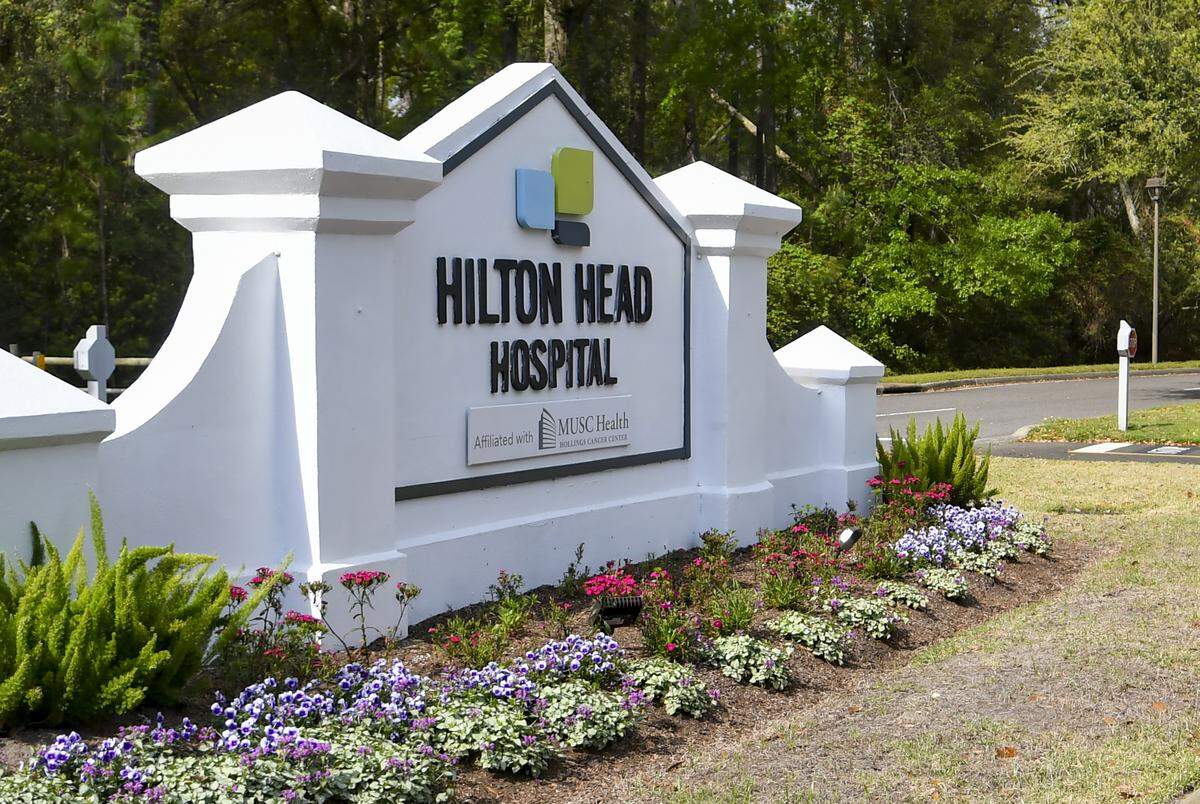
New details on hospital surge plans
Hilton Head and Coastal Carolina Hospitals “can increase capacity over their licensed bed count, including adding ICU beds,” wrote Clark, naming several areas of the facilities that are being adapted.
Hospital staff set up new ICU beds in the post-anesthesia care unit at Hilton Head Hospital and the observation unit at Coastal Carolina in Hardeeville, Clark said. The health system already has 150 licensed beds and 16 ICU beds, he reported.
Early projections by Harvard University researchers warned of a shortage of hospital beds in Beaufort County and in hospital regions across the country under a “moderate” infection scenario.
More recent modeling from the University of Washington’s Institute for Health Metrics and Evaluation show the outbreak peaking at the end of April in South Carolina, with statewide hospital resources sufficient to handle the influx of patients. (Researchers assumed that social distancing measures are strictly followed and will stay in place through the summer to create the model, also cautioning that a “second wave” of the epidemic is possible.)
Clark said the Hilton Head Regional Healthcare system plans to use The Cove, its 16-bed senior behavioral health unit on Hilton Head, and 10 beds within two areas of Coastal Carolina Hospital “should we see an influx of patients needing lower level care.”
Hospital officials are in contact with emergency management officials, “so that we can assist in delivering care outside the walls of the hospital, if eventually needed,” wrote Clark. In southern Beaufort County, state officials are researching renting space in hotels for patient overflow, The Island Packet and Beaufort Gazette reported last week.

Ventilators supplemented with other breathing machines
Clark reported to staff that the two hospitals have 13 ventilators, the life-supporting breathing machines that have been deployed in critical cases of COVID-19 that lead to respiratory failure.
The CEO said the hospital could provide “ventilator assistance” to around 40 patients with anesthesia and bilevel positive airway pressure machines (BiPAPs).
The American Society of Anesthesiologists published guidance at the end of February discouraging the use of non-invasive ventilation, like BiPAP and CPAP machines, because doing so may increase the risk of transmission by pumping viruses into the air.
But at the end of March, the U.S. Food and Drug Administration provided guidance on how to employ a range of respiratory devices beyond ventilators during the public health crisis.
BiPAP machines can be modified to be safely used for less severe cases of COVID-19 but might not be able to meet the demand caused by a severe outbreak, reported NPR.
Anesthesia machines equipped with ventilators are “an obvious first-line backup” when ventilators can’t meet patient care needs, according to the American Society of Anesthesiologists, which has published a guide for safe use of these devices in emergency situations.
The Tenet Healthcare spokesperson said modifications of breathing machines would be “consistent with FDA guidance,” but didn’t provide further detail.
Hospital representatives to attend local town council meetings
Last week on a Hilton Head Island-Bluffton Chamber of Commerce call, Hilton Head Mayor John McCann asked that Hilton Head Regional Healthcare send representatives to Town Council meetings on the island and in Bluffton to share updates on COVID-19 preparations.
The request came after Hilton Head leaders formally requested Hilton Head Hospital share daily updates on COVID-19 cases on March 26.
Clark said on last Wednesday’s call that he plans to honor McCann’s request.
In his email on Friday, Clark wrote that staff “will continue to see more information being shared in the coming days and weeks,” while also asking employees to avoid posting patient care-related information on personal social media outlets.
He wrote that local restaurants and businesses have donated food and protective equipment. Clark warned of “some challenging times ahead” while praising the “collegiality and enthusiasm of our staff and physicians” and “the spirit of giving from our community.”