Are Beaufort Co. hospitals ready for a coronavirus patient surge? Here’s what we know
There aren’t enough hospital beds to treat about 13,000 people in Beaufort County who could be hospitalized because of COVID-19 over the next year, based on models in a Harvard University study published last week.
In a “moderate” scenario, the rush of patients could overrun the region’s hospitals, requiring three times the beds currently available, the report says.
Residents want to know what hospitals are doing to prepare.
“Hilton Head Island has a very vulnerable population,” said Mary Boland, a 15-year island resident. She worries about what her local hospital will do to handle an influx of patients. “We all just need the facts, good or bad, so we know what to expect,” she said.
For nearly two weeks, The Island Packet and Beaufort Gazette have asked local hospitals for specifics on medical resources they had and still needed to treat symptoms of the virus, as well as how they were planning for what state health officials on Monday called the “acceleration phase” of the pandemic.
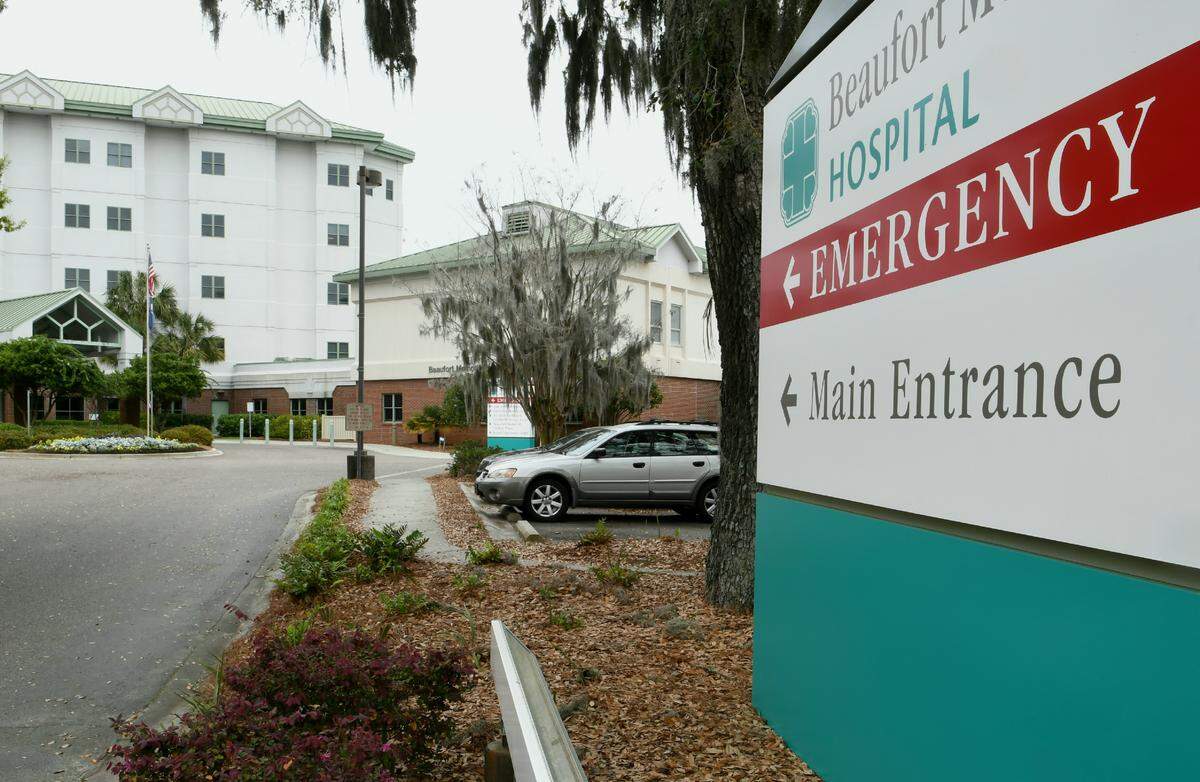
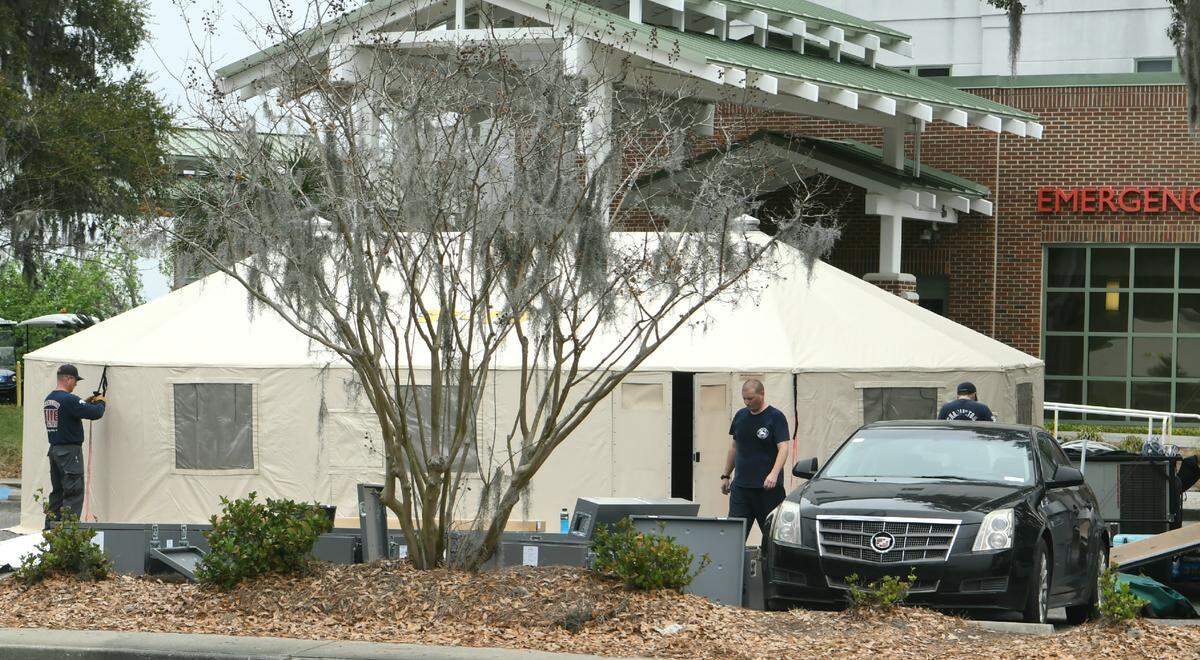
A spokesperson for Hilton Head and Coastal Carolina Hospitals said the facilities can “safely and appropriately” care for patients. Beaufort Memorial Hospital announced Tuesday it has set up a triage tent outside its emergency room and previously told reporters it has the “necessary equipment to support patients in critical condition.” Since COVID-19 cases were confirmed in Beaufort County, none of the facilities has accepted interview requests to discuss surge preparations in detail.
Hilton Head Mayor John McCann said Monday he plans to demand “more detail” from local hospitals.
Elsewhere, officials acknowledge the challenge they’ll face and are moving quickly to identify alternate care locations and triage procedures for COVID-19 patients.
Prisma Health announced on March 17 that it is converting its North Greenville hospital to a dedicated coronavirus treatment center, moving all other patients elsewhere.
Photos circulated on social media last week of rows of hospital beds and medical equipment set up in a Vanderbilt University Medical Center parking garage. The hospital quickly clarified in a statement that the beds weren’t “hospital overflow,” but rather a way to isolate possible COVID-19 patients.
Hospital CEOs in Orlando laid out specific plans to order additional ventilators and set up emergency triage tents outside emergency rooms, as well as increase bed capacity, in media interviews over the weekend.
The chief medical officer at Duke Health Systems in North Carolina told the News & Observer that coronavirus would place “an incredible strain” on the healthcare system.
Full hospitals can also affect care for non-coronavirus patients, said Kevin Bennett, a professor at the University of South Carolina School of Medicine who studies rural healthcare. “As large hospitals fill up with patients, that reduces beds for other things as well.”
Bennett gave the example of a smaller hospital receiving patients in critical condition after a bad car wreck and needing to transfer them to a larger hospital overwhelmed with COVID-19 patients. “How do you make room for them?” he said.
John Soffronoff, a Hilton Head island resident, said, “I think the community needs to be reassured that the hospital is addressing whatever the gaps in their plan are.”
Richard Dean, another Hilton Head resident, said uncertainty about what the hospitals are doing to ensure they are ready for the worst-case scenario makes him afraid. “That gives me great pause about being here on the island,” he said. “Silence is not a good sign.”
State health officials say contingency plans are in place, but hospital officials across Beaufort County won’t discuss specific measures for increasing bed capacity or transferring critical patients to larger facilities. Local politicians say they plan to ask for more information.
Here’s what we know — and don’t know — about what local hospitals are doing to prepare.
How many hospital beds will Beaufort County need?
The social distancing measures mandated across South Carolina — shuttered restaurants, closed schools and, on Hilton Head, public beaches — are restrictions designed to delay new infections and avoid overwhelming the health care system.
The models published last week by Harvard Global Health Institute and first reported by The New York Times and ProPublica predict just how big the surge of new patients could be.
If 40% of the local population is infected over 12 months, area hospitals would need almost eight times the beds normally available in intensive care units, given rates of severe cases already observed in China.
The Harvard researchers created nine different scenarios assuming differing percentages of the adult population are infected over varying amounts of time.
Then, they applied those scenarios to 305 hospital regions across the country, estimating how many beds and intensive care-unit beds are currently available and how many will be needed.
BEHIND THE STORY
MOREClick the dropdown for more on where this data on local hospitals came from
Why is Savannah included in the analysis?
Researchers used hospital referral regions to better represent where residents receive care, which can cross county and state lines.
Why are there so many different scenarios?
The Harvard team tried to model what would happen if the spread of the coronavirus is slowed by social distancing and prevention measures currently in place across the country. Researchers aren’t yet certain what effect these measures will have, so the team modeled different possibilities. The different scenarios also represent different possibilities for the percentage of the American population that will be infected.
Where did hospital bed figures and infection rates come from?
The Harvard team used data from an American Hospital Association survey of hospitals conducted in 2018 and from the American Hospital Directory. The model doesn’t take into account hospitals’ ability to add beds and increase capacity. The infection rates used are based on estimates from Dr. Marc Lipsitch, head of the Harvard T.H. Chan School of Public Health’s Center for Communicable Disease Dynamics. His models are based on historical data on flu pandemics. For more information on the study see articles in ProPublica and The New York Times.
Even under the researchers’ best-case scenario, where 20% of the U.S. population is infected over a span of 18 months, Beaufort County’s hospital region — including Savannah — would need 98% of its available beds.
If 60% of the population is infected in just six months, in line with what German Chancellor Angela Merkel recently predicted may happen in Germany, patients would flood hospitals. In this scenario, the local hospital region would need nine times the currently available beds and 23 times the available ICU beds, according to the Harvard study.
These estimates assume hospitals don’t free up already occupied beds or add additional beds, measures that are being discussed across the country. But even if local medical facilities cut current occupancy by 50%, additional beds will be needed in the researchers’ moderate scenario.
As of Tuesday, local hospitals such as Beaufort Memorial, Hilton Head and Coastal Carolina didn’t answer questions about plans to increase capacity. A DHEC spokesperson said the agency is developing its own hospital demand projections, which will be made public when complete.
In most of the scenarios, “vast communities in America are not prepared to take care of the COVID-19 patients showing up,” Ashish Jha, one of the Harvard researchers behind the study, told ProPublica.
What are Beaufort County hospitals doing to prepare?
Administrators and spokespeople at the three hospitals in and near Beaufort County haven’t provided clear descriptions of what preparations are underway.
The CEO of Hilton Head Regional Healthcare, Jeremy Clark, did not return reporters’ calls.
Beaufort Memorial Hospital officials have established a drive-thru specimen collection center for COVID-19 tests, followed Gov. McMaster’s request to suspend visitation and provided regular guidance for patients experiencing coronavirus symptoms on the hospital’s website.
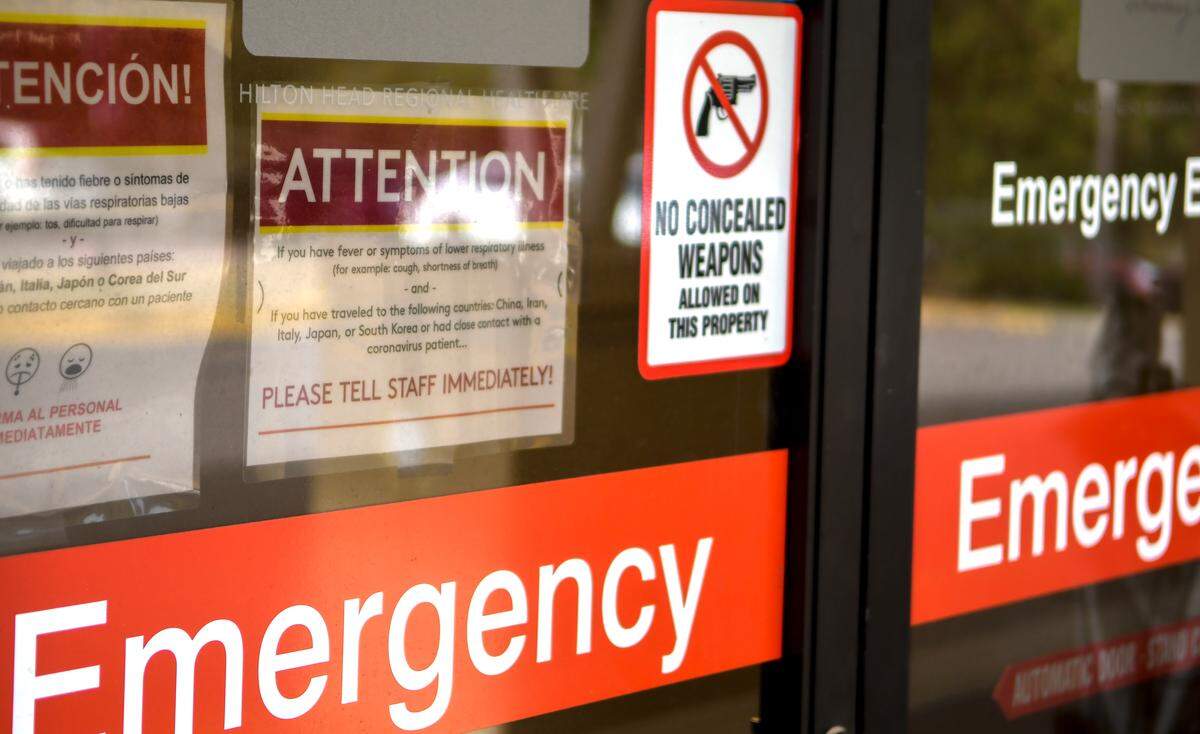
But the hospital has not responded to interview requests and questions about available ventilators and isolation rooms, as well as plans to increase capacity and maintain staffing as providers are exposed to the virus.
Hospitals should be able to convert 30% of available beds for COVID-19 patients at a week’s notice, according to recommendations by the Johns Hopkins Center for Health Security. The center suggested making single rooms into doubles and converting lobbies, waiting areas, and classrooms to increase capacity.
While Beaufort Memorial has continually updated residents on testing availability and procedures to seek care, Hilton Head hospitals have been near radio-silent.
“Why is there not something on the website?” asked Dean, referring to what he says is a lack of accessible public information on hospital operations. He said he has watched news of the COVID-19 outbreak hitting hospitals in New York, where he’s from. Dean says a lack of clarity around testing procedures and emergency planning on the island means he would consider traveling as far as Jacksonville, Florida, for care.
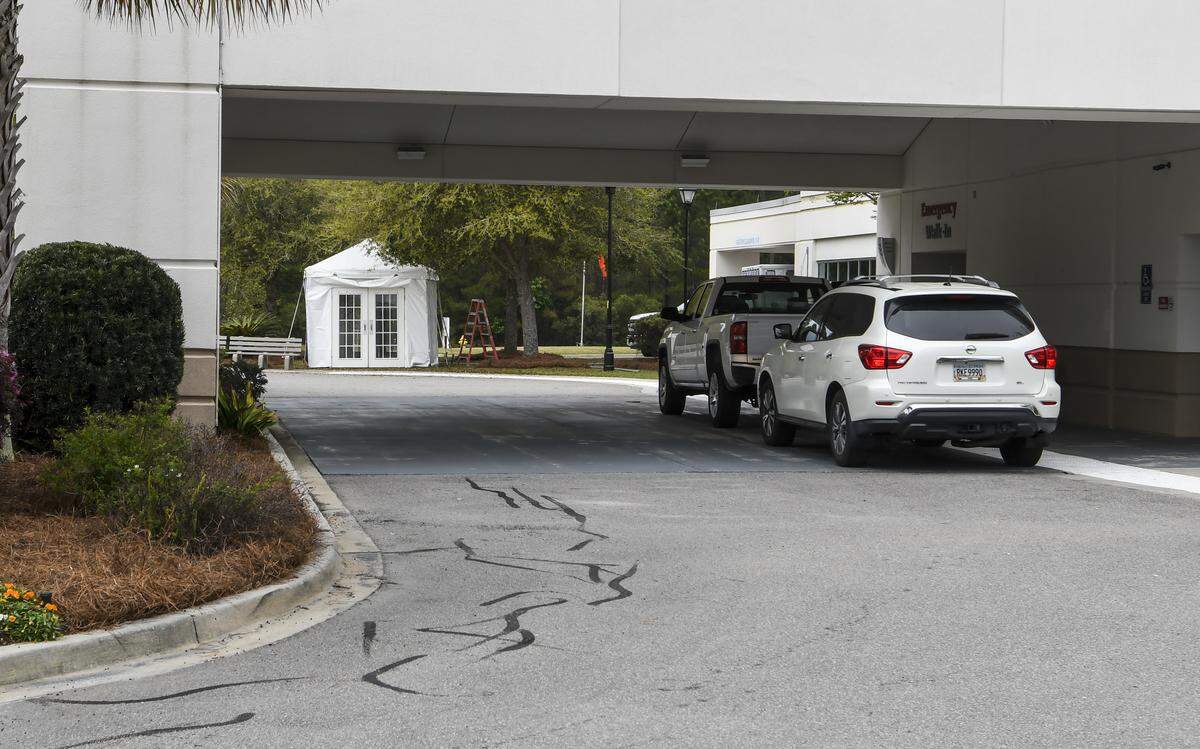
Daisy Burroughs, a spokesperson for Tenet Healthcare, the for-profit company that operates Hilton Head and Coastal Carolina Hospitals, directed preparedness questions to state officials and the S.C. Hospital Association. She said only, “We can safely and appropriately care for our patients with the necessary supplies and equipment.”
Hospital workers at the two Tenet facilities are collecting names of volunteers willing to make homemade medical masks, according to an email from Bluffton Mayor Lisa Sulka.
Gov. McMaster twice asked hospitals last week to halt elective and non-emergency procedures. “We expect everyone to comply,” he said on Thursday. Beaufort Memorial took that step on Saturday, and Burroughs said on Monday that Tenet facilities would do the same.
Hospital Association spokesperson Schipp Ames said he could not provide data about specific facilities. “Hospitals are extremely busy and working at full capacity to help their patients and communities,” he wrote in an email.
A DHEC spokesperson said in an email that all hospitals have response plans in place but did not respond to questions about what those plans involved in Beaufort County. On Friday, the S.C. National Guard began to distribute supplies, some expired, from a national medical stockpile.
The DHEC spokesperson said the allocation was “data driven,” but did not say what local hospitals received. As of March 21, there are 27 ventilators at Beaufort County facilities, DHEC said. Ventilators are the “main supportive treatment” for patients at a critical stage of COVID-19 when breathing is impaired, according to a Feb. 24 Lancet medical journal study.
State health officials will “work cooperatively in identifying additional bed space in other hospitals for potential patient transfer,” said the spokesperson. Officials and local hospitals did not say what this arrangement would look like locally.
In interviews, Hilton Head residents raised questions about whether local hospitals are recruiting volunteer staff from local retired providers, where they plan to transfer critical patients if beds fill, and how community members can support hospital staff.
What are local leaders doing?
In interviews, Beaufort County mayors and politicians described widely variable levels of communication from different facilities about hospital preparedness.
Bluffton Mayor Lisa Sulka said Beaufort Memorial CEO Russell Baxley holds a weekly call with local officials. She said recent discussions have focused on ensuring first responders are able to receive priority testing.
Beaufort Mayor Billy Keyserling said he feels Beaufort Memorial has kept him updated on medical resources available.
He said the hospital, like others across the nation, will likely need help as the pandemic continues.
“It is my understanding that they are not in trouble,” Keyserling said Monday. “They are working hard but that can only last so long.”
Sulka said she receives updates from Hilton Head Regional Healthcare facilities only on weekly Hilton Head Island-Bluffton Chamber of Commerce calls. “I would like to have that same information that I’m getting from Beaufort Memorial,” she said, in response to concerns about unanswered questions from Hilton Head and Coastal Carolina Hospitals.
Sulka committed to asking more questions about preparedness plans on that call.
“The more information, the better,” she said.
Hilton Head Mayor John McCann said Hilton Head Hospital is sharing little information with even him.
“I’m sure they are doing a great job, but I would like more detail,” McCann said Monday.
McCann said he plans to ask hospital officials for more information during a meeting set for Tuesday.
Beaufort County Council Chairman Joe Passiment said county officials are on daily phone calls with hospitals in the county. He said the information is then passed to council members.
However, Monday, he couldn’t say what medical resources were in place or possible shortages the region could see from coronavirus.
“Everyday things are changing,” Passiment said. “It is a fluid situation. How do we get this information that we need to know? … It is a nationwide struggle.”
State Sen. Tom Davis, R-Beaufort, said McMaster and state health officials are closely monitoring demand for hospital beds. He said he is not in communication with hospital officials.
“The jury is still out on whether or not we have flattened out that demand curve enough,” he said, referring to the success of prevention measures imposed by state officials.
Davis is confident McMaster will use executive powers to covert public facilities into temporary care locations if hospitals are overrun. He did not know where those alternate facilities would be established in Beaufort County.
Asked where they would be located, a DHEC spokesperson wrote in an email, “we are currently working to evaluate potential locations for these facilities across the state.”
What overwhelmed hospitals look like
Northern Italy stands as a dire warning for what an explosion of COVID-19 cases can do to even the most well-prepared medical systems.
“I have never seen so many people die together before my eyes,” a nurse working in a hospital in Bergamo, an Italian city that has seen over 6,400 infected, told NBC News. “It feels like we are crossing in the middle of a battlefield.”
Doctors have converted wards into makeshift intensive care units, and hospitals have erected sealed infectious disease tents on their grounds. The photo of Elena Pagliarini, a nurse collapsed face down on a desk in a hospital in the town of Cremona after 10 straight hours of work, circulated widely on social media, according to The New York Times.
Giorgo Gori, Bergamo’s mayor, said that in some cases a lack of resources caused by the influx of patients forced doctors not to intubate some elderly patients, leaving them to do, reported The New York Times.
In the span of just over a month, the daily obituaries in a local newspaper went from one and a half pages to 10. Italian Army trucks ferried coffins from the center of the city to crematoriums, the local morgues overwhelmed.
The exact reasons why Italy was so hard hit are unclear. Some have attributed the region’s high death rate to its aging population.
A group of Italian doctors from Milan had a warning to colleagues in the European Society of Intensive Medicine. In a March 4 letter they advised other medical providers to increase ICU capacity, create contingency plans and prepare for COVID-19 patients needing intensive care. “We wish to convey a strong message,” they wrote. “Get ready!”
BEHIND THE STORY
MOREWhat you should know about the coronavirus
What is coronavirus?
Coronavirus is an infection of the respiratory system similar to the flu. Coronaviruses are a class of viruses that regularly cause illnesses among adults and children, but this outbreak has spawned a new disease called COVID-19, a particularly harsh respiratory condition that can lead to death.
Health officials believe COVID-19 spread from animals to humans somewhere in China. It spreads among humans by physical person-to-person contact, including via coughs. That’s why health officials urge sick individuals to avoid contact with other people.
For more information, visit the website for the Centers for Disease Control and Prevention.
What are the symptoms?
Symptoms are similar to the flu and include fever, coughing and shortness of breath.
How can I stop the spread of the coronavirus?
Wash your hands regularly with soap and water, and cover your mouth and nose when you cough or sneeze.
If you develop symptoms similar to the coronavirus, you should seek medical attention. Stay home from work or school and avoid contact with others. It can take up to 14 days after coming into contact with the virus to develop symptoms.
COVID-19 is a new condition and there’s much about the disease we still don’t understand. For now, taking precautions is the best way to stop the spread of the coronavirus.