Here’s how Beaufort’s hospital is prepping for ‘expected surge’ in coronavirus cases
Beaufort Memorial Hospital detailed preparations for what CEO Russell Baxley called an “expected surge” in COVID-19 patients on Friday, providing new details on its supply of ventilators and capacity to test for the virus.
There aren’t enough hospital beds to treat about 13,000 people in Beaufort County who could be hospitalized because of COVID-19 over the next year, according to “moderate” predictions from Harvard researchers, reported The Island Packet and Beaufort Gazette earlier this week.
“The hospital is prepared as it can be for a surge of patients,” Baxley said at a press conference Friday.
EMS is experiencing seven-to 10-day wait times on orders of medical supplies and has received allocations from a national stockpile, said a Beaufort County Sheriff’s Office official.
Also Friday, a day after Hilton Head Island Mayor John McCann said Hilton Head Hospital had decided to provide “no information at all” to local officials or the public about the virus at its facility, a spokesperson shared a letter Hilton Head Regional Healthcare CEO Jeremy Clark sent to staff. The letter promised “increased communication” and assurances of adequate supplies to meet the needs. He outlined some of the steps the hospital is taking to prepare.
Beaufort Memorial is “working around the clock” to inventory equipment, identify isolation units for coronavirus patients and train staff, said hospital spokesperson Courtney McDermott in an emailed statement.
Beaufort County has recorded 35 confirmed cases of the virus. New data released Friday by the S.C. Department of Health and Environmental Control show cases in nearly every part of the county, including Bluffton, Hilton Head, Beaufort, Daufuskie Island and Saint Helena Island.
“We can’t predict the future and we won’t speculate about what we don’t know, but we can and will continue to use every resource available to take care of our staff and everyone who comes through our doors,” said Baxley in a written statement.
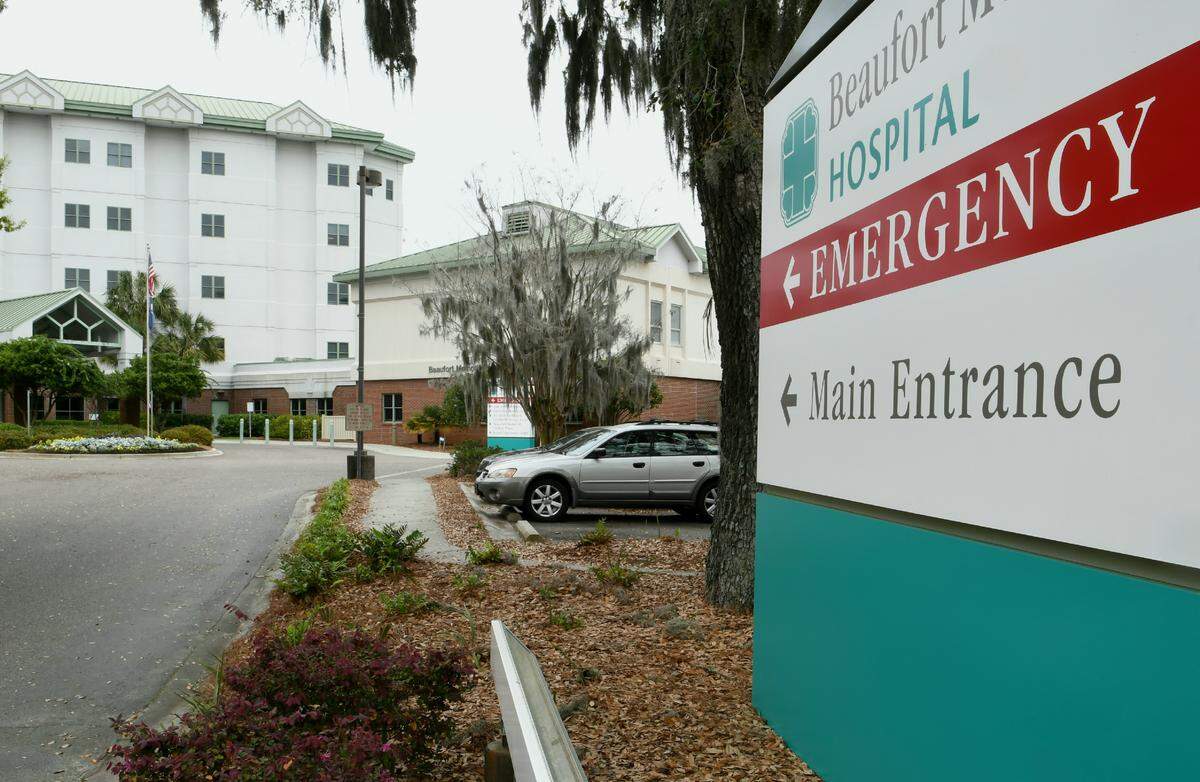
Triage tents set up outside ER
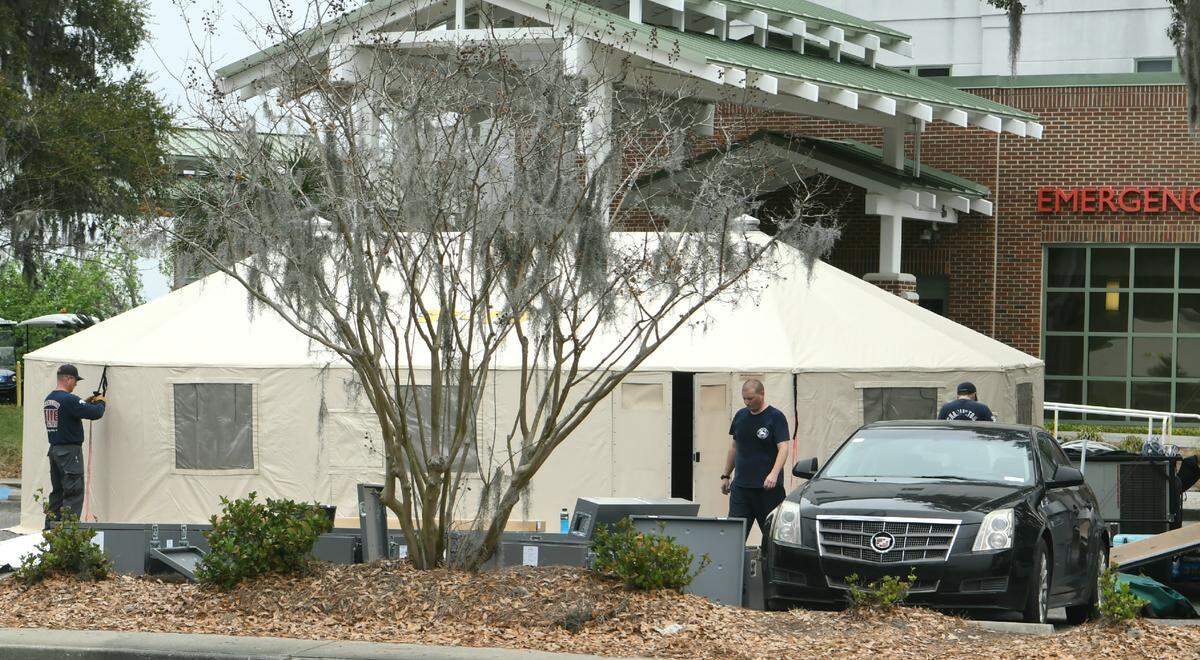
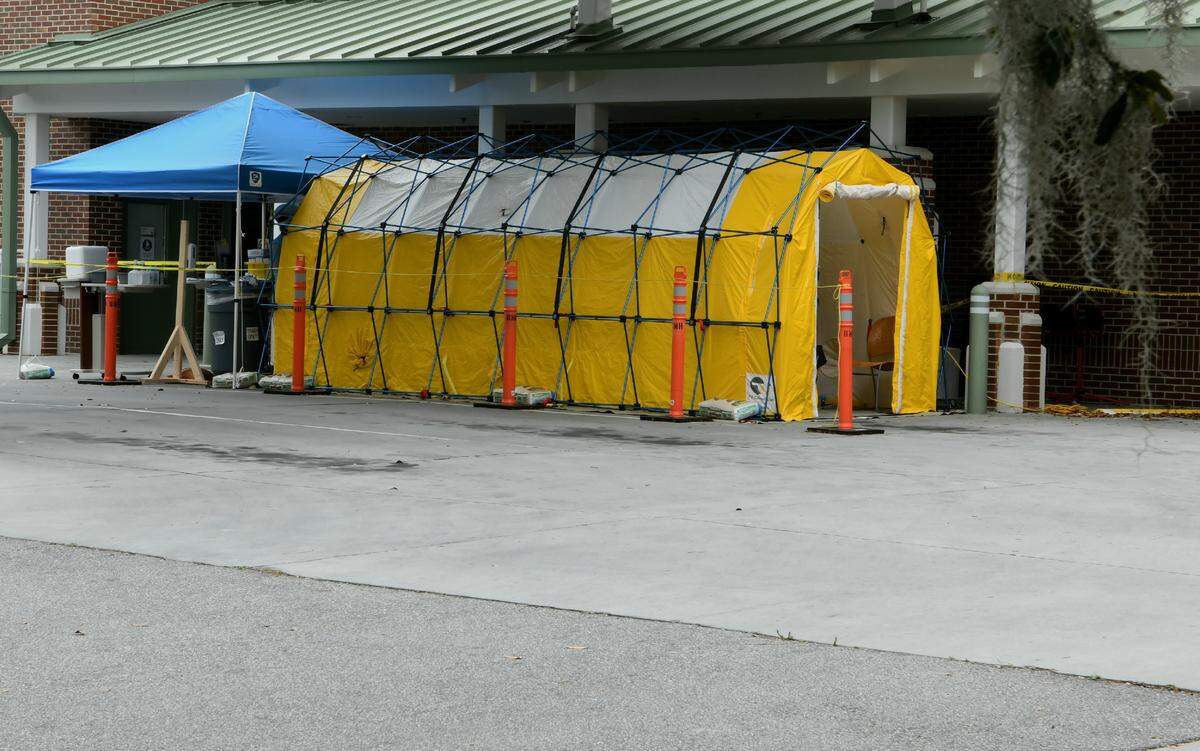
In coordination with state emergency management officials, Beaufort Memorial has set up two large, climate-controlled tents outside its emergency room.
“This is not because we are overwhelmed right now,” said Baxley, who explained that the tents help hospital workers keep those experiencing potential COVID-19 symptoms separate from healthy patients who visit the emergency room.
For two weeks, Beaufort Memorial has operated a drive-thru testing site at the hospital to collect samples from patients with a doctor’s order for coronavirus testing.
Hospital explores options while facing COVID-19 testing backlog
Access to testing for the coronavirus remains a roadblock in South Carolina, with health officials saying on Thursday that the state’s health laboratory has a backlog of 1,600 samples waiting to be tested because of a nationwide shortage of chemicals used in the testing.
As of Friday, Beaufort Memorial has run 301 tests for COVID-19. McDermott would not say how many of those tests have come back positive.
Samples are being sent to a private lab in Virginia and to the state’s health department for processing. Beaufort Memorial is seeing a turnaround of four to five days on tests run by DHEC and seven to eight days for tests sent elsewhere, Baxley said on Friday.
The hospital is working with “another independent testing resource” to find out if it might be able to upgrade its own lab equipment to run tests locally, according to McDermott.
If that were possible, local testing would be possible by late April, an estimate considered the “best-case scenario,” according to the hospital. DHEC models predict there will be more than 8,000 cases of COVID-19 in South Carolina by May.
Due to the shortage, State Epidemiologist Linda Bell said Thursday that not everyone who is sick should get tested for the coronavirus.
“If disease activity increases significantly, we will advise people to stay home, get better and seek medical attention only if symptoms are worsening,” Bell said. “This will allow our health care systems and our health care providers to give care to those who are most seriously ill and need it most.”
Stock of ventilators consolidated
Beaufort Memorial currently has 29 ventilators, Baxley said. The breathing machines can mean the difference between life and death for COVID-19 patients and are in short supply nationally.
Baxley said the hospital is cross-training nurses and other providers for the possibility that all 29 machines be needed to support patients at one time.
A Bluffton resident donated $50,000 to the hospital to purchase an additional ventilator, which was ordered this week, McDermott said in an email.
A DHEC survey of hospitals taken on Monday and Tuesday found that 25% of available ventilators were in use in Beaufort and Jasper counties, although that survey reported a lower number of machines at Beaufort Memorial than the hospital is currently saying it has at its disposal.
The hospital has 12 ICU beds but is prepared to convert other parts of the hospital to function as ICU-like environments, said Baxley.
Dr. Joseph Borelli with 3T MRI of Belfair donated five continuous positive airway pressure (C-PAP) machines to the hospital, and other businesses, schools and community members have donated hand-sewn masks, protective equipment and meals, said McDermott.
Public will see “increased communication” from Hilton Head Hospital
Other hospitals in Beaufort County have been tight-lipped about coronavirus preparations and COVID-19 patients that receive treatment at their facilities.
Hilton Head Hospital’s board voted to share “no information at all” with the public or town officials, reporting COVID-19 cases only to state officials, Mayor John McCann said Thursday.
Hilton Head leaders voted to ask for daily updates from the hospital. On Friday, DHEC released a breakdown of Beaufort County’s coronavirus cases by zipcode, confirming that island residents have tested positive.
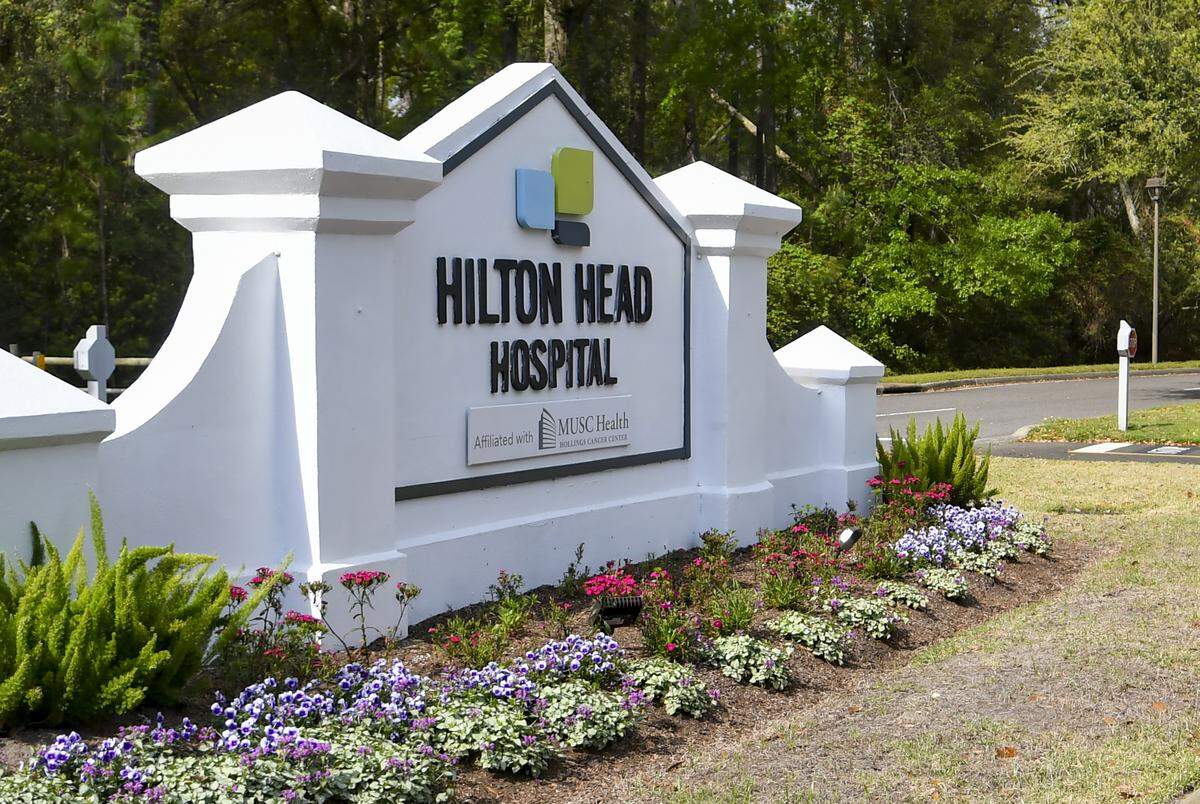
On Friday afternoon, a spokesperson for Tenet Healthcare, the for-profit company that owns Hilton Head and Coastal Carolina hospitals, shared an email Hilton Head Regional Healthcare CEO Jeremy Clark sent staff and board members.
In it, Clark said staff and the community will see “increased communication” in the form of “videos, interviews and articles posted to our social media and other local media outlets” in the future. That communication “will not include comments on the health status of any patient in our care,” Clark wrote.
“In these truly unprecedented times, we are continuing our focus on being prepared, not panicked, and on providing high quality care to the patients in our hospitals,” wrote Clark.
The email said the hospitals have “adequate supplies” of protective equipment and are “tightly managing” inventory. Clark wrote the hospitals are “doubling our ventilator capacity with the use of anesthesia machines” and have made plans to re-purpose hospital space for COVID-19 patients.
The hospitals have agreements with larger facilities should a patient need to be transferred, Clark wrote.
Beaufort County Council Chairman Joe Passiment said during Friday’s press conference that he has been to Hilton Head Hospital early that morning with his wife. He said the facility had “several items in place to protect everyone,” including screening measures.
BEHIND THE STORY
MOREWhat you should know about the coronavirus
The coronavirus is spreading in the United States. Officials are urging people to take precautions to avoid getting sick, and to avoid spreading the disease if they do contract it.
Click the drop-down icon on this card for more on the virus and what you should do to keep yourself and those around you healthy.
What is coronavirus?
Coronavirus is an infection of the respiratory system similar to the flu. Coronaviruses are a class of viruses that regularly cause illnesses among adults and children, but this outbreak has spawned a new disease called COVID-19, a particularly harsh respiratory condition that can lead to death.
Health officials believe COVID-19 spread from animals to humans somewhere in China. It spreads among humans by physical person-to-person contact, including via coughs. That’s why health officials urge sick individuals to avoid contact with other people.
For more information, visit the website for the Centers for Disease Control and Prevention.
What are the symptoms?
Symptoms are similar to the flu and include fever, coughing and shortness of breath.
How can I stop the spread of the coronavirus?
Wash your hands regularly with soap and water, and cover your mouth and nose when you cough or sneeze.
If you develop symptoms similar to the coronavirus, you should seek medical attention. Stay home from work or school and avoid contact with others. It can take up to 14 days after coming into contact with the virus to develop symptoms.
COVID-19 is a new condition and there’s much about the disease we still don’t understand. For now, taking precautions is the best way to stop the spread of the coronavirus.