‘Not trying to build a Walmart.’ Beaufort developer seeks exception from zoning board
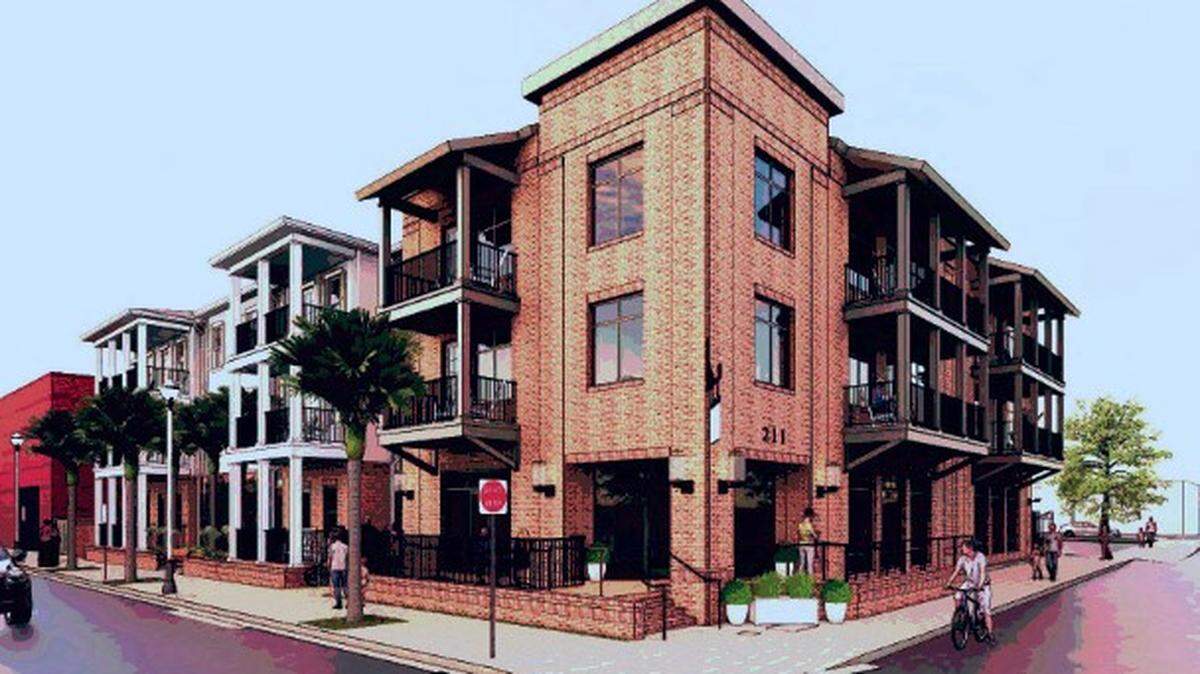
A developer of a $7.5 million apartment building in Beaufort’s historic downtown says it will have a smaller footprint than the building it replaces, even though it’s being treated as a “large footprint” project.
A critic says the project, if approved, would be the biggest in downtown Beaufort.
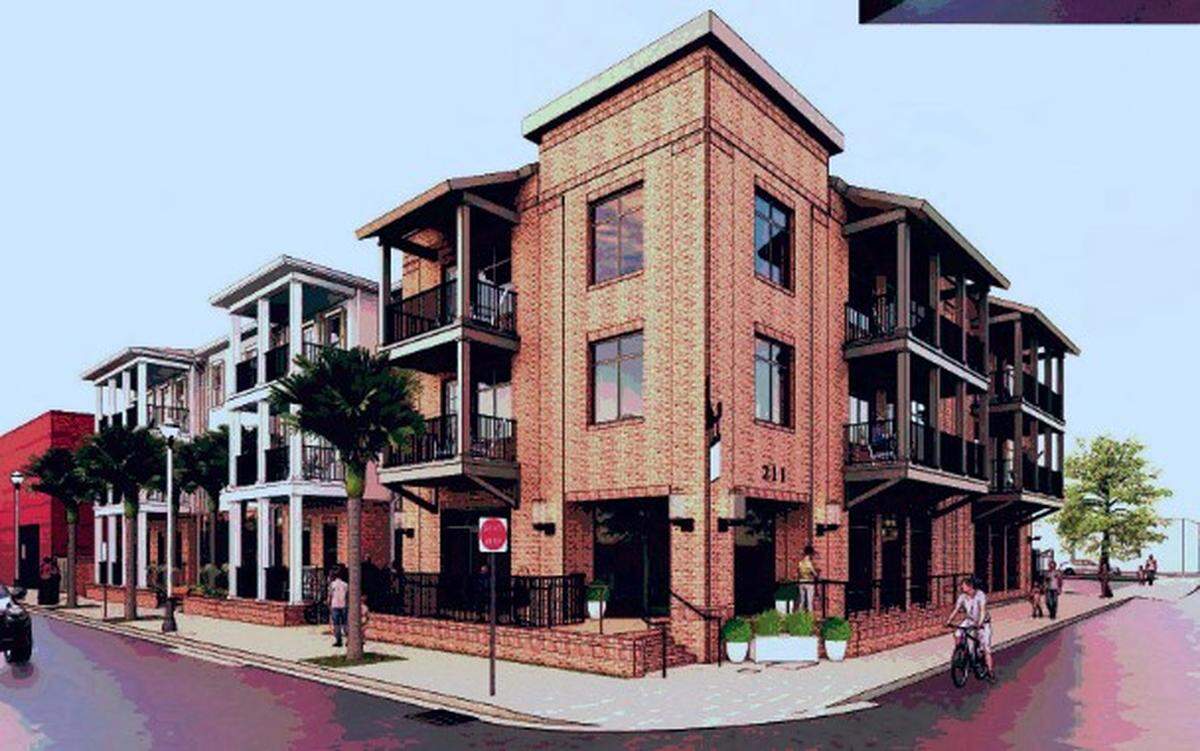
The three-story, 27,500-square-foot building would house apartments and some retail at 211 Charles St. at its intersection with Port Republic Street.
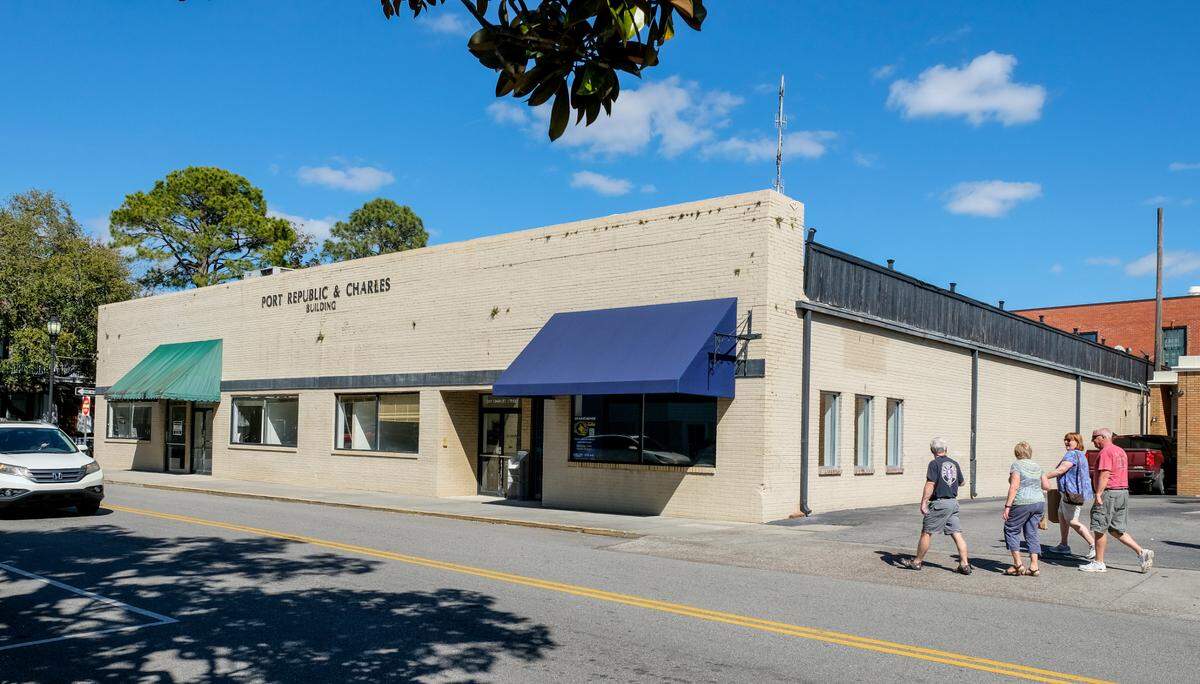
Developer 303 Associates, LLC has already received preliminary permission to demolish the existing building, known as Port Republic and Charles Building, at that location.
But it still needs a special exception from the Zoning Board of Appeals to construct the building in the downtown historic district.
The Cannon Building project is one of several proposals by 303 Associates and the Beaufort Inn, owned by Dick Stewart, that have sparked a debate over size and scale of downtown projects that’s spilled over into a lawsuit.
“We’re not trying to build a Walmart here,” Stewart said Friday. “That’s what the ordinance is intended to prevent.”
The city code he’s referring to requires buildings wider than 100 feet be treated as a large footprint building.
And large footprint buildings located in the city’s historic district need a special exception from the Zoning Board of Appeals, said David Prichard, director of Community and Economic Development.
303 Associates will be seeking a special exception at a Zoning Board of Appeals meeting at 5:30 p.m. Monday.
Critics have previously said the projects are piecemeal proposals that will significantly alter Beaufort’s downtown. They worry about the size and scale of the developments and said city officials haven’t done enough to prepare citizens for the changes.
In the Charles Street apartment/retail project, Stewart says he’s demolishing a decrepit building on an underutilized property and replacing it with a building that will contribute to the economic and design fabric of the community.
Stewart says the 27,500-square footage of the apartment building includes all the three stories. The on-the-ground footprint of the building is less than 10,000 square feet, which is smaller than the building it will replace, he said.
He says the investment in the project is $7.5 million, not including the land.
“We invest in infill and redevelopment,” Stewart said, to prevent sprawl.
City staff, in its review, concluded that the proposal is compatible with the surrounding area.
Stewart is hoping to break ground in the first quarter of 2022.
In April, West Street Farms LLC and Mix Farms LLC — two limited liability companies owned by Graham Trask, a real estate investor and developer who lives in Geneva, Switzerland — sued the City of Beaufort, 303 Associates LLC, and the Beaufort Inn, LLC.
In the lawsuit, Trask claims that a hotel project at the corner of Scott and Port Republic Streets, a parking structure on Craven Street and the apartment project on Charles Street have not received special exception permits from Beaufort’s Zoning Board of Appeals, a requirement under city code for large buildings in the historic district.
All three projects have been developed by Stewart’s 303 Associates, LLC and the Beaufort Inn.
The lawsuit asks that work be stopped on all the projects until they receive special exceptions.
Trask said Friday allowing construction of buildings larger than 100 linear feet is like “gutting” the Beaufort city code as it pertains to the downtown historic district.
“It’s tantamount to a rezoning of downtown Beaufort, it’s as simple as that,” Trask said.
The issue, he said, is the city code is written to prevent large buildings from being constructed in historic downtown. Stewart’s building, if approved, would be the largest building in downtown Beaufort at more than 27,000 square feet, Trask said.
“And a large building is anything with front facade more than 100 feet,” he said. “This facade is 133 linear feet.”
The large footprint buildings also require 70 percent of parking to be on site. “That’s a problem for him too,” Trask said.
In May, the city filed a response to Trask’s lawsuit.
The development code that defines large footprint buildings as exceeding 100 linear feet in width was adopted in June 2017, the city noted.
Since the Charles Street apartment project was not submitted until recently, it’s the city’s position that the project must receive the special exception.
However, the city says, the applications for both the hotel and parking projects were submitted to the Historic District Review Board in 2016 and 2017, when a different development ordinance was in place. That ordinance did not require the special exception for large footprint buildings in the historic district.
Therefore, the hotel and parking projects are viewed as existing uses in the zoning and only require approval from the Historic District Review Board, the city says.
The board previously granted preliminary approval of the proposed Charles Street apartment development. That board also approved the demolition request for the existing building as long as the permit isn’t issued until after 303 Associates receives a building permit.
If the special exception is OK’d by the Zoning Board of Appeals, the project would return to the Historic District Review Board for final approval for the architectural design. After that, the developer can apply for a project permit from a technical review committee made up of city staff.
This story was originally published August 6, 2021 at 3:31 PM.