Hilton Head’s north end airport announces new nonstop flight. Here’s where you can go
Boston, anybody?
American Airlines announced Monday that new nonstop flights between Hilton Head Island Airport and Boston Logan International Airport will start April 10.
The single flights on Saturdays will connect the island with the northeast. Hilton Head is a popular vacation and retirement destination for Bostonians.
American Airlines also flies between Hilton Head and Charlotte and Hilton Head and Washington, D.C.
The new flight will leave Boston at 11 a.m. and arrive on Hilton Head at 2 p.m.
It will then turn around and leave Hilton Head at 2:30 p.m., according to the airport’s news release.
The flight will be run by an Embraer 175 regional jet equipped with 12 first-class seats and 64 seats in the main cabin.
“We strive to be the airport of choice for both residents and visitors. This added seasonal route from Boston provides another opportunity for travelers to fly right to the island and is a continuation of a long-standing partnership with American Airline,” Jon Rembold, airports director for Beaufort County and of the Hilton Head Island Airport, said in the news release.
Roundtrip tickets for April 10 were listed on American Airlines’ website for $205 in the main cabin and $493 for first class.
New airport terminal
The announcement comes as the airport continues to grow.
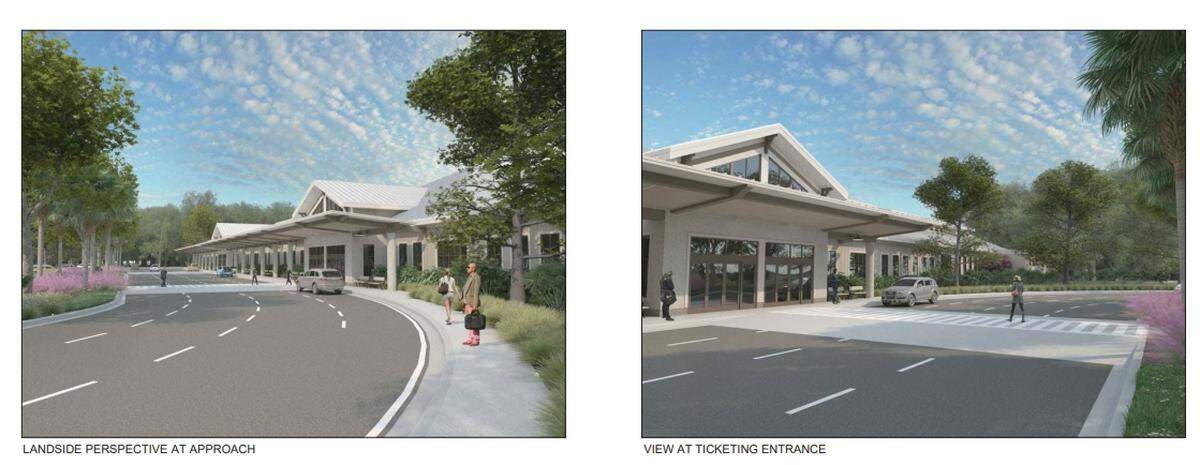
Plans for a three-gate terminal were submitted to the Town of Hilton Head Island and discussed at a Dec. 8 design review board meeting. Although preliminary, the plans show more parking, an expanded TSA security checkpoint, updated baggage collection areas and more space in the north island airport.
An impending terminal expansion comes on the heels of a runway extension that made it easier for larger planes to land at the airport. Prior to the coronavirus pandemic, the airport was experiencing 200% increases in passengers from previous years, which the application said “put extreme strain on the pre‐9/11 terminal design and its parking lot.”
The plan adds 43,000 square feet to the 18,500 square-foot building, about half of which is a holding room for passengers waiting to board. The other half includes a new grand hall and a four-lane passenger drop‐off and pick-up area.
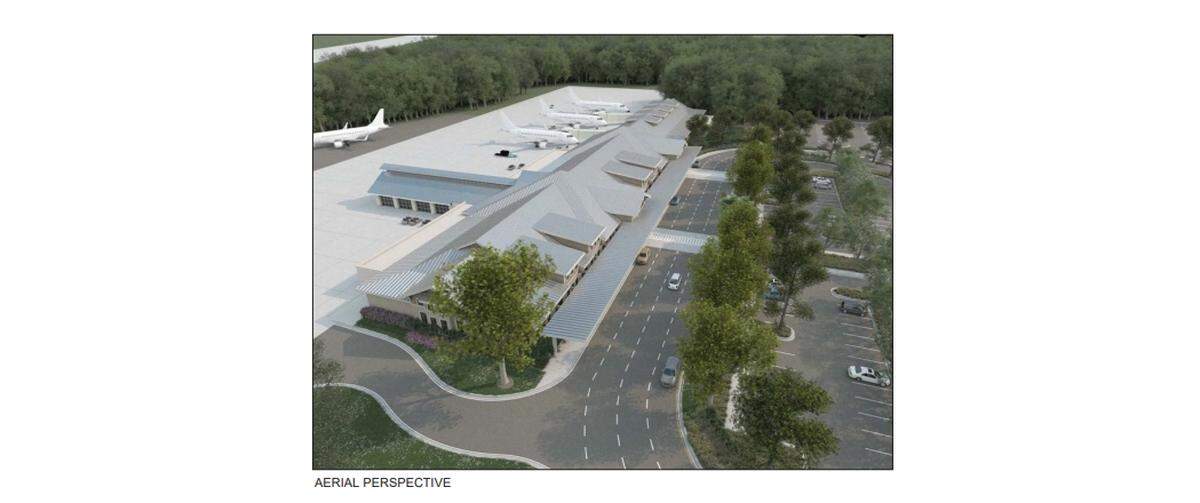
Rembold said there may be more food options in the new holding room, but there will be no established restaurant space.
The expansion comes with a cost. The project’s budget is $37.5 million, and $20 million of that is being paid by a grant from the Federal Aviation Administration, according to Rembold.
“The entire project is not fully funded yet, and we’re still in the designing and funding part of it,” he said.
Rembold estimates that after standard 5% contributions from the South Carolina Aeronautics Commission and the airport itself, the project still needs about $15 million.
Unhappy neighbors
Expanding the airport comes with more ramifications than financial ones.
The new terminal expands south into the Hunter Road area, and five businesses were relocated to make way for the new building. Business owners were reimbursed for relocating, but many expressed frustration with the process.
Mitch Dyess, a property owner and owner of Farmer’s Air at 32 Hunter Road, said he didn’t want to sell his property to the county because he didn’t want to have to pay rent to the county while relocating.
“I’ve been up at night frantically searching for a property,” Dyess said in March. “It’s really a horrible situation. [Beaufort County] doesn’t care how I’m feeling. They say their hands are tied. If I don’t take their offer peacefully, then they’re going to force me to take it. I’m trying to stay positive and focus on ‘where are we going to go?’ No one from the county has expressed any kind of empathy.”
The new terminal will require filling a half-acre of wetlands next to the airport.
More traffic to the airport and bigger planes aren’t necessarily welcome, either.
Neighbors in the Palmetto Hall gated community across Beach City Road have often complained of the noise that comes with daily commercial flights into and out of the airport.
The congregation at St. James Historic Baptist Church is preparing to relocate from its original site, where native islanders have been gathering to worship since 1886. When the airport’s runway expanded in 2018, its runway protection zone enveloped the church’s location.
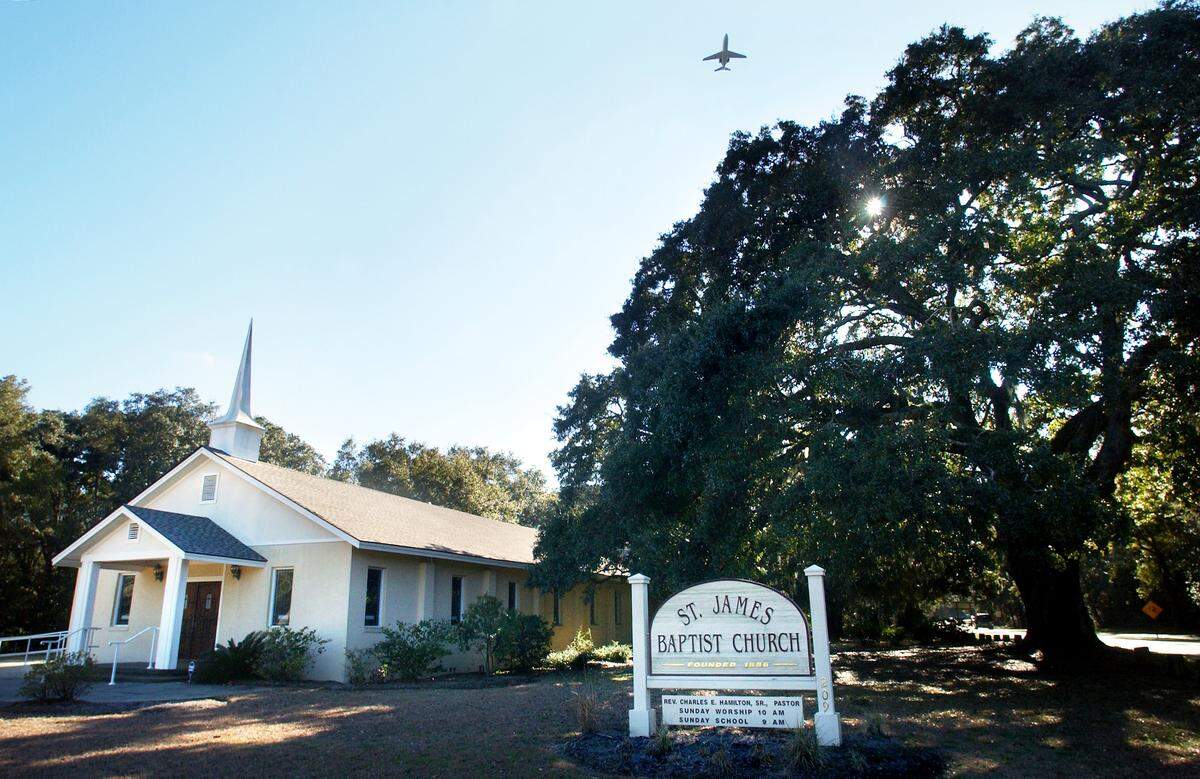
The FAA recommends airports own the buildings in the safety zones and that people not gather there, since most aircraft problems arise during takeoff and landing.
“If you were to observe, you can actually see how close (the planes) come to clipping trees and how close they come over the church property,” congregation member Blewett Wright told The Island Packet in February. “I think everyone realizes that if we don’t get out of there, we’re an accident waiting to happen.”