
The blushing truth about the brown blobs in our yards
Turn your eyes.
This is about sex.
Maybe not what you were hoping for, but sex, nonetheless. It's about the sex lives of our oak trees.
Normally, we would take a don't-ask-don't-tell approach to these affairs. But this is no longer a private matter because our Lowcountry yards are littered with the brown fuzzy things that, I blush to report, are a byproduct of the oak's fertilization.
Surely you've noticed that our trees have been especially frisky this spring.
These little brown strings -- sometimes called "beards" -- are everywhere. They're in our hair, our hair pieces and our long-haired Shih Tzus. They have covered our cars, and perhaps small children. They have added spice, and maybe a dash of protein, to our coleslaw at picnics.
Carol Guedalia, a retail horticulturist at The Greenery nursery, said they're thicker than she's seen them in 20 years.
They were a bigger hazard than the alligators during the RBC Heritage Presented by Boeing golf tournament. Between groupings of PGA Tour players, greens often had to be swished clean by men with leaf blowers, which, by the way, is now the most common life form in Sea Pines.
Casual golf fans would squint through the blizzard of golden brown junk and make authoritative statements like: "It's not the season, it's the wind."
I did some undercover work so that you, too, can now stand around nursing your fifth Bloody Mary and bellow nuggets of truth on the mysteries of Lowcountry life.
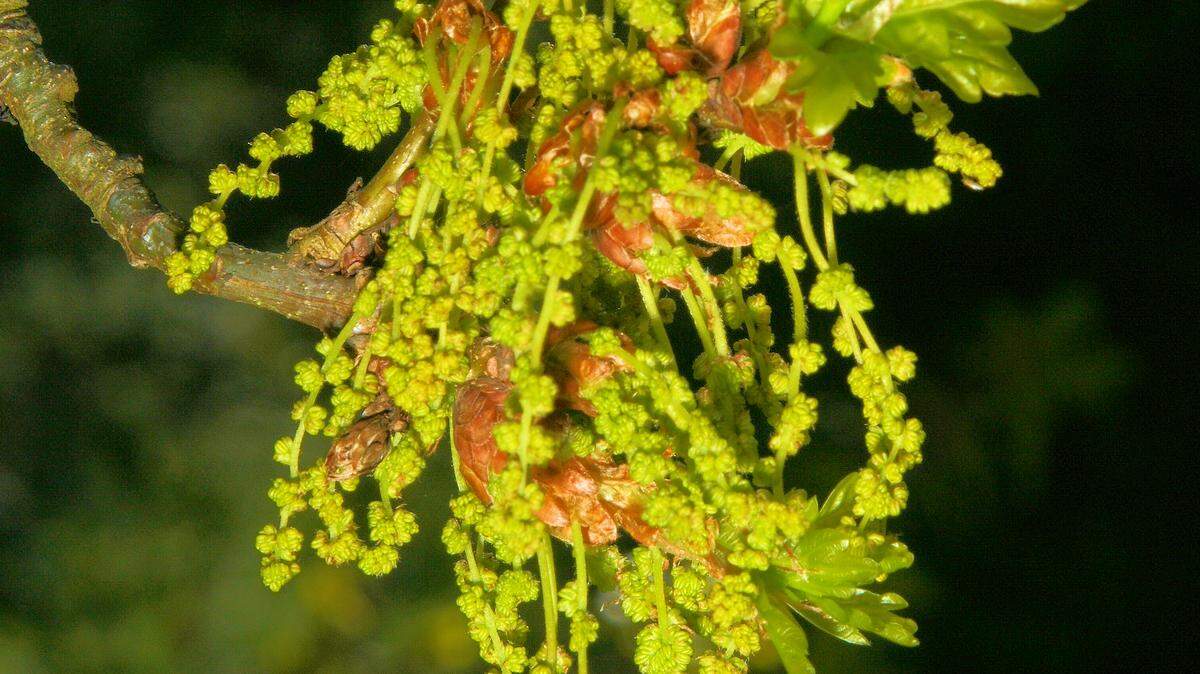
The little brown things are the oak trees' male sexual apparatus. The oak is monoecious, which means it has both male and female reproductive organs, or flowers, on the same tree. In the spring they come out to play.
The little golden "beards" are also called catkins, apparently stemming from the Dutch word "katteken," because an early botanist thought they looked like a kitten's tail. Another word for them -- ament -- comes from a Latin word meaning "thong."
I told you to look away.
The male flowers grow in little fraternities of clustered groups. They produce pollen, which gets blown by the wind to a receptive female flower in the twigs and branches.
It's at this point that people down below start weeping and wheezing in the yellow mist, and the spent male drifts to the ground to further make a nuisance of himself.
Fertilized flowers then grow into acorns. When the acorns fall to the ground in the autumn, they are warmly welcomed by squirrels and other creatures that move them, hide them, eat them, bury them and blast them with leaf blowers.
Only the tiniest percentage of acorns will grow into a mighty oak.
And our grandchildren will stand beneath them, sneezing and swatting, and saying, "It's not the season, it's the wind."
Related content
This story was originally published April 30, 2013 at 8:24 PM with the headline "The blushing truth about the brown blobs in our yards."