
Lauderdale: SC's old racial beliefs on sinking sand
Clementa Pinckney's remarkable life pulled me to his hometown church Sunday, where his body can be publicly viewed Thursday.
I went with a trace of hesitation, being a white guy showing up for Bible study at an African Methodist Episcopal church where he has never been seen before.
Just four days earlier, Pinckney and eight others at a Bible study were killed in the Emanuel AME Church he pastored in Charleston. The suspect is a white guy they'd never seen before.
I came as a stranger, but left the St. John AME Church near Ridgeland with a bottle of cold water on a scorching Lowcountry day, a slice of Shirley Fair's famous carrot cake, a solid-thumping watermelon, and a beer mug.
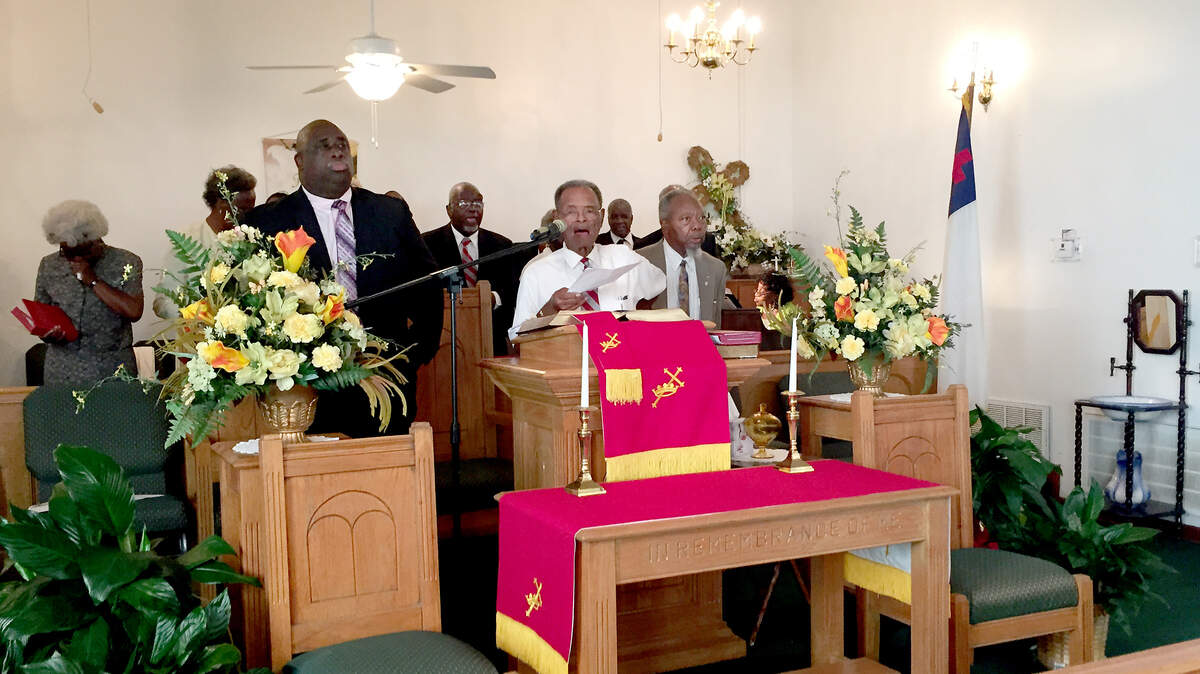
The mug was filled with hard candy. All the men and boys came forward to receive this Father's Day gift as pastor Gregory M. Kinsey warned that it was for iced tea and Coca-Cola only.
The congregation in the red brick church on the outskirts of Tillman insisted that I pose with the others in their annual Father's Day photo.
Here was a church that had just lost its brightest native son, the one who preached there at age 13 and taught Sunday school before that. Surely their burden could be lifted for a moment by the visitor trying to work a note pad, smartphone camera, audio recorder, Bible, hymnal, bulletin and Bostick Funeral Home fan all at once.
I was invited to lunch in the fellowship hall after the service, but spent my time talking to people who taught Pinckney long before he became a state senator, or went to school with him before he was chosen to lead the most important church in his denomination.
These were the people who got a call from Pinckney's wife, Jennifer, who was in the Emanuel church office with one of their two girls, ages 6 and 11, minutes after her husband's bright life was snuffed out at only 41.
Hilda Stevenson-Stewart was told to come quickly, and bring her parents, Donald and Emma Stevenson, who helped raise Pinckney.
Like most AME churches, this one was filled with community leaders, like the retired Rev. Thomas McClary and his wife, Beatrice.
Worship leader Alphonso Tyler had checked me out when I arrived. I didn't blame him. He was happy to hear that I'd called the pastor the night before so I wouldn't unduly alarm anyone.
I got the pastor's number from Isaac Wilborn. A street is named for Wilborn on Hilton Head Island, where he was a school principal for 30 years. His father also pastored Emanuel AME Church, and Wilborn became an AME pastor before retiring a second time.
Wilborn is known as a wise and humble man, kind of like Pinckney. In the 1960s, Wilborn asked the new breed of islanders arriving to live behind guarded gates for help when his grade-school students were at home babysitting for working moms. That led to the nonprofit Children's Center child care center.
As we chatted on the phone, Wilborn asked me if I'd ever met his mother.
"My mother and her father and her mother were as fair-skinned as anyone in Bluffton," he said. "My father was a very black man from Alabama. So we come from a mixed group. The color of a person's skin has never been a factor for me."
He said the problem is that there is always one group that thinks it is better than others, "but that's an individual thing, not necessarily a racial thing."
The problem is the friction between the so-called superior people and the so-called lesser people.
"We always want somebody to do the job we don't want to do," he said. "It's about who's going to be the rulers."
It's been easy to ask after the Emanual massacre: Who are the superior people?
Isn't it the ones who have expressed nothing but forgiveness even as they mourn the latest instance of centuries of unfair treatment?
During the church service, pastor Kinsey made a point of including Pinckney's favorite hymn, "My Hope is Built on Nothing Less." That's the one with the rousing refrain: "On Christ the solid rock I stand, all other ground is sinking sand; all other ground is sinking sand."
Out of the brutality that so badly hurt this little church that fed a stranger, South Carolina's old racial beliefs find themselves on sinking sand.
Follow columnist and senior editor David Lauderdale at twitter.com/ThatsLauderdale and facebook.com/david.lauderdale.16.
Related content:
- Clementa Pinckney's home church keeps doors open , June 22, 1015
- Queen Chapel AME Church: A beacon for freedom, the community , Sept. 11, 2010
This story was originally published June 23, 2015 at 6:45 PM with the headline "Lauderdale: SC's old racial beliefs on sinking sand."