
Lauderdale: 'Hope broker' reflects on mission to help abused children
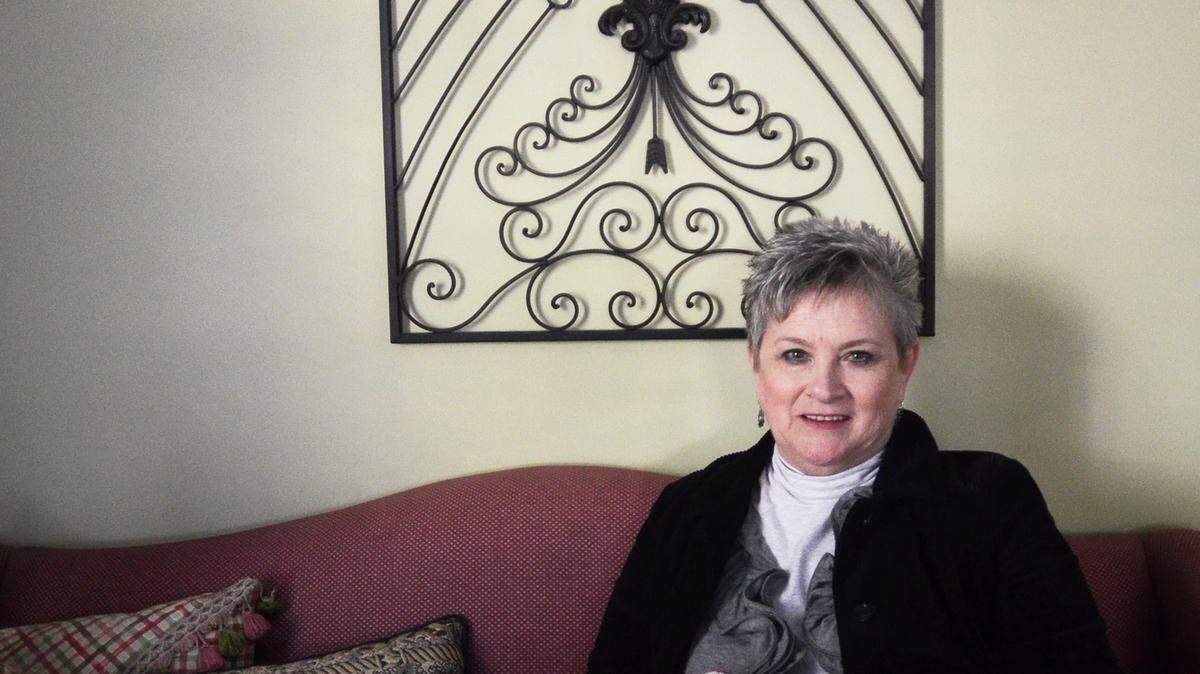
CAPA's Open Arms Shelter for Abused and Neglected Children has provided safety for more than 2,200 children since it opened in 1985.
And in all those years, only three times have any of the children of those sheltered children shown up for help.
"I don't think that's a coincidence," said Susan Cato, who retired last week after 29 years as executive director.
The mission of the nonprofit Child Abuse Prevention Association based in Port Royal is to "break the destructive cycle of child abuse and neglect by equipping parents, children and their caregivers with necessary skills, knowledge and values."
Cato came to the job reluctantly. Her husband, Jim, was working day and night as editor of The Beaufort Gazette. Her children were ages 3, 11 and 13. Foreign exchange students were in an out of the house.
She agreed to work part-time until CAPA could find somebody. The office was in her home and the trunk of her car. The shelter had just opened and her first task was to raise $52,000 for the annual budget.
Cato found herself on a mission. It was one that had oddly crossed her path a number of times since her first volunteer job in college. She was in a children's hospital when a baby was brought in that had been left in a Dumpster.
Later, as a young adult volunteering at the police station she was thrust into counseling a couple whose daughter was abducted at an amusement park and assaulted.
It also crossed her path closer to home, in an era when nobody talked about abuse or acknowledged it.
"I was raised in a family that you would never believe had child abuse," Cato said, "but there was lots of child abuse and there was sexual abuse and incest, so for a long time I was really, really angry with God because I thought what kind of God would let that happen to children?"
Last week she reflected on an agency that now works with 6,000 children and adults annually with a budget of $1 million and 23 employees.
"We call ourselves 'Hope Brokers,' " she said.
'DEFINE WHO THEY ARE'
Abuse will never go away, but a lot has changed in 29 years.
Today, more criminal charges are brought, Cato said.
Child abuse and neglect is less hidden. It once was harder to talk about a 13-year-old girl made pregnant by a grown man. CAPA needed to be sensitive, but also get people riled up about things that were going on.
People are now more likely to speak up if they see something wrong.
"They don't look at people and think, 'Kids are your property and you do with them what you will, just don't do it out in the street. We don't want to get into the ugly of it,' " Cato said.
As a result, CAPA is getting into families much earlier than it used to. Instead of getting abused 13-year-olds, it now sees more children 2, 3, 4 and 5 years old. Younger children are more likely to be taken in by a family member.
Also, children are staying in the shelter longer.
Cato said CAPA has a better relationship with the state Department of Social Services today, with collaboration being today's buzzword.
Children in the shelter are wards of the state, not CAPA. The goal is to get them back with their family, but they often are adopted or go into a foster home.
CAPA tries to help the children see that what has happened to them does not have to define who they are.
'LET YOUR LIFE SPEAK'
Every child leaves the Open Arms Shelter with a quilt made by a member of quilt guilds in Beaufort or on Hilton Head Island.
It's something they can call their own. For some, it becomes the only thing they have from their childhood.
Two successful women who were in the shelter as children around Christmastime now return to lavish gifts on the current occupants. One is from Atlanta, the other from the Orient.
In a Beaufort restaurant, a line cook with a wife and six children thanks the shelter for sparing his life, or keeping him out of jail. When he arrived as a child, he was already raising his younger siblings.
"He was just an angry little 10-year-old kid who was tired of watching his mom get horrible, horrible abuse," Cato said.
Parenting classes have helped other women stand up and learn not to bring men into their homes who may harm their children. Men prey on women working two jobs, Cato said.
"You have to give them hope," Cato said. "That's the main thing. My entire married life I have had something in my house, my office, somewhere, that talks about hope. I firmly believe the old saying: Let your life speak.
"I really feel that this has been my way of speaking. If we've helped people along the way, that's wonderful, and I know we have made tremendous differences."
Follow columnist David Lauderdale at twitter.com/ThatsLauderdale.
Related content:
Child Abuse Prevention Association
This story was originally published December 13, 2014 at 6:15 PM with the headline "Lauderdale: 'Hope broker' reflects on mission to help abused children."