
Passion for Bluffton's Civil War story still burning 150 years later
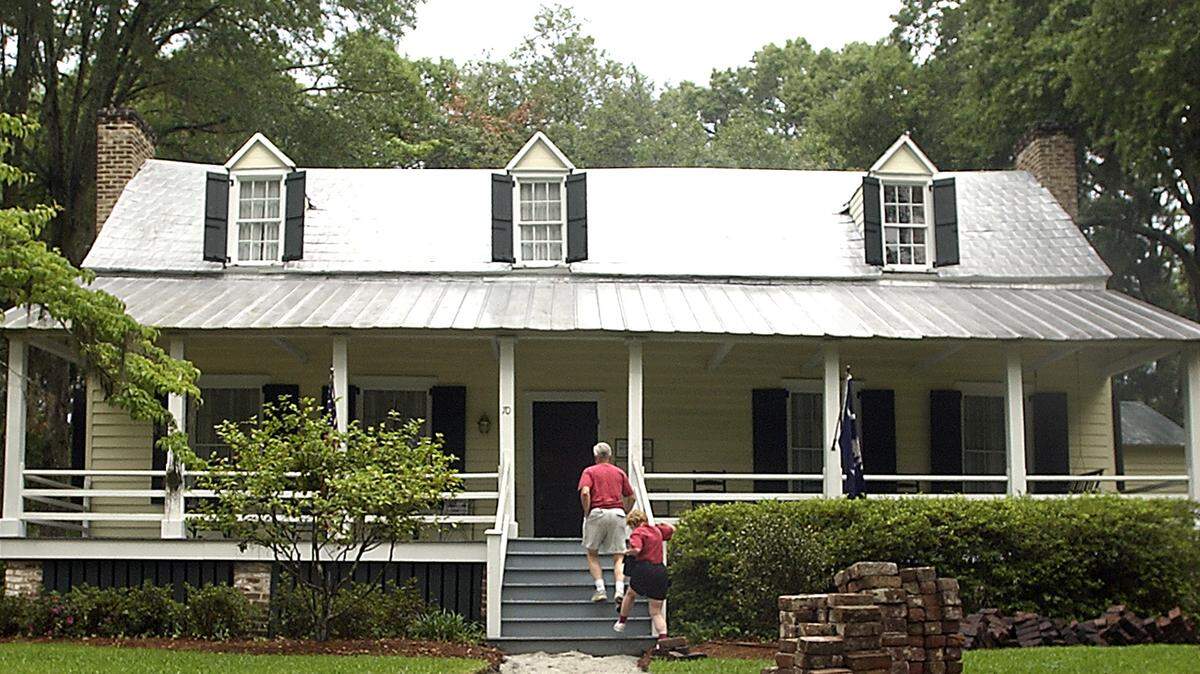
The 150th anniversary of the day the Yankees burned old Bluffton down was quiet Tuesday, except for a rip-snorting thunderstorm and the comforting squeak of the screen door at the Heyward House Historic Center.
Historian David Smoot of the Parris Island Museum gave a lecture on the porch of the 1840 home about the primitive medical practices of the Civil War.
The medic's favorite tool -- a hacksaw -- was not needed in Bluffton's rude brush with history on June 4, 1863, because virtually no one was hurt.
Union troops, about 1,000 strong, crossed Calibogue Sound and eased up the May River in the pre-dawn fog, surprising ineffective pickets and having their way in an unoccupied village. Rebel troops put up a bit of a fight, but gunboats blasted away as two-thirds of the town was burned in less than four hours.
After the Yankees looted furniture and left, about two-thirds of the town's 60 homes were destroyed.
The Church of the Cross and enough homes survived to give generations of Bluffton folks a feel for antiquity.
But the unpleasantness of June 4 was not taught in the schools, and what oral histories there were did not necessarily mesh with the facts.
Bluffton native Jeff Fulgham satisfied his personal curiosity by publishing a book last year: "The Bluffton Expedition." Fulgham is pleased that fourth-grade teachers at Michael C. Riley Elementary School have used the book in their classrooms.
"Regardless of the outcome of whatever event, it's important just to know it," he said.
Maureen Richards, executive director of the Bluffton Historic Preservation Society, points to a mirror on display in the Heyward House that a federal troop etched with "Flee Rebels. Hell is Here" to illustrate the importance of June 4. That and July 31, 1844, when as many as 500 people gathered under the Secession Oak in town to form the Bluffton Movement toward secession.
Fulgham reports that because of that gathering, when Bluffton was burned, the whole nation knew it, and South Carolinian Mary Boykin Chesnut wrote in a diary that would later win the Pulitzer Prize: "Bluffton must be satisfied now. It has about as much fighting on its hands as anybody need want -- fire eaters or otherwise."
Today, that story gives visitors something to cling to, see and touch -- like the old furniture, crafts, architecture, maps, artifacts, tools and gardens of the Heyward House grounds.
Richards said visits were up 44 percent in the first quarter of this year compared to last. She sees a growing thirst for Bluffton's history.
Emmett McCracken, who grew up in town, was also on the porch Tuesday. He said it's ironic that it required many non-natives -- like the center's tour docents from Sun City Hilton Head -- to help historic, old Bluffton see the value in its own story.
"It's given the town more character, something additional to appreciate besides the changing of the tides and sandbars," McCracken said.
He smiles at the thought of one wave of Yankees coming to destroy Bluffton, and another wave coming to restore it.
Related content
This story was originally published June 4, 2013 at 8:49 PM.