
Tree-cutting plans for I-95's deadly Jasper County section gain traction
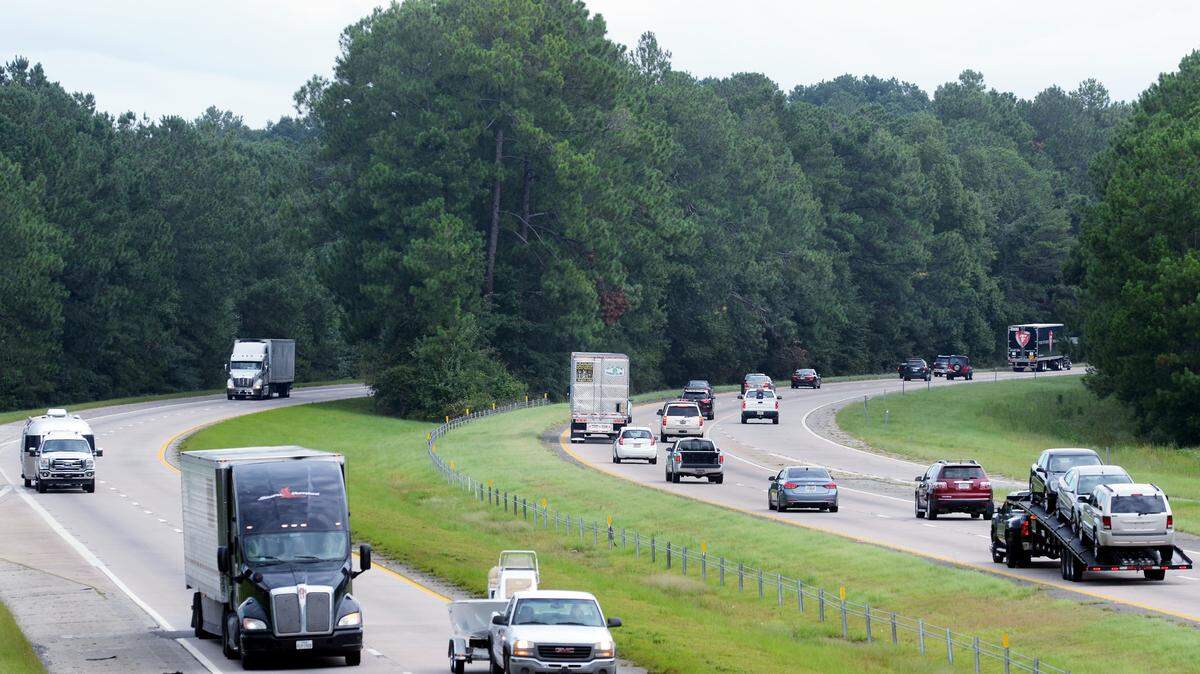
The removal of trees along a stretch of Interstate 95 in Jasper County known as the "coffin corridor" because of its high number of deadly wrecks could start by early next year.
Work could begin in about six months, depending on how long it takes to obtain environmental permits, according to Joy Riley, traffic engineer with the S.C. Department of Transportation.
The 35-mile interstate section in Jasper County has been the site of 16 deaths from tree-related crashes during the past five years. That's more than any other S.C. county along the interstate.
The problem was revealed in March by The Island Packet and The Beaufort Gazette, leading the state Department of Transportation to make safety improvements a priority on the highway in Jasper County. Before that, the state had planned for only routine maintenance to be done no sooner than 2017.
State transportation workers are conducting field studies and gathering data to determine the road's "clear zone" -- the amount of space needed to stop, gain control or lessen a crash's impact if a driver runs off the road, according to state officials.
In the case of Jasper County's portion of I-95, some trees are as close as 10 feet away, leaving drivers little time to avoid a fatal impact.
Improving safety will likely require creating a 46-foot clear zone in the medians and on the outsides of the highway, Riley said.
That will mean cutting a significant number of trees. How many and where is still being determined.
She expects it to take two more months before the reports are completed. The state will also have to get environmental permits from the U.S. Corps of Engineers for any damage to wetlands.
Crash data and other information are being collected to determine how large the clear zones, which begin at the edge of a road, should be, according to Brett Harrelson, a DOT safety engineer. He said his department would likely make its recommendation on those zones in a month.
The recommendation will be based on federal guidelines that consider speed limits, crash statistics and slope, among other factors.
He added that funding for the project could come from a federal grant that would require a 10 percent state match.
The federal guidelines for 70-mph highways with more than 6,000 cars a day and steeper slopes, recommend clear zones of 38 to 46 feet. Harrelson said that where there are lots of crashes, as in Jasper's case, the clear zone is on the higher end of that range, and parts of it could exceed 46 feet.
"This area is one of the highest in the state with people leaving the roadway and fatalities and hitting fixed objects," he said.
The state is also considering cable barriers in some of the medians, Riley said.
A cable barrier is typically used in narrower medians to prevent cars from traveling into opposing lanes. But there's also a concern they could cause cars to bounce back into traffic if they're placed too close to the road.
"There's a lot of things we're balancing to figure out what's the best scenario," she said.
Jasper County administrator Andy Fulghum is just glad to see the state finally moving on fixing the problem.
He and others have complained in the past. After reading the newspapers' investigation, he called on the state to improve safety. About a week later, DOT efforts were underway.
On Thursday, he noted that the progress continues.
"They've lived up to their promises," Fulghum said.
Follow reporter Zach Murdock on Twitter at twitter.com/IPBG_Zach and on Facebook at facebook.com/IPBGZach.
Follow Don McLoud at twitter.com/IPBG_Don.
Related content:
- I-95's 'coffin corridor'
- I-95's 'coffin corridor' in Jasper County targeted for state safety project
This story was originally published August 27, 2015 at 5:40 PM with the headline "Tree-cutting plans for I-95's deadly Jasper County section gain traction."