
Richardson: From palmetto logs to the modern age, Fort Moultrie has protected the Lowcountry
Have you ever wondered why South Carolina is called "The Palmetto State?"
True, those majestic trees seem a fitting symbol as they grace our dune-lined beaches, highways and landscape -- but the reason for the name is more significant than that.
On Sullivan's Island near Charleston stands Fort Moultrie, which for centuries it has protected the Lowcountry.
During the American Revolution, the unfinished fort made do with palmetto log walls instead of brick or stone. That choice proved very fortunate. The guns of the British fleet sent to capture Charleston in 1776 were ineffective against the spongy native palmetto logs, and the day -- and the city -- was saved. Through this victory, freedom became reality.
Now the fort remains for you to enjoy.
Fort Moultrie is a part of the Fort Sumter National Monument network of parks and preserved lands in and around Charleston.
Perched at the mouth of Charleston Harbor, it commands an incredible view of the city and the sea, as well as Fort Sumter.
In 1861 another battle was fought. It sparked the fire of civil war as Fort Sumter was fired upon and war was declared.
When you visit Fort Moultrie today, you will not hear the noise of battle but the gentle sea wind, the call of birds and the happy voices of visitors exploring the structure's many walls and rooms.
Fort Moultrie is unique because it carefully and accurately preserves several eras of coastal defense, the colorful history of its battles and the lives of the men and women who have served there over the years.
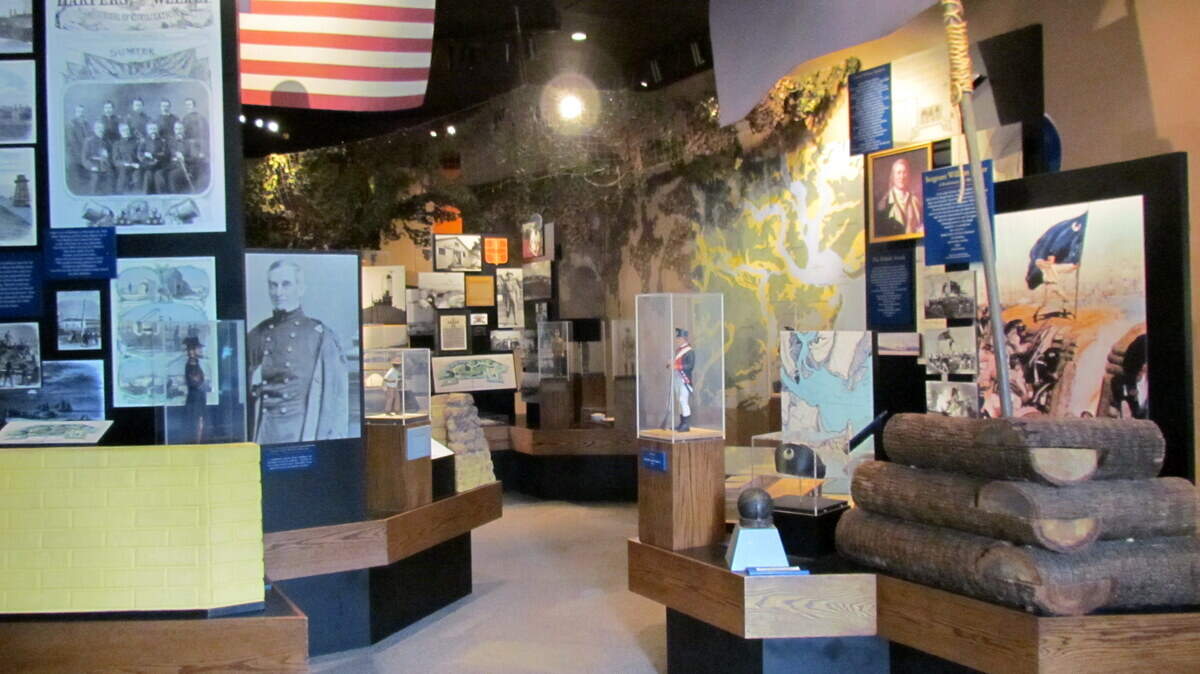
Starting with the exhibit-packed visitors' center and museum, your visit to Fort Moultrie will offer you the 171 years of the fort's use as a military installation and protector of the coast.
When you walk into the fort itself. You will in fact be visiting three forts at the same time. Fort Moultrie has been preserved to show historical periods from its earliest days to the Battle of the Atlantic of World War II when it served as a watch against German U-Boats stalking Charleston and the Carolinas.
You can explore passageways and rooms and wander sunny pathways atop the walls. Cannon from different era frown outwardly but prove to be kid-friendly magnets of hands-on adventure.
On a recent visit, my family was most fascinated with the most modern features of the World War II era command center and tower -- a uniquely preserved feature not seen in most coastal fort museums today.
Whether you're enjoying a day in Charleston, in need of an easy outdoor diversion or seeking out a fascinating destination that guards one of the very origins of our state symbol, Fort Moultrie is an excellent destination.
Bluffton resident Matt Richardson enjoys taking day trips with his family and exploring the Lowcountry. To see more pictures from his adventures, go to www.Flickr.com and search on the username "greenkayak73." He can be reached at greenkayak73@gmail.com.
This story was originally published June 2, 2015 at 6:41 PM with the headline "Richardson: From palmetto logs to the modern age, Fort Moultrie has protected the Lowcountry ."