
Ex-Beaufort County teacher who molested 9 boys could soon be free
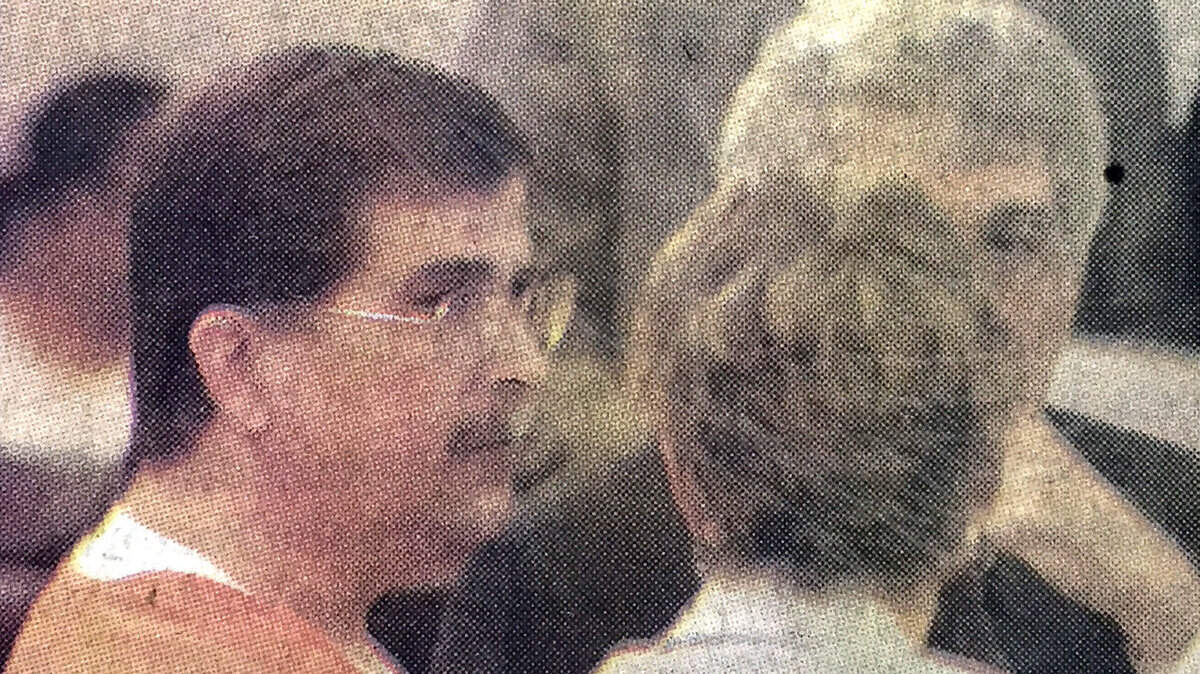
Thirteen years after molesting nine young boys, Philip Underwood-Sheppard appears to be about to get out of jail.
The 57-year-old former Coosa Elementary School teacher was released from prison last month after serving a little over half of a 25-year sentence. He has been in the Beaufort County jail since, awaiting a decision on whether the state would commit him to a locked mental health ward inside a Columbia prison.
On Friday, the S.C. Attorney General's Office reported that two mental evaluations reached the same conclusion, that Underwood-Sheppard does not qualify for the state's Sexually Violent Predator Treatment Program. The program requires a civil-court commitment, and those sent to the program can be held indefinitely, until they are deemed safe to be released.
Alan Wilson, the state's attorney general, has not moved to dismiss the case. But with both a court-ordered evaluation and an independent evaluation ordered by Wilson's office both concluding that Underwood-Sheppard does not qualify for the program, the case's dismissal appears eminent.
"It would be a tough case to prosecute if your own doctor" said he doesn't qualify, said Chris Mills, a Columbia civil right lawyer.
The next step is for Underwood-Sheppard's lawyer to file a motion to dismiss the case.
A judge can decide to make that decision or call for a hearing before deciding. Underwood-Sheppard's lawyer, Scott Lee of Beaufort, did not return calls for comment on when he planned to file a motion.
Attorney general spokesman Mark Powell said he could not provide more details about the evaluations, which are sealed by state law.
"Because this matter is pending before the court, it is inappropriate to comment at this time," Powell said.
To be committed to the program, the state must prove the person has a "mental abnormality" or "personality disorder" or both that would make him likely to commit acts of sexual violence if not confined, Powell said.
About 180 men are in the predator program, which is run by the S.C. Mental Health Department in the Broad River Correctional Institute in Columbia. Some have been in the program for more than 10 years. Its residents are evaluated each year for possible release.
The mental evaluations are in-depth, and the evaluators are good at identifying low-risk offenders who should be released, according to Elizabeth Letourneau, director of the Moore Center for the Prevention of Child Sexual Abuse.
Though such cases inflame the community, she said, such sex-offenders have a low rate of recommitting sex crimes, at about 5 percent in three years.
Letourneau, who is also an associate professor at John Hopkins University's Bloomberg School of Mental Health and formerly a professor at the Medical University of South Carolina, believes that sexually violent predator programs are too costly to be used indiscriminately. Someone who has been cleared by two evaluators should not be committed, she added.
"All you are doing is draining South Carolina's coffers," she said.
South Carolina's program costs about $15 million to run annually, or about $83,000 per inmate.
She was concerned, however, that the state would not require parole or supervision following prison release for such crimes.
Underwood-Sheppard would have to sign up for the state's sex-offender registry but would not be supervised or required to undergo treatment after being released.
His crimes came to light April 26, 2002, when a worker at the Boys & Girls Club after-school program became suspicious and peeked in the music teacher's room at Coosa Elementary School on Lady's Island and saw him naked from the waist down. Two boys, ages 7 and 8, were in the room with him and there had been inappropriate physical contact.
Seven other boys between the ages of 6 and 13 later came forward to report similar crimes to the Beaufort County Sheriff's Office.
Underwood-Sheppard had been a teacher in the school district for 17 years, also having worked at Davis and Broad River elementary schools and Robert Smalls Middle School.
He was sentenced to 25 years on April 24, 2003, after pleading guilty to nine counts of indecent exposure, seven counts of performing a lewd act on a child and one count of assault and battery high and aggravated. Due to earning credit for good behavior and working jobs in prison, he became eligible for early release after serving 13 years.
Some "truth-in-sentencing" advocates, such as 14th Circuit Solicitor Duffie Stone, have called for ending the state's early release program because of cases like Underwood-Sheppard's. They say it is unfair to victims who face distress over the uncertainty of a prisoner's release and it undermines the criminal justice system.
Shauw Chin Capps, executive director of the Hope Haven of the Lowcountry child advocacy center, says that though each victim responds differently, the pending release of a prisoner can be traumatic.
"It can be a reopening of wounds," she said. "It's very difficult for them to understand that when someone is sentenced to 25 years and they get out in 13."
Underwood-Sheppard's crimes were also costly.
Lawsuits against the Beaufort County School District and the Boys & Girls Clubs followed his guilty plea. The clubs paid out $2.4 million. The district paid about $5.2 million, with its liability insurance eventually reimbursing about half of that amount after a lengthy legal battle.
The school district has declined to comment on Underwood-Sheppard's case. But its spokesman Jim Foster said the district plans to issue a districtwide no-trespassing order against him if he is released. If seen on school property, police would be called, he said.
Because he worked for 17 years for the district, Underwood-Sheppard is eligible for partial retirement benefits at age 60. The state only prevents benefits from going to school employees convicted of embezzlement, according to Megan Lightle, spokeswoman for the state retirement system.
After five years of employment, teachers are vested in the state employees' retirement system, into which they pay a portion of their salaries. Full benefits require 28 years of service, Lightle said.
The retirement system's online calculator indicates Underwood-Sheppard, based on the 2001-2002 salary schedules, could receive about $9,000 to $10,000 per year. He would not be eligible for state health benefits.
Follow Don McLoud at twitter.com/IPBG_Don.
Related content:
- Too dangerous to be freed? Man who molested Beaufort County children may be released after serving half of 25-year prison sentence, Aug. 27, 2015
This story was originally published September 11, 2015 at 9:20 AM with the headline "Ex-Beaufort County teacher who molested 9 boys could soon be free."