
Hilton Head mother fundraises for Tay-Sachs cure
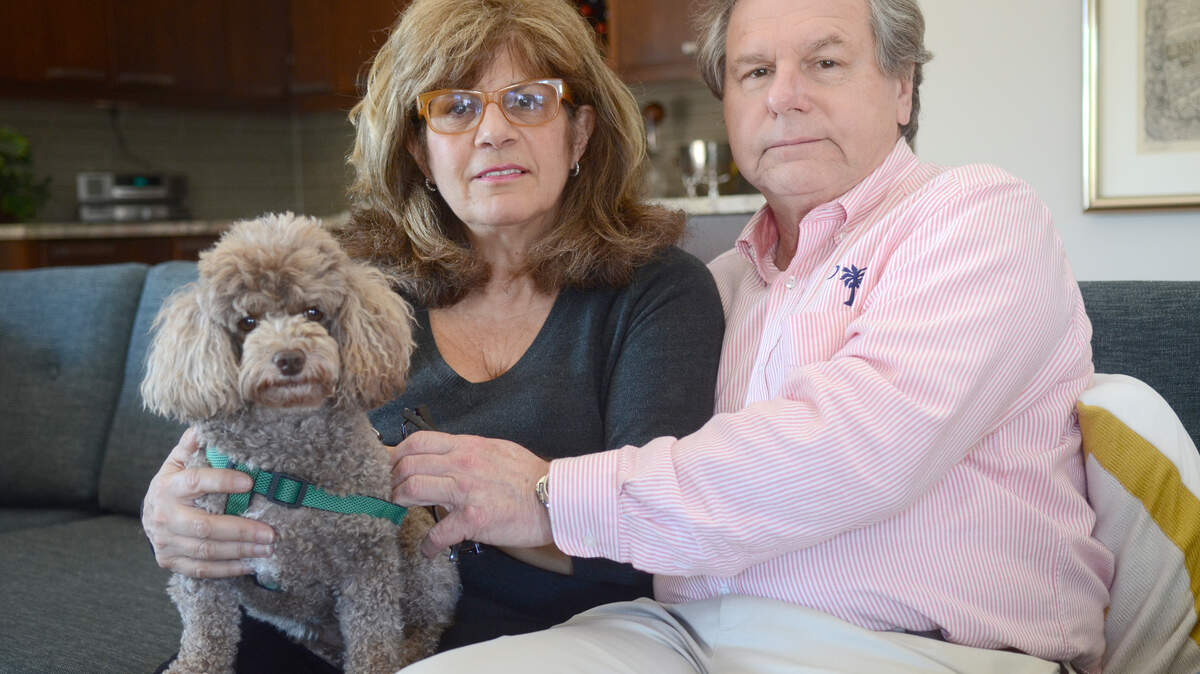
Katie Buryk sat stranded in her New York City apartment Monday morning as freezing rain slicked the pavement outside.
Even on a clear day, the former Hilton Head Island woman can't jog, walk down the steps to the subway or wear high heels.
An icy sidewalk could be even more treacherous for the 26-year-old, whose muscles are weakened by late-onset Tay-Sachs disease.
Less than three months after she and her twin sister were diagnosed with the rare genetic disease, their mother has helped raise more than $100,000 from her home in Sea Pines for research to find a cure.
She said she struggles to remain optimistic over her condition, which will worsen slowly over her life.
"I also have to be realistic and know what's coming," she said. Otherwise, when "one day I wake up in my bed and I can't walk and I need to have a wheelchair, I won't be able to accept it."
However, she said she's grateful her family can help support fledgling research for both the late-onset disorder and the fatal version that kills children by the age of five.
"In the end, I don't think it'll actually help cure me," Buryk said. "But it'll help cure someone coming after me, if we start now."
THE DIAGNOSIS
Katie, who works in retail, and her twin Allison, a Greenville nurse, graduated from Hilton Head Island Preparatory School in 2006. They lived with their dad in the family's vacation home on the island.
While both were active in middle school, they stopped swimming, gymnastics and playing soccer and tennis as they got older. Though they continued working out, the twins say they now recognize their lack of strength and coordination -- and tremors in Katie's hand -- as early signs of the disorder.
"I thought it was just me, I wasn't that (athletic) type of person," Katie said Monday. "It really was my body saying I couldn't do it."
It wasn't until Katie's late teens that her symptoms worsened. She began struggling to walk up the stairs to her second-floor dorm room. On a trip back to New York City, the twins realized they had to push off from their seats to stand up.
It would be eight years before the pair had a diagnosis.
A battery of nerve and muscle testing for Katie -- whose symptoms are more severe -- turned up abnormalities, but doctors ruled out ALS, spinal muscular atrophy and multiple sclerosis. The Mayo Clinic was equally stumped, and a series of blood transfusions failed to improve her condition.
As a last resort, a friend suggested the family undergo genome sequencing, which revealed in November that their parents, Alexis and Bill were carriers of Tay-Sachs.
'WORTH A SHOT'
Putting a name to the symptoms provided the family with little relief. There is no treatment or cure for the disorder, caused by a genetic mutation.
"I was in shock," Alexis Buryk, 62, said. "I didn't know what to do and I owe it to (Katie), who rose to the challenge and channeled her energies into, 'Mom, I want to find a cure. We have the find a cure.'"
Alexis Buryk, a former senior vice president of advertising for the New York Times, contributed $10,000 to a fundraiser through the National Tay-Sachs & Allied Diseases Association.
She then got to work writing to family, friends and many of the contacts she developed in her 35 years with The Times.
By the end of January, hundreds had donated more than a total $100,000.
Raising money for a cure -- not only for her daughters, but for children diagnosed with the fatal disease -- has become a full-time job for the recent retiree.
"Sometimes in the middle of the night, I go, 'Oh, how about this person,' and I'm emailing them in the middle of the night," she said.
"Inactivity means I don't have hope," she said. "If I don't do anything, there might not be a result, and I can't. It's too devastating for an infant to die."
The family also hopes to educate more people about the disease, and the simple blood test that can tell would be parents whether they are carriers.
While many associate Tay-Sachs with the Jewish population, the mutation also exists in the Cajun community of Louisiana -- Bill Buryk's ancestry -- and in French Canadians.
One of Buryk's friends thought she had been hacked when he received an email asking for a donation.
"He said, 'But you're not Jewish,'" Buryk recalled. "I said, 'I know.' People don't get (that). I didn't get it, either."
The association is only aware of about 100 people worldwide with the disorder, though they believe there are more people who are undiagnosed or uninterested in joining a database.
Executive director Sue Kahn said she is also keeping track of ongoing gene therapy research and the development of drugs that can better treat neurological disorders.
Twin Allison also hopes to take part in a clinical trial for a drug that could slow her symptoms.
"I have to stay positive," she said. "It's worth a shot."
Follow reporter Rebecca Lurye on Twitter at twitter.com/IPBG_Rebecca.
This story was originally published February 2, 2015 at 5:59 PM with the headline "Hilton Head mother fundraises for Tay-Sachs cure."