
McMillan: Resurrection ferns: From treetops to a mission to space
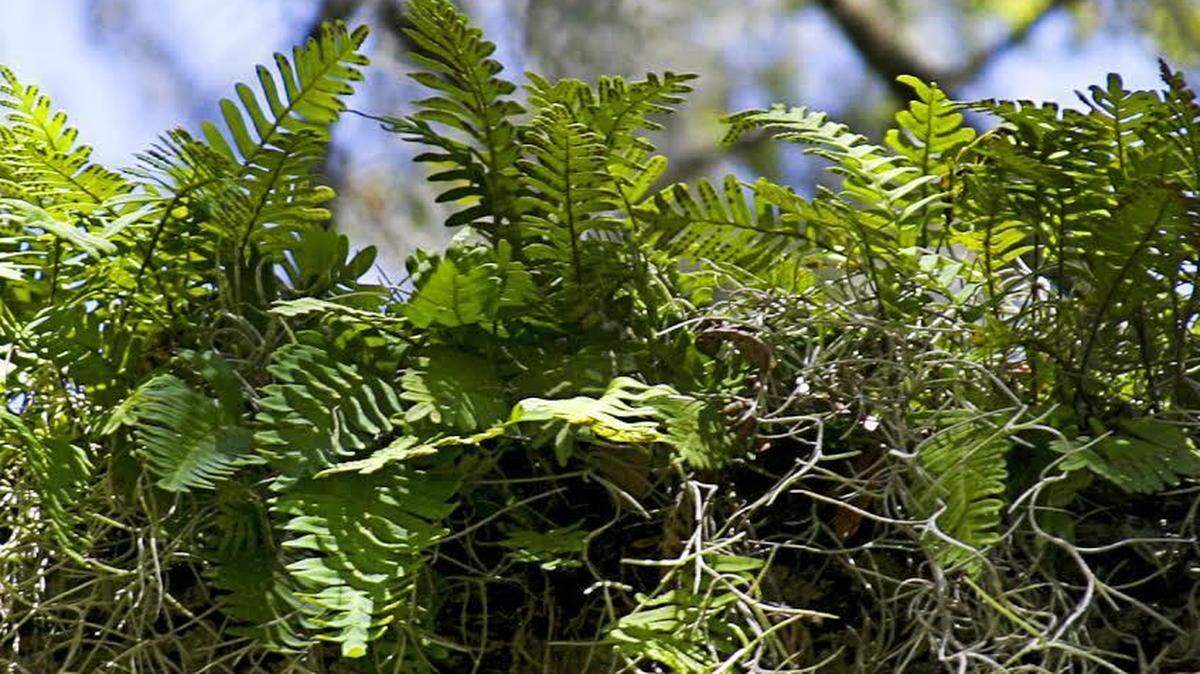
Plants usually die when they don't get much water.
That isn't the case with resurrection ferns (Pleopeltis polypodioides), which can morph from withered and dead-looking during a drought to green and luxuriant within hours after a rainstorm.
These small, leathery ferns commonly blanket the larger branches of live oak trees throughout the Lowcountry.
As the leaves (fronds) of resurrection ferns start to dry out, they shrink and curl, minimizing the surface area exposed to water loss. Once moisture becomes available again, the fronds rehydrate quickly via numerous microscopic holes on their lower surface.
Resurrection ferns can lose up to 97 percent of the water in their cells -- enough to kill most other plants -- and still undergo this amazing metamorphosis. Studies suggest that desiccated ferns may stay viable for several decades, perhaps longer.
Although anchored to tree bark by slender rhizomes (modified stems), resurrection ferns are not parasites. They make their own food by photosynthesis and absorb moisture from the air. They also tap into nutrient-rich rainwater trapped within the bark's cracks and furrows.
Their treetop location frees them from competition with plants on the ground.
Common throughout the Southeast, the resurrection fern is one of about 11,000 species of ferns found worldwide. Like other ferns, it forms neither flowers nor fruit, and it reproduces via spores grouped in clusters on the undersurface of the fronds.
Thanks to a South Carolina middle school, the resilient resurrection fern has even experienced space travel,. Students suggested that the plant's tolerance of extreme desiccation would make it a good study species to take on the space shuttle Discovery in 1997.
Scientists found that, despite exposure to zero gravity, the fern's rejuvenation abilities remained intact.
Vicky McMillan, a retired biologist formerly at Colgate University, lives on Hilton Head Island.
This story was originally published July 25, 2015 at 12:31 PM with the headline "McMillan: Resurrection ferns: From treetops to a mission to space."