
McMillan: Color-changing anoles a wonder of the Lowcountry
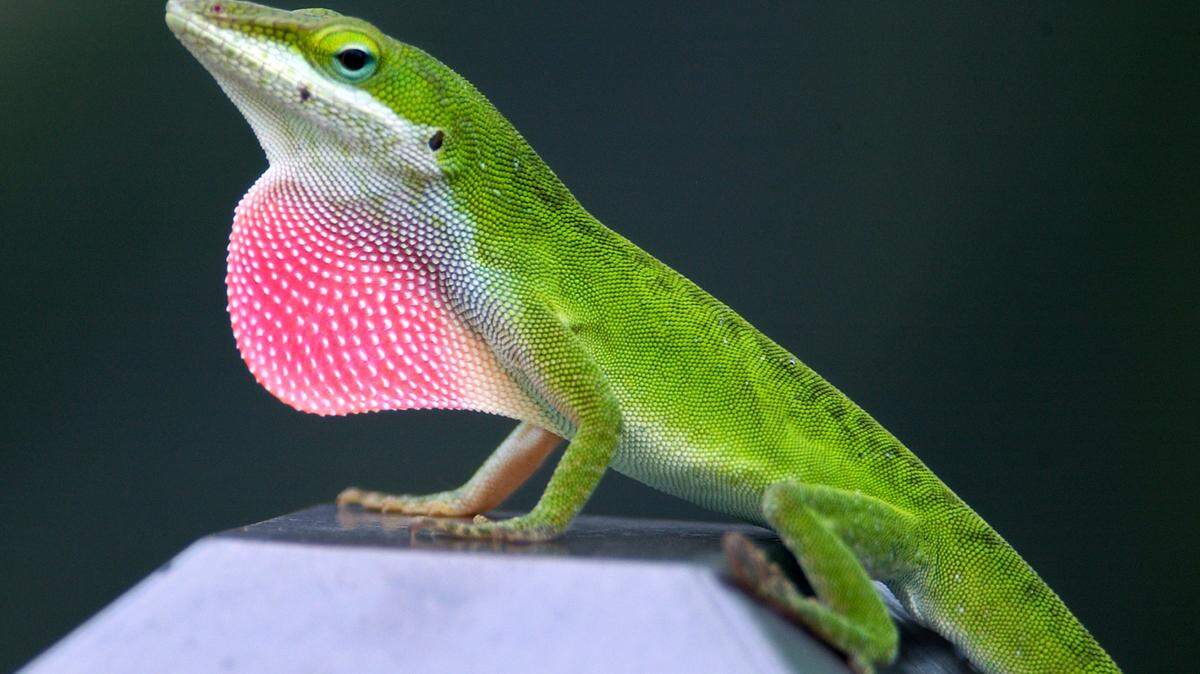
I've lived here for years, but I still love watching the little lizards that clamber over palmetto leaves and dart across my deck.
Those lizards are green anoles (Anolis carolinensis), common throughout the Southeast.
Like true chameleons -- distant reptilian cousins -- green anoles can change color from green to brown and various shades in between. These remarkable, often rapid transformations are mediated by a pituitary hormone affecting pigment concentrations in their scaly skin.
Scientists don't fully understand what prompts the color changes.
Previously, they assumed anoles changed color in direct response to their surroundings. The resulting camouflage presumably helped them blend in with their background, making them less conspicuous to predators.
But new research suggests that internal "mood" may be a more important trigger.
For example, male anoles are green when acting aggressively toward other males, but brown when submissive. Both sexes turn brown when frightened, injured or ill.
Temperature may also affect color changes, but more studies are needed.
During cold winters, anoles become inactive and take shelter in protected places. One December, I found four anoles nestled together in a crack between the shingles of our house. On warm afternoons, they emerged briefly to bask in the sun.
Once spring arrives, anoles seem to pop out from every crevice.
Males start performing courtship and territorial displays -- bobbing their heads up and down, doing "push-ups," and fanning out their pink throat flaps (dewlaps). It's a performance not to be missed.
On the other hand, feeding involves stealth, patience, and sometimes leaps of 9 inches or more.
Anoles have good eyesight and quickly fixate on moving prey such as insects or spiders. I've watched anoles stalk a potential meal for a full five minutes, then take a flying jump, extend their long tongue and swallow the prey whole.
A full meal can increase an anole's body weight by as much as 30 percent. All that food weighs the animal down. Satiated anoles move more slowly and can't jump as far or as fast.
Anoles are, of course, prey for larger animals such as snakes, birds and domestic cats. When chased or disturbed, they move at top speed. Traction comes from suction-cup pads on their feet.
A more startling escape tactic is the ability to shed their tails when seized.
A new tail eventually grows back in its place, though it's usually shorter than the old one.
Vicky McMillan, a retired biologist formerly at Colgate University, lives on Hilton Head Island.
This story was originally published May 16, 2015 at 4:06 PM with the headline "McMillan: Color-changing anoles a wonder of the Lowcountry."