Why he’s sailing 1,000 miles in a 16-foot kayak. And what he’s learned about surviving
Will Freund, a North Carolina man making a 1,000-mile trip from Miami to Norfolk, Virginia, in a 16-foot-long kayak with a sail and pedals, arrived in Beaufort Wednesday exhausted after fighting a brutal headwind.
The obstacles he’s encountering on his first solo sailing trip are teaching Freund a thing or two, like not trifling with Mother Nature and how to better read sailing conditions so he avoids “those scary conditions.” Among them: three instances when he thought his boat was going to flip.
“There have been some of those moments where they’ve scared me to the point when I got finished for the day, tied up at the dock, that my hands were literally shaking from the adrenaline that was pumping,” Freund said.
Freund, 25, isn’t just making a trip of a lifetime for an adrenaline rush.
Along the way, he’s talking to people about climate change and listening to their stories about its effects on coastal communities like Beaufort.
Using two GoPros and a digital camera, Freund is recording those conversations as part of a documentary he’s making during the unusual journey he’s dubbed “Climate, Kayak and Conversation.” He plans to publish it on YouTube.
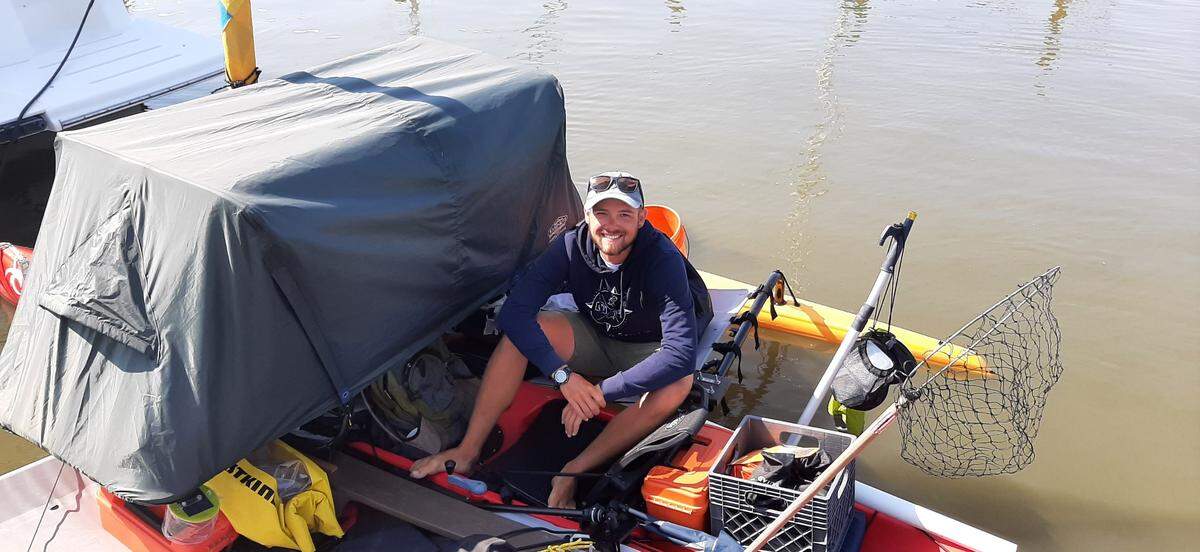
His vision: Communities and ecosystems living and working in harmony through communication, conservation and compromise.
“Because with us all not on the same page right now, it also means we aren’t talking together,” Freund told the Beaufort Gazette and Island Packet Friday at the Beaufort marina., about the halfway point in his trip. “And if we are able to come together with meaningful conversation, we can move forward on taking action.”
Freund grew up in Raleigh, and now lives in Kill Devil Hills on the state’s Outer Banks.
Freund first thought of the “crazy” idea of taking a sailing kayak up the East Coast while daydreaming during a boat safety class. He’s a 2017 graduate of the College of Charleston, where he studied biology and the environment.
In the end, the Eagle Scout combined his passions for education and the environment with his camping and sailing experience in a trip about something bigger than himself.
“Honestly, I had no idea what I was getting myself into,” he said, “but I knew it was going to be one heck of an adventure for sure.”
Trip has surreal moments
Freund says the expedition up the Atlantic Intracoastal Waterway, sponsored by the Environmental Educators of North Carolina, has been surreal at times.
Once, as he was making dinner while anchored behind Cumberland Island off the coast of Georgia, he turned to the right to see a dorsal fin of a 4-foot shark 5 feet from the kayak.
“I’m like, ‘you stay in the water, I’m going to stay here,’ and we’re good to go,’” said Freund, who guesses it was a sandbar shark.
Freund also has seen manatees, dolphins, stingrays, otters, turtles, alligators and more than 100 species of birds, a thrill for Freund, a self-described bird nerd.
The experience has given him a new appreciation of nature’s diversity and the connectivity of waterways.
“Over the last 500 miles, I’ve seen environments change, the water change, from palm trees to live oaks and pines, and mangroves have turned to salt marsh,” he said. “We live in a really big country with a lot of coastline.”
Tied up at the marina, Freund’s 16-foot-long, 9-foot-wide Hobie Mirage Adventure Island boat looked like a bathtub toy in comparison to the larger vessels it shared dock space with. Its name is Time and Tide.
“I’m constantly figuring out what time it is and what the tide is doing,” said Freund, explaining the name.
Its maximum carrying capacity is 440 pounds, and Freund estimates its carrying just north of 300, including him.
It holds five to six days of food and four days of water, and a solar panel to charge three battery banks for his electronics.
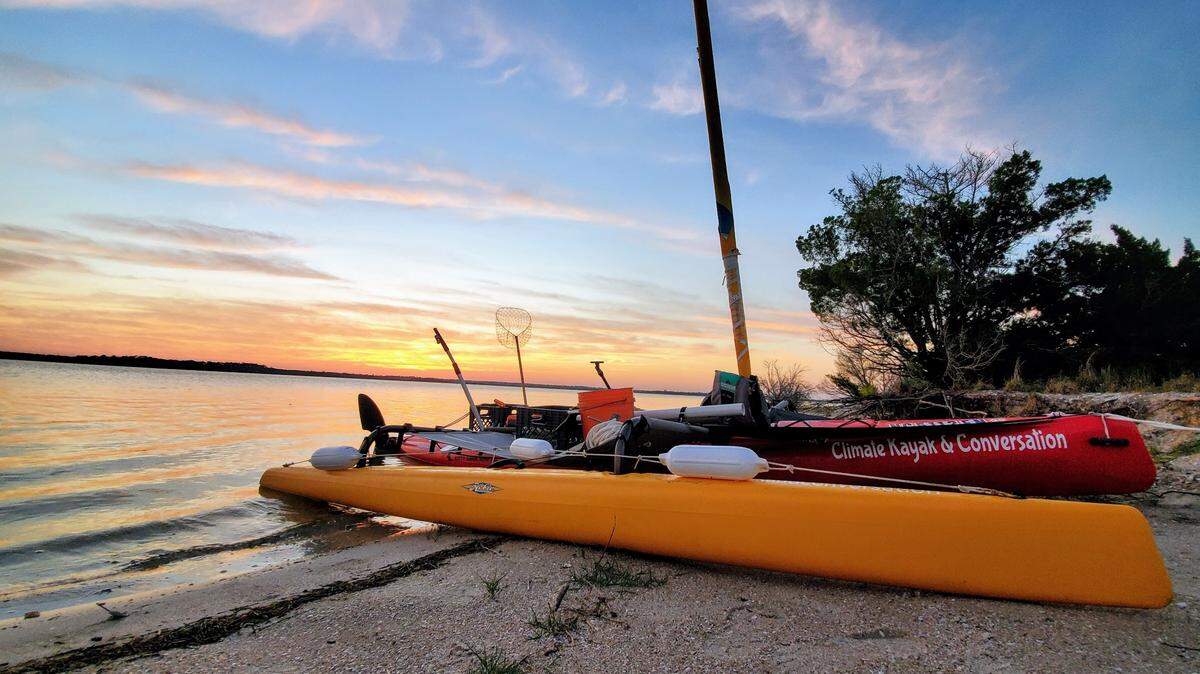
Outboard pontoons stabilize it. A collapsible tent/cot combination that rests crosswise on the craft is where he sleeps and takes shelter from the rain. About once a week, he keeps the kayak on the water overnight.
“So I can poke my head out and see some of the best stars I’ve ever seen,” he said.
Followers on his social media accounts are keeping up with his adventures and can even “Find Will,” thanks to GPS coordinates he posts on his website.
“That’s a very important thing for my mom,” Freund said.
Freund actually began the trip last March and made it 17 days and 200 miles to Titusville, Florida, before COVID-19 ended the journey.
Freund picked up where he left off April 14.
He arrived in Beaufort, 560 miles into the 1,000-mile trip, Wednesday evening.
It was his worst day of the trip.
In the middle of Port Royal Sound, one of the foot pedals on his boat broke just as he ran straight into a headwind.
Using every sailing talent he has, Freund managed to make it across the sound and into the Beaufort River, but he continued to fight the wind.
Journey into Beaufort ‘worst day’
Exhausted, he was forced to flag down a family in a dinghy as he was tied to a moored boat 100 yards from the marina. Once he was tied up at the dock, Freund collapsed.
Freund says the best part of the trip has been the “unwavering generosity” of people who have shared their stories of the effects of climate change and opened their homes, feeding him and allowing him to wash his clothes. They agree to help a random guy in the kayak, Freund says, after he explains what he is doing, even if they don’t agree with him.
Freund planned to depart Beaufort Sunday, when the winds were expected to shift, allowing him safer travel around the backside of St. Helena Island.
He travels about 15 miles a day and hopes to finish July 4.
“Part of me likes that idea that all these fireworks are going off, and everybody is celebrating me finishing,” he says.
This story was originally published May 21, 2021 at 12:00 AM.