White interviewees had 3x better odds of being hired as NFL head coaches, new data show
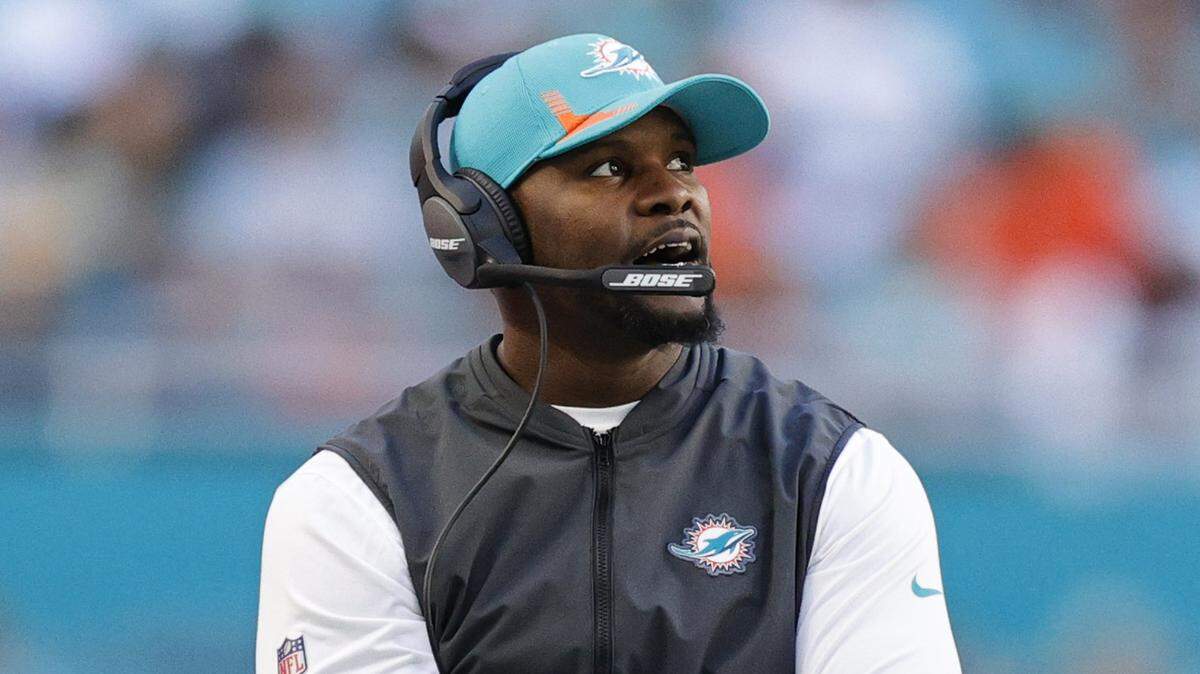
With the league facing searing criticism over its lack of diversity in the top coaching ranks, two NFL teams this past week chose men of color as head coaches: Mike McDaniel, hired by the Miami Dolphins, and Lovie Smith, picked to lead the Houston Texans.
The moves took some heat off the league as it headed toward the biggest day in sports: Super Bowl Sunday.
But the recent hires weren’t enough to change the overall trend.
The chances of landing an NFL head coaching position were three times better for white candidates compared to their non-white counterparts — even after including the most recent hires and controlling for age, number of opportunities, previous coaching position and years of experience in the league.
That’s according to a new statistical analysis by Alexis Piquero, chair of the sociology department at the University of Miami, using data compiled by the Miami Herald on all interviewees for NFL head coaching positions filled since the beginning of 2015.
The analysis comes on the heels of a lawsuit filed this month by former Dolphins head coach Brian Flores, who accused the New York Giants of conducting a “sham” interview to fulfill a league-imposed requirement, called the “Rooney Rule,” that at least two external minority candidates be interviewed. In fact, he said, the Giants had already filled the position, but simply hadn’t announced the hire.
In his 58-page complaint, Flores claimed his experience was not unique and he alleged widespread racial bias in the NFL, especially when it came to hiring and retaining Black head coaches.
While all minority head coaching candidates were significantly less likely to be hired than white candidates, Piquero’s analysis showed Black candidates fared particularly badly.
Black interviewees had around one-fourth the chance of being hired for a head coaching position compared to everyone else, the analysis showed.
That remained true even after factoring in many of the usual explanations for why one coach might be hired over another — like differences in years of NFL coaching and playing experience, age, how many interviews the coach participated in during each annual hiring cycle and whether the candidate was an offensive or defensive coordinator or a head coach the previous season.
“There’s something here that’s not a cause for pause; it’s a cause for concern,” Piquero said.
The trends shown in the Herald’s data suggest what happened to Flores was more than a mere “blip” in an otherwise fair and merit-based hiring process, Piquero said.
“It’s an eight-year pattern. That’s impervious. That’s more than a blip,” he said.
The NFL did not respond to the Herald’s request for comment.

Last week, the Herald published an analysis of the most recent three years of interviewing data, which showed disparities in hiring. Since then, amid the fallout from Flores’ lawsuit, McDaniel and Smith were hired. The Herald updated its data to include those recent hires and added five more years of historical data, allowing for Piquero’s more robust, statistical analysis.
The recent hires did not reverse the entrenched pattern of hiring white coaches, Piquero found.
There have been 56 openings for head coaching positions since the beginning of 2015, data show. In total, 121 individuals interviewed for the openings. One out of every three interviews was conducted with a Black candidate. But only eight Black candidates were hired in that time period — 14% of total head coach hires.
Based on the number of Black candidates in the running for these jobs, the expected number hired would be twice that, Piquero’s analysis showed.
See the raw data
All seven Black coaches hired between 2015 and 2021 have subsequently been fired, most after losing seasons.
Anthony Lynn was the only coach fired with an overall winning record. The Los Angeles Chargers went 7-9 in Lynn’s final season as head coach, although the team won its final three games that season. Still, Chargers owner Dean Spanos said Lynn’s performance had “fallen short of expectations” and fired him in January 2021.
David Culley was fired by the Texans over “philosophical differences” after just one season marred by the absence of the team’s three-time Pro Bowl quarterback, Deshaun Watson, amid allegations of sexual assault by multiple women. (The Texans ended the season 4-13.) And Flores, who inherited a team that was painful in its ineptitude, was fired despite rallying the Dolphins to eight victories in their last nine games last season. It was the second year in a row the team had an overall winning record.
.JPG "TexansBrownsFootball (2).JPG")
Looking at win-loss record alone can be misleading, said Kenneth Shropshire, a consultant for the NFL and professor at Arizona State who heads the Global Sport Institute.
Although most coaches are hired to take over bad teams, Black coaches often aren’t given enough time to turn things around before they are fired, Shropshire said. And sometimes they were fired despite achieving success.
“Look at the success [Flores] had and was about to have,” Shropshire said. “He got fired with a winning record. Lovie Smith got fired [from the Chicago Bears] with a winning record.”
Smith went 10-6 in his final year with the Bears, 2012. Only once since then have the Bears bested that mark.
As it stands now, with no openings left to fill, the NFL has five head coaches of color. Two of them are Black. (Dolphins’ hire Mike McDaniel, whose father is African American, has responded to questions about whether he considers himself Black by saying he identifies “as a human being.” As such, he was considered a minority but not Black for the purposes of the Herald’s analysis.)
“The numbers are still woeful,” said Derek Sells, managing partner at the Cochran Firm, named after its founder, Johnnie L. Cochran Jr., who was a driving force behind the implementation of the NFL’s “Rooney Rule” in 2003, requiring employers to interview at least one minority candidate for head coaching positions. The number was later increased to two. While the rule seemed like a step in the right direction to him at the time, Sells said the lack of progress revealed the ineffectiveness of the Rooney Rule, which he referred to as “window dressing.”
The chance to interview has not resulted in a proportionate number of Black hires in recent years, data show.
“Despite the fact that Black NFL coaches have done extremely well as compared to white coaches, they do not get the same opportunity, they’re not treated the same, and they’re more likely to be fired despite their success,” Sells said.
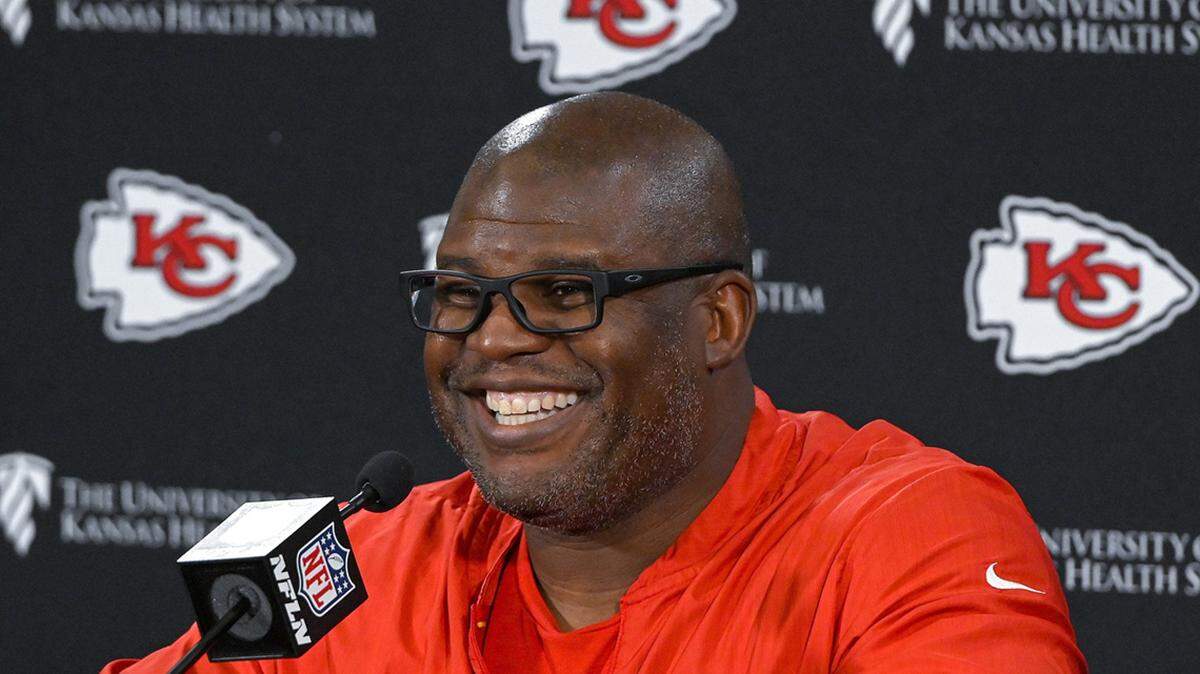
Some attempt to explain the disparity in hiring by suggesting the problem stems from a lack of qualified Black candidates, Sells said. But data show Black candidates were often the most experienced coaches in each pool of interviewees.
And while the NFL has recently shown a preference for making offensive coordinators into head coaches — disadvantaging Black coaches who are more prevalent among defensive coordinators — even that was not enough to explain the disparity, Piquero’s analysis showed.
Offensive Coordinator Eric Bieniemy, who helped the Kansas City Chiefs win the 2019 Super Bowl, has interviewed for more head coaching jobs than any other coach since 2015 — 14 in total — and has yet to be chosen.
Bieniemy, who is 52, is around the same age as the average head coaching hire from recent years, data show. And he had more years of NFL experience — based on the sum of his years playing and coaching in the league — than of any of the other candidates in at least three cases, data show. (One of those three jobs went to another Black coach.)
“Coaches that have had any success on any objective level — such as a consistent pattern of winning games, or getting into the playoffs, or a consistent pattern of putting a team on the field that is competing for a championship — there’s always some type of subjective reason why they just can’t get us [Black people] where they want to be,” Sells said.
“Attitude” and “ability to inspire in the locker room” were among the most common subjective reasons Sells hears cited.
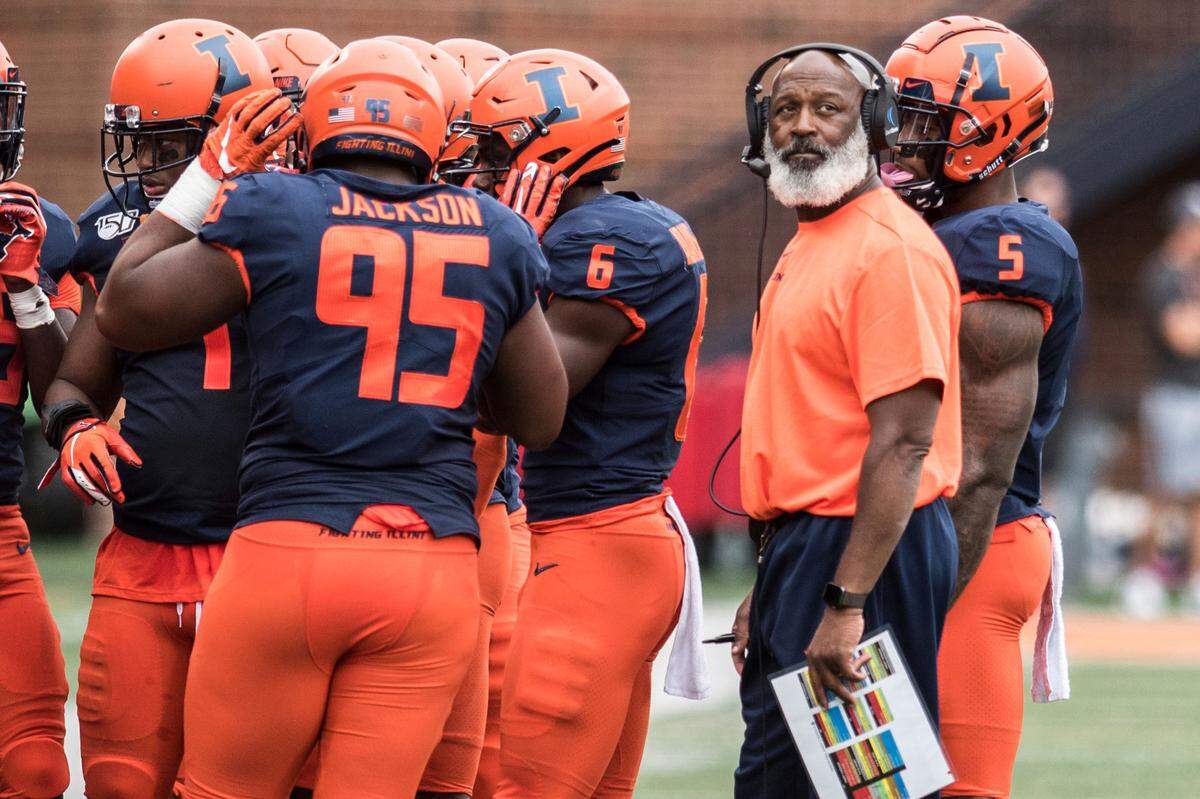
In 2020, the NFL considered a plan to grant incentives — like compensatory draft picks — for teams that hired minority candidates to fill head coaching vacancies. Amid pushback, the NFL diversity committee modified the plan, which was then adopted, to instead grant third-round draft picks to teams that lose minority assistant coaches when they become head coaches or general managers, and theoretically encourage teams to develop more minority coaches.
Historically, progress in the NFL has come less from the promise of carrot, Sells said, than from the threat of the stick.
“It took a lawsuit, brought by Brian Flores, to get two African-American coaches hired within just days of him filing that suit,” he said “There needs to be a remedy that allows for punishment if a qualified coach of color is denied the opportunity to coach.”
But even if a proportional number of black head coaching candidates were hired out of the total pool of candidates, only around 30% of head coaching hires in the past eight years would be Black, despite Black players making up 70% of the league. That also points to a pipeline problem, Piquero said. Black players are not ending up on the path to head coaching positions.
“We always got to think about a path forward when we see something like this,” Piquero said. “There’s a problem. How do we fix the problem?”
One step, he said, would be getting more young Black coaches en route to becoming offensive coordinators, either through mentorship programs or incentives. Shropshire of ASU said interventions should begin even earlier, when future coaches are players choosing what position to go out for.
“Be a quarterback,” Shropshire said. The path from there, he said, is clearest.
“Be a quarterback coach. Be an offensive coordinator. Be a head coach,” he said.
BEHIND THE STORY
MOREThe Miami Herald created a database showing candidates who interviewed for each NFL head coaching job filled since the beginning of 2015.
This statistical analysis was performed by Dr. Alexis Piquero, chair of the sociology department at the University of Miami. Dr. Piquero’s work focuses on racial bias in institutions, particularly when it comes to law enforcement. He has previous experience examining racial bias in the NFL.
The analysis was performed several different ways, using both the individual as a unit of analysis and the individual by year as the unit of analysis. While both produced results that were substantively the same, figures in the story are based on the latter, as it captures changes over time and better accounts for situations like that of Brian Flores, who was both hired (2019 Miami Dolphins) and not hired (2018 and 2022 hiring cycles). In that analysis, interviewees were counted once per annual hiring cycle. For example, if a coach interviewed for head coaching jobs in two different years, he would be counted twice. If he interviewed for two jobs in the same year, he counted only once. Controls included age, years of NFL playing experience and years of NFL coaching experience at the time of the interview, number of interviews the coach did that cycle, and whether they had been an offensive coordinator, defensive coordinator or head coach (includes interim head coaches) the previous season. The analysis did not control for win-loss record as those statistics are kept only for NFL head coaches and most interviewees were not previously head coaches.
The individual-level analysis simply analyzed whether or not an interviewee was ever hired as a head coach over the course of eight years, potentially underestimating the bias as a result. (Brian Flores was simply marked yes in that analysis.) Years of experience were averaged over time and previous position could not be accounted for as it often changed over time.
How the data were compiled
The Herald first collected a list of each vacancy from media reports. Then it used additional media reports to determine every publicly identified candidate who had interviewed for at least one of the jobs
Only candidates where an interview was confirmed as completed were counted. The Herald did not count declined interview requests or candidates who expressed no interest in the job.
Intern years are counted under NFL coaching experience.
Only final hires were counted as head coach hires. Candidates who rejected a position for a head coach job after getting an offer were kept as an interview candidate only.
Candidates who withdrew from consideration after being interviewed are included.
The coaches’ previous jobs, including whether they possessed head coaching experience, were determined from media reports, NFL team websites and statistics maintained by the website Pro-Football-Reference.com. Their years of playing and coaching experience were determined from Pro-Football-Reference.com.
Interim head coaches from the previous season are considered as having head coaching experience and are counted as head coaches the previous season.
Coaching positions in leagues outside the United States, including NFL-Europe, were not counted as NFL experience.
The designation “Other NFL Job” is used for other coaching positions (outside of head coach, offensive coordinator and defensive coordinator) and playing positions in the league.
Total NFL experience is the sum of coaching and playing experience.
The Herald used two primary sources to determine the race of the head coaching candidates: the NFL’s annual Diversity and Inclusion Report and data collected by Arizona State University’s Global Sport Institute 2021 NFL Field Study Update. In the case that the two sources differed, the NFL classification was considered primary. In cases where those sources did not identify the race of a head coaching candidate, the Herald sought instances in news reports or social media where the candidates self-identified their racial identity. Failing that, the Herald relied on news reports that identified the race of candidates. If no sources existed, the candidate’s race was marked “unknown.” (Luke Getsy is the only coach on the list whose race could not be verified.)
All non-white coaches were considered “minorities” for the purposes of this analysis. Black coaches were all coaches marked “African American” by the NFL and GSI and all those who self-identify as Black or who have been identified as Black in voter registration or court records. Mike McDaniel, recently hired as a head coach for the Dolphins, is listed as “African American and white” in the GSI data and is counted as a minority for the purposes of the Herald’s analysis. However, he was not included in the analysis of Black coaches specifically as he has dismissed questions about whether he considers himself Black by saying his father was Black, but he identifies himself “human.”
This story was originally published February 13, 2022 at 1:07 PM with the headline "White interviewees had 3x better odds of being hired as NFL head coaches, new data show."