5 NASCAR rule changes ahead of the 2026 season. One will impact Daytona 500
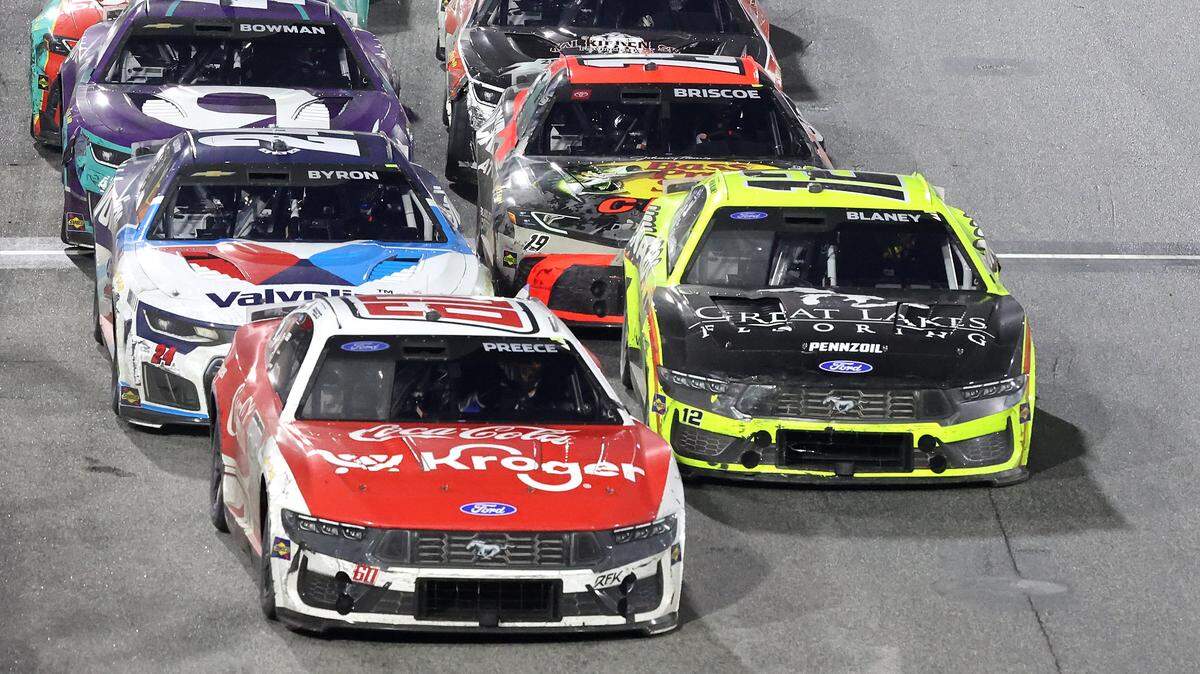
NASCAR hosted its annual rules briefing Thursday at its research and development center in Concord.
Most of the rules changes weren’t all that revelatory. The big procedural adjustment to the NASCAR postseason — the return of The Chase — was announced in January. But there were still consequential tweaks announced on Thursday.
Here’s a look at five key rule changes.
Adjusting the In-Season Challenge
The NASCAR Cup Series is maintaining its “In-Season Challenge” — a 32-driver, single-elimination tournament that takes place over five races in the middle of the season. The driver with the best finish in each matchup advances to the next round. The ultimate winner earns $1 million.
This year, the five races making up the In-Season Challenge on TNT Sports are Sonoma, Chicagoland, EchoPark Speedway, North Wilkesboro and Indianapolis. Unlike last year: Seedings for the challenge will be set by points position following the race at Pocono on June 14 — two weeks before Sonoma.
Driver age for each series
NASCAR announced that for the O’Reilly Series at tracks 1.25 miles and shorter — as well as on all road courses — the minimum age will drop to 17 (from 18). This is similar to the rule in the NASCAR Truck Series, where the minimum age on those tracks is 16.
NASCAR leaders made this change as a result of requests from team owners wanting to develop young drivers.
Adjusting the ‘Open Exemption Provisional’
NASCAR is bringing back its “Open Exemption Provisional,” like it introduced last year during the 2025 Daytona 500. The OEP idea effectively opens a spot for non-full-time Cup drivers who have immense racing experience and accomplishment; it, in effect, was a way in which accomplished drivers can take part in premier NASCAR events.
The OEP will be applied only if more than 40 vehicles attempt to qualify for the event, like last year. The difference? This year, the OEP will start the field at P41, and teams using an OEP will be ineligible for points and prize money for that event. NASCAR has full discretion to deem certain events ineligible for the OEP.
Jimmie Johnson, the seven-time Cup Series winner, was the lone OEP applicant for this year’s Daytona 500. That means he will get the distinction and is guaranteed entry into the Great American Race, officials said Thursday. NASCAR is still accepting applicants for OEPs ahead of the San Diego Street Race.
Some nuance to the Fastest Lap Point
NASCAR instituted a rule in which a team could earn a point for putting together the “fastest lap” of the race. The motorsport sanctioning body made a slight clarification this year: Once a car enters the garage during the race, that car will no longer be eligible to record the fastest lap.
Such a stipulation prevents teams from being rewarded and/or incentivized from heading into the garage.
Simplifying Daytona 500 qualifying
This might not be the rule change that will stick around the longest, but it will impact the teams and their fans the soonest.
The long and short of it: There are always several Open cars needing to qualify into the Daytona 500. This year, there are 36 chartered cars, meaning there are four “Open” slots (not counting the aforementioned OEP).
And how are those four Open slots determined? Starting in 2026, the top two open cars in single-car qualifying — Wednesday’s event — are locked in. The remaining Open cars then race for one spot available in each Duel race; whoever is fastest among the “not-already-locked-in” Open cars in each Duel race gets a spot in the Daytona 500.
In other words, the four Open slots will be filled by:
- Fastest on speed in single-car qualifying among Open cars
- Second-fastest on speed in single-car qualifying among Open cars
- Top Open car in Duel race No. 1 (that didn’t already qualify on speed)
- Top Open car in Duel race No. 2 (that didn’t already qualify on speed)
Other notes
- When it comes to the postseason, NASCAR made two things clear about The Chase. (1) If there is a tie at the end of the Chase, the tiebreaker goes to the best finish in the 10-race Chase. And (2) “If a waiver is granted for reasons other than a NASCAR-initiated and/or approved absence, the driver will begin The Chase with 2000 points (or 2020 and 2030 in the Truck Series and the O’Reilly Series, respectively).
- There are no further changes to NASCAR’s short-track package at the moment beyond the car’s newly increased 750 horsepower. As announced earlier this offseason, at all tracks under 1.5 miles or on road courses, the package will include 750 horsepower.
- A-Post Flap — a device attached to the car that has worked to keep cars grounded — will be mandatory at every NASCAR Cup Series event.
This story was originally published February 6, 2026 at 5:55 AM with the headline "5 NASCAR rule changes ahead of the 2026 season. One will impact Daytona 500."