When you remember NASCAR’s Greg Biffle, think about this flight instead
AI-generated summary reviewed by our newsroom.
- Former NASCAR driver Greg Biffle died in a plane crash in Statesville, NC Thursday.
- Following retirement, Biffle flew dozens of helicopter missions after Hurricane Helene.
- Author suggests NASCAR should establish an annual award in Greg Biffle’s name.
Greg Biffle, who died in a tragic plane crash Thursday morning in Statesville, was a superb NASCAR Cup driver who won 19 times at the sport’s top level.
I would argue that his greatest victory, however, was his relief work in the aftermath of Hurricane Helene, when Biffle made dozens of humanitarian flights to western North Carolina in his helicopter to do whatever work that needed doing.
Those are the flights I hope we can ultimately remember him for — particularly one of them — and not the one that took his life and the lives of six other people Thursday, according to Iredell County Sheriff Darren Campbell. Also among the deceased were Biffle’s wife Cristina; his daughter Emma and his son Ryder.
Biffle was only 55 when he died in Thursday’s plane crash. He was about to celebrate his 56th birthday next week, two days before Christmas.
Like so many of NASCAR’s top drivers, Biffle came from elsewhere (in this case, the Pacific Northwest) and then settled in the Charlotte area. He could drive anything and did, working his way through the ranks until he became a full-time Cup driver from 2003-2016. His best season came in 2005, when he won six times and had his best shot at a season championship, finishing second to Tony Stewart.
How good was he as a driver? In 2023, in conjunction with its 75th anniversary, NASCAR named Biffle one of its top 75 drivers of all time. Not only did he win those 19 races in the Cup series (including twice at Darlington), he also won 20 times in the Xfinity Series and 17 in Craftsman Trucks. He drove almost his entire career for car owner Jack Roush, and it seems likely that one day Biffle will join Roush in the NASCAR Hall of Fame in Charlotte.
But Biffle didn’t like to just stay on the ground and go fast. He liked the air, too. As his Instagram biography read: “NASCAR driver and I love anything with gas and wheels.” A number of NASCAR drivers have become pilots over the years, and Biffle was one of the more experienced. This made him ideally suited for Helene rescue missions, since so much of the damaged terrain was mountainous and so many people were stranded in hard-to-reach areas.
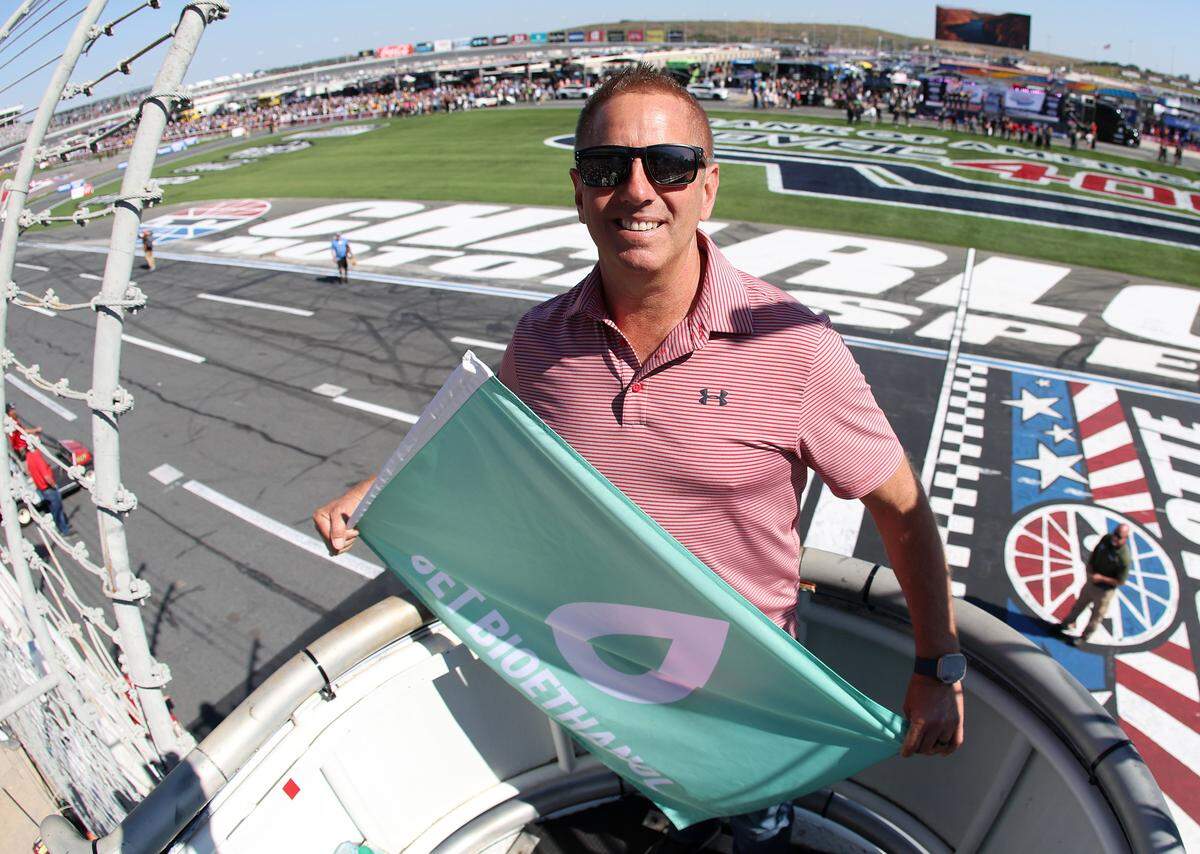
As he said in a 2024 story published by NASCAR’s website: “The feeling you get when you win a race, you can only ask drivers, right?... That’s the feeling you get when you’re able to help people in need.”
During one of his helicopter missions — the one he would later call his most “famous” — Biffle saw a storm victim who was using the reflection from a vanity mirror out of a bathroom as a distress call from the bottom of a ravine. Biffle saw the reflection out of the corner of his eye and decided a difficult landing in the canyon was worth trying.
As Biffle posted on X at the time: “6 attempts to land due to difficulty but we got there — got him a chainsaw, EpiPens, insulin, chicken food, formula, gas, 2 stroke oil, and sandwiches premade from Harris Teeter before we left.”
These missions continued for weeks for Biffle, who said at the time he had had “a lot of seat time in the helicopter, more than I ever would have imagined in my life.”
Why did he keep going?
“There’s communities over there that we discovered that are just devastated,” Biffle told NASCAR.com. “The reason why I’m still going is people are still in need, and I don’t want to leave a soldier behind. That’s why I’m still at it.”
Biffle got help in those rescue efforts from his wife Cristina, along with many other race teams. As he said on a YouTube video he made roughly three months ago, a year after Helen: “I was blessed with the opportunity to have the resources, have the time and have the money to go help another family that was stranded in the mountains of North Carolina.”
Helping one family turned into helping hundreds, and along the way Biffle became something of a pied piper to other people who owned helicopters and wanted to help.
“It was so great to see everyone come together,” said Biffle, who based his operation out of Statesville’s regional airport — the same one where Thursday’s crash occurred.
Biffle wasn’t perfect. No one is. But he had the heart of a true humanitarian, and if I were NASCAR I’d name a special award for him and start giving that one out immediately to people who make a difference in our communities. His death and the death of his beloved family members was sudden and very public, and that doomed flight will be hard to erase from people’s minds for a while.
But when you think about it, try to imagine that other flight instead. A helicopter. Western North Carolina. Six attempts to land. Life-saving medicine.
That’s the Greg Biffle we should remember.
This story was originally published December 18, 2025 at 4:39 PM with the headline "When you remember NASCAR’s Greg Biffle, think about this flight instead."