Humpy Wheeler, a NASCAR visionary who cemented Charlotte as a racing hub, dies at 86
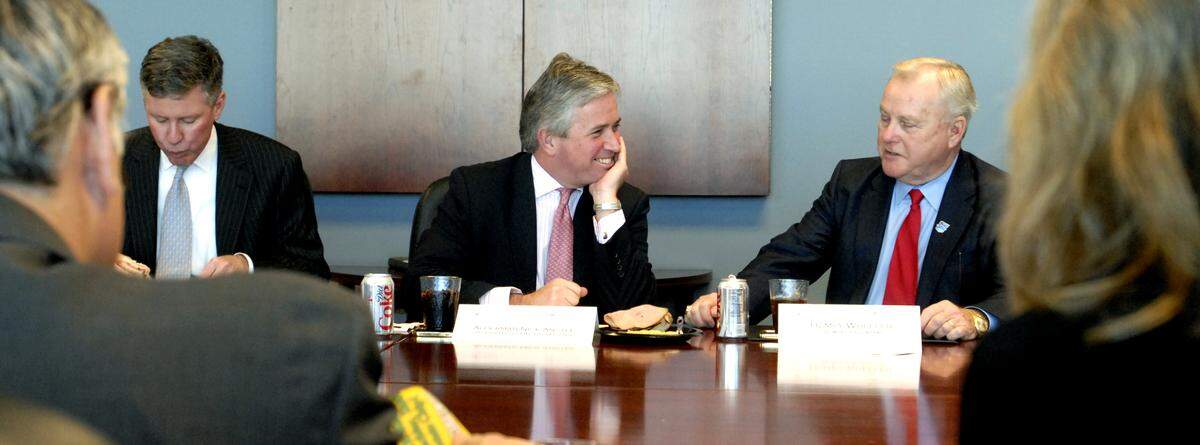
Humpy Wheeler, the longtime president and general manager at Charlotte Motor Speedway whose creativity helped lift NASCAR into the nation’s consciousness, has died. He was 86.
Howard Augustine “Humpy” Wheeler Jr. passed away peacefully of natural causes Wednesday night and was surrounded by his loving family, according to a release from Speedway Motorsports, his longtime employer.
The Belmont, N.C., native will be remembered for his love of stock car racing and his acumen for promoting races. Those promotions — which included putting on pre-race stunts such as boxing matches, three-ring circuses and highflying stunt car acts — yielded him the name the “P.T. Barnum of Motorsports.”
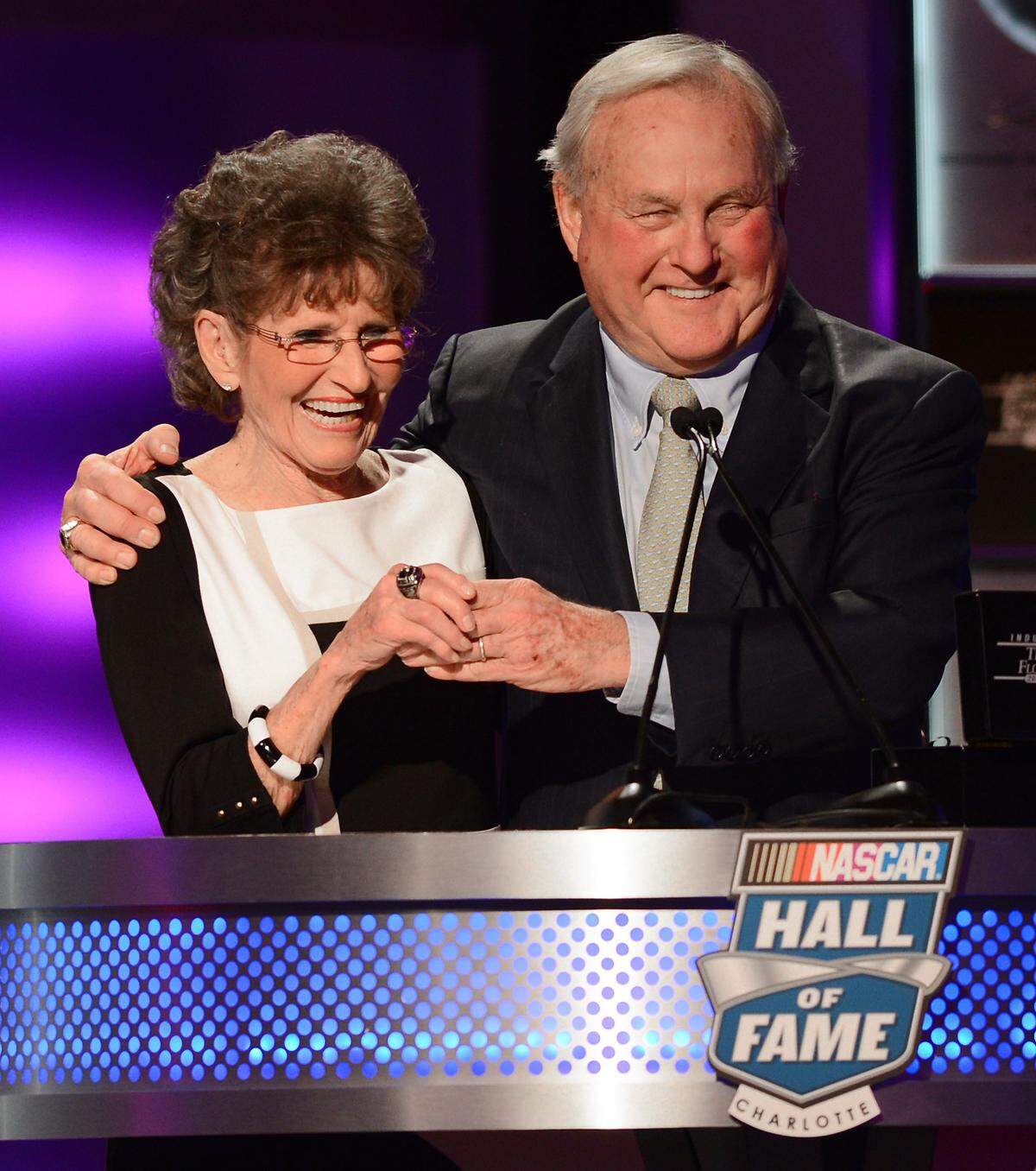
He was inducted into the National Motorsports Press Association and North Carolina Sports Halls of Fame in 2004, the International Motorsports Hall of Fame in 2006 and the Motorsports Hall of Fame in 2009. Earlier this year, the NASCAR Hall of Fame announced Wheeler as the recipient of the Landmark Award for outstanding contributions to NASCAR.
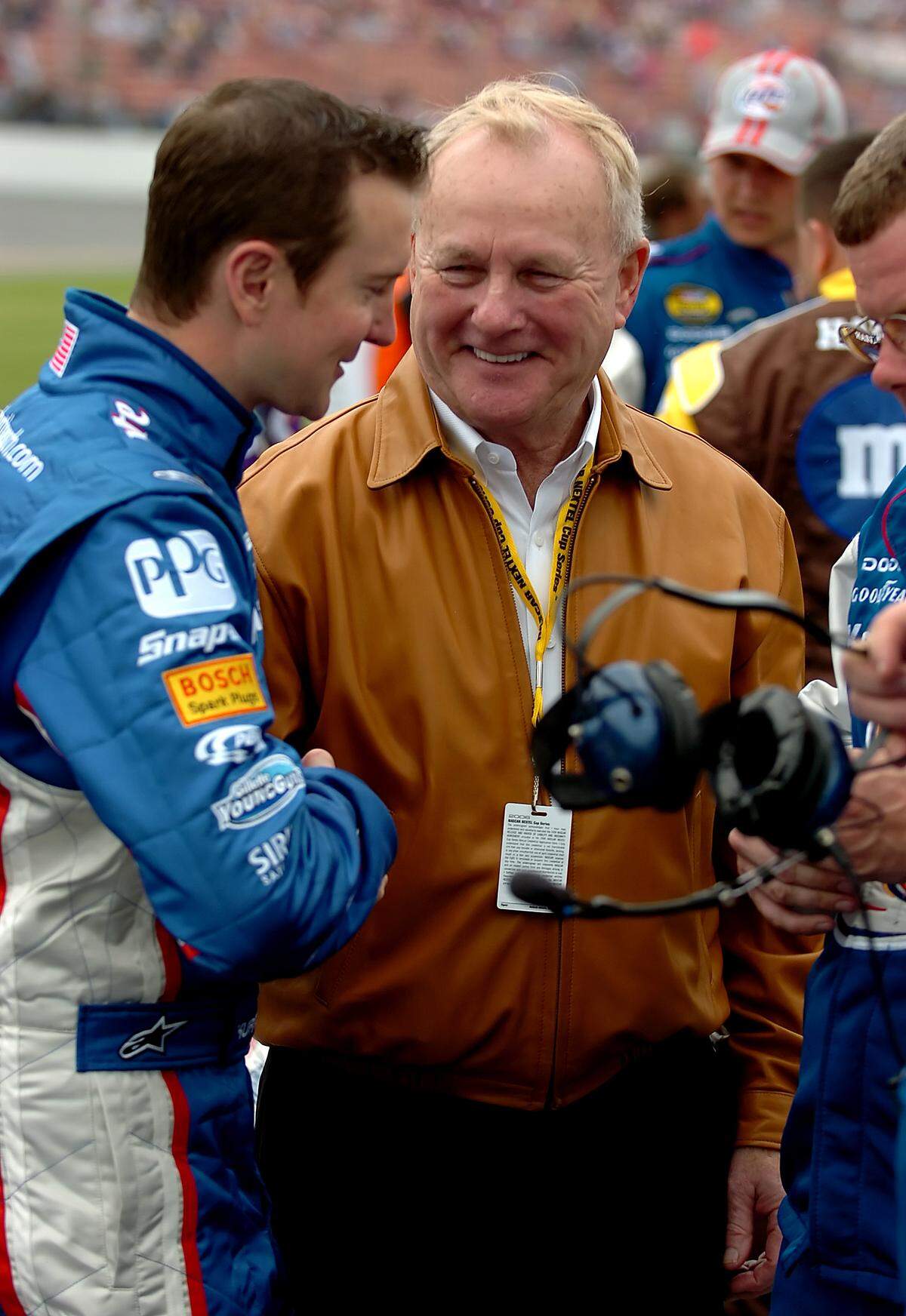
“Humpy Wheeler was a visionary whose name became synonymous with promotion and innovation in our sport,” Jim France, NASCAR chairman and CEO, wrote in a statement Thursday morning. “During his decades leading Charlotte Motor Speedway, Humpy transformed the fan experience through his creativity, bold ideas and tireless passion. His efforts helped expand NASCAR’s national footprint, cement Charlotte as a must-visit racing and entertainment complex and recently earned him the NASCAR Hall of Fame’s prestigious Landmark Award for Outstanding Contributions to NASCAR.
“On behalf of NASCAR and the France family, I extend my heartfelt condolences to the Wheeler family and all who were touched by his remarkable life and legacy.”
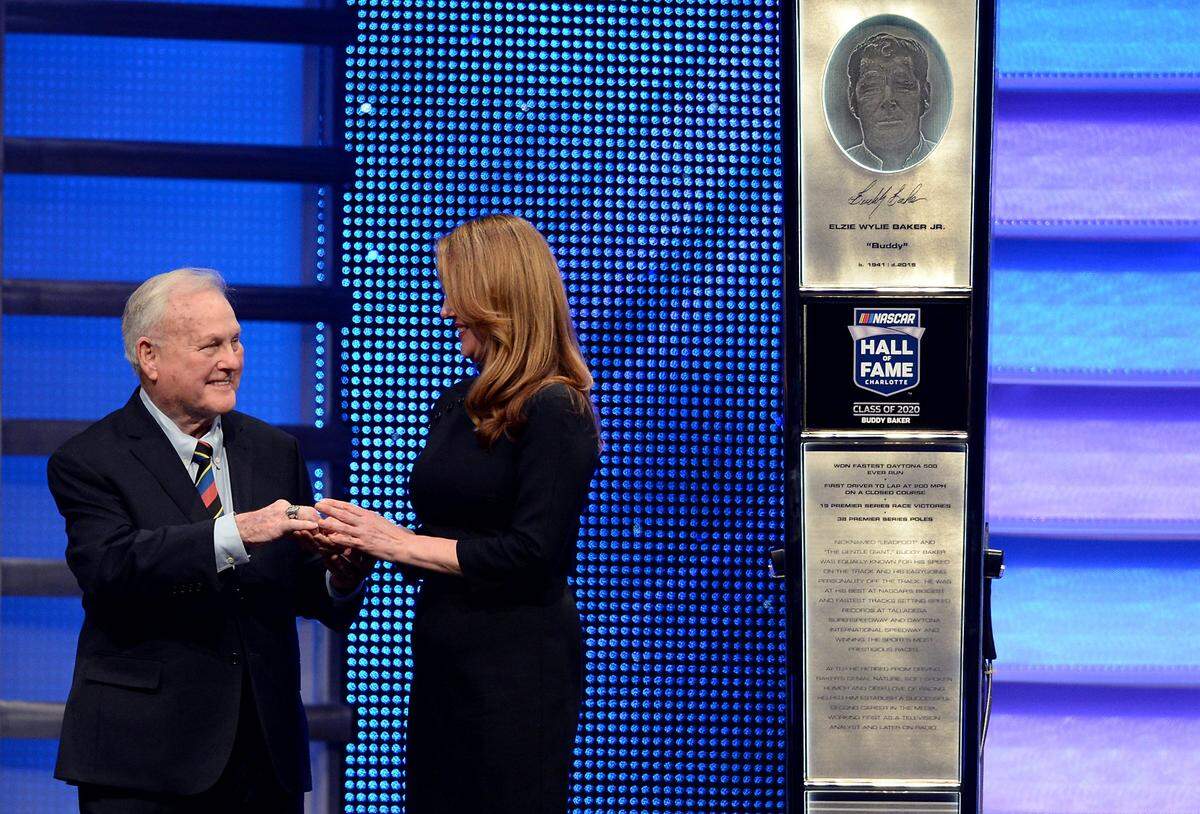
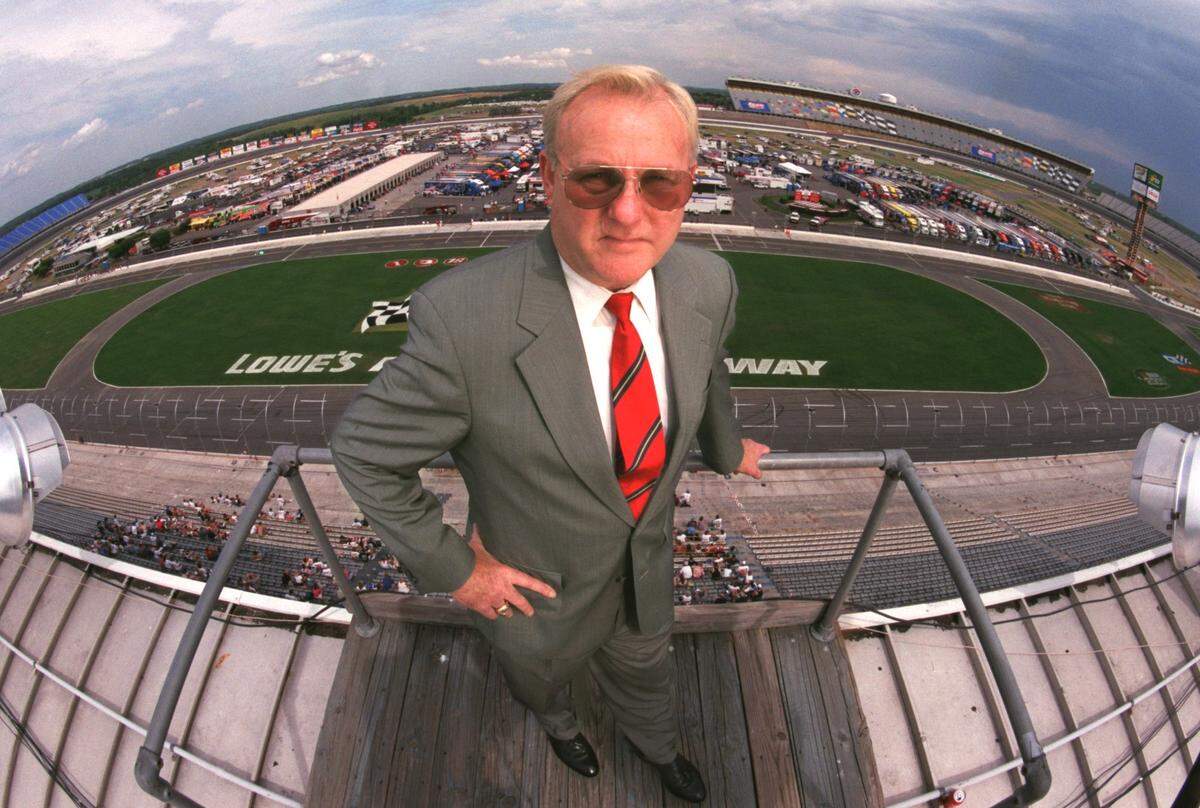
Wheeler spent 33 years as president of Charlotte Motor Speedway, the nearly 2,000-acre facility that includes a famed 1.5-mile superspeedway, a 2.25-mile road course, a sixth-tenths-mile karting track and a quarter-mile oval. He worked hand-in-hand with the late leader of Speedway Motorsports, Bruton Smith, to transform the venue into a world-class facility that attracted not only a wide range of fans but also myriad corporate sponsors. Wheeler considered Smith a close friend — “a force to be reckoned with” and someone who was as smart as anyone he’d ever met with “the ability to raise money like nobody in racing ever had,” he’d later tell The Observer.
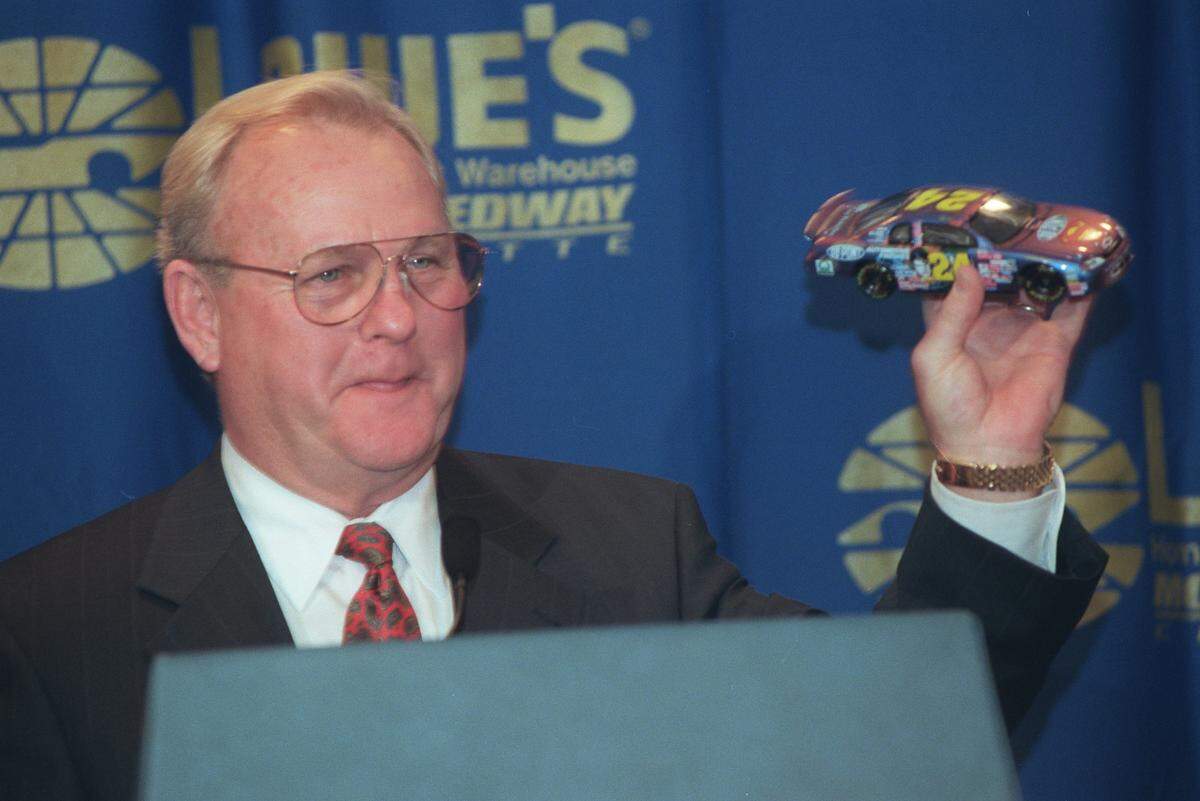
Among Wheeler’s many accomplishments: He worked diligently to bring sports car racer Janet Guthrie to the 1976 World 600, where she became the first woman to qualify for a race at a NASCAR superspeedway. He supervised the installation of a first-of-its-kind lighting system at the track, which helped deliver the sport’s first night race in 1993. He also was integral in the facility’s first major naming-rights agreement when he established an 11-year partnership with Lowe’s; CMS was called Lowe’s Motor Speedway from 1999 to 2009.
But again, what endures is his risk-taking; his sense of humor that connected with race fans; his revolutionary promoter’s brain that kept finding the right attention.
Wheeler had school buses attempt to jump the length of football fields before races. He introduced a metal-smashing robot called Robosauraus that would crush cars and breathe flames. He’d ride elephants and stick his head in a tiger’s mouth to promote a race. He once had hot dog-eating champion Joey Chestnut help him promote the Bank Of America 500.
He also once had a dead shark delivered to the NASCAR garage as a play on Darrell Waltrip’s “Jaws” nickname, according to newspaper reports.
“Cale (Yarborough) and Darrell and NASCAR all hated it,” Wheeler later said about the shark stunt. “So I knew I’d done something right.”
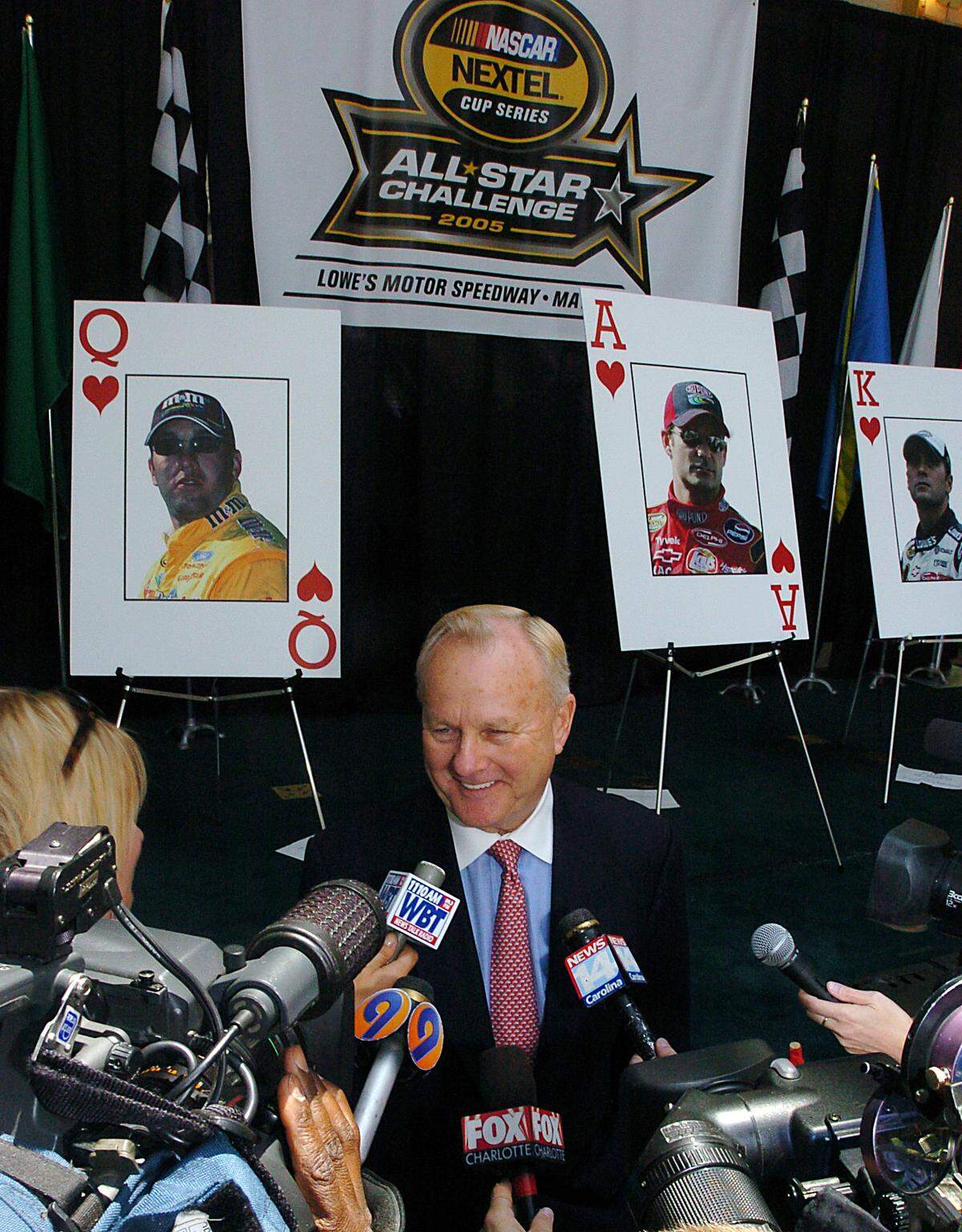
Even former North Carolina governor Roy Cooper has a story about Wheeler. When Cooper served as attorney general, he held a meeting at the NASCAR Hall of Fame in Charlotte in which he invited other attorneys general from around the country to highlight the state. Cooper added Wheeler to the invitation to “kick this thing off for us.”
“I should’ve known,” Cooper said, recounting the tale in 2021. “Humpy gets up with all these law enforcement officers out there and pulls out of his bag. He’s got his mason jar of clear liquid (moonshine). He puts it on the table and he said, ‘Ladies and gentlemen, ‘This is how it all started.’”
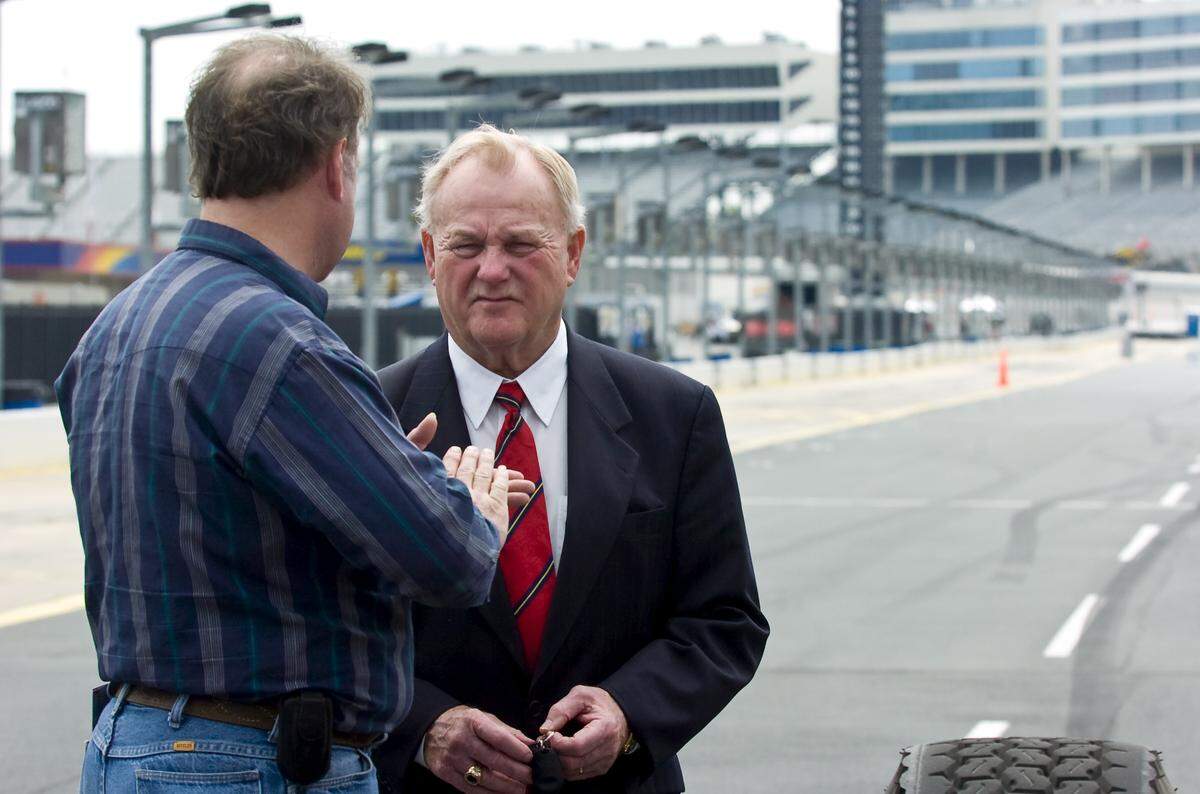
Humpy Wheeler remained a stock car racing promoter after retirement
By the time Wheeler retired from CMS in 2008 — after that year’s Coca-Cola 600, his favorite race of them all — he’d not only helped expand NASCAR’s national presence but had helped Charlotte live up to the name he gave it: the “Racing Capital of the World.”
But he wasn’t done with racing and his love for promoting it. Far from it.
In 2008, Wheeler mused about having the speedway host open auditions for “American Idol,” which was at the pinnacle of its popularity at the time. But Wheeler, ever the consummate showman, said that he had no interest in trying out himself for the television series: “That’d put the show back 25 years.”
But there was a time that Humpy went Hollywood. In May 2006, he hosted the world premiere of the Pixar movie “Cars” at the speedway. Any why not? Wheeler had not only befriended the director, John Lasseter, he also had landed a small role in the hit movie — that of Tex, the owner of Dinoco who sponsored the reigning Piston Cup champion.
Lasseter had transformed Wheeler into a ‘57 Cadillac convertible from Texas, complete with steer horns on the hood.
In conversations with the director, Wheeler provided NASCAR insights that lent authenticity to the film, Lasseter told The Observer at the time, from the fans in motorhomes to the wood-paneled owner’s box and “Redneck Hill,” a popular camping section between Turns 1 and 2.
“I just love Humpy,” Lasseter said. “I kept thinking, ‘I gotta use this guy’s voice.’ He inspired me about this world.”
Wheeler described his own acting technique as “contained bedlam.” Asked whether he would “go Hollywood,” Wheeler chuckled and said, “You don’t have to worry about that.”
He did, however, have at least two other film credits. That included “Born to Race” from 1988, with George Kennedy and Joseph Bottoms. Wheeler got a last-minute call to fill the role of a track operator. He attended the premiere and was surprised to hear “someone’s else’s voice coming out of my mouth.”
In 1971, he was in something called “Jump,” also known as “Fury on Wheels,” with Judd Hirsch and Conrad Bain (the dad from TV’s “Diff’rent Strokes”). Looking back, Wheeler gave the movie “a full one star. It absolutely didn’t work.”
‘If the community doesn’t embrace you ... you’re not going anywhere’
Wheeler was never far from the enterprise he loved. In a Charlotte Observer story from 2023, right before that year’s Coke 600, Wheeler explained that he was still everywhere NASCAR was, including in a suite above the fourth turn at North Wilkesboro Speedway at that year’s NASCAR All-Star Race, the first Cup event at Wilkesboro since 1996. He loved the idea of the sport going to the streets of Chicago, even if he preferred oval racing to road-course racing.
His stories of the past, of finding NASCAR funding and lifting NASCAR into a national venture, felt untouched by time.
“If the community doesn’t embrace you, no matter what you have, you’re not going anywhere,” he told The Observer. “I remember the first time I spoke to the Chamber of Commerce board. This was in ‘76. It’s traditional that you give the speaker some sort of gift. It was Luther Hodges who was running what is now Bank of America. And he was the chairman of the Chamber.
“And he said, ‘Come forward, Humpy, we got a gift to give you.’ And so I walked up there wondering what they were going to do. And he gave me a pack of Pabst Blue Ribbon and two pairs of white socks, and I thought going back to the track that day, ‘Boy, you got a longggg way to go.’”
And the sport traversed that long way into the venture it is now.
“He massively impacted the growth and excitement of the entire sport,” Dale Earnhardt Jr. wrote in a post on X Thursday morning. “Helped tons of drivers and other individuals obtain opportunities that changed lives and careers. Always a friend and supporter to the industry. RIP Humpy.”
Wheeler’s financial acumen served him well in his professional life after racing. Wheeler was actively engaged in Cabarrus County’s civic life, including serving on the county Economic Development Corp. board.
In 2004, as the EDC was overhauled and put under the control of the Cabarrus County Chamber of Commerce, Wheeler spoke of the impact of development across one of the fastest-growing counties in the country. He was one of several EDC members who floated the idea of a moratorium on new construction to help get a handle on the area’s growth.

A life in sports before NASCAR
Wheeler’s executive skillset was honed over time and was steeped in a knowledge of sports.
Wheeler’s father, Humpy Sr., was an athletic director at Belmont Abbey College and Wheeler was said to have run laps around the Robinwood Speedway dirt oval growing up. As a teenager, Wheeler won the Carolinas Golden Gloves boxing competition. In 1992, he was inducted into the Carolinas Boxing Hall of Fame, one of the many Hall of Fame honors he accumulated before he passed.
Wheeler attended the University of South Carolina on a football scholarship and graduated in 1961 with a degree in journalism. He transitioned into a career in motorsports, and by 1975, was named general manager and president of Charlotte Motor Speedway under Smith.
Wheeler is survived by his wife of 63 years, Pat; their three children, Patti Wheeler (Leo Hindery), Tracy Hardy and Trip Wheeler (Jacqui); and their four grandchildren, Jackson Marchant, Adele Marchant, Austin hardy (Donna), Adam Hardy and one great-grandchild August Hardy. His sisters, Angie and Mary, survive him, too.
The public is invited to join in honoring Wheeler’s life and legacy for a vigil at 5:30 p.m. Monday at Saint Gabriel Catholic Church in Charlotte and then for the funeral and mass reception on Tuesday at 11 a.m. at the same venue. In lieu of flowers, the family has requested donations be made in memory of Wheeler to the Belmont Abbey College Motorsports Program, which Wheeler helped launch more than 20 years ago.
Alex Andrejev and Adam Bell contributed to this report.
This story was originally published August 21, 2025 at 10:46 AM with the headline "Humpy Wheeler, a NASCAR visionary who cemented Charlotte as a racing hub, dies at 86."