‘It was a duty.’ What happened at Rockingham after Dale Earnhardt’s sudden death
A racecar driver’s phone rang late on a Wednesday night. He was summoned to a race shop. His boss, one of the most successful race team owners in NASCAR, had a question for him. The driver knew what the question was. Before the driver left, he told his wife he knew he had to say yes, and he knew as a result things would never be the same.
That day was Feb. 21, 2001. That driver was Kevin Harvick. That race team owner was Richard Childress.
And that question was an unthinkable one.
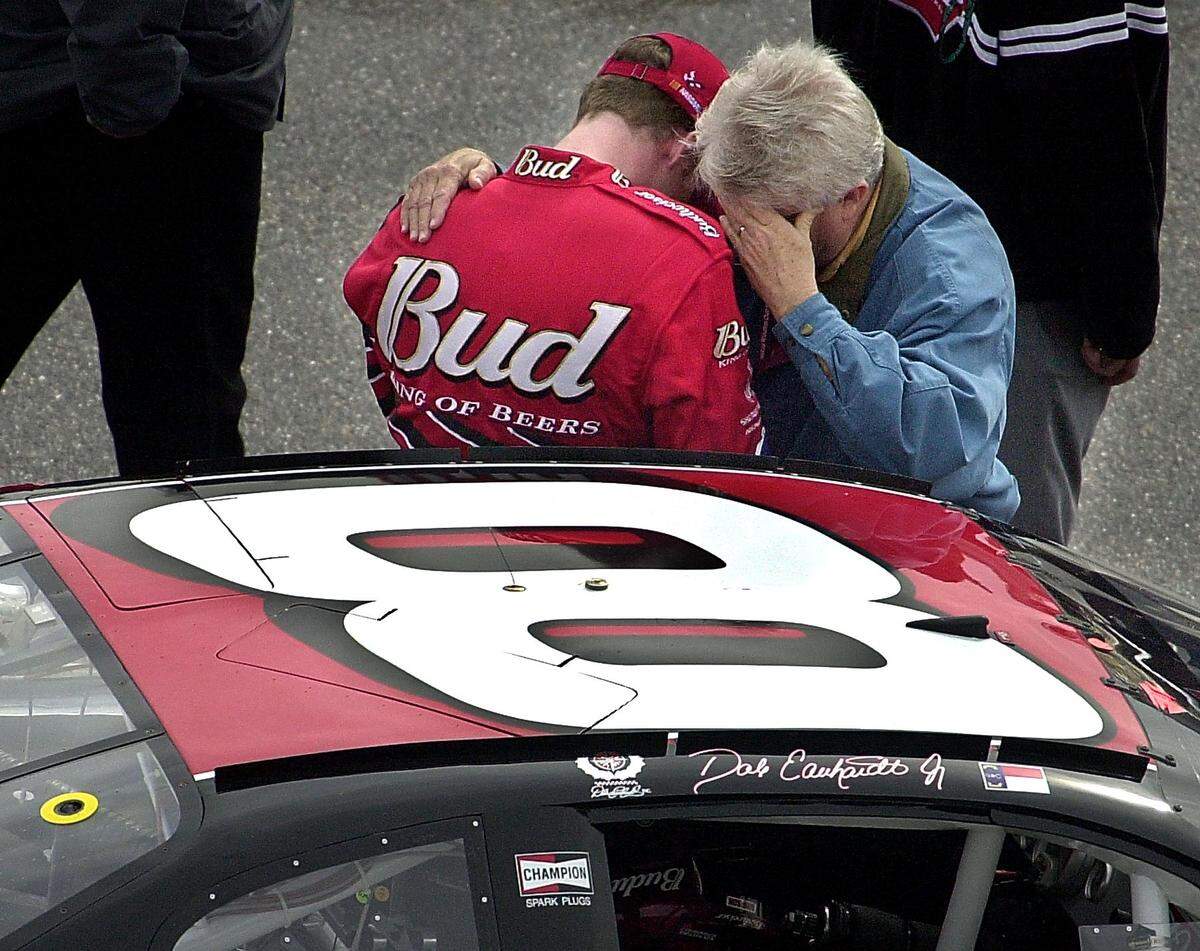
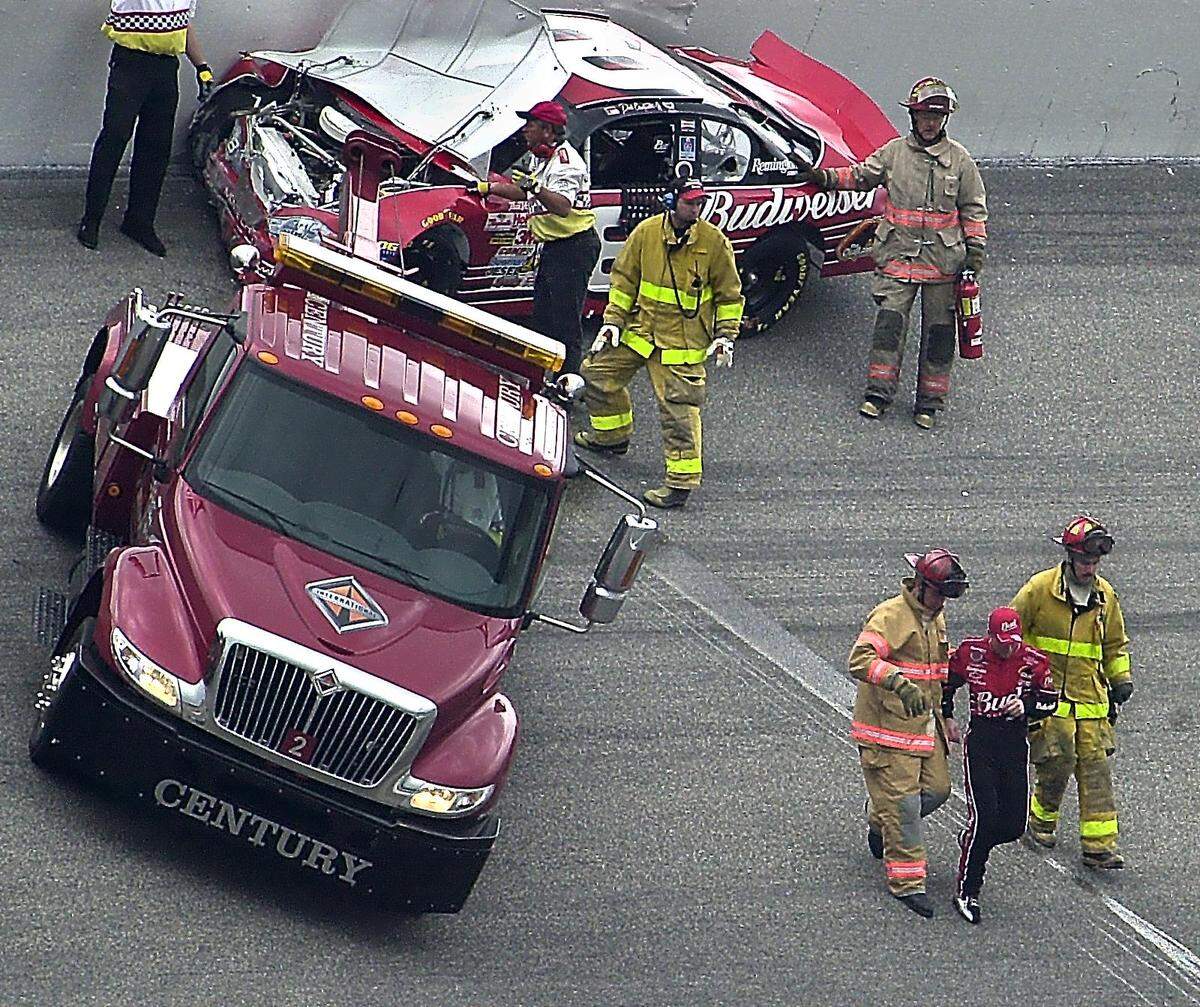
Three days prior, Dale Earnhardt, the sport’s superhero and antihero and transcendent phenom all in one, wrecked into the wall on Turn 4 on the last lap of the Daytona 500. He never got out of the car. His death — on the battleground of the biggest stage in American motorsports — shook all of NASCAR and reverberated across the nation. It left a fan base in mourning, a sport at an inflection point, a group of sponsors in limbo, a TV partner with an unenviable task, a tightly knit community of drivers and teams wondering what next to do.
And in the thick of the rubble, there Harvick was, on a Wednesday night, walking into his fate. Harvick was a 25-year-old Busch Series rising star then. There was a plan laid out for him: Race all of the Busch Series in 2001, mix in some Cup appearances here and there, and pave the way for a long Cup career, under the tutelage of Earnhardt, the kind of baton-pass in sports as old as time. But in February 2001, that plan was suddenly over. A new one emerged. It had to.
“We feel like we need to race,” Childress eventually told Harvick that night. The owner was flanked by Bobby Hutchens and Kevin Hamlin, fellow RCR employees, and had a bottle of Jack Daniels nearby. The three of them were despondent but sure. “This is what I told Dale I’d do.”
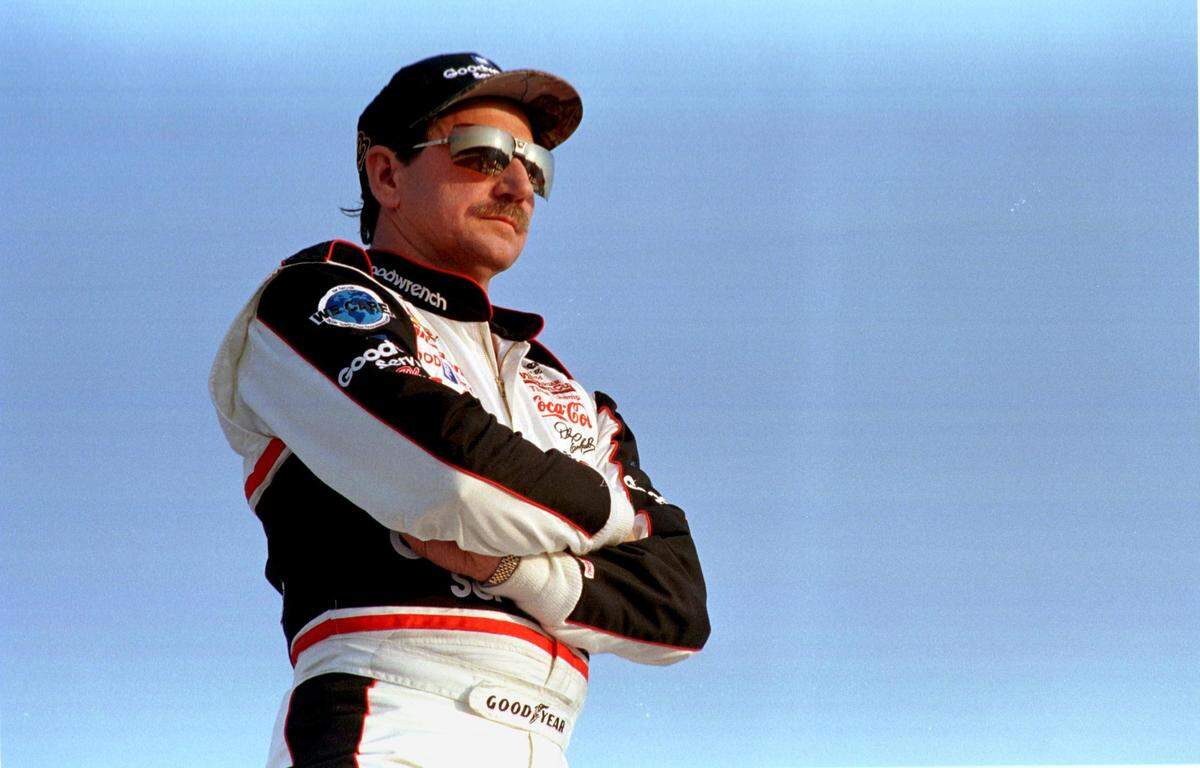
They had someone else ready to step behind the wheel of the white No. 29 car that upcoming weekend in North Carolina Speedway at Rockingham if need be, a veteran in Rick Mast, who had a previous racing relationship with Hamlin.
But Childress made his sentiment clear: “We feel like you’re the guy to do it.”
“It was a duty,” Harvick told The Charlotte Observer. “Those are the types of scenarios where you feel like you have a responsibility to keep all that together.”
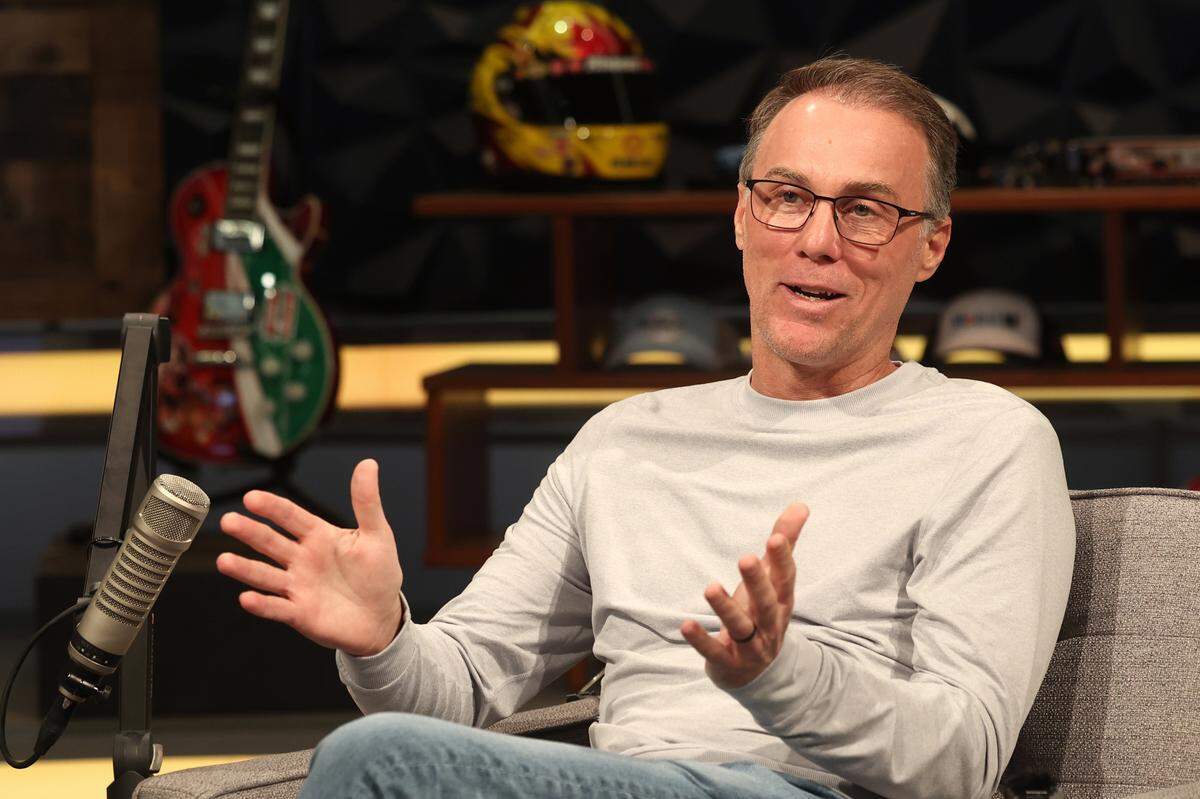
Telling this story now, 24 years later, his legs crossed in a pristine FOX broadcast studio in Charlotte where he’s in his second season as a NASCAR analyst, it’s difficult to imagine what was required of Harvick and the sport of NASCAR to “keep all that together.” The imagining is made more difficult when you consider everything started two days later, when teams descended on a 9,000-person town in the sandhills of North Carolina to commence a NASCAR race weekend that the sport might strain to remember but will never forget.
Somehow, Harvick, now 49 and a Cup champion with a legacy that goes beyond the stats that should warrant first-ballot-Hall-of-Fame consideration, marched on to Rockingham.
Somehow, too, did the rest of the sport.
As a result, Rockingham has an inextricable place in NASCAR’s story. If its long history on the Cup schedule from 1965 to 2004 didn’t do it alone — as a place where Richard Petty and Jeff Gordon and countless others clinched championships — the February 2001 race seals it so. And this week, NASCAR is returning to the North Carolina racetrack after years of desolation and renovation and revitalization; a Truck Series race, which FOX is broadcasting, will run Friday, with an Xfinity Series race on The CW slated for Saturday before Easter Sunday.
Ask anyone who was there that 2001 race, and they’ll almost certainly say time and emotion has blurred some details. That goes for Richmond County natives who were there, and for the drivers who raced, and for the newspaper reporters who told the story. That goes for the FOX Sports officials who had to navigate the network’s first season broadcasting NASCAR, a big deal for a sport on the rise. That goes for then-NASCAR president Mike Helton. That goes for Harvick.
The significance of that February 2001 race is lost on none of them.
“When you lose arguably the most popular driver and certainly the most successful active driver in a horrible crash on the last lap of the biggest race of the year, the sport’s gonna change forever,” said Mike Joy, the play-by-play FOX broadcasting legend, who was the voice of that 2001 season as he continues to be today.
“And it did for all of us in the aftermath of Dale’s death. And I think that’s where this story starts.”
The decision to go to Rockingham at all
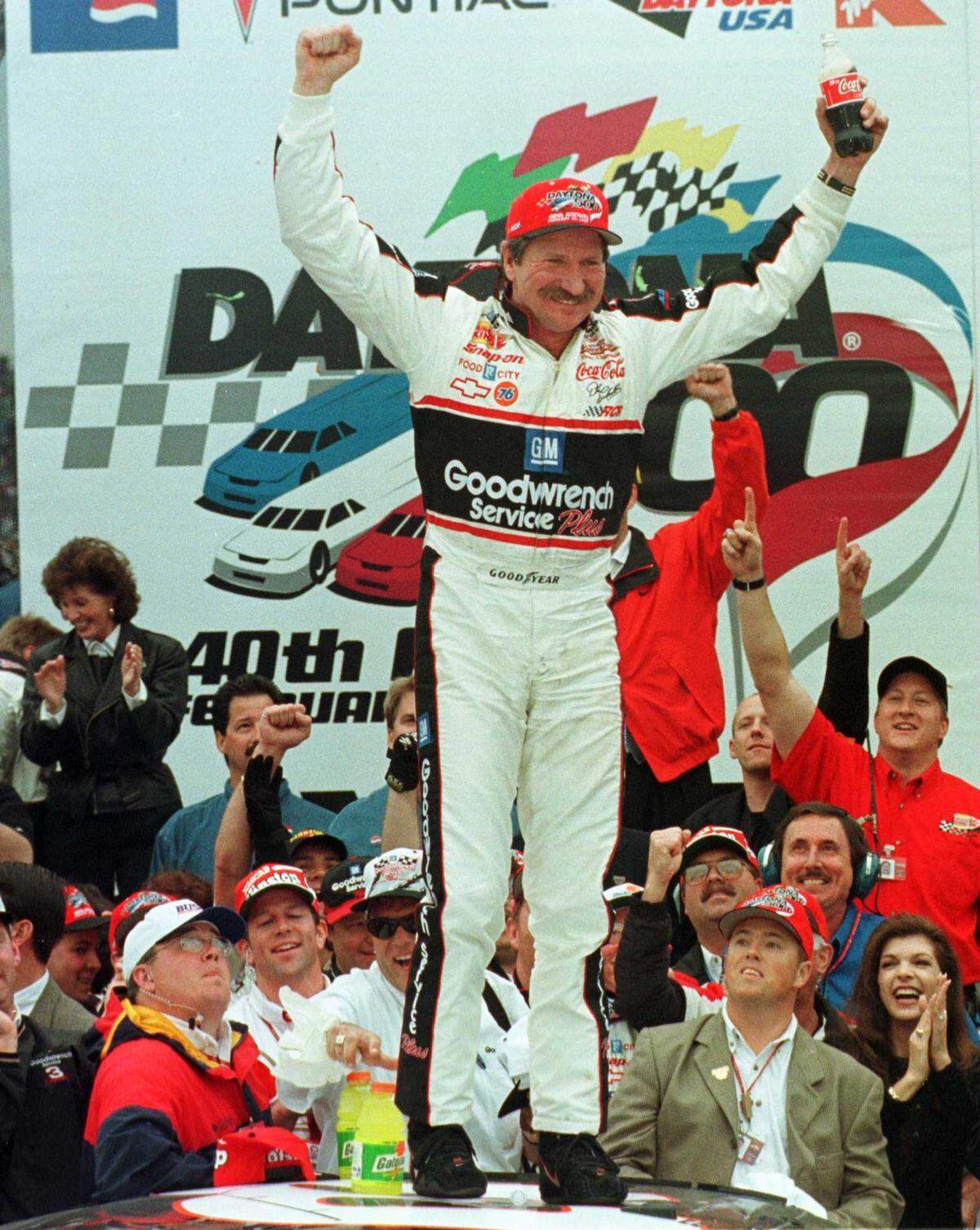
After the tragedy that occurred in the 2001 Daytona 500, some remember there being discussion about the possibility of pausing the season. But NASCAR officials decided the season ought to go on at then-named North Carolina Speedway and to race that year’s Dura Lube 400. According to those who lived it, that was the right thing to do — however difficult it was.
Mike Helton, NASCAR president from 1999-2015: “Monday morning after the Daytona 500, there were a lot of thoughts and questions in your head. And down here in Daytona, we said, ‘Well, what would we do?’ And I really think, from my personal aspect, talking with Childress and Teresa (Earnhardt) and the family, the concept of not going on was not even a thought process. They all agreed that we needed to get back to doing what we do. As tough as it is, as hard as it is, Dale Sr. would not have wanted us to hiccup any. So whatever thought might’ve gone through didn’t last very long.”
Mike Joy, play-by-play announcer: “They had a TV contract to fulfill. The track had sold its tickets. That’s just not something — in this sport, it’s not something you do. I go back to when Richard Petty retired. He was asked by NASCAR, ‘Do you want us to retire your car number?’ And there was a lot of thought given to that, and Richard said, ‘No.’ This sport goes on whether there was a Petty in it or not. He said, ‘Actually, I would rather keep the number, and whoever sees that car in the years ahead looks at that car and remembers Richard Petty.’ And I think in this instance, I think a lot of people were guided by that. ...
“I do recall fans asking, ‘Hey should we take a break from this, you know, to honor Dale?’ And I think Richard Childress helped lead this discussion. You can find the Childress quotes where he talked about a hunting trip with Dale, which they told each other, ‘Hey, if this horse slides the edge of the mountain, you better keep racing.’ But nobody ever thought of anything happening on the track. Because you don’t think of that. Again, that’s what drivers do. You do not consider the possibility of fatality on the racetrack. Because that happens to other people. Can’t happen to you.”
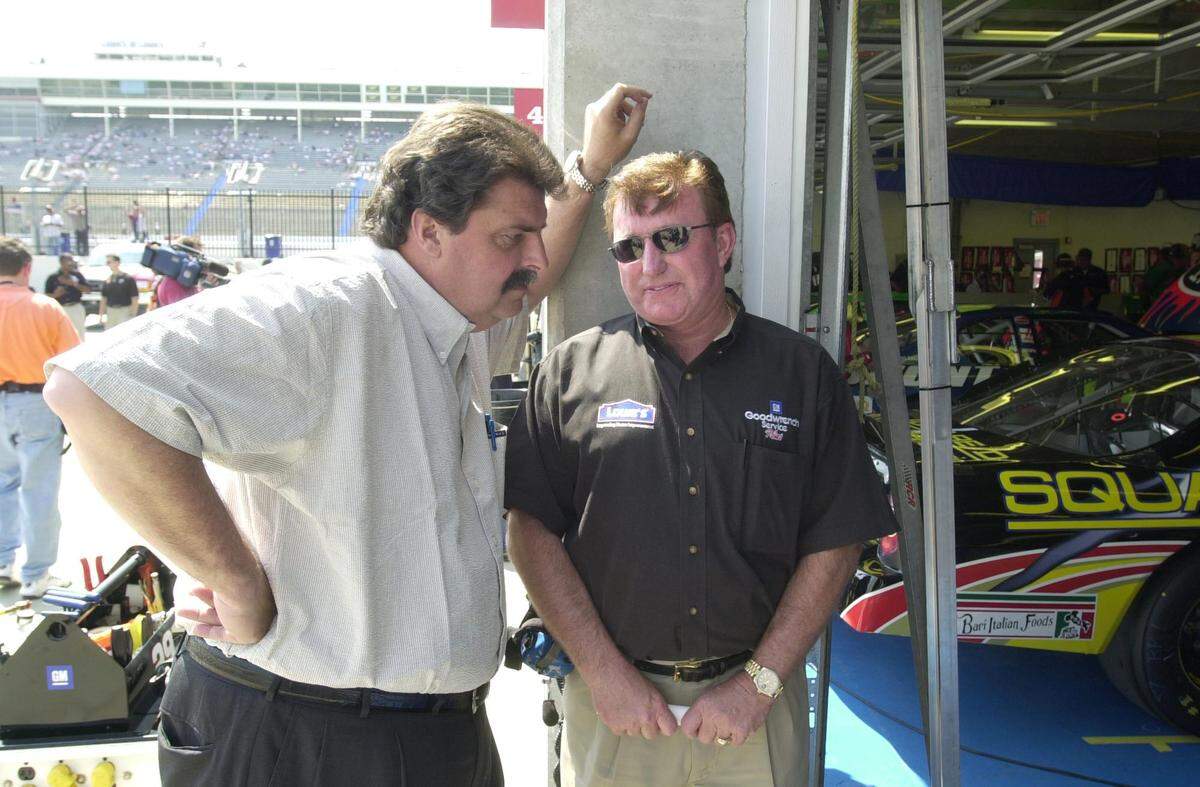
Scott Fowler, sports columnist who covered the race for The Charlotte Observer: “You could hardly have a bigger figure in the Carolinas die. Billy Graham was still alive at that time. It was a very small handful of people. But Dale Earnhardt was as big as it got. ... I remember thinking to myself as we got there, into the race: ‘The show stops for nobody.’ The old show business idiom: The show must go on. If NASCAR was ever going to cancel a race just out of respect, this would’ve been it.”
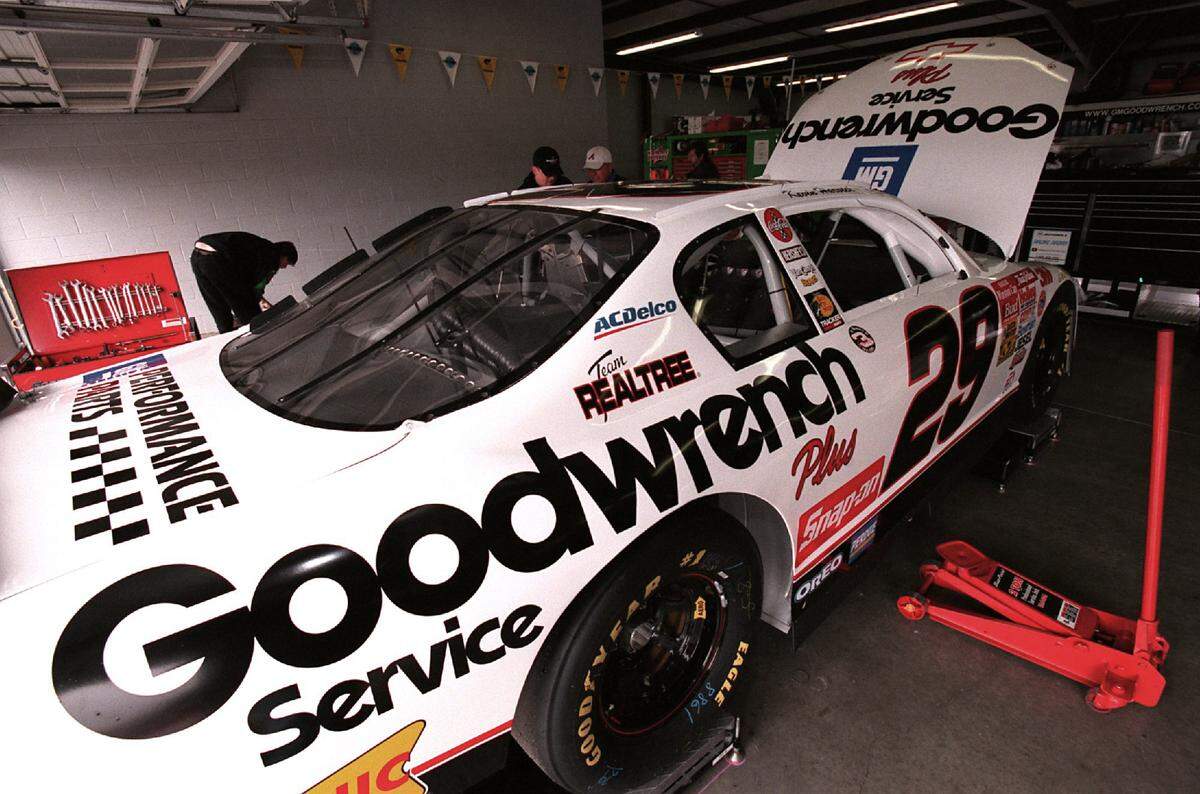
Dustin Long, who covered the race for the News & Record in Greensboro, and now is a motorsports writer for NBC Sports: “It’s like trying to analyze something that didn’t make sense at all. It didn’t make sense that someone like Dale would be killed in a crash. Richard really had to work through a bunch of different things emotionally and personally. You wondered if they’d skip the race, whether the car was not going to run. ... Will the 3 return? That was a big question. So it was obviously a white car, and 29 was another number that Richard had, so it became the white 29. It was a 29 car on track, but it was the 3 car in spirit.”
The most public decision Childress made that weekend: picking Harvick to succeed Earnhardt.
Kevin Harvick: “I already knew the whole team. I’d already worked with the team. I’d done the testing with the team. Had my own car. I didn’t know Dale on a personal, day-to-day level, but I had been in Dale’s office enough with Ron Hornaday, and been around Dale a few times at that particular point. We were testing his car. And it just got to the point where we just wouldn’t even ask, we just went and did it, because he didn’t really want to do the testing unless it was at Daytona or Indianapolis.
“For me, I really felt like the middle of 2000 was really where I had my feet on the ground. We had just signed America Online. We had to make a choice between three sponsors at that particular time. And I went to every sponsor meeting that we had with Richard, and we had to call the other two and tell them that we were going to pick America Online. So my path was already set. Atlanta was going to be my first race in the No. 30 AOL car. We announced that at Daytona in 2001. And so the way that all that played out, knowing the team, doing the testing in 2000, Atlanta going to be the first race, just a lot of crazy scenarios that were already in place.
“And everything happened, and went into the 3 becoming the 29 and Atlanta being the first win. So there are a lot of pretty wild things that were already in place that wound up being for a different path.”
Settling into a strange weekend
Richard Childress, on the FOX broadcast early in the race weekend, said plainly that it was painful to be there, at the racetrack without Earnhardt, his driver and close friend. He wasn’t the only one who had a difficult introduction to the weekend.
Mark Martin, driver in the race: “It was tougher than normal because of the loss. We’d lost our superstar of the sport. And so, even as a competitor, that left an empty feeling in me, because we’d lost our superstar and knew that it was going to affect our sport, a sport that I loved so much. That’s really what I remember.”
Monty Crump, city manager of Rockingham from 1989-present and a NASCAR fan: “We knew it was going to be big. I know some of the folks who ran the track. They knew there was going to be a lot of attention. There was a lot more media presence that showed up here. We were expecting that. ...
“I do remember getting many, many more media requests. ‘What do you think about it?’ I did a whole lot more of those that weekend than I ever have for another race. ‘What do you think the impact will be? It’s the first race after Dale Earnhardt’s death, how does it affect the community?’”
Mike Joy: “I will tell you, Thursday, the drive to Rockingham, which is less than 100 miles, felt like 1,000 miles. I drove down with my family. And usually we would do that drive without a stop. ... We must have stopped four or five times on the way down there because nobody wanted to go. Nobody wanted to pick up and go to Rockingham.
“It was really Richard Childress’s words that I think motivated the whole sport: ‘We’ve gotta go run the next race. This is what Dale would’ve insisted on, had he been in a position to do so.’”
Dustin Long: “There was a level of shock. It’d been less than a week. The funeral service was on Thursday in Charlotte. And then Friday, you’re at Rockingham. That morning, there was a fog around the track and around the area, which kind of added to the heavy atmosphere everybody felt.”
Scott Fowler: “It was really kind of a public funeral, in a way, just a week late. A lot of people hadn’t been able to mourn, considering it’d only been a few days, and this was really as close as a lot of people got to going to Dale Sr.’s funeral.”
Kevin Harvick: “Richard had me miss practice while we were doing the press conference (Friday), which was by far the most intimidating thing we had to do in the whole scenario because it looked like a presidential press conference with the amount of media and people. It had its own tent that they had created for the press conference on that particular weekend. So we missed practice, and had the press conference. And you’ve heard me say it before, ‘That was by far the biggest press conference I’ll ever do in my life,’ by a long ways, just because of the magnitude of the situation.
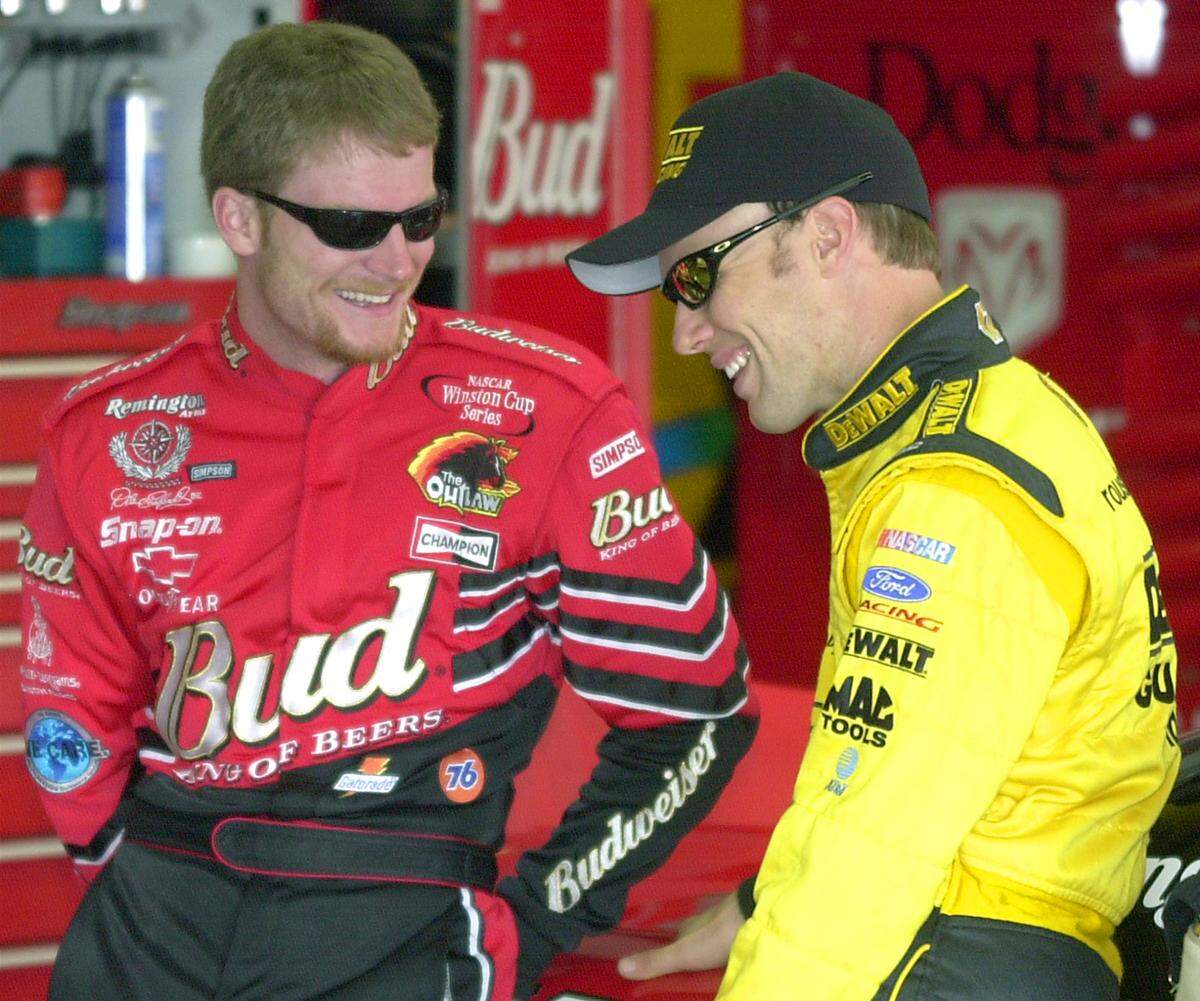
“You realized the magnitude of everything that was happening. On that particular day, I’d run the Busch race. I was getting ready for Happy Hour, in the Cup car, and it was Dale Jr. and Dale Jarrett by the trailer to say, ‘Hey, we’re here to support you, to do whatever you need to do. It’s a tough situation. If you need any advice or help to get through the scenario.’”
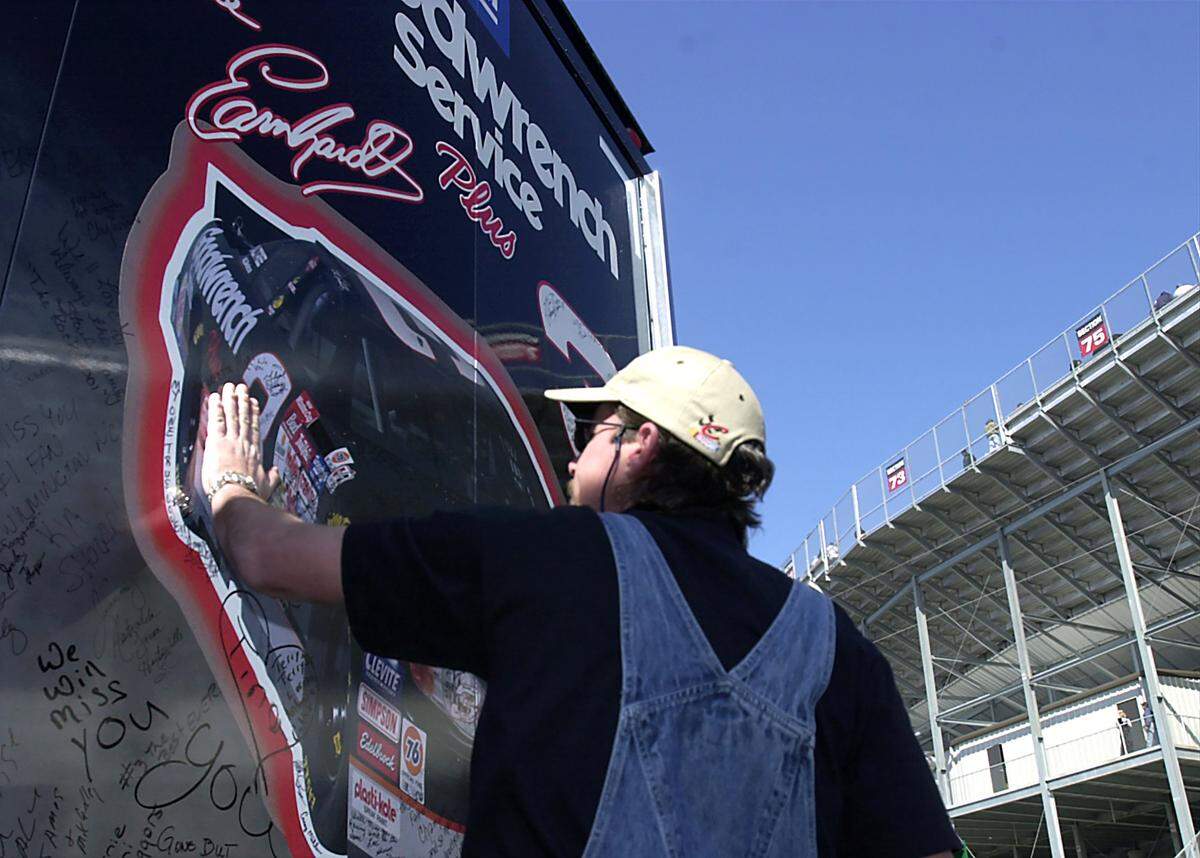
Television had to capture all the excitement of a race day, but it also had to capture the accompanying emotions of the week before. It was a tall task. The FOX talent in the booth wore Earnhardt ball caps. Larry McReynolds relayed the advice he gave Andy Petree, the late Earnhardt’s crew chief. The Lap 3 tribute came to be. Footage of fans gathering around a vigil for The Intimidator was revisited regularly throughout the weekend, as the offerings grew and grew.
Pam Miller, FOX Sports pit producer at Rockingham race: “In our planning, it was: ‘OK, the race is going to go on.’ Dale would’ve been furious with everybody if the race didn’t go on. That’s kind of the way things go in the racing world at that point. There was no question the race was going to happen. It was, ‘How do we remember Dale? How do we help the fans heal? How do we help the sport heal? How do we tell the story in a respectful way?’
“Everybody was pretty numb the whole week. Every day, it was a different news report. You couldn’t turn on the TV without seeing it, mentioning it. Didn’t matter if it was national, local, didn’t matter. Every newspaper and magazine had it. There was the service for Dale that week. There was a lot going on. And then there was the planning: How do we be respectful? How do we tribute Dale? But also, the sport was going to move forward. And how do we do that?”
A rainy weekend in North Carolina
To almost everyone interviewed, the race at North Carolina Speedway was a blur. On TV, Childress said he didn’t want to be there. Others agreed. The race started, and a temporary reprieve from reality was about to step in. Then, on the race’s first lap, Dale Earnhardt Jr. — “Little E” as he was often referred to back then — wrecked and saw his day come to an early close. Then, a handful of laps later, the rain came.
Mark Martin: “I remember feeling for Jr. (Dale Jr., Earnhardt’s son), because that was a heavy load that shifted onto him at the finish at Daytona, and having to go to Rockingham. The best medicine was getting in that race car, but when he wasn’t in the race car, it was probably really brutal. So I really felt for Jr. going through that.”
Mike Joy: “Race day was not a great day for weather. There were sprinkles on the racetrack, and who ends up in the wall right away? Dale Jr. And it rains and they call the race. We’re going to have to live this all over again tomorrow, and go through the preparation and the — I won’t say it was acceptance, I would say it was still at the point the denial of what had happened and how big an impact it was. But we did it. And the race ran.”
Pam Miller: Once the rain delay came, there’s just no way you can journalistically avoid it. ... It was a nice time to find more time to tribute (Dale Sr.), and we just continued doing it. That whole weekend, when you look at it, is just all part of the grieving process, all part of helping each other, and all part of the healing. And in a weird way, we were sort of forced to do more because it rained. To lean into it.”
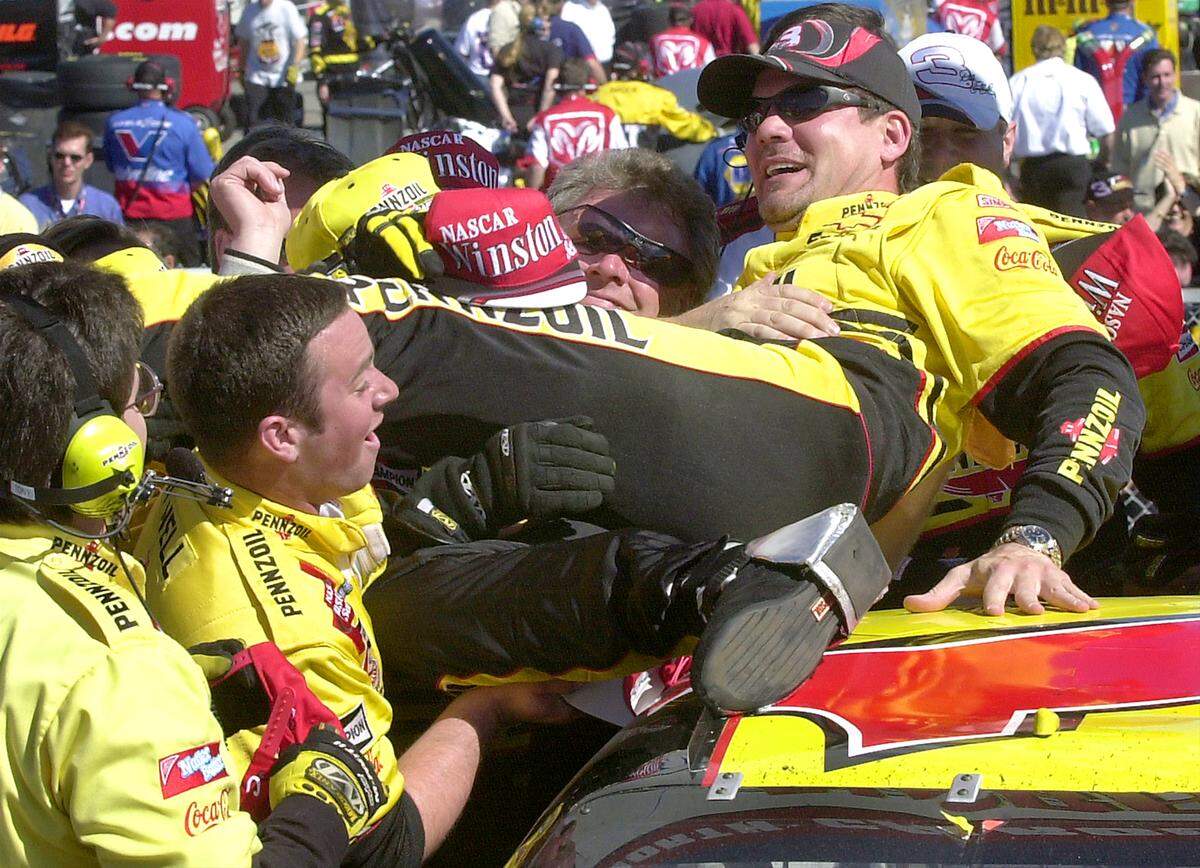
And then, once the racing resumed Monday, a special winner emerged.
Mike Joy: “The fact that one of Dale’s cars won that race, with Steve Park driving, I think gave everybody a chance to breathe and say, ‘OK, this is not going to be easy. It’s not going to be like it was, but we’re certainly in a better place than we were several days ago, and we’re going to move on. We’re going to move this sport forward because it’s what we all have to do.’”
Bobby Labonte, driver who finished second at Rockingham that race: “I was trying to pass Steve Park at the end. And we were coming up on him pretty fast. With one lap to go, I got into the fence a little bit, and just couldn’t make the pass. I tried my hardest to do that. Afterward, on the cool-down lap, I said, ‘Well, I guess if you’re not gonna be able to win, I mean, what a great scenario that this turned out to be.’ We tried to win the race just like anybody would, but when it was all said and done, I guess it was meant to be that.”
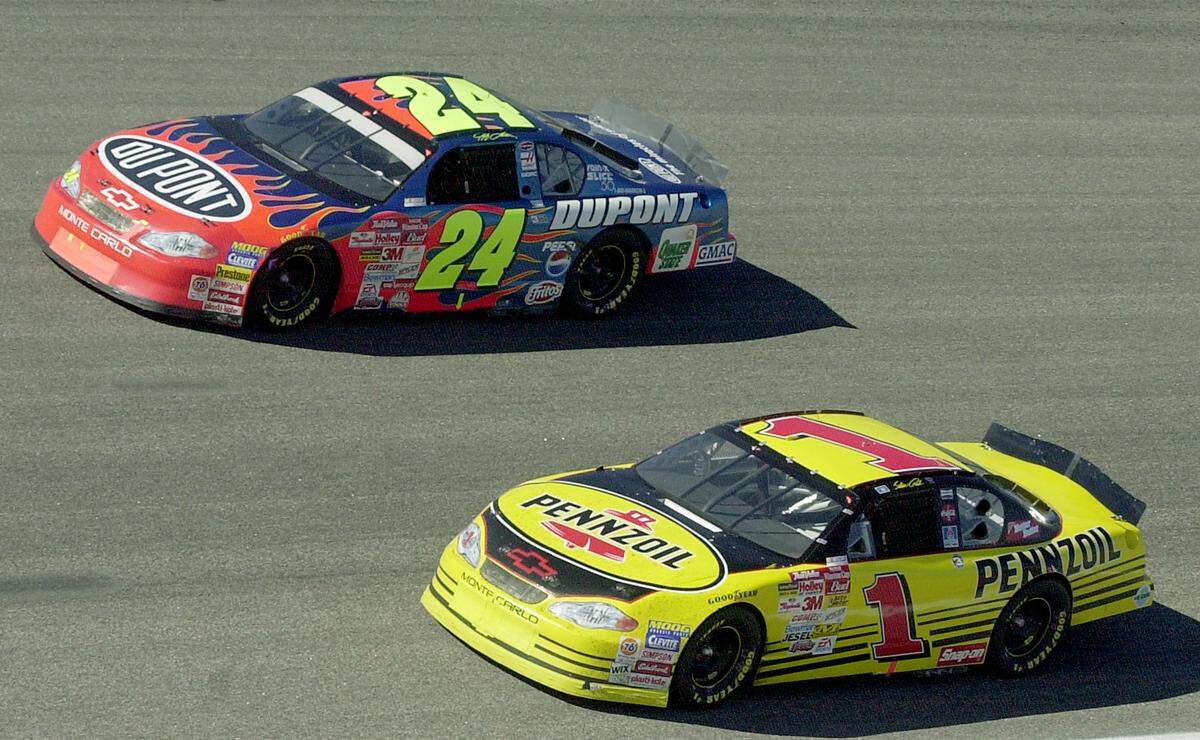
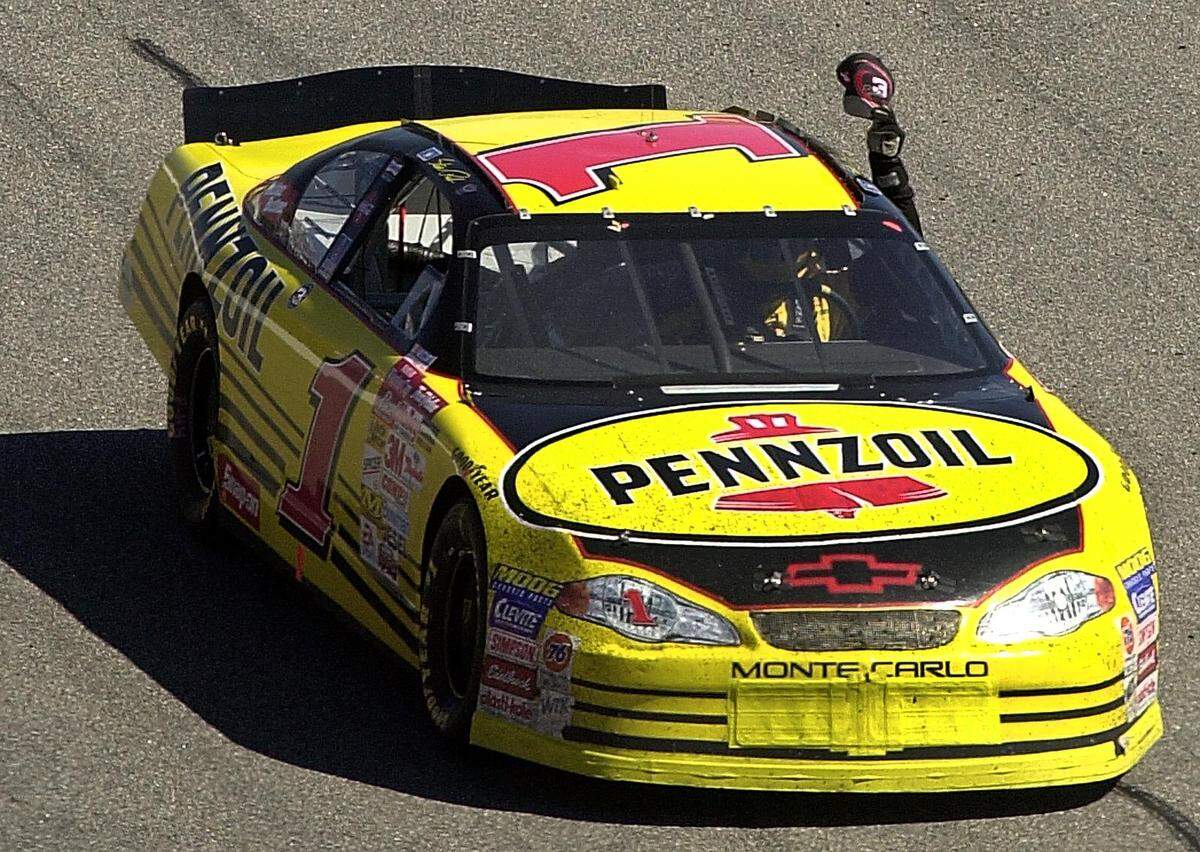
Park, after his victory, turned around and did a Polish lap along the frontstretch so the driver’s side could be closest to the grandstands. He waved a black No. 3 hat outside the window as fans, waving Earnhardt pennants and sticking three fingers in the air, rushed down to cheer him on. Other drivers, including Labonte, pulled up next to Park after the checkered flag flew and waved a No. 3 hat of his own.
Steve Park, postrace on the FOX broadcast: “It brings tears to my eyes. I don’t know what to say. Dale’s the one who taught me how to drive this place. He told me to stay off the brakes, and we stayed off the brakes all day long, and we won the race. He’s been with us all weekend.”
The aftermath of Dale’s death
The race at Rockingham’s track might have been a bandage that temporarily eased people’s pain. But there was no doubt that many of the sport’s wounds still required surgery. One of those proverbial wounds was driver safety. The process of prioritizing safety above all else was in motion by the beginning of 2001 — in 2000, after all, the sport of NASCAR lost Adam Petty and Kenny Irwin Jr. and Tony Roper — but safety discourse peaked ahead of Rockingham.
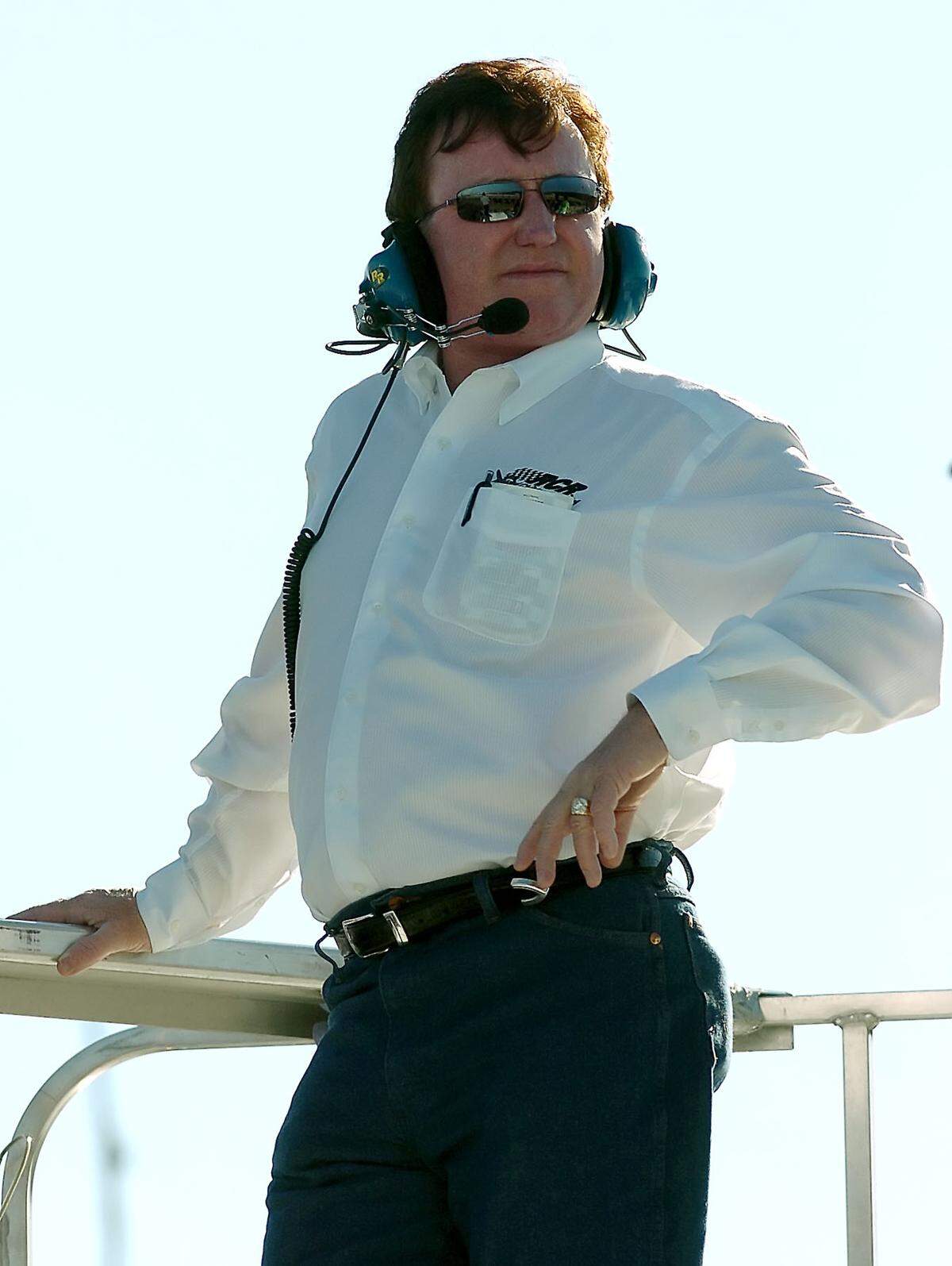
Mike Helton: “What NASCAR was doing was looking very seriously at elements of racing that we had learned from. And 2000 was a tough year. We lost Adam Petty, Kenny Irwin in identical situations in Turns 3 and 4 at New Hampshire. Tony Roper (Cup race in Texas), I think it was. So we were having things happen on the racetrack that we were trying to prevent, or mediate, and so there was a lot of energy being spent. We’d already gone in with (Indianapolis Motor Speedway president) Tony George and his family on trying to look at SAFER barriers, as they’ve become to be known, what they use for INDYCAR and NASCAR.
“And so the science and the engineering and the effort around trying to come up with solutions and answers was already in the works. But I think what kicked in immediately after we lost Dale, there was a global effort from all levels of engineering, and product-building. What if we did this? And what does this look like? And questions from NASCAR and everybody else about, ‘Well, how did this happen? Why did it happen? And can we prevent it from happening again?’ If what NASCAR and INDYCAR collectively was doing was 8-out-of-10, it went to 12-out-of-10, after February 2001. And it’s stayed that way ever since. ...
“Racing is still a very dangerous business. And we continue to work diligently with teams and OEMs and other folks to be sure that we try to give the best we can, and that’s truly a global effort. ... It’s been an effort that has lost absolutely no energy since then.”
Dustin Long: “Some of the drivers talked (in the racetrack tent) about, ‘Hey, we need to have a safety committee. We need to get a group of people working together, moving forward and doing this kind of stuff. And while there’s an open-door policy in NASCAR, this needs to be more organized.’ ... There were just a lot of questions about safety, and a lot of uncertainty.”
Kevin Harvick: “We went through 9/11. Got married right at the beginning of the year. So you got your first win, your first Top 10, first Top 5 — all these things, all these crazy scenarios. ...
“Nobody even really worried about (the future of RCR) until 2002. The sponsors didn’t ask questions. The team never treated me that way. I was already so embedded into just driving the car, and having this crazy approach to what we could do with the testing and the racing, and we were building a team that was totally separate away from the 3 car, and then we just merged all that together, and then everyone wound up focused on going to the racetrack and racing the car. And in a way, racing hid us from reality.
“Having racing really hid us all from what we had to approach in the offseason from 2001 to 2002. And 2002 was really when the effects of having to make all those decisions happened, and you had to have the conversations with the sponsors who were there for Dale and who didn’t want to be around me, and whatever that scenario was. ... Now you had to make the decisions between the two differences and the reality of the situation.”
The legacy of Rockingham’s February 2001 race
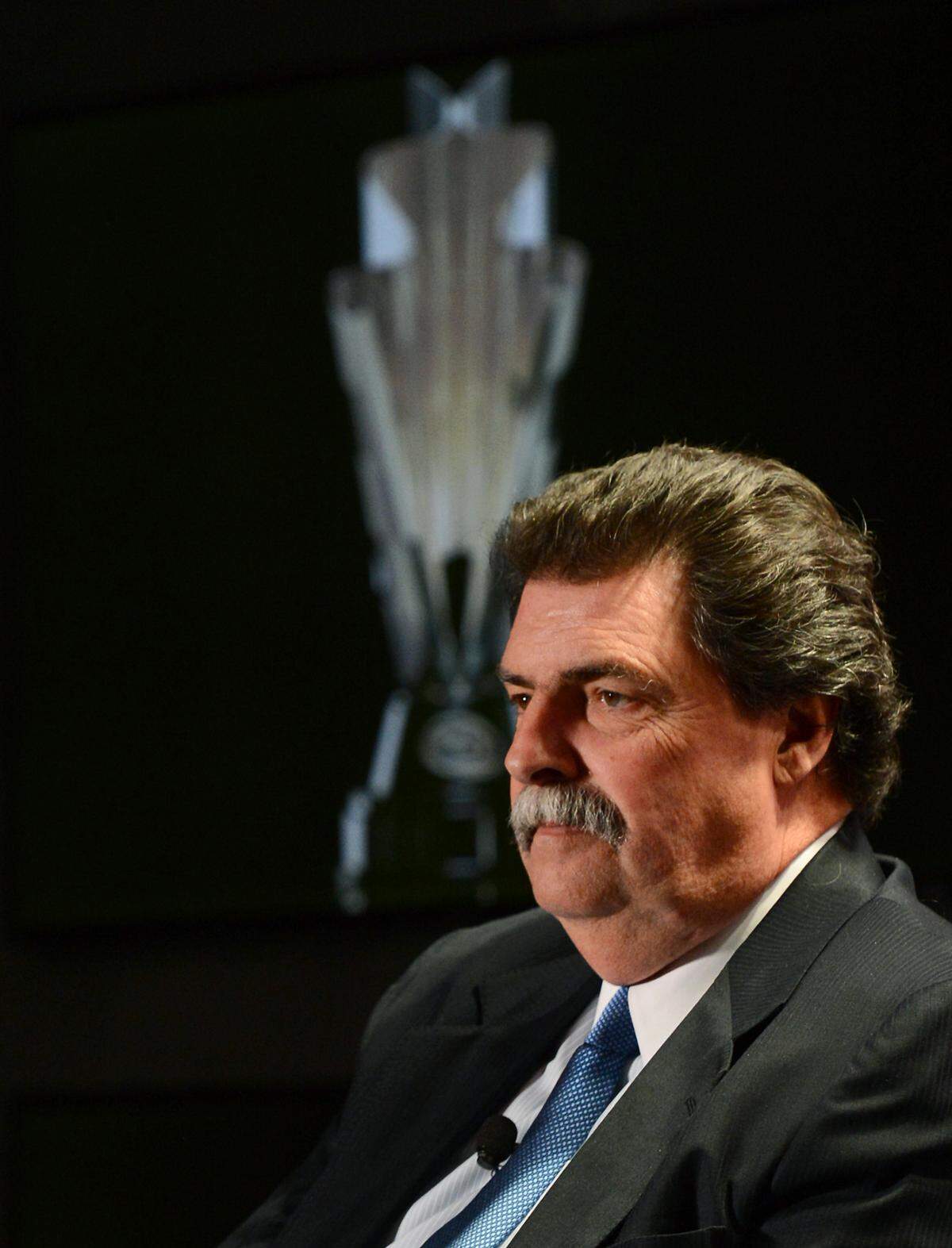
Mike Helton: “I would label it as a moment of healing. For the entire industry. Not just us in the garage area. Or us in NASCAR. But for fans — everyone who was heartbroken over what happened in Daytona. Rockingham kind of offered a location where all that sympathy and pain (could go), where we can stick together and begin that healing process.”
Scott Fowler: “I know Jr. immediately wrecked and was gone, but I think it did turn over the mantle. His dad was the face of the sport. He quickly became the face of the sport, and really handled that gracefully, I thought, and has done so the past 24 years since.
“Obviously he’s not as good a racer as his dad, and he would say that. But no one’s ever been a better spokesman for NASCAR. No one’s ever been more equipped to handle all the different duties of having his dad as the emperor. He was able to live in his dad’s shadow there for a long time. He had to grow up. And he had to grow up in a hurry, sadly. And I think that this was just the very beginning of it.”
Dustin Long: “It was the beginning of a new era for NASCAR. Certainly there was going to be a time that Dale Earnhardt was not going to be racing. And that was viewed as being a few years away. But when he was killed at Daytona, now you’re looking at one of the first times — his rookie season was what, ‘79 — that he’s not in a race. That one of the most important figures of the sport is no longer there, and is not going to ever be there again. ...
“They consider 1972 the start of the modern era of NASCAR because that was when the schedule changed. Instead of running 60-something races, they pared it down. ... Rockingham was the birth of another era in the sport, of trying to figure out life without Dale Earnhardt.”
This story was originally published April 13, 2025 at 5:00 AM with the headline "‘It was a duty.’ What happened at Rockingham after Dale Earnhardt’s sudden death."