A nightclub magnate and an NC town kept Rockingham’s NASCAR dreams alive — and still do
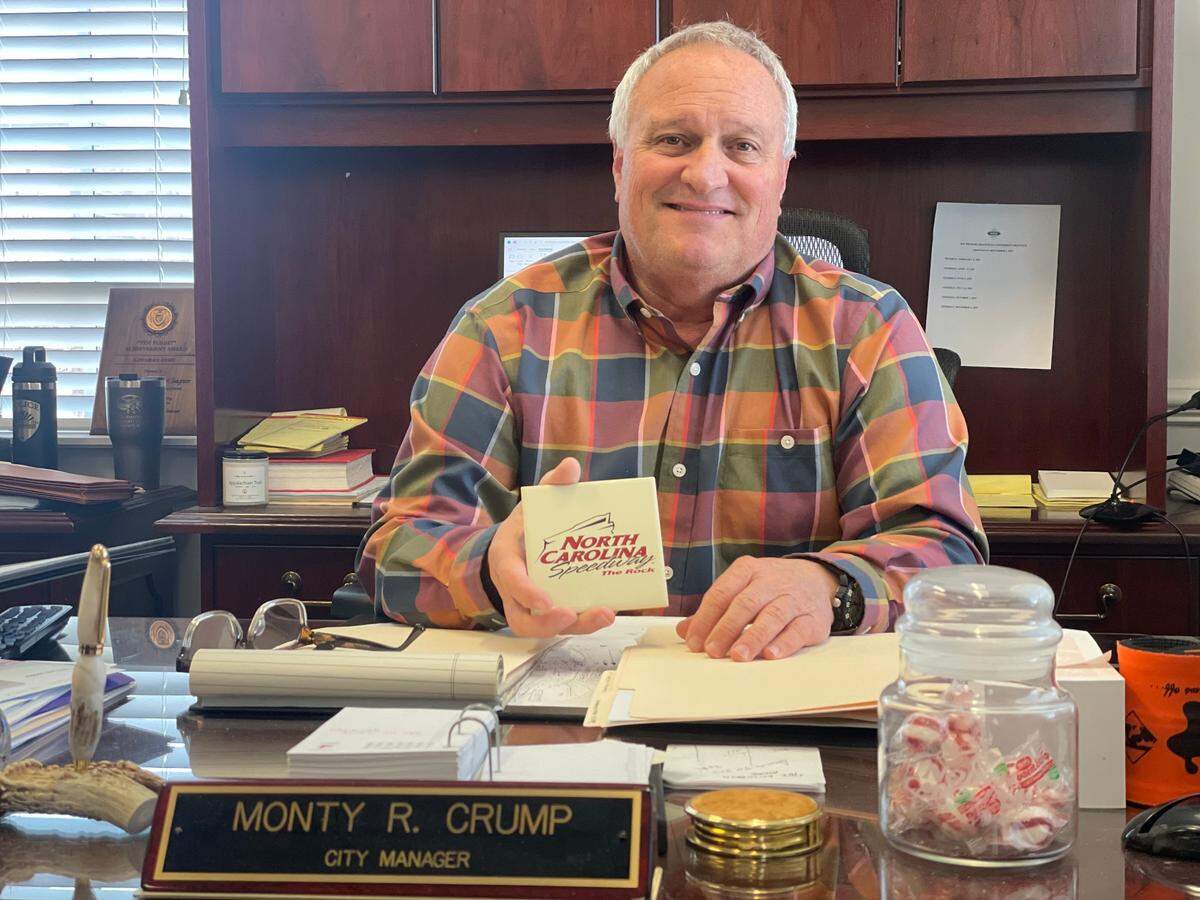
In the corner of his office, Monty Crump is digging for an answer.
If it’s anywhere, it’s there, stashed away. The city manager of Rockingham has so much he can see from behind his desk: Reams of local legal code on a shelf, four taxidermy deer heads on a wall, honors from former N.C. governors on his cluttered desk. But the answer he’s looking for today, on this sedate-turned-sunny March afternoon, isn’t in plain view.
It never has been.
Why did the racing leave?
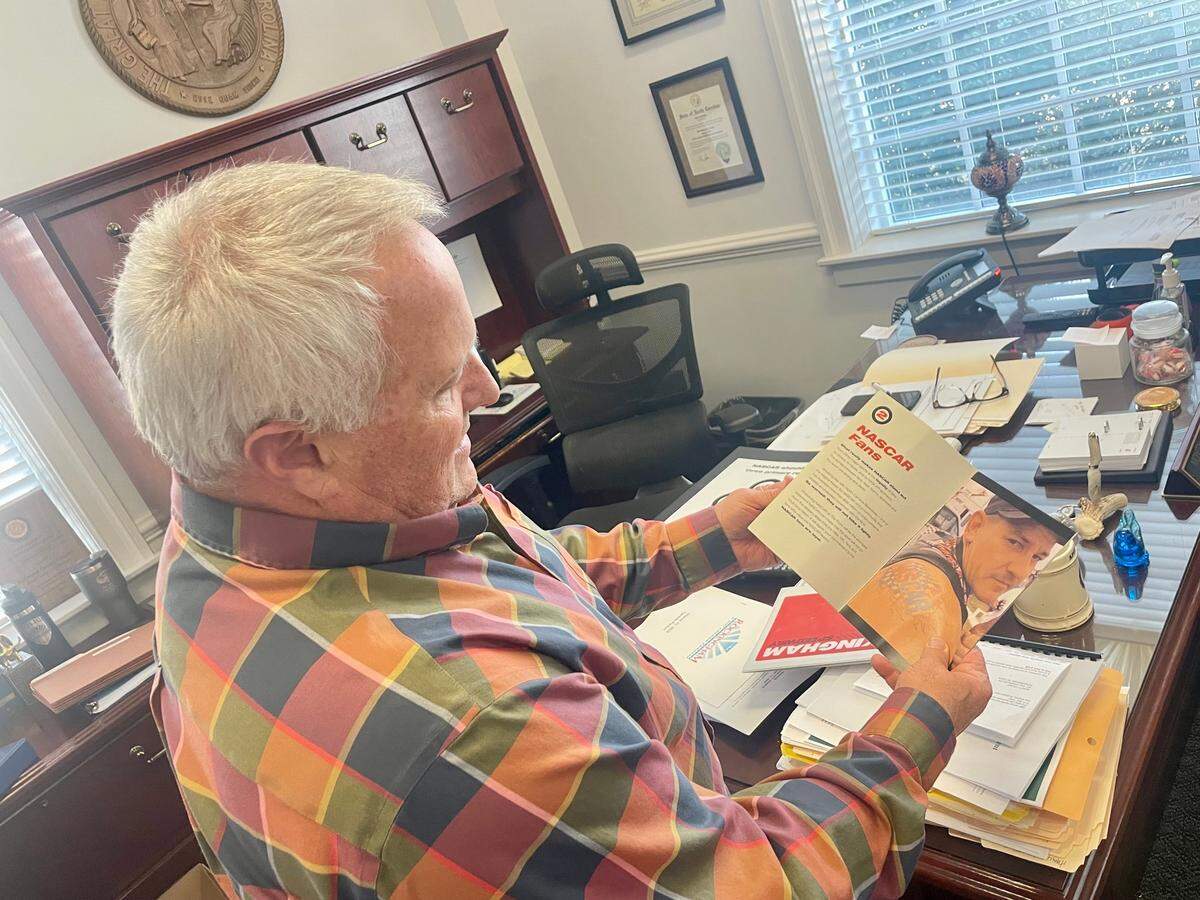
“We saved all these things,” Crump says, lifting up an armful of relics. Among the pile are posterboards for a presentation he and other community officials gave sometime before the 2003 NASCAR season.
The presentation was in response to the more-than-rumors that The Rock — once a rite of passage in the sport of racing, a bastion of small-town Americana and NASCAR — was going to be removed from the NASCAR schedule. It referenced the drivers’ love for the track, the fans’ love for tradition and the track’s surprisingly good TV ratings, as the track twice a year regularly punched above its weight. Crump and his colleagues even made a book that went into more detail of their points.
“We did everything in the world to keep them here,” Crump continues. The 64-year-old fast-talking Richmond County native pauses for a moment. He then turns his attention to the rest of the office, back on his search: “There are other mementos that you can see here …”
Mining for that elusive answer — why did the racing leave? — is admittedly easier than it was a few years ago. Good news helps.
In August, NASCAR announced that the facility now known as Rockingham Speedway and Entertainment Complex would be back on its 2025 schedule, even if not with the premier Cup Series. The 1.017-mile oval will host an Xfinity Series race and a Truck Series race the weekend of April 18-19, the Friday and Saturday before Easter Sunday. It’ll host an ARCA race, too, on Saturday.
Such news was hugely triumphant for the community. The Truck Series hadn’t been back at Rockingham in more than a decade. Its last race there was in 2013. Xfinity cars haven’t been there since 2004 — the same year the Cup Series departed and left all of south-central North Carolina wondering if it would come back.
Answers of why the racing left have availed themselves before. Simple ones, even.
In the early 2000s, after all, the sanctioning body of the biggest league in American motorsports wanted to capitalize on its growing popularity by expanding its national footprint. It was intrigued by the fiscal and cultural promise of bigger markets up North and out West. Rockingham was abandoned then. Twenty years later, NASCAR is searching for innovation while simultaneously channeling the cultural power it held when it was mostly a Southeastern enterprise. Tracks, and communities, like Rockingham are now compelling again.
That explains a lot. But not everything. There’s more to the answer of why the racing left, and of how it all came back. To find it, though, you have to go to someone not from the 9,000-person town of Rockingham.
Someone no one initially imagined.
Not even himself.
Rockingham Speedway’s unlikely playmaker
Cub, RELAX.
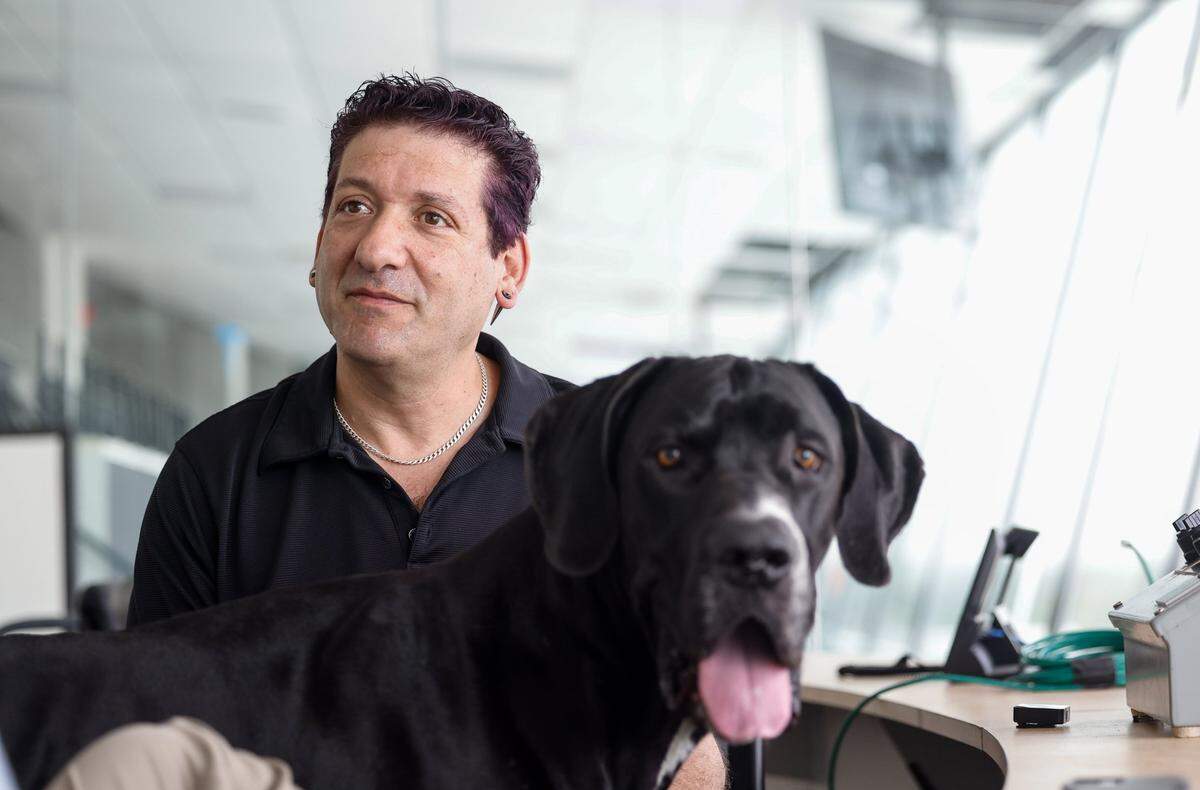
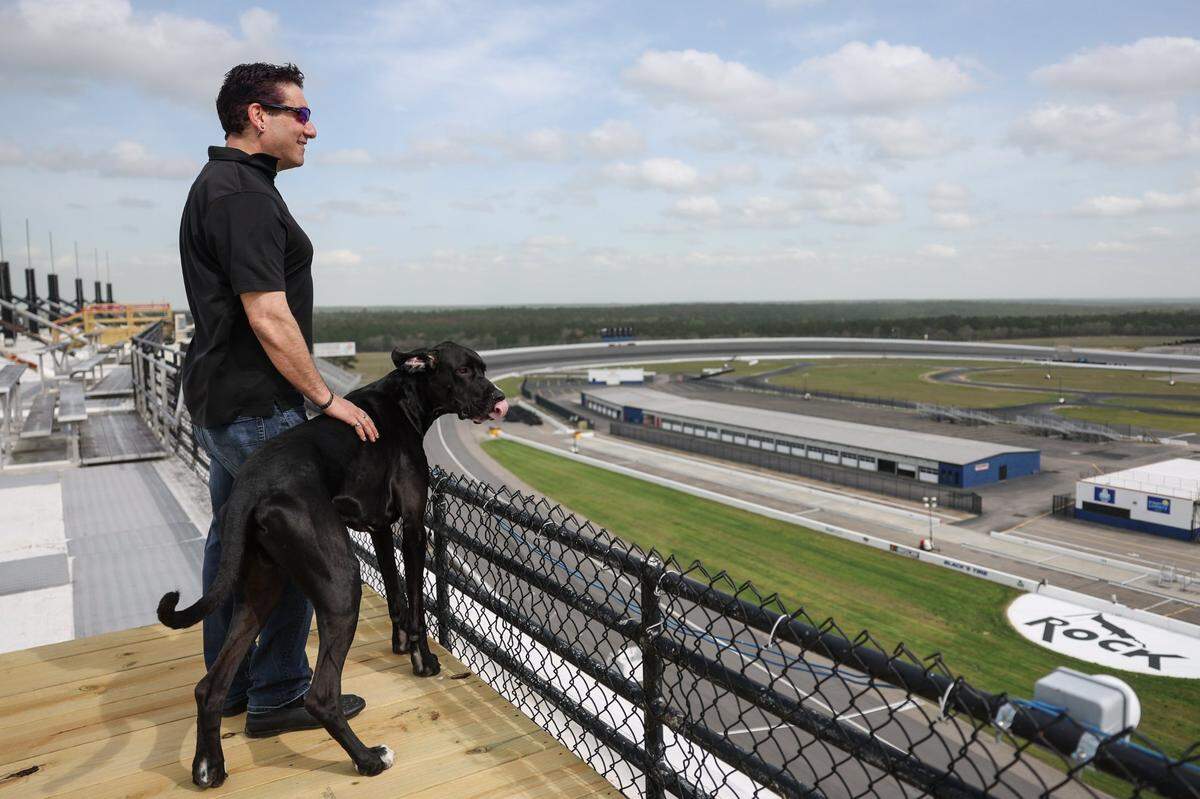
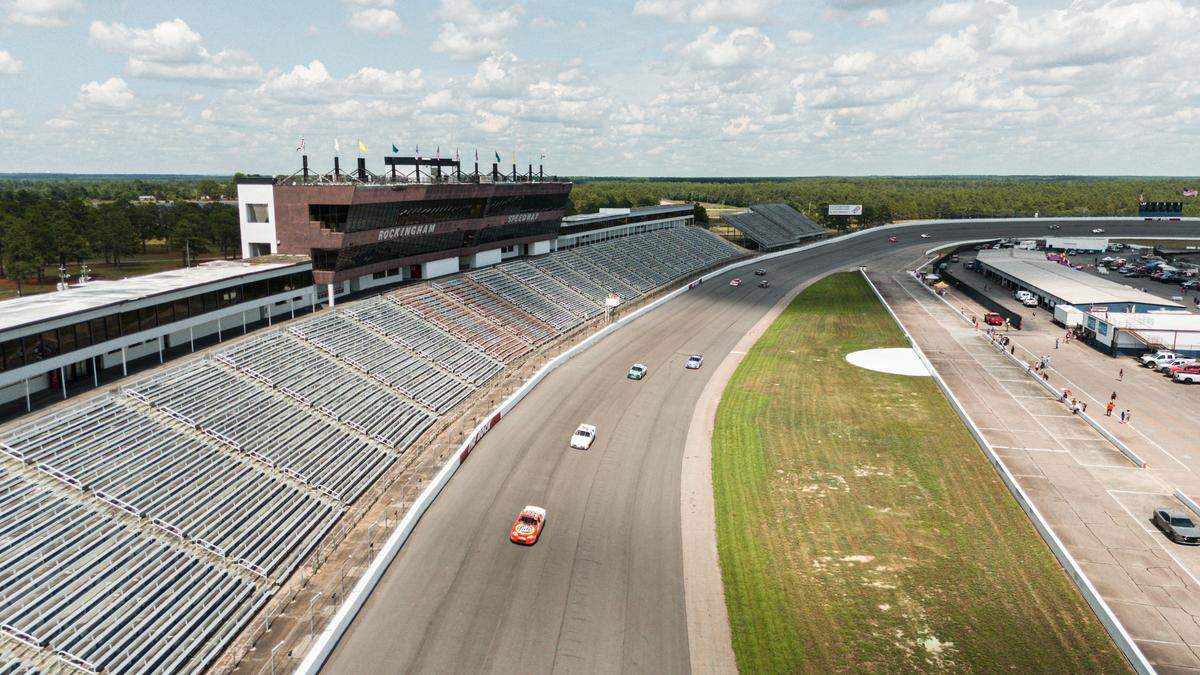
It’s another March afternoon, and Dan Lovenheim is on the roof of Rockingham Speedway. He acts like he owns the place, which he does. He has since August 2018. His black Lamborghini is parked just outside the concession stand, somehow, up above the grandstands. The wind is battering his dark-purple-dyed hair. Also on the roof is his dog, a 2½-year-old black Great Dane named Cub, who has the zoomies today. The pair is looking over the cliff, Mufasa and Simba style, scanning all the light touching their 250-acre kingdom.
“When I bought it, no one would touch this thing with a 10-foot pole, and I mean no one,” Lovenheim says. He smiles. “And next month, we have an Xfinity and Truck NASCAR race.”
Look at the journeys of both Rockingham Speedway and Lovenheim, and you’ll realize how much of an improbability that statement once was.
Start with Lovenheim:
The 49-year-old entrepreneur, 25 years ago, was a Rochester, New York, native searching for purpose. He’d been living on the road before a motorcycle accident “shattered basically all of my limbs” and forced him to recover in his parents’ basement for a year. Once mobile, for reasons he still doesn’t have, he drove a 1978 Volkswagen bus to eastern North Carolina. “I came somewhere my family wasn’t, knew no one, had nothing,” he told The Observer in 2023. And “I decided to go make something awesome happen.”
His first job was at Red Lobster. He then went into business with a friend in Greenville, where he helped turn a live music venue into a successful nightclub. He eventually sold that parcel and used that money to purchase 25% of a business that he’d refurbish and run called 606 Lounge (now called Alchemy) in downtown Raleigh. Business boomed. Success led him to purchase another property on the same strip of land called Cornerstone. That boomed, too, and snowballed into more. Now he’s a nightclub magnate, responsible for a good portion of Glenwood South, the most popular strip of nightlife in the North Carolina state capital.
In 2018, he saw further opportunity when he noticed the market for Rockingham Speedway, a huge property with no noise ordinance for miles. The possibilities he saw: Large-scale events, concerts, low-level races, with the understanding that “NASCAR probably wouldn’t be back in any high form,” he told The Observer. “You’re talking about eight figures to make that happen. And I didn’t have the eight figures at the time solely to do that.”
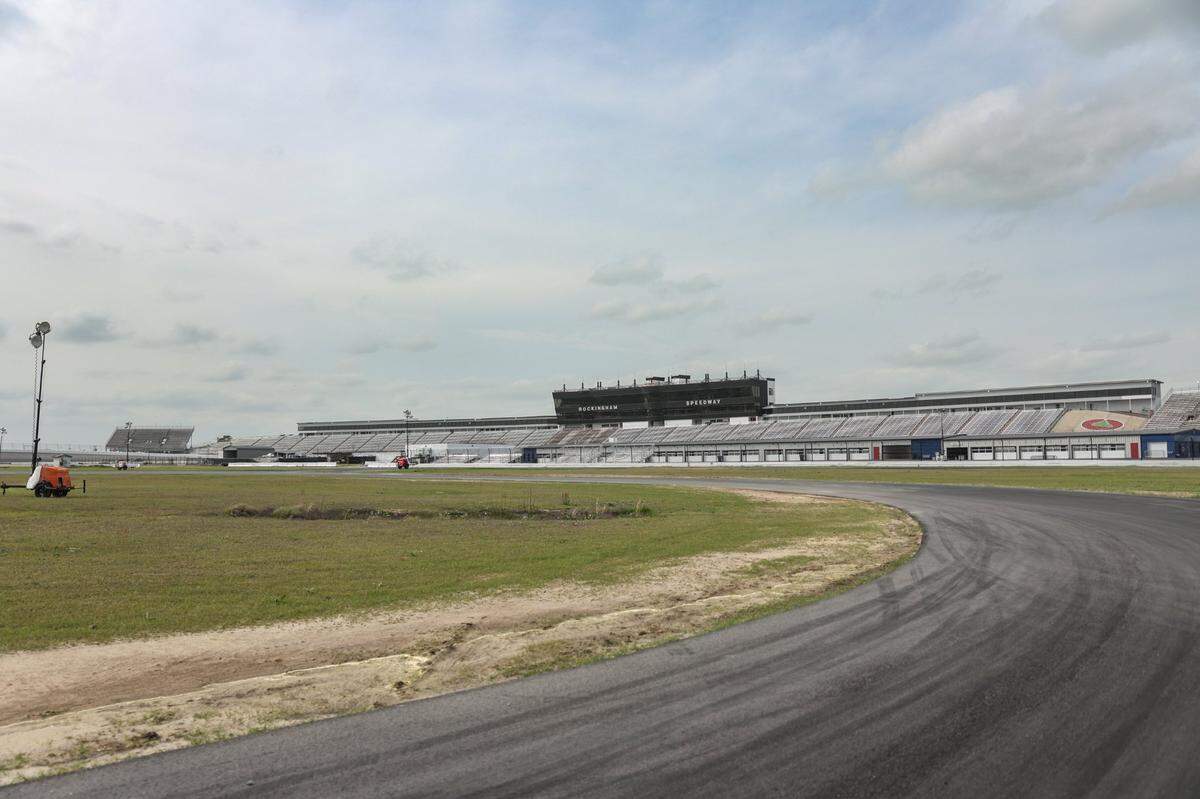
Why Rockingham Speedway needed eight figures’ worth of refurbishing is another story. The short of it:
The racetrack, for decades, was a staple in the NASCAR Cup Series. It hosted two Cup races for the better part of 40 years after its first race in 1965. It was a meaningful part of community life in Rockingham, a rural town thriving and then rebounding from the decline of the textile industry.
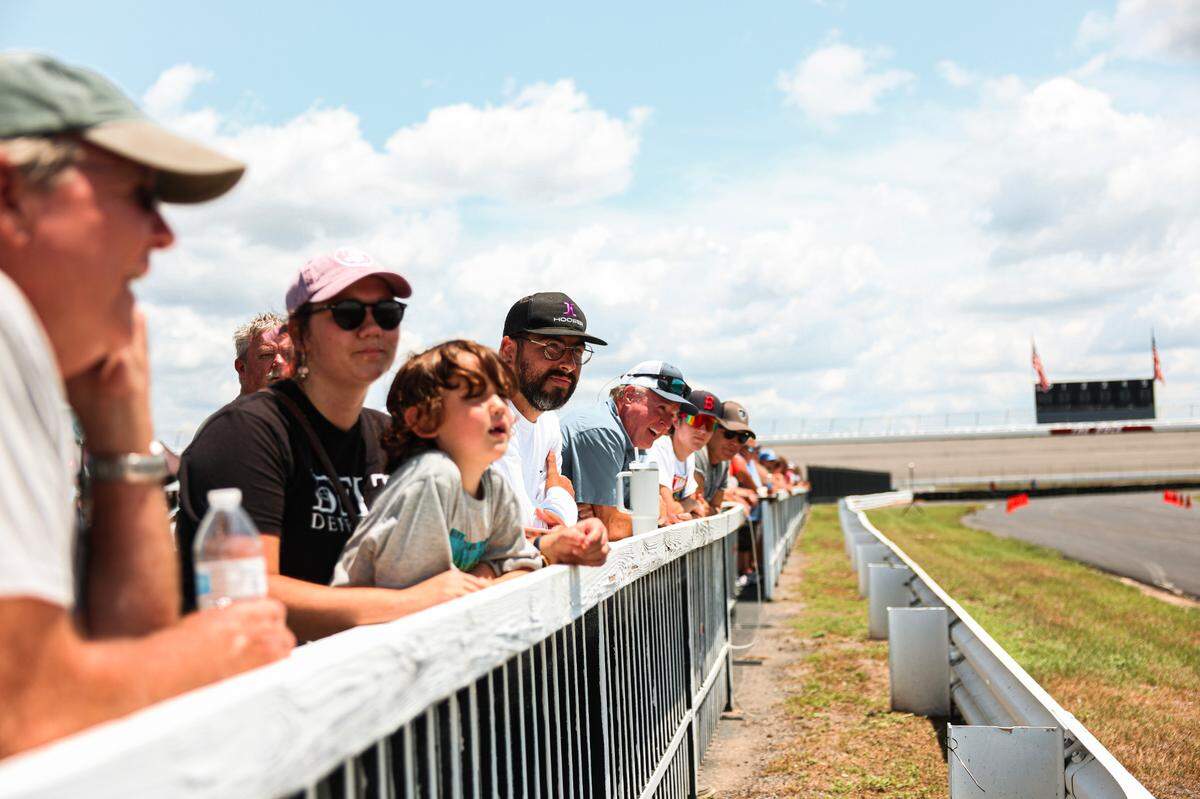
On the Thursdays of race weekends over the years, there would be hauler parades, and people from Richmond County would line U.S. 1, sitting on their car hoods and waving as the NASCAR teams went by. NASCAR race weekend, in many ways, was the town’s homecoming. Fans planned their months around the races. Clubs raised funds by helping at concessions and planned their years around the races. Drivers interacted in the municipalities, stayed in local fishing camps, became annual regulars at local watering holes. Kids played hooky from school to watch qualifying; their parents would let them — and would play hooky from work.
“Everybody has a little story like that” in connection with the track, said Meghan Lambeth, executive director of Visit Richmond County and lifelong county resident.
Things change, of course. And the track, with its relative lack of surrounding town infrastructure and declining attendance through the late 90s, was not spared.
In 1997, Carrie, Jo and Nancy DeWitt — the wife and daughters of the original peach farmer owner, L.G. DeWitt — decided to sell the racetrack to racing giant Roger Penske. Two years later, Penske sold the speedway to International Speedway Corp. (ISC). In 2003, ISC took one of the two Cup dates away from Rockingham, and then in May 2004, Speedway Motorsports Inc. purchased the racetrack and gave Rockingham’s last remaining Cup date away to Texas Motor Speedway.
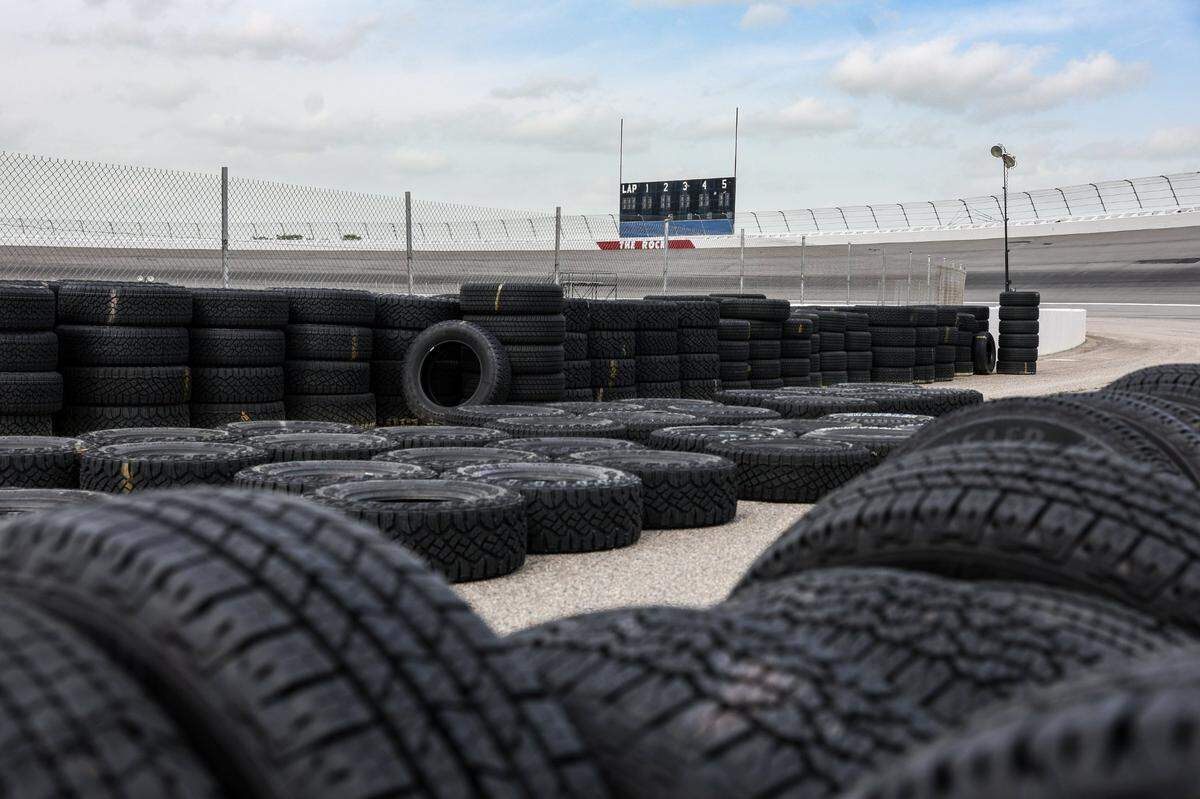
The track would then change ownership a few more times from there. One ownership group, led by Andy Hillenburg, even brought back the NASCAR Truck Series there, in 2012 and 2013. But NASCAR didn’t return for 2014, stating at the time that the track “failed to meet its obligations” as a facility. There was another sale in 2015.
And then came 2018, when Lovenheim bought the facility for $2.8 million.
“There were weeds growing out of the track,” Lovenheim said, recalling what he first saw of the property. “There was washout under the grandstands in Turns 1 and 2. You were literally a couple years from the place falling past the point of repair. And luckily we got in just in time to stop the decay, made sure with ground-penetrating radar that there wasn’t damage to the tracks, sealed everything, structurally re-supported some of the buildings, and then went to work.”
But again, that work wasn’t necessarily in service of NASCAR racing, at the time. It was of parties, festivals, bringing people together. Such a vision was carried out in 2019, when the facility hosted its first music show called the Epicenter Festival.
Rockingham’s future would again change in 2021. This time, though, for the better.
‘Better to be lucky than good’
The way Lovenheim explains it, you can draw a line from fall 2021 to the present.
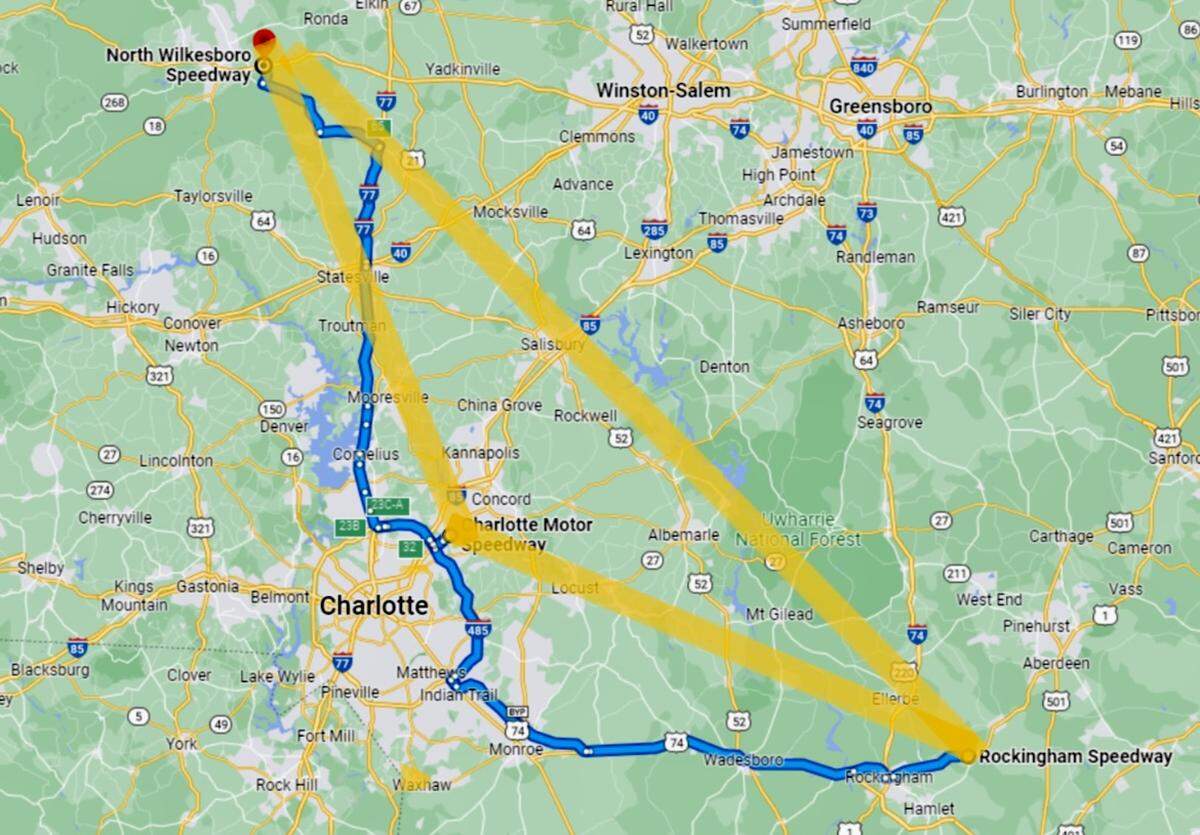
In November 2021, the North Carolina state budget earmarked about $50 million to go toward renovating three speedways — Charlotte, North Wilkesboro and Rockingham. Those funds were made available via North Carolina’s cut of a federal post-pandemic stimulus package that passed in February of that year. Rockingham was set to receive $9 million.
Lovenheim, all of a sudden, had money to uplift his facility. His eyes turned to racing.
“That’s sort of the switch that’s happened over the past couple of years, my recognition that my business model for what this was has gained so much more potential opportunity,” Lovenheim said. “I’d be a fool to not change directions and not just do that primarily, and then do everything else secondarily. Whereas before, it just wasn’t on the table.”
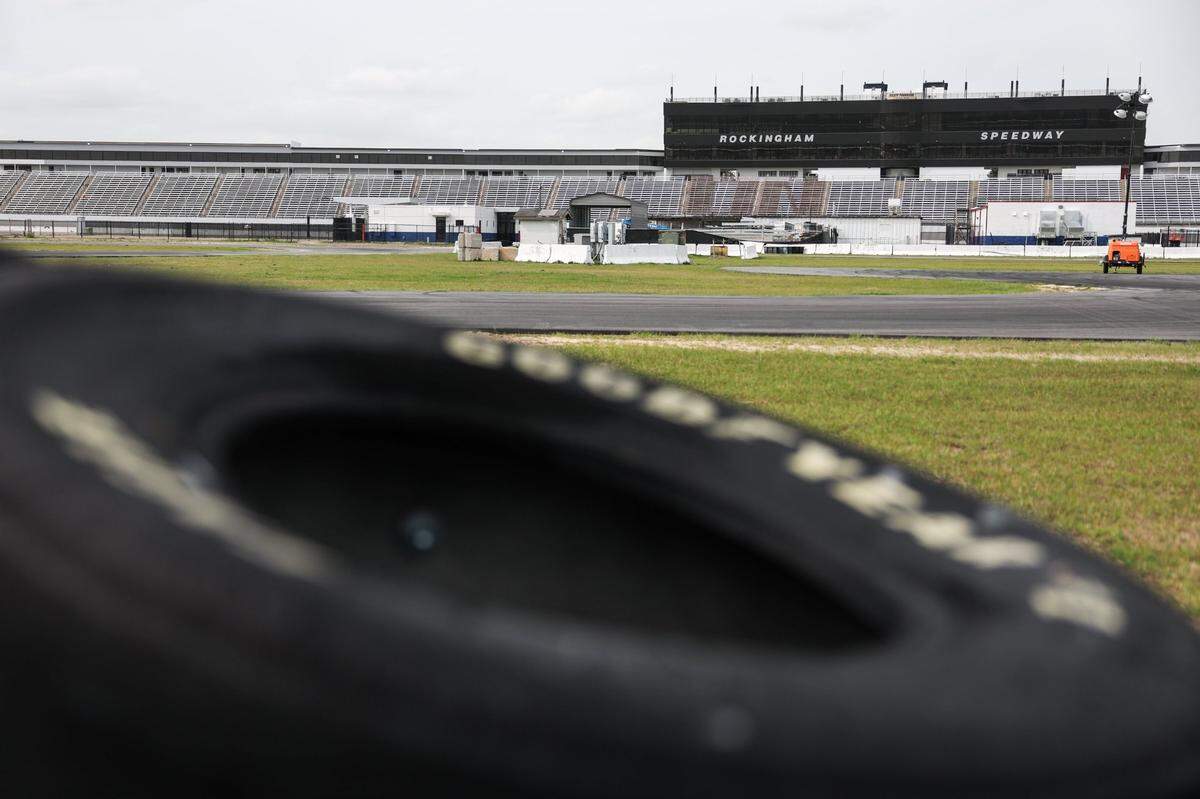
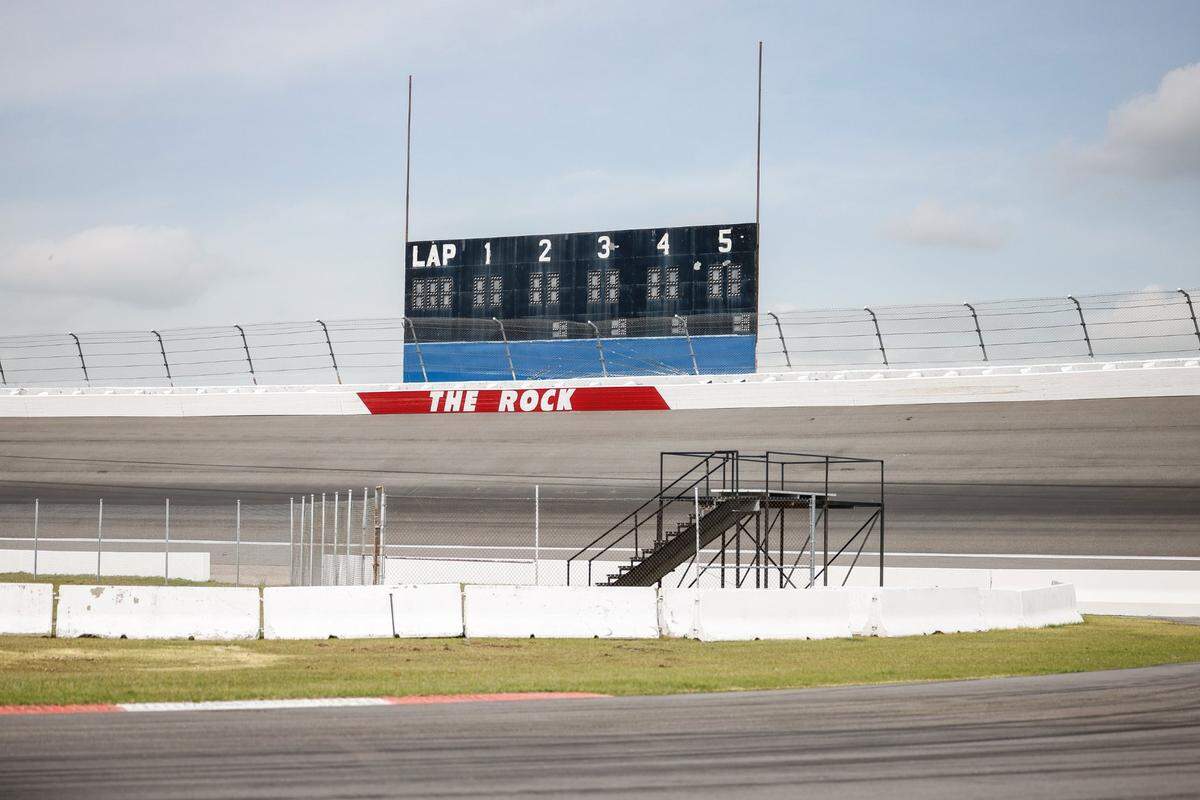
Lovenheim started with a $3.5 million repave of what he calls “Big Rock,” the famed mile oval. (The facility also is home to a short track — “Little Rock” — and an infield road course.) After that, there were HVAC systems to install, bathrooms to clean and refurbish, pit garages to renovate. By May 2023, it was “90% ready” to host a daytime NASCAR race. By August, once the announcement came, it was closer — save for a few more NASCAR safety specifications required of all facilities, including SAFER barriers on all walls of the track.
All in all, with the money put forth by Lovenheim himself and the government, about $15 million has gone into Rockingham’s revival, Lovenheim said.
“It was some pretty fancy footwork,” he said. “Nine million seems like a lot of money. But it’s not. Not here. Not when you take $3 million for a repaving and say, ‘Get the rest done.’ But we did. And if we hadn’t self-performed most of the work, I think it would’ve cost double.
“Because my construction company” — he owns Carolina Design and Construction — “gave us the flexibility to really change course on a dime, when we were busy doing this mess. ‘Oh, we need all this.’ We responded, ‘OK, let’s stop here with the bathrooms, let’s stop Little Rock. Let’s divert these funds and make sure NASCAR has what it needs to throw a race in 2025.’ And that’s what we’ve done.”
Once the renovation was accounted for, other stars aligned. A big one was Bob Sargent. The well-known track promoter and leader of Track Enterprises connected with the speedway in the spring of 2024 and guided communications between Rockingham and NASCAR.
Lovenheim deemed that 50% of the reason that NASCAR has come back had nothing to do with him. It’s a cocktail, he said, of a windfall of government money, the right people showing up at the right time, NASCAR’s thirst to return to its roots — the “golden triangle of racing,” as Lovenheim calls it, where moonshine runners were born. That golden triangle: The foothills in North Wilkesboro, the sandhills in Rockingham, the state line in Charlotte.
“Better to be lucky than good,” Lovenheim said, talking about his Rockingham venture, but also seemingly about everything else. “But you need both.”
What is Rockingham Speedway’s future?
That’s Rockingham’s past and present. Its future as a racing complex is now officially on trial.
Ask anyone — drivers, community members, NASCAR officials — and they’ll all be their own variation of cautiously optimistic.
“We’re really looking forward to being there,” Ben Kennedy, NASCAR’s chief venue and racing innovations officer, told The Observer. “I was talking to Bob Sargent the other day, who’s promoting the event, and they’re wide open on getting ready for it. …
“Ticket sales have gone really well for him. I know he’s had a lot of corporate support as well. And I think the best part about it is the owners are investing in the facility in a way that we haven’t seen before, too.”
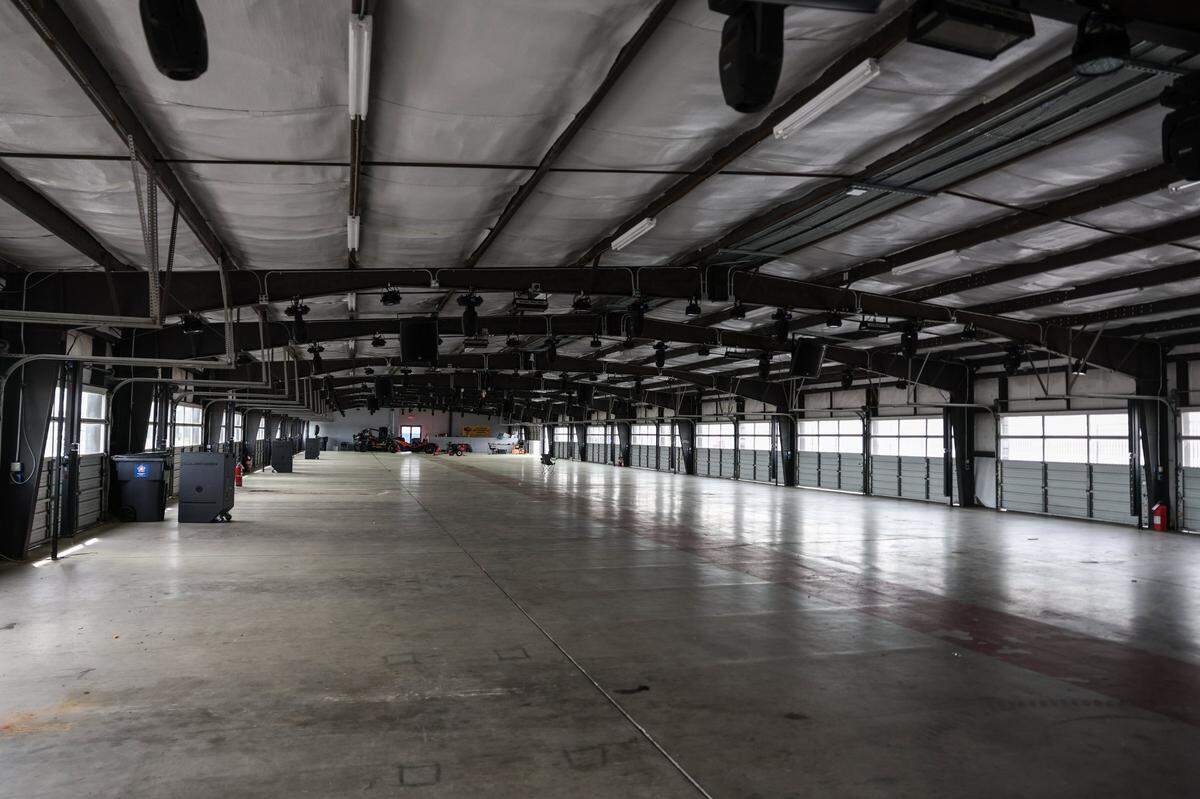
Kennedy said that getting Rockingham a Cup date starts with this coming weekend. A successful weekend means a lot of things: packed stands, the track’s facilities holding up, the venue looking good on TV. A strong race wouldn’t hurt, either.
“For the Cup schedule, we’re in the process of building out our schedule through 2031,” Kennedy said. “And I think the great part about it is we have great interest for new events in new markets. I would say now more than ever we have to be more thoughtful and strategic in any moves that we make, just because (when) we add a new event, it’s gotta come from somewhere.”
He added: “I would say for Rockingham in particular, like all other tracks and promoters out there, it’s on the radar for sure (for a Cup date). I think it’s something you want to see how it does the first few years, and then if it’s successful, it’s something that we’ll put in our consideration set.”
Mark Martin, one of the drivers in the last Cup race at Rockingham, isn’t shy about wanting to get Rockingham back on the Cup schedule.
“I’m not opposed to modernizing facilities and building bigger and all these things, but there is a major thirst for the more racing roots,” Martin said. “Rockingham, I think, is an important addition to our sport. We need to go to these dazzling facilities, like Daytona and Atlanta and Charlotte, but we also need to be embracing where we came from. I think there’s a segment of the fans that really embrace that.”
There most certainly is.
Count Crump, the aforementioned city manager, among those fans. Count all of the city of Rockingham and all of Richmond County. Count their unlikely playmaker — Lovenheim — too.
Together, their NASCAR dreams were revived. Kept alive.
And still are.
This story was originally published April 13, 2025 at 5:00 AM with the headline "A nightclub magnate and an NC town kept Rockingham’s NASCAR dreams alive — and still do."