Why NASCAR lawyer says settlement is unlikely in 23XI Racing lawsuit — and what’s next
For those curious as to whether NASCAR and two of its Cup Series teams could land on terms of a settlement and avoid trial in December, a NASCAR lawyer has an answer:
That’s not likely.
“I don’t see a great path,” said Chris Yates, the attorney representing NASCAR, which finds itself as the defendant in the federal antitrust lawsuit brought forth months ago by 23XI Racing and Front Row Motorsports. “Because if 23XI and Front Row think that this is going to lead to a renegotiation in the 2025 charter (agreement), they’re wrong.”
Yates doubled down on this assertion to The Charlotte Observer on Thursday, about 24 hours after NASCAR filed a counterclaim to the lawsuit involving the sanctioning body and 23XI and FRM. Yates said that he thinks there is “a misconception out there that what’s happening here is the litigation will force a renegotiation” — and, he added, “I just want to make clear that that’s not going to happen.”
The basis for the original lawsuit, which was filed in October in Charlotte, was that the France family-owned NASCAR represents a monopoly.
The lawsuit states that NASCAR has used “anti-competitive and exclusionary practices” to “enrich themselves at the expense of premier stock car racing teams.” Those ways of enriching themselves include that NASCAR owns a majority of the country’s big racetracks that it uses; that NASCAR Cup teams can’t participate in any other stock car series; and that NASCAR mandates that its teams purchase cars and parts from NASCAR-approved suppliers.
The lawsuit was filed after negotiations for the charter system for 2025 concluded. The newly established charter system was slightly revised from the original system adopted in 2016, which made it so each race team operated like franchises in other pro sports leagues. Think of how the New York Yankees are a franchise that belongs to Major League Baseball. NASCAR’s charter system guaranteed entry into each race and a portion of each race’s purse — hoping that it would deliver stability and long-term value to existing team owners, which, in theory, would lead to more investment from said team owners to make the enterprise more competitive and generally better.
The newly established charter system was agreed upon by 13 of the 15 Cup teams in September. The 2025 system doesn’t make Cup charters permanent — a key request among teams — but it still offered some concessions. Among the most prominent: Charter holders receive 49% of broadcast revenue under the new media rights agreement — a 25% bump from 2016.
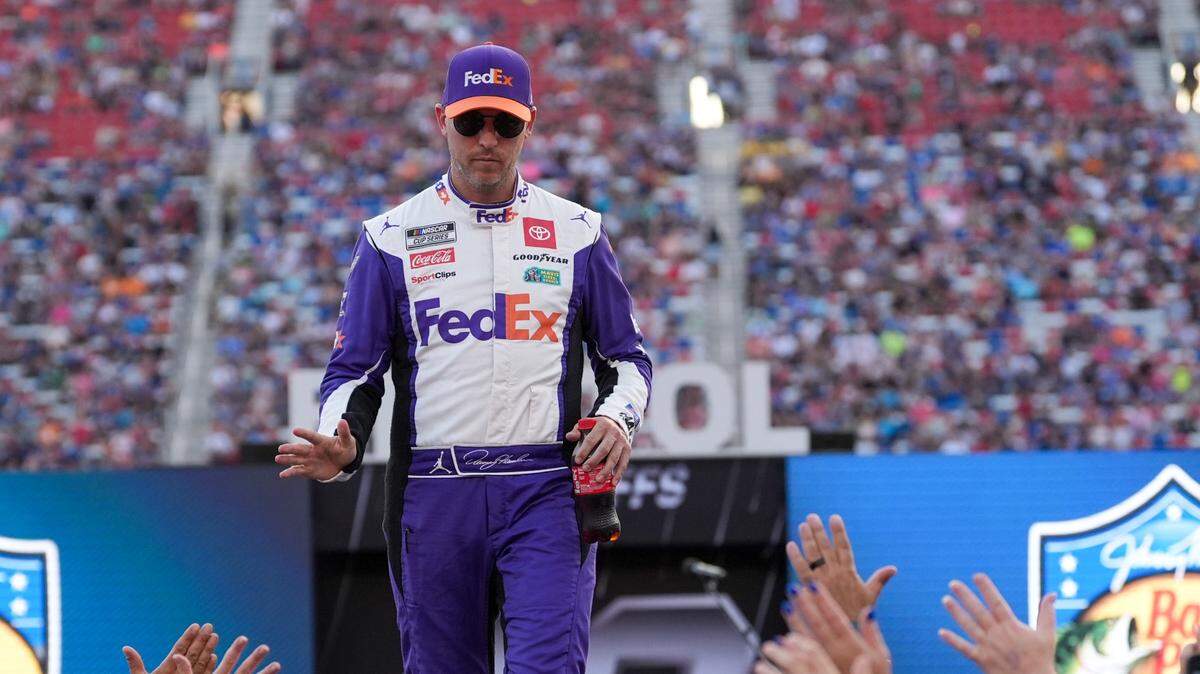
The two teams that didn’t agree to the system were 23XI Racing and Front Row Motorsports. 23XI Racing is co-owned by sports icon Michael Jordan and driver superstar Denny Hamlin, and its drivers are budding stars in the sport Tyler Reddick, Bubba Wallace and Riley Herbst. Front Row Motorsports is owned by Bob Jenkins, and the team’s drivers are Todd Gilliland, Noah Gragson and Zane Smith.
NASCAR, in several court filings including Wednesday’s counterclaims, asserts that the two teams didn’t sign the deal because they are trying to transform this case from a legal battle into a business negotiation. Yates said it puts NASCAR in an ironic position: defending a charter system that was originally implemented at the behest of the teams.
Yates said NASCAR doesn’t need the charter system in place. After all, the sport was fine prior to the system being established in 2016.
He added that the lawsuit is threatening the continuation of the charter system no matter who prevails in litigation.
“Ordinarily, if you’re a defendant, you’re in a situation where there’s something you’re desperate to preserve, and that’s why you settle,” Yates said. “Here, NASCAR would be totally fine going back to the model that exists at the Craftsman Truck Series, that exists in Xfinity Series and the Cup Series before the charter system came into place. Again, teams came to NASCAR and said, ‘Hey we want this.’ But NASCAR would be totally fine with everyone racing open and having to compete for entry every race. That’d be fine with NASCAR.”
He added: “There’s no leverage. ... NASCAR will defend the charter system because we think it’s good for teams. But if it ultimately goes away, it goes away.”
So if no settlement, what’s next in NASCAR lawsuit?
With no settlement on the horizon, a few milestones for the rest of the case come into focus.
The first will come in May. That is when NASCAR will head to the appeals court regarding NASCAR’s appeal to a district court’s ruling that the two plaintiff Cup Series teams should be allowed to continue competing with a charter during the 2025 season, even though they refused to sign the charter agreement put forth in September.
Another will come in September or October, Yates said. That’s when NASCAR will file a motion for summary judgment at the end of discovery. A summary judgment motion essentially asks the court to decide the case without having a trial.
If that isn’t granted, a jury trial is scheduled to begin Dec. 1, something Yates said NASCAR is “planning on.”
The jury trial will address the lawsuit 23XI and FRM brought to NASCAR, as well as NASCAR’s counterclaims to 23XI and FRM (and longtime business partner to Michael Jordan, Curtis Polk), at the same time.
This story was originally published March 6, 2025 at 12:29 PM with the headline "Why NASCAR lawyer says settlement is unlikely in 23XI Racing lawsuit — and what’s next."