As NASCAR makes emphatic return, 5 memorable moments in Bowman Gray Stadium racing history
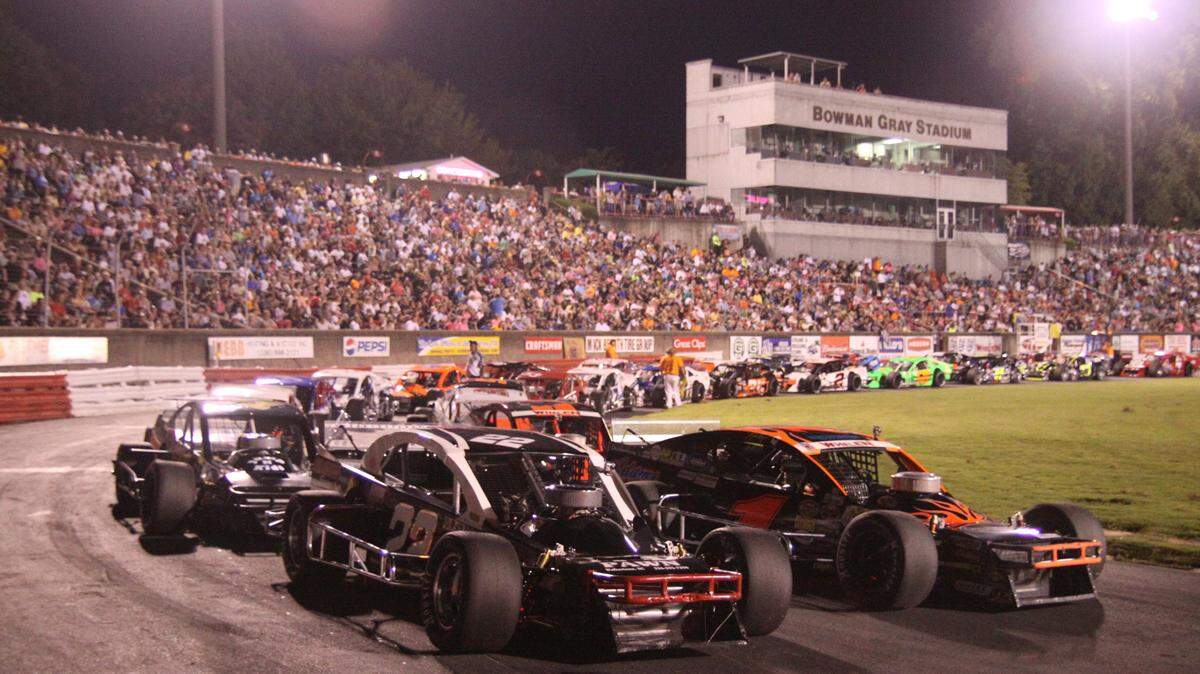
NASCAR racing returns to the “Madhouse” on Sunday night.
Bowman Gray Stadium, the longest-running weekly track in racing history, is the site for the Cup Series’ preseason Clash on Sunday night. The legendary quarter-mile track near downtown Winston-Salem — among the smallest venues to host NASCAR races — is set for its first NASCAR race in 54 years.
Here are five memorable moments throughout the history of Bowman Gray Stadium:
When construction began, it wasn’t necessarily for a race track
Ground was broken in March 1937, as a public works project to provide jobs during the Great Depression.
Intended to be a football stadium, the venue received half of its construction funds from the Works Progress Administration, a New Deal-era program to create jobs. The rest came from locals, a sizable portion of which came from the family of Bowman Gray Sr., the former president of R.J. Reynolds Tobacco.
Gray, a Winston native whose father co-founded Wachovia Bank, died in 1935. His wife, Nathalie Fontaine Lyons Gray, made a substantial donation to the project in his memory — securing the naming rights.
Before relocating to Winston-Salem, first came Wake Forest football
While Wake Forest moved from the Raleigh-area town with its name in 1956, the football team wasn’t new to Winston-Salem.
On Oct. 22, 1938, the Demon Deacons lost a 7-0 game to Duke in the inaugural event at Bowman Gray Stadium. It was still one year before a dirt track had been constructed around the football field.
Wake continued scheduling frequent football games at Bowman Gray during the seasons preceding its move, before the Winston-Salem venue became the home of both the Demon Deacons’ and Winston-Salem State University’s programs in 1956. Wake football kept playing there until 1968 — upon the completion of Allegacy Stadium (then called Groves Stadium) — and the Rams still play their home games at Bowman Gray.
The venue held its first races long before NASCAR’s arrival
On Sept. 1, 1939, Bowman Gray Stadium hosted a set of midget car races.
The Winston-Salem Jaycees sponsored these races on the cinder running track at Bowman Gray. World champion Johnny Wohlfiel dominated the event, and with an estimated 5,000 in attendance, the Jaycees announced more racing the following week.
The series ended after three weeks, and midget racing would not return to Bowman Gray until 1947.
City of Winston-Salem paved the track, bringing NASCAR to Bowman Gray
Racing was bringing big crowds to Bowman Gray, and city officials opted to pave the quarter-mile dirt track in 1947.
Bill France Sr. and Alvin Hawkins took notice. The first NASCAR race at Bowman Gray was held on May 18, 1949, a modified division race won by Fonty Flock.
Richard Petty earned his 100th career win at Bowman Gray
The 87-year-old known as the “King” won four races at the track, including one of his milestones.
Richard Petty won his 100th race at Bowman Gray Stadium on Aug. 22, 1969, in what was known as the Myers Brothers 250. Then just a 22-year-old racer from Randolph County, Petty led nine laps after winning the pole and held off Bobby Isaac to take his historic checkered flag.
This story was originally published February 2, 2025 at 5:00 AM with the headline "As NASCAR makes emphatic return, 5 memorable moments in Bowman Gray Stadium racing history."