Williams-Brice embarks on first major seating changes in almost 25 years. Take a look
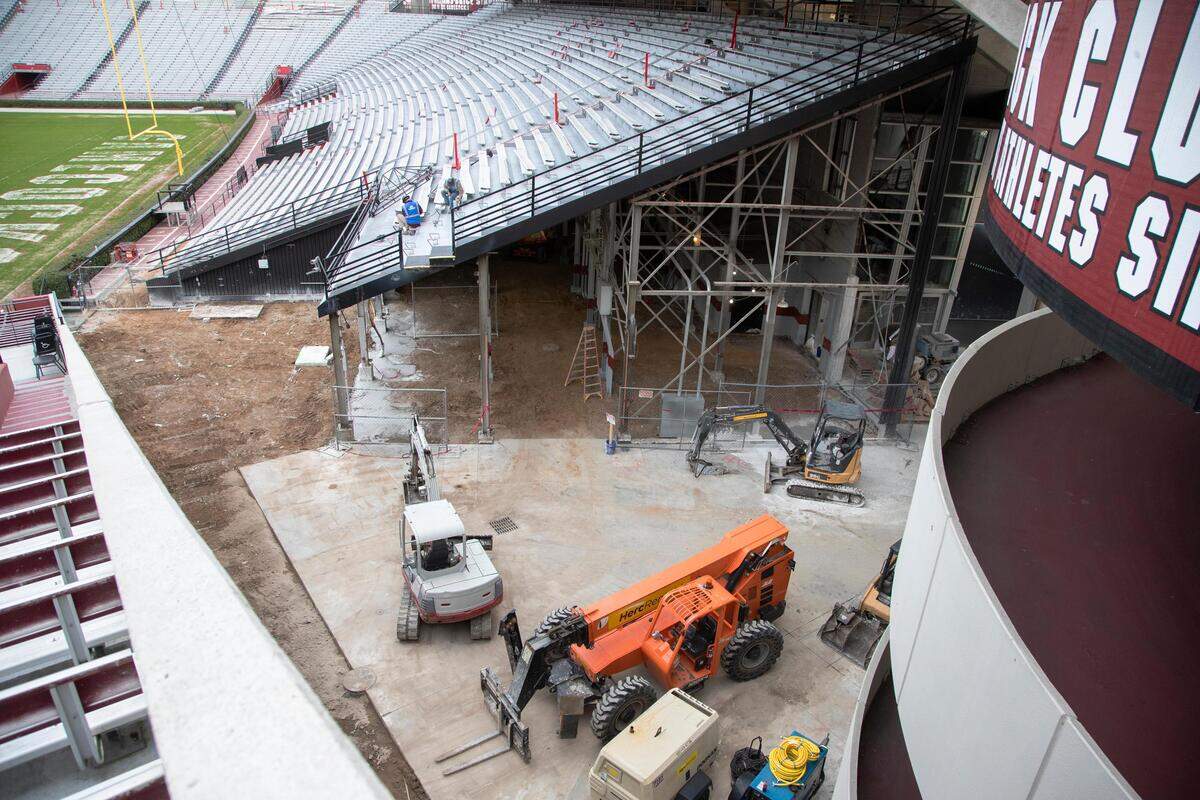
It’s almost stark seeing where South Carolina’s football weight room used to be at Williams-Brice Stadium.
Mounds of dirt are where weight racks once stood. There’s some concrete left, but there’s also a stretch of pipes with a few lines popping up from a trench. That’s where a bar and kitchen will be built next to an open club area.
The home of the Gamecocks is humming with construction. Three areas of the stadium are set to house four new club sections, part of a large change in the way some fans will experience a USC football game.
They’re the first major tweaks to Williams-Brice Stadium seating since the south end zone was expanded in the mid-1990s.
“We had the opportunity to maximize some spaces that football was using previously,” said South Carolina executive associate athletic director for development Steve Eigenbrot, “then increase the opportunity for fans to have a better experience. What we’re finding in this day and age is that fans want more amenities to keep coming.”
These upgraded areas aim to address a sort of middle ground in seating, something the school termed “affordable premium.” They won’t cost as much as the most in-demand suites up high, but they will offer more comfort and experience than an regular seat.
“Rather than adding premium, we’re trying to make a better experience for the everyday Gamecock Club member,” Eigenbrot said.
A look inside at the under-construction stadium gave a sense for what these changes might look like when they are fully in place for the start of the 2020 season.
The changes
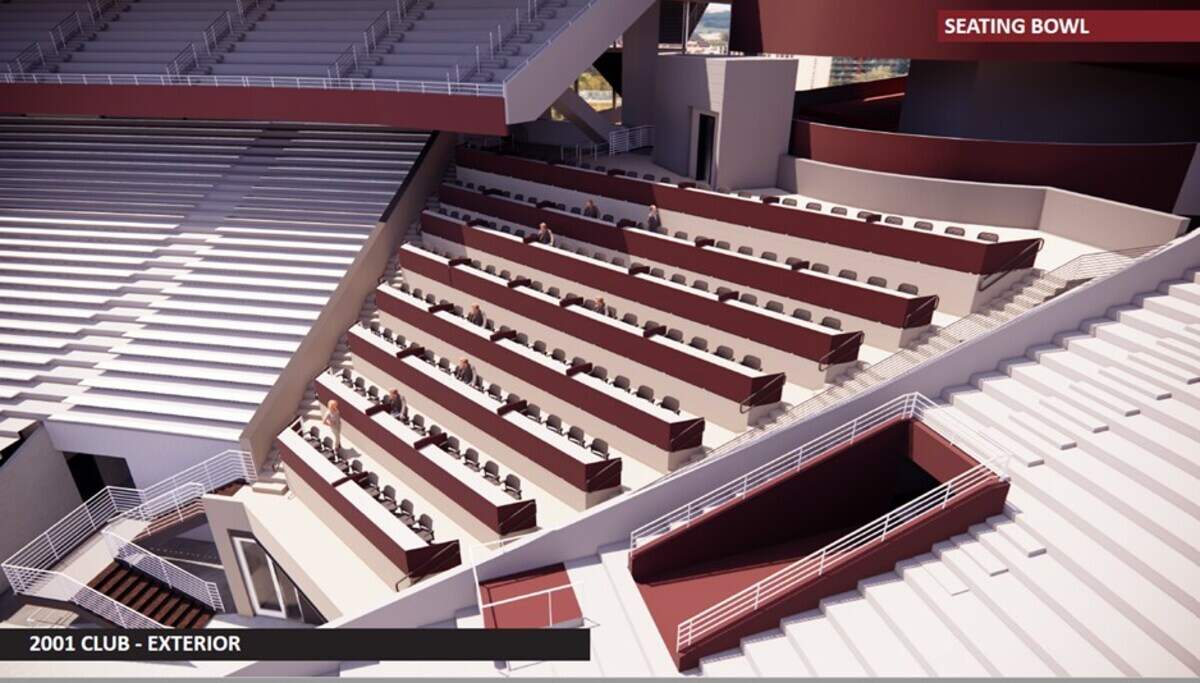
Standing inside the bowl at Williams-Brice, the main changes fans can see will be a wide-open deck on the east side of the stadium (Key Road) and a small wedge of new seating on the southwest corner of the stadium called the 2001 Club — as the name suggests, it’s right where the Gamecocks enter the field during “2001.”
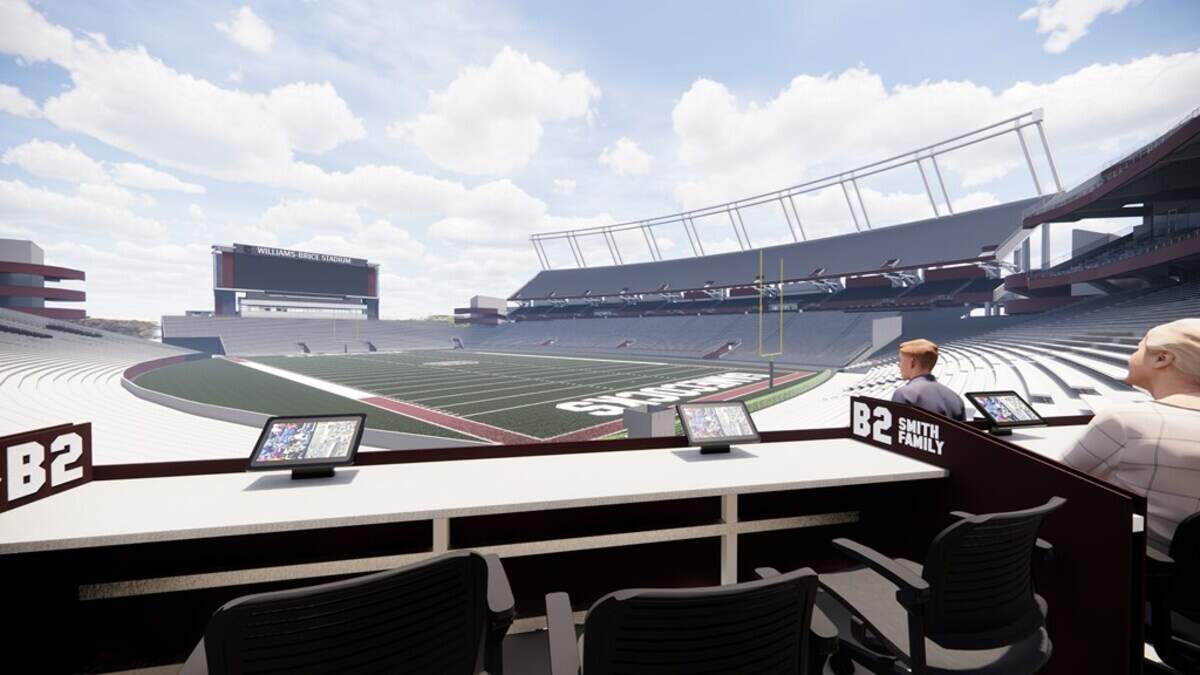
The east side changes will take out some regular seats to create a patio area, while the wedge in the corner will include a set of new loge seating — open-air, suite-like seating areas that fit between four and eight people.
“If you have a loge box up there and it has eight seats in it, you can have some guests if you’re a business person or a person in the community,” Eigenbrot said. “And whether they’re corporately owned or not ... the loge box piece, there’s 70 loge boxes, but they’re all four-seaters, so you’re talking about 300 seats.”
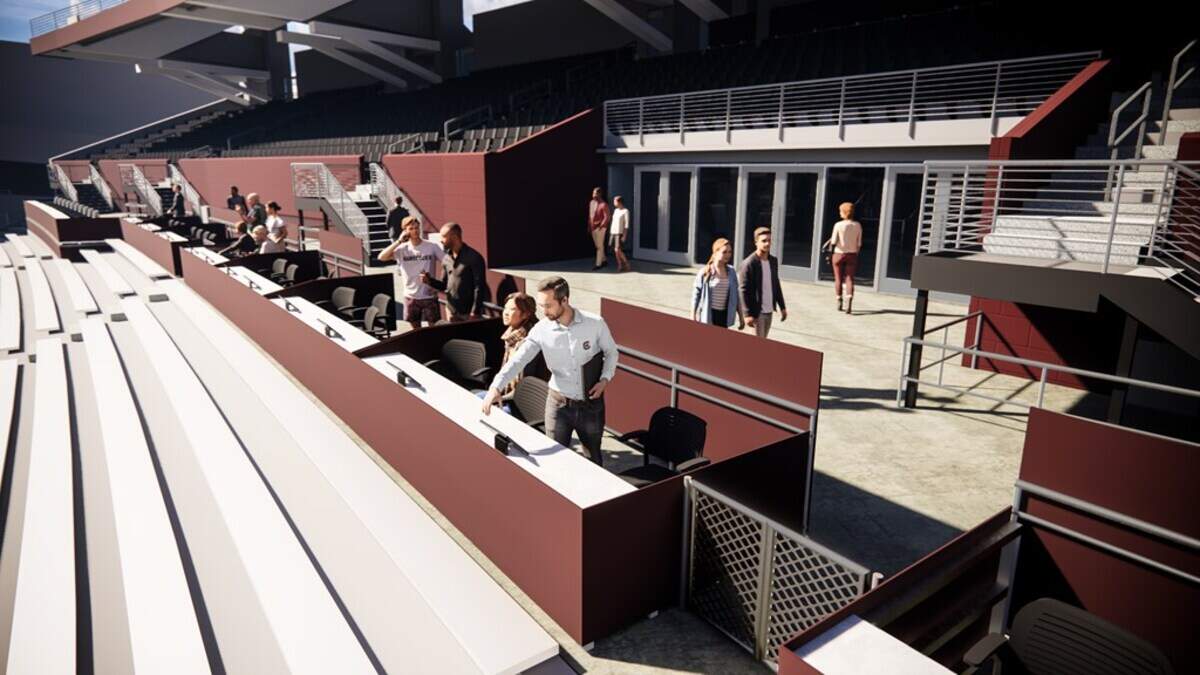
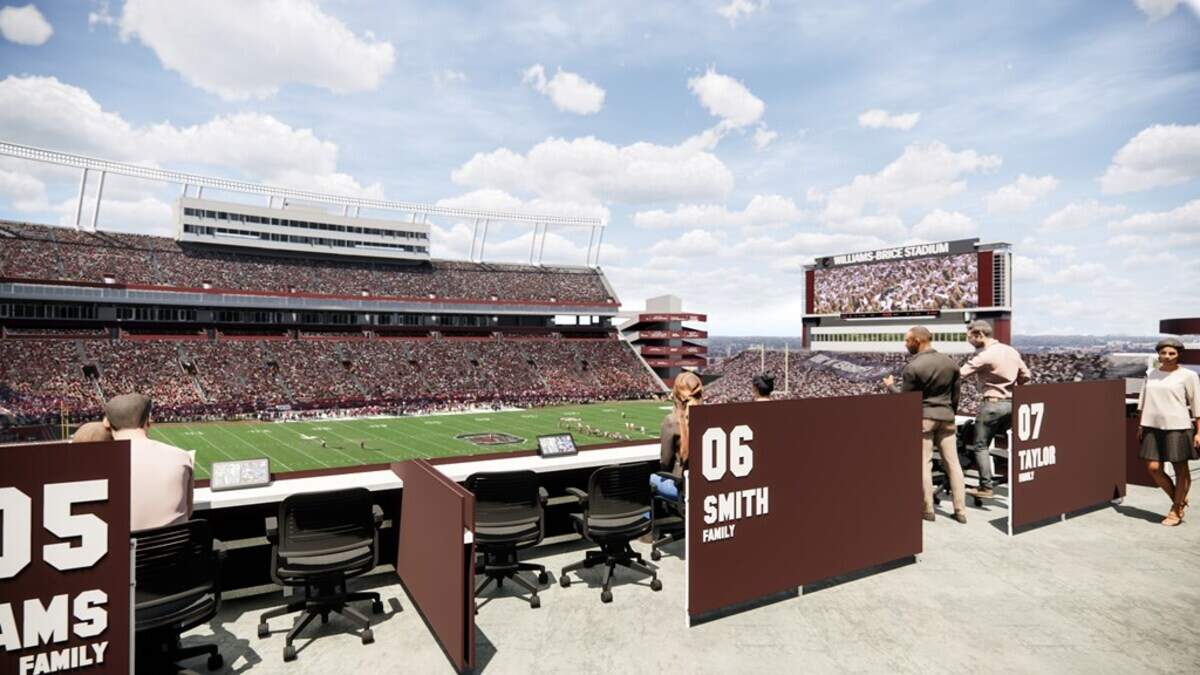
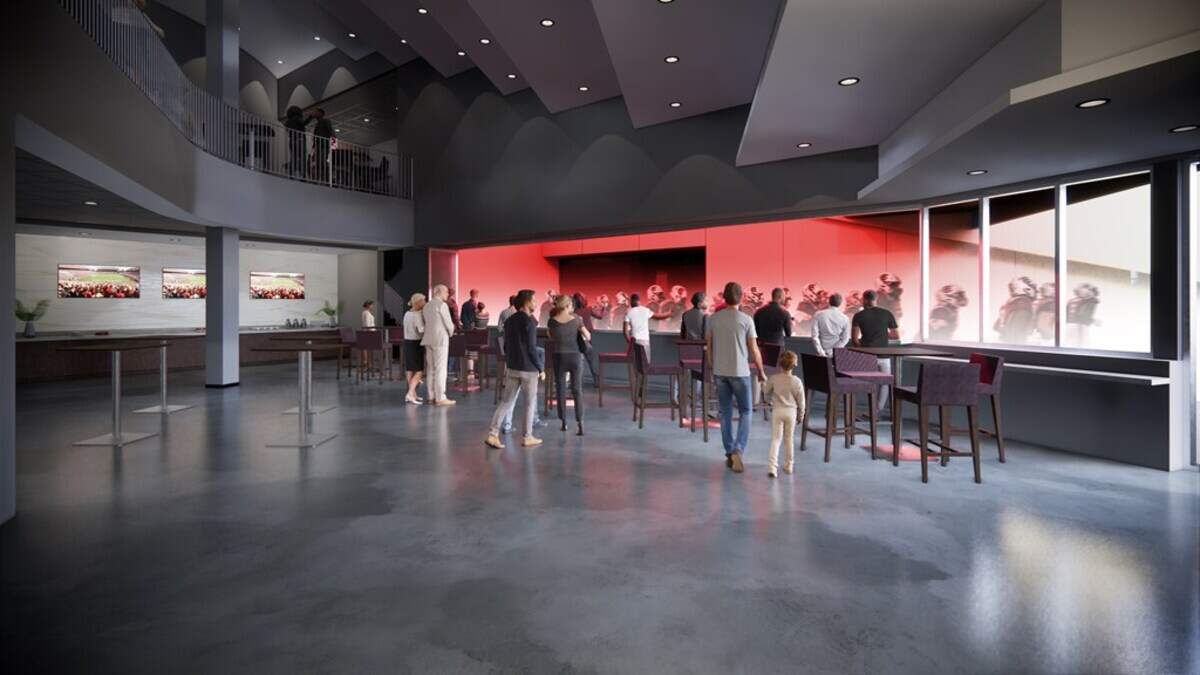
The bigger change comes underneath the surface, beneath the seats, where four enclosed club areas offer places where fans in those sections can duck indoors to buy food or a drink, or to cool off from the late-summer heat. Those clubs are under the three aforementioned areas, plus the West Club seats.
The prices for tickets with access to those club areas range from $715 per season ticket in the south end zone to $1,165 on the east side club seats (that includes game ticket price). The change is between $29 and $65 more per game compared with previous prices. The new premium loge boxes account for a small number of seats, less than 4% of the affected seats, and those start around $14,000 for four seats.
The $22.5 million project is expected to generate about a million dollars a year in extra revenue. Around 8,000 existing seats are being affected, and the changes will lower the stadium’s capacity by a few hundred people, according to Eigenbrot. The 2001 Club adds 138 seats in loge boxes, but that doesn’t quite offset some of the seats coming out for the deck on the east side.
One of the perks of the 2001 Club: Fans can high-five coaches and players as they go to and from the field before, during and after the game. That area is considered premium because there’s a buffet.
Williams-Brice Stadium first became an 80,000-plus seat facility in 1996, when the school added a deck to the south side of the venue as well as the premium area called The Zone. Those additions meant 6,153 new seats.
A big reason changes are happening now? The football program moved most of its operations to a new building across Gamecock Park and left a lot of open space where the old weight room and football meeting rooms were under the south stands. That vacancy plus available-but-somewhat-underused concourses in the middle of each side of the stadium left the spaces for these new additions.
Fans who held the affected seats were made aware of the changes and the price increases, and they were given the option to move elsewhere in the stadium if desired. Eigenbrot said USC actually saw several hundred new season tickets sold in those areas, with a fee attached going toward the upgrades.
Stadium project timeline
Greg Hughes of Contract Construction, the firm handling the project, said work fired up fully in the days after the Clemson game, but his crews managed to get in at times during the season to get a few things done on the east side.
His company has three crews working, treating each area as a separate project (the 2001 Club and South Club are adjacent).
“We had about 50 people over here the day after the Clemson game, that Sunday,” Hughes said. “We’ve been working seven days a week ever since and plan to do so til the end. We’ll have the $22.5 million project done in eight months.”
The design and planning took more than a year, he said. To get to this point, South Carolina took bits and pieces from different stadiums, Eigenbrot said. That included SEC venues administrators saw during USC road games and a few they made other trips for. He mentioned Texas A&M, Missouri, Baylor and Kansas State as sources of inspiration.
The project brought the athletic debt up and close to the state-mandated ceiling of $200 million. That reality changes some of the dynamics comparatively to other SEC schools. Texas A&M’s last renovation cost $485 million. Kentucky’s was $126 million, while Arkansas’ was $160 million.
The expectation from the school is at least $1 million a year in revenue from the new areas, Eigenbrot said.
“We want to pump that into future stadium renovations like doing LED lights and doing ribbon boards, improving restrooms and those sorts of things,” Eigenbrot said.
Soon enough
At the moment, one can still see the rough edges of the work being done in Williams-Brice.
The future seating areas have their general shape. One can see the windows that will look outside to landscapes of Gamecock Park and the downtown Columbia skyline from the east side of the stadium. The rough shapes of the rooms are visible amid the clangs of metal and the construction.
In an era when drops in college football attendance are a perpetual worry (USC’s season ticket numbers dropped five consecutive seasons before a jump last year), this plan is aimed at creating something a little different, something beyond a standard seat and access to the usual concrete concourses and restrooms.
The school still has other plans for the stadium. Down the road that could mean more suites, an area where South Carolina has fewer than almost any other SEC stadium. It could also come with different amenities, features or even add-ons to the projects already underway.
There are a lot of options for fans, with ranges of tiered costs when it comes to annual donations attached to the actual tickets to the games. Massive stadiums across the Southeast have a range of offerings, suites, clubs and loge boxes. And Gamecocks officials say they’re trying to do something a little different with the latest project.
“We have premium seating right now, and what we’re making the difference between premium seating, which really includes food and is more of a higher-end experience, and club seating, which hopefully is more (for the) every-man,” Eigenbrot said. “Affordable.”
What to know about Williams-Brice project
The four sections affected:
▪ The South Club, underneath the south end zone seats, is accessible from Sections 11, 12 and 13.
▪ The 2001 Club, a wedge-shaped section of new loge box seats that will fill in an open corner over the tunnel the team uses to take the field and a club area beneath it. The indoor portion will include window that open so fans can high-five players as they go to and from the field.
▪ The East Club, the 400-level seats that sit at the top of the lower deck on the east side (Key Road). This area will include a new deck area, more loge seats and an indoor club area.
▪ The West Club, the 100-level seats near the top of the west lower deck. This area is getting a concourse club area.
▪ What is a club area? These are temperature-controlled indoor spaces with televisions, seating and concessions. They allow fans in the attached areas to duck inside and have a different stadium experience. These do not have direct views of the field. The 2001 Club also has a buffet, which makes it “premium seating.”
▪ What is a loge box? A suite-like, open-air seating area with four to eight seats and a TV monitor.
▪ More information can be found here: https://gamecocksonline.com/feature/wbs-2020-project
This story was originally published January 21, 2020 at 9:38 AM with the headline "Williams-Brice embarks on first major seating changes in almost 25 years. Take a look."