What’s next in Clemson receiver’s NCAA eligibility lawsuit? Judge sets timeline
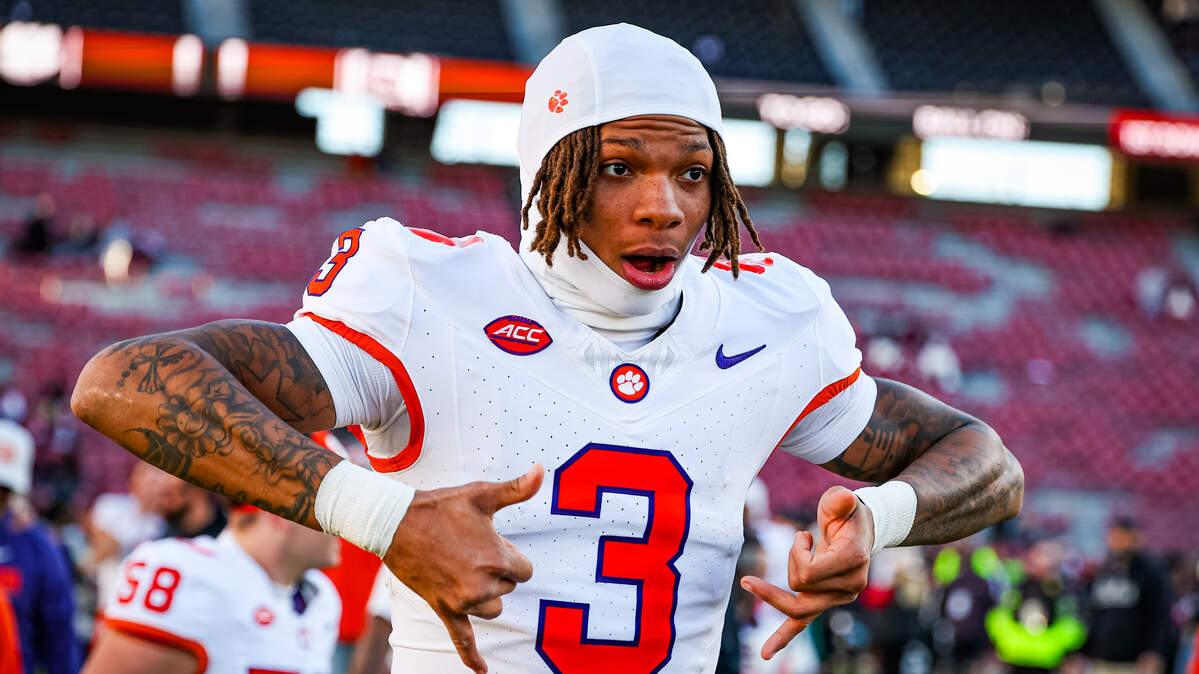
Clemson wide receiver Tristan Smith’s NCAA eligibility battle took another step forward Monday.
After hearing roughly 30 minutes of arguments from Smith’s lawyers and NCAA lawyers in a virtual hearing, a local judge said she’ll make a ruling on whether to grant Smith a temporary injunction by Friday.
If granted, the injunction would allow Smith, 22, to compete for the Clemson football team in 2026. Smith sued the NCAA for a fifth year of eligibility in January, arguing the organization was unfairly counting his non-NCAA junior college years against his five-year NCAA eligibility clock.
The assigned judge in the case, Jessica Ann Salvini, indicated she’d make a ruling on the injunction by Friday after taking a closer look at both sides’ arguments.
“I’m going to take it under advisement,” Salvini said. “You’ll have my decision, though, by the end of this week. I don’t sit on my cases long. I just want to go back and take a look at some of the case law that you both cited.”
Salvini promised a ruling “as soon as possible.”
The case is being heard in South Carolina’s 13th Judicial Circuit, which covers Greenville County and Pickens County, where Clemson’s campus is located.
Why is Tristan Smith suing the NCAA?
Smith, 22, transferred to Clemson in 2025 from FCS Southeast Missouri State. The 6-foot-5 receiver from Georgia became a fan favorite and flashed his potential with 24 catches for 239 yards and a touchdown in 13 games (four starts).
But the 2025 season was Smith’s fourth at the college level after playing at SEMO in 2024 and Hutchinson Community College in Kansas in 2022-23.
The NCAA in November denied Clemson’s waiver request for Smith to play a fifth season.
In a lawsuit originally filed in January, Smith’s lawyers argued that the NCAA is unfairly counting Smith’s two years of football at Hutchinson, a non-NCAA junior college, against his “eligibility clock” despite giving other athletes in similar situations additional years of eligibility.
“The crux of our case is simply the arbitrary application of this waiver and why he (Smith) is not being afforded the same relief as other individual athletes have been afforded in the past,” lawyer Alan Wilmot said Monday.
Clemson WR ‘unduly prejudiced’ by NCAA rules
Smith was not eligible for the “Pavia waiver,” a blanket waiver the NCAA extended to every Division I college athlete whose eligibility was set to expire in 2024-25. That ruling allowed prominent athletes like Vanderbilt quarterback Diego Pavia to play another season last fall — but it didn’t apply to Smith because his eligibility under current rules didn’t expire until 2025-26 (as opposed to 2024-25).
There’s now traction for the NCAA to approve a measure giving athletes five years of eligibility to play up to five seasons, widely known as the “5 for 5” rule. But the rule isn’t official yet, and even if it passes it wouldn’t allow for Smith to be “grandfathered in” and benefit from it retroactively, his lawyers said.
“He’s actually being unduly prejudiced on both sides of the coin,” Wilmot said.
Wilmot also said Smith would suffer “irreparable harm” if the injunction isn’t granted because he wouldn’t be able to play another year at Clemson, and he cited a similar injunction granted in March which cleared the way for Ole Miss quarterback Trinidad Chambliss to retain his 2026 eligibility.
In a declaration statement attached to Smith’s original lawsuit, his agent valued Smith’s potential 2026 NIL/revenue-sharing earnings at $300,000 to $600,000. Smith, who has been open about his tough upbringing in Georgia, said the money he gets playing at Clemson is crucial for supporting his family.
Missing the 2026 season, Wilmot added, would be a “lost opportunity” for Smith, who is not considered a top-tier NFL draft prospect and could significantly increase his chances of playing pro football if he’s an impact player for the Tigers this fall.
“This is all harm that cannot be quantified by simply cutting him (Smith) a check for his perceived NIL value, should he prevail at trial,” Wilmot said.
NCAA: Eligibility rules can’t be ‘in a vacuum’
Lawyer Taylor Askew, who argued on behalf of the NCAA Monday, said the organization was “sympathetic” to Smith’s situation, but it must enforce its rules as they are written. Under NCAA rules, he said, Smith is clearly not eligible for 2026.
“I understand Mr. Smith is disappointed that his career at the collegiate level is over,” said Askew, a former Tennessee Tech offensive lineman who’s argued other high-profile eligibility cases on behalf of the NCAA this year. “... I remember when mine was over as well. It’s sad, but it’s a chapter in a book that closes.”
Askew added: “The rules that the NCAA enforce can’t be looked at in the vacuum of how they impact one player at any given time.”
If the injunction is denied, Smith’s college football career would likely be over. His camp could appeal the ruling or continue fighting the case, but that would likely drag well past Clemson’s 2026 football season. The Tigers’ season opener is Sept. 5.
Clemson is reserving a spot on its roster for Smith if he becomes eligible. He’s been allowed to participate in all team activities as he awaits an outcome.
Tigers coach Dabo Swinney said in February that if Smith’s injunction was denied, Smith could either enter the 2026 NFL supplemental draft this summer or spend the fall on Clemson’s campus training and earning the final credits he needs to graduate through the school’s Tiger Trust program.
Smith could also work as a student coach with Clemson football and stay in shape before moving on to the 2027 NFL Combine and 2027 NFL Draft prep.
If Smith’s injunction is granted, he would be a solid rotational piece for Clemson’s 2026 offense behind starting receivers T.J. Moore and Bryant Wesco Jr.
“Hopefully it’ll go his way, especially when you look around the country and you see some of the decisions that get made compared to his situation,” Swinney said Feb. 25. “But we’ll just have to go through the process.”
This story was originally published June 8, 2026 at 11:13 AM with the headline "What’s next in Clemson receiver’s NCAA eligibility lawsuit? Judge sets timeline."