Straight shooter: How a former Clemson hooper became a broadcasting standout
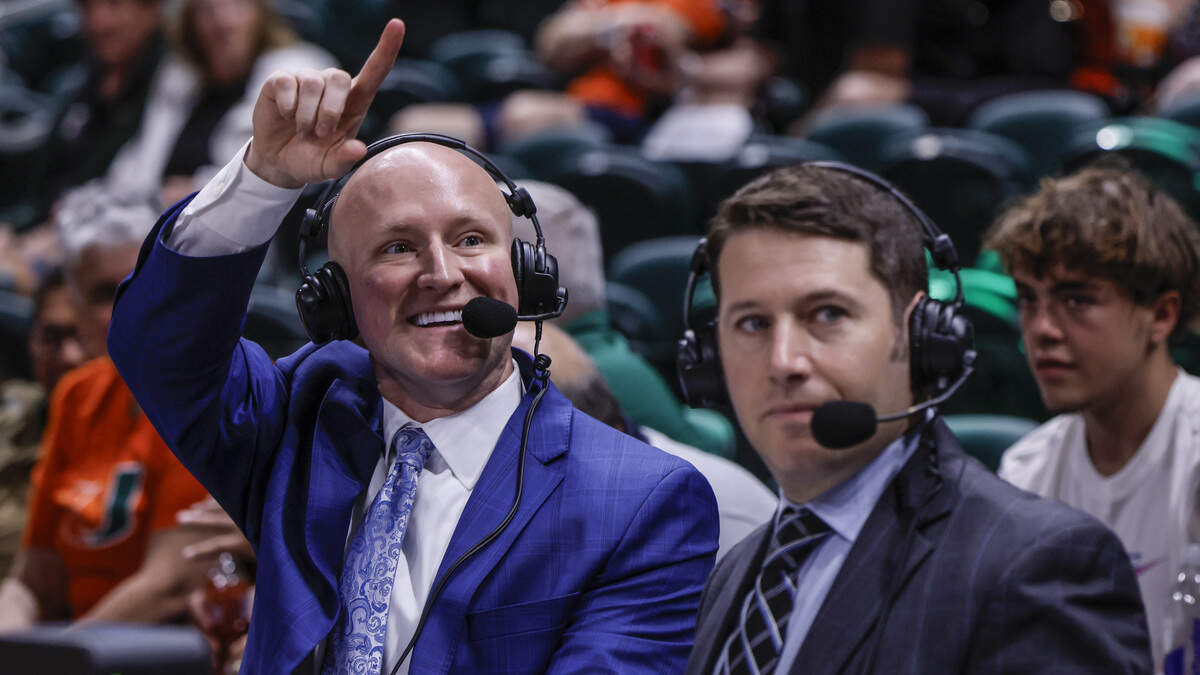
On Sunday, Terrence Oglesby was in Jacksonville, Florida and called the ASUN championship game that sent Queens University to the NCAA tournament.
On Monday, he flew back home to Greenville. On Tuesday, he flew cross-country to Las Vegas. On Wednesday, he’ll be the color analyst for a quadruple-header of Mountain West tournament games that tip at 3, 5:30, 9 and 11:30 p.m. Eastern.
Then it’s three more days of studio work for the Mountain West tournament and Selection Sunday before Oglesby flies back to Greenville, takes a breather and resumes his job as a studio analyst for Charlotte Hornets home games next Tuesday. Before he knows it, he’ll be in Indianapolis for the 2026 Final Four.
“It’s kind of nuts,” Oglesby said. “... But I love it so much.”
Oglesby, a Clemson basketball player from 2007-09, is far from the only broadcaster with a crazy travel schedule this month. It’s March Madness, after all.
But the fact he’s gotten this busy this early into his career is a reflection of just how good others in the industry think he can be.
Colleagues describe Oglesby as a grinder and a versatile talent who’s just as comfortable calling a game in person as he is anchoring a studio show from afar, two jobs that require very different skill sets. At 37, Oglesby isn’t an A-lister yet.
Give him five years, though, and he might be.
“That dude works his butt off,” said Jeff Goodman, co-founder of the college basketball-focused Field of 68 Media Network. “I always say you need to be able to entertain and inform — and T.O. does both at the highest level.”
All of this is very high praise for someone who was once getting paid in hot dogs.
A transition period: ‘What am I doing?’
OK, it wasn’t just hot dogs. Oglesby also got paid $15 a game, if that makes the story any better.
But this was his starting point as a rookie broadcaster trying to break into the industry about six years ago, after Oglesby quit his job mid-season as an assistant basketball coach at Division II Carson-Newman University.
Highlights included paying for studio time to film a YouTube show he jokes only his neighbors and his mom watched ... and calling men’s and women’s basketball games at Division II Anderson University for $15 a pop — plus as many franks as he wanted from Skins’ Hotdogs, a local chain that catered each game.
“I’d pack a suitcase full of hot dogs and take them home,” Oglesby said. “My son loved them.”
He can laugh now, thinking about the ridiculousness of those early broadcasting days. They weren’t as funny at the time.
It was one of the tougher transition periods of his life. Oglesby’s dad, Tony, died unexpectedly in August 2019 at 57. After two seasons of basketball at Clemson, a long overseas career and two years as a graduate assistant for Brad Brownell, Oglesby was starting to sour on his assistant job at Carson-Newman — and coaching in general. His wife didn’t exactly love living in Jefferson City, Tennessee either.
Quitting that job, moving his family back to Clemson in early 2020 and diving headfirst into broadcasting — something he’d been interested in for years but never truly considered as a career path — was essentially hitting the reset button.
Oglesby thought many times: “What am I doing? I’m 33. This is stupid.”
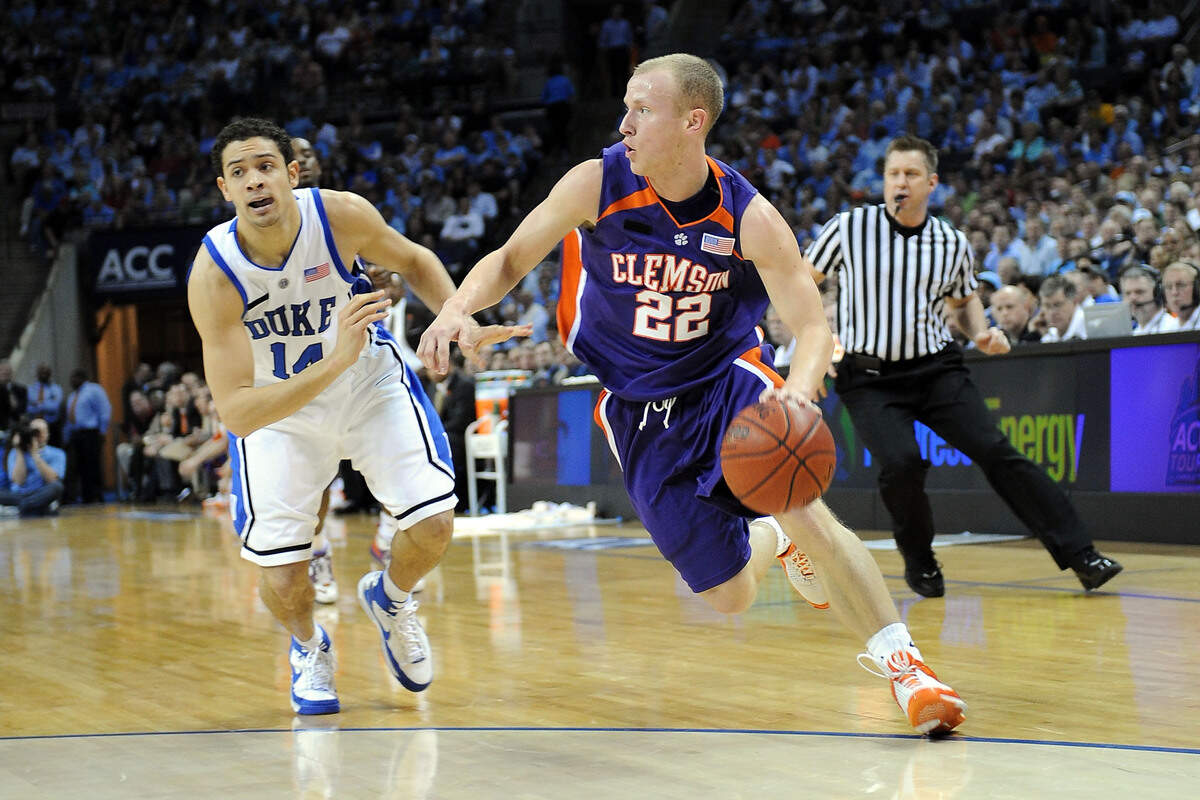
But Oglesby, one of the ACC’s top 3-point takers and makers while at Clemson, knows this as well as anyone: Sometimes to get hot, you’ve gotta keep shooting.
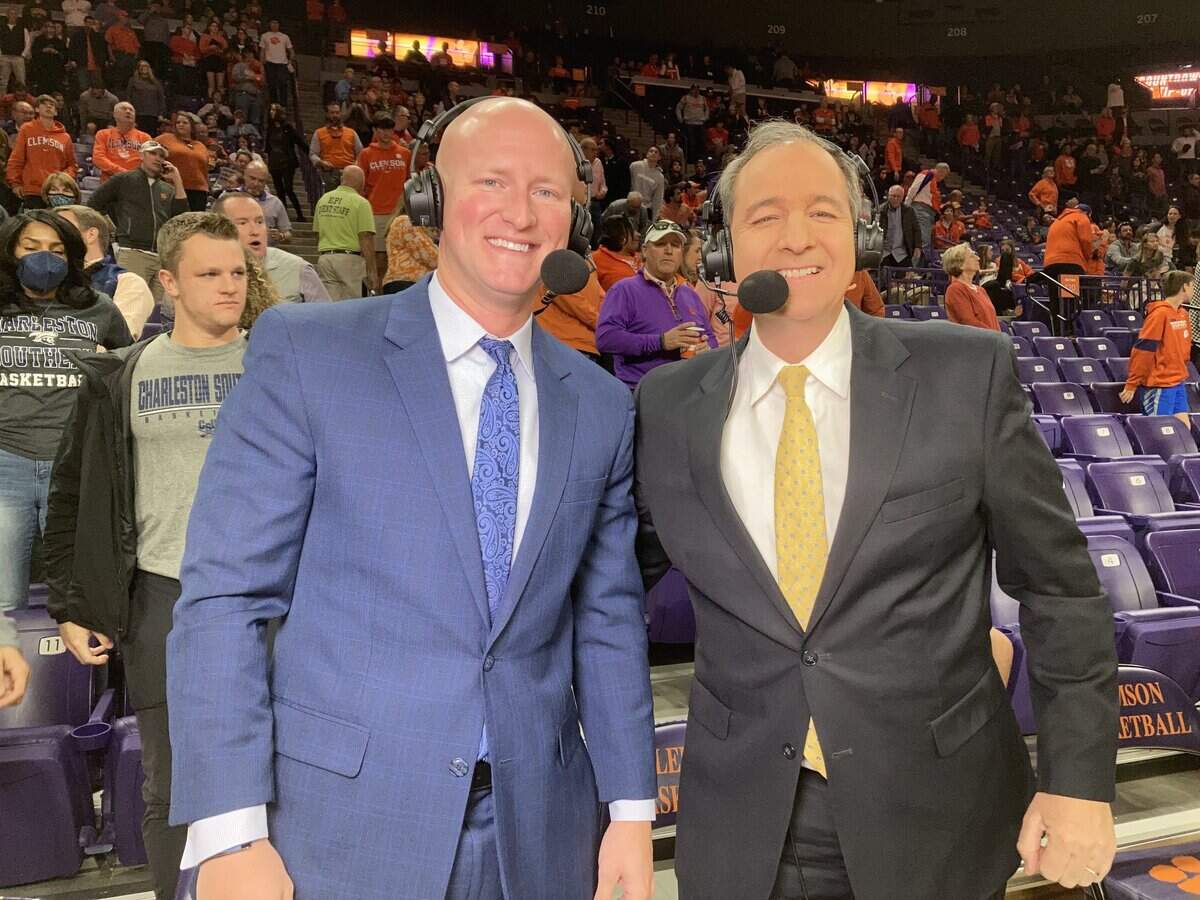
Leaning on the connections he’d formed as a Clemson player and graduate assistant, Oglesby earned some entry-level TV opportunities. He wasn’t perfect — far from it, he says, still cringing at how he once “screwed” an early play-by-play man by losing his mind after a late 3-pointer when he should’ve deferred to his partner. But when he made mistakes, he worked twice as hard to avoid making them again.
Over the years, the opportunities snowballed. Oglesby connected with Goodman and Field of 68. He landed the Hornets studio hosting gig in 2023, a big break for someone three years into the business. He cold-called the head of the ACC Network, asking if he could do some studio work for ESPN from its Bristol, Connecticut campus, which was a “kind of brash” pitch, he admits, but somehow worked.
It helped that Oglesby was pretty good at it.
“He’s very naturally gifted on TV,” ESPN studio producer Bryan Ives said.
3-pointer shooter turned straight shooter
Oglesby is also candid. Like, really candid. He has a lot of thoughts about sports, broadcasting and life, and he isn’t afraid to share them, which was evident during a wide-ranging, 90-minute interview with The State over breakfast last month.
On his one season with the NBA D-League’s Iowa Energy in 2015: “I’d think I was going to play that night. Then freaking Russ Smith would fly in an hour before the game, eating chicken tenders on the way in, and he’d play 40 minutes. ... It was an impossible job. Impossible. ... And my coach, Bob Donewald, was a jerk. He was the meanest guy I’ve ever played for or been around.”
On CBS NFL announcer Tony Romo: “He gets excited. Can’t help himself. I think there’s a child-like, golden retriever-type joy with Romo. But when you’re covering a freaking Super Bowl, tuck your tail in. ... If you want to show excitement, great. It’s just, shut your mouth. They pay you to talk. They also pay you equally to shut up.”
On Maria, his wife of 12 years, who he met while playing overseas in Sweden: “She’s the star. And she’s tough, man ... which is healthy for me, because I needed a wife that I believed would kill me. And I wholeheartedly believe she would kill me.”
On Detroit Pistons forward Isaiah Stewart: “He’s a punk.”
On air, he’s the same way. Oglesby once got into a texting battle with the head of men’s basketball officiating for a conference whose game he was calling (he declined to name the conference). The official didn’t like a phrase he’d used on the air.
“Hey dude, you’re being a little hard on them,” the official texted mid-game.
“Well, they should call it better,” Oglesby shot back during a commercial break.
Interestingly, Oglesby rarely hears from coaches who are upset with something he said during a TV broadcast or one of his many weekly media appearances. He believes that’s because you can be more critical of players in the modern era — after all, the best ones make millions of dollars nowadays — and because his critiques are usually “what the coaches are saying behind closed doors anyway.”
“Honesty is what you want,” ESPN broadcaster Anish Shroff said. “Certain people do it for effect. What I respect about T.O. is he says it because he means it.”
When he works ACC men’s basketball games with Oglesby, Shroff added, he often gets “really good behind-the-scenes access.” Why? Oglesby seems to have a years-long, personal relationship with someone at every school. One coach recently let them sit in on a full film session, which almost never happens.
“He’s very plugged into the sport,” Shroff said.
Staying patient but staying ready
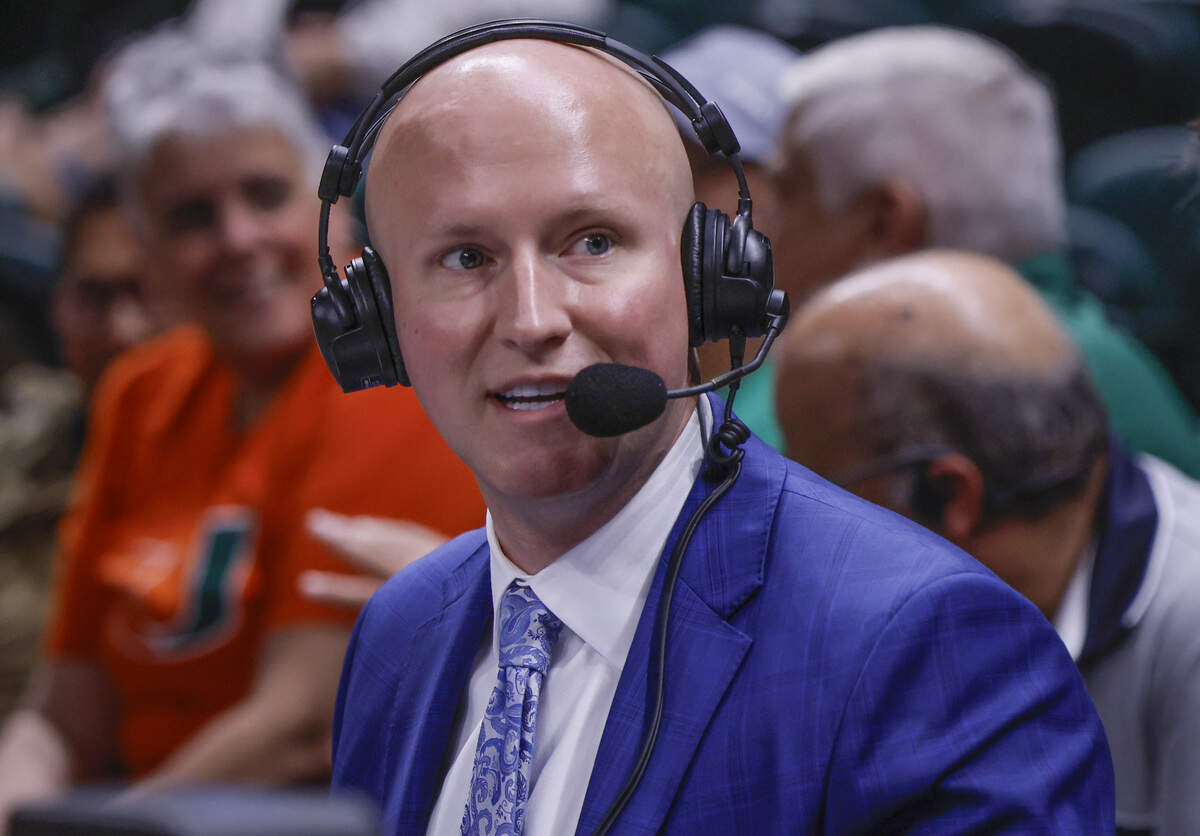
What’s next for Oglesby? He and Goodman agree: More reps, and more time.
Sunday’s ASUN championship game was the last men’s college basketball game Oglesby will call for ESPN this season. Although he has a working relationship with CBS and has called CAA and SoCon games for their CBS Sports Network, he’s not yet in the mix for March Madness, the pinnacle of college hoops broadcasting.
Regardless of how good someone is, it can take time to break into those roles, said Goodman, a veteran college basketball journalist who worked at ESPN. Goodman compared Oglesby to Sean Farnham, a former UCLA player who joined ESPN in 2010, steadily rose in the ranks and is now an upper-tier game/studio analyst.
“He’s got the personality, he’s got the work ethic and he’s got the preparation,” Goodman said. “He’s gonna be a star. ... He just needs to probably be patient.”
Oglesby sees broadcasting as a legitimate and viable career path and very much takes his progression seriously. On a recent off Saturday, he visited ESPN’s “College GameDay” set ahead of a UNC-Duke men’s basketball game in Chapel Hill — not to watch from the stands, but to sit inside the network’s production truck because he was interested to see how a show of that caliber is executed.
.jpg "IMG_2407 (1).jpg")
Work-life balance is also important. You wouldn’t think it looking at Oglesby’s jam-packed Google Calendar, but he proudly notes he coached his son’s rec league basketball team this winter, only missed his two of 11 games and held 16 midweek practices (unsurprisingly, the team finished 11-0). A few years ago, the Oglesbys moved from Clemson to 10 minutes outside the GSP Airport, which has saved Terrence hours of commute time he now pours into his family.
He’ll be pedal to the metal through April, doing studio work for remaining Hornets home games and covering the Final Four as a media member for the Field of 68.
Then Oglesby will take a breather and let the coaching carousel and transfer portal run their course. In August, he’ll start his rigorous preseason prep: Researching one team a day, every day through mid-October, with a focus on the power conference leagues and anyone else he’s scheduled to cover a lot of that season.
By early November, it’ll be go time for college basketball — again. Not that Oglesby, Clemson’s sharpshooter-turned-broadcaster, has ever minded.
“It’s been a fun thing,” he said. “I enjoy it so much.”
This story was originally published March 11, 2026 at 7:00 AM with the headline "Straight shooter: How a former Clemson hooper became a broadcasting standout."