
Do USC, Clemson use state funds for revenue-sharing NIL payments to athletes?
As the University of South Carolina and Clemson are now paying some of their athletes, lawmakers wanted clarity on where the money comes from for NIL revenue-sharing agreements before granting the schools more secrecy.
Athletic directors promised senators Wednesday no state money or tuition dollars have been, or will be, used to pay student athletes. But as universities’ financial support for their athletics has grown in the past year, NIL revenue-sharing has put additional financial pressures on department budgets, the athletic directors told lawmakers.
Some senators were satisfied with the firewall athletic directors said existed between state funds and tuition and revenue-sharing payments. Others believed the strain Name, Image and Likeness puts on budgets is leading to more tuition money going toward athletic departments and, indirectly, revenue-sharing payments.
“It is a reshuffling of money, in a way,” said Sen. Michael Johnson, R-York. “You are losing X amount of revenue that is going out here to NIL, you have less money here, so you have to have the institution give you more in order to operate.”
“And that is a direct result of NIL,” Johnson continued. “Can we agree on that?”
“I think it is one of the biggest factors, for sure,” University of South Carolina Athletic Director Jeremiah Donati responded.
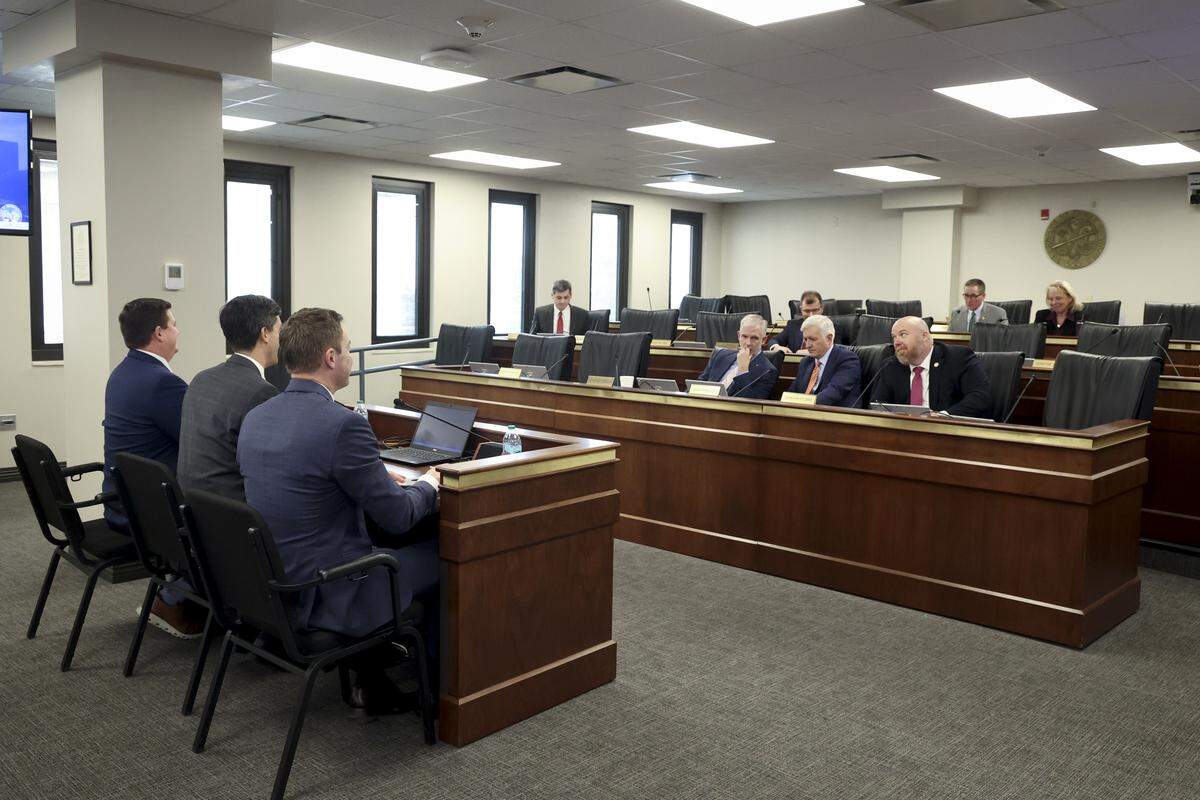
Three of South Carolina’s public Division I athletic directors — Donati of the University of South Carolina, Graham Neff of Clemson and Chance Miller of Coastal Carolina — testified in front of Senate lawmakers after a bill they said would help with competitiveness was held-up in the upper chamber last week.
The bill would exempt athletic departments’ revenue-sharing payments to student athletes from open records laws. Colleges would not have to disclose to the public how much it pays student athletes, or even how much revenue-sharing money goes to each sport.
Under the NCAA settlement enabling universities to pay student athletes, schools participating in revenue-sharing are allowed to spend up to $20.5 million in the 2025-26 school year on payments. That’s on top of the millions private organizations or booster clubs can contract with athletes while competing for a university.
The legislation initially sped through both chambers of the legislature but was halted last week over concerns about whether “public” or “private” money was being paid to athletes. The Senate originally passed the bill 30-13 Feb. 17, but it didn’t receive its necessary perfunctory vote until Thursday.
At issue for Senators was the distinction between money generated through the athletic department, like ticket sales or media rights, and funding allocated from the General Assembly or tuition paid by students.
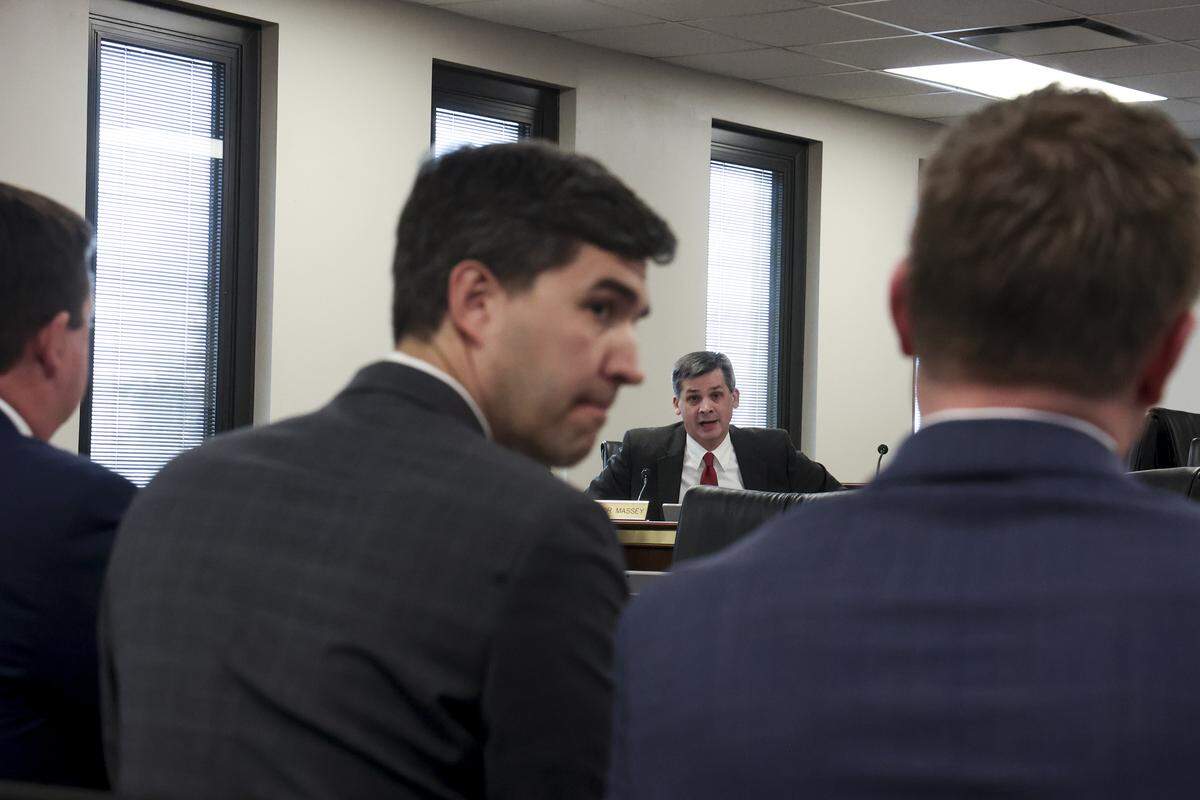
“Another part of the issue is, there are people who are paying astronomical amounts of money to send their children to school,” said Senate Majority Leader Shane Massey, R-Edgefield, on Wednesday. “In many cases, they struggle to do that. If there is tuition money that’s going to support these types of payments, if there’s state-appropriated dollars that are going to support that, that’s a problem.”
Massey was concerned how athletic departments were using state money last week and said Thursday he wouldn’t vote for the bill, regardless of the athletic directors’ testimonies.
“The specific concern would be whether there is state-appropriated funds and/or tuition funds that are being transferred into an athletic department revenue account,” Massey told reporters last Thursday. “And then there’s money from that revenue account being used to pay players.”
Clemson’s Neff said the university’s nearly $20.2 million in institutional support in 2025 to the athletic department was put in a separate account from the one the school used to pay athletes from the following fiscal year. Donati said USC primarily pays athletes using money generated from its conference distribution, and the athletic department similarly has separate accounts for its $42.6 million “direct institutional support.”
Both directors said the direct institutional support from the universities did not include state-appropriated dollars.
State Sen. Richard Cash, R-Anderson, seemed unmoved by these explanations.
“Money is fungible,” he said. “I don’t see how we get away from that argument.”
“As I said in the first education meeting, we might just go ahead and vote what we feel like we’ve got to do to protect these teams,” Cash said, giving air quotes around the word, ‘teams.’ “But I don’t know that I can be won over by the argument that there’s no state money that been appropriated … when money is just being put into various accounts to satisfy technicalities.”
Athletic programs are also not legally bound to restrict tuition dollars paying for NIL revenue-sharing, which could be problematic in the future, Massey said.
“Who knows what types of competitive pressures are going to come going forward and who knows what your fundraising ability are going to be going forward,” Massey said.
Why do ADs want secrecy for NIL contracts?
There is something interesting about what the three athletic directors want.
They all seek transparency in the new era of college athletics. They want regulation. They want NIL agents to be vetted, to go through a process that ensures no student-athlete is being led astray. They want revenue-sharing deals to be out in the open, with budgets and payments known to everyone.
They just want that to apply to the entire country. And right now, Donati said, no other state or institution requires its revenue-sharing deals to be public.
“I certainly wouldn’t want to be the first in,” Donati said.
The counterargument: Why not? What actual harm would be done by those revenue-sharing deals made public? Because there is no precedent, any answer is pure speculation. But the athletic directors kept coming back to the idea of competitiveness, which seems to be a two-pronged argument.
If other schools knew how much South Carolina or Clemson were paying their players, the ADs said, then other schools would just outbid them. Theoretically, that makes sense. The problem is, that’s already happening. Almost every student-athlete — at least those playing football, basketball and baseball/softball — have agents and those agents help negotiate third-party NIL deals, which student-athletes can earn on top of their revenue-sharing payments.
If another school wanted to poach a player from, say, Clemson, it would just call that student-athlete’s agent and ask how much they were making.
At one point, Miller (Coastal Carolina’s AD) said that not a single football player on the 2025 All-Sun-Belt first-, second-, and third-teams remained at the same school. That caught the attention of Cash, who sniffed out the absurdity of bidding wars in a world where no payments are disclosed.
“Apparently, they’re going to come poach (players) anyway,” Cash said. “Apparently all they’ve got to do is call that student’s agent and ask him how much he’s getting and go from there. I mean, I don’t understand a contention that this would hurt our competitive ability.”
OK, but these athletic departments are asking for more than just student-athlete privacy. At one point, Massey — who voted no on the bill — asked why it’s necessary for schools to exempt how much revenue-sharing money it shares with each sport program (i.e. how much of the $20.5 million goes to football versus baseball or women’s basketball).
Again, Donati said releasing such information would put schools at a “competitive disadvantage.”
“If Alabama knows that you’re spending $17 million on football, how does that hurt you?” Massey asked.
“Because,” Donati responded, “Alabama would spend $17 million and one.”
While that is true, it doesn’t account for the above-the-cap NIL dollars, which are not part of revenue sharing. On top of the $20.5 million schools are allowed to pay their athletes, many athletic departments are helping their athletes procure deals that don’t count against the $20.5 million cap, which has allowed programs like LSU to reportedly spend $40 million on its college football roster.
Therefore, even if Alabama knew that South Carolina was spending $17 million in revenue-sharing money on football, it would be unable to truly know how much money Gamecocks players are being paid.
But there’s another angle to consider. If the bill did not pass and South Carolina became the only state that mandated revenue-sharing payments be made public, how would that impact the ability for local schools to attract talent?
If everything else was equal, would a student-athlete choose to attend a school where — by enrolling — part of their salary becomes public knowledge or where their earnings could be plastered on the internet?
Some lawmakers, like Rep. Justin Bamberg, D-Bamberg, have argued that publishing student-athlete’s salary data could put them in danger of “extortion.” Such claims may seem frivolous when considering that it’s no secret some college athletes are getting paid handsomely and, thus, are in danger of extortion regardless. But one could imagine the possibility of online and in-person harassment that could arise from folks knowing exactly how much a high-profile 18-year-old makes.
Knowing that, some student-athletes might steer clear of any school that would publicize how much they were earning.
Again, because there is no precedent, there is no way to know the exact ramifications ... but South Carolina, Clemson and Coastal Carolina certainly don’t want to be the guinea pigs.
What is the status of the NIL bill?
The House passed the legislation 111-2 on the third day of session without any public hearings. The Senate held an initial hearing on the bill, but only accepted written public testimony. The Senate passed the bill last Tuesday, but it was put on hold. Senators will have to give the bill a final reading before it goes to the governor’s desk.
The bill quickly passed the House after lawsuit filed in Richland County requested information on revenue-sharing payments made by the University of South Carolina to its student athletes.
Last year, Frank Heindel asked USC how it doled out revenue-sharing money to its student athletes last year. The university denied the request, and Heindel filed a lawsuit in state court last September over the public’s right to the information. Heindel argued that since the universities were a party to the revenue-sharing NIL contracts, the state’s NIL law made how the contracts were paid public record.
Judge Daniel Coble of Richland County put a hearing on whether USC was required to share its payments on hold at the request of the General Assembly and USC last month. If the bill becomes law, Heindel and the public would not have a right to the information.
Proponents of the bill said keeping South Carolina universities payments to athletes exempt from open records laws would keep athletic programs, like Clemson or USC, competitive and protect privacy. But lawmakers concerned with the legislation, including Gov. Henry McMaster, say it prevents transparency.
This story was originally published February 25, 2026 at 5:28 PM with the headline "Do USC, Clemson use state funds for revenue-sharing NIL payments to athletes?."