
As conference realignment continues, what should we expect next? All eyes on Notre Dame

When Texas, Oklahoma and the Southeastern Conference announced last summer those schools would be leaving the Big 12 for the SEC, all of college sports waited for the next big move in the conference realignment saga.
It took 11 months, but that move came June 30 when UCLA and Southern California announced their plans to leave the Pac-12 Conference for the Big Ten.
Now, the college sports world awaits the logical next move.
The general consensus from those inside and outside college administrative offices is that Notre Dame’s pending action — or inaction — will determine where things go from here.
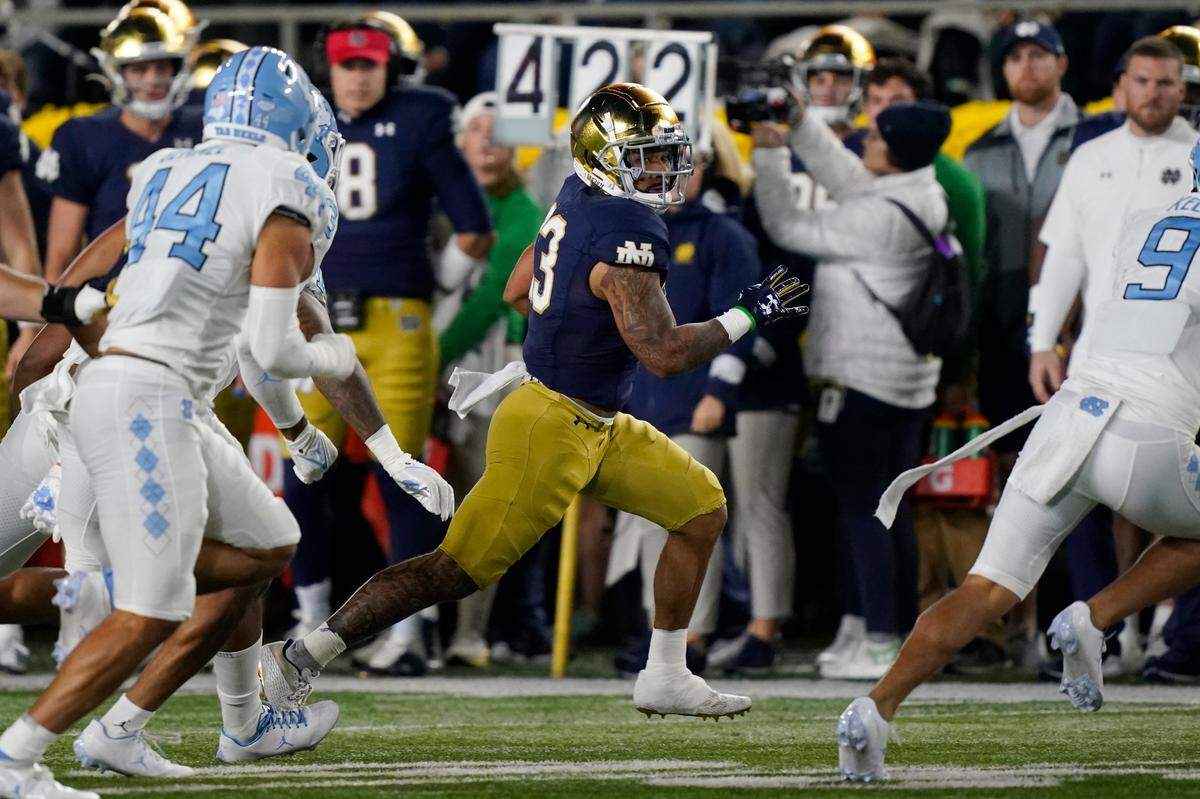
The Irish, with their renowned football brand, represent the best choice for a league looking to significantly increase its media rights revenue through expansion.
Notre Dame is an ACC member for all sports except football and ice hockey. It receives a reduced share of the ACC’s media rights revenue because of that agreement.
But the big money is in football, where the Irish receive $15 million annually through a deal with NBC to televise its home games. That’s money Notre Dame does not share with any school.
So what are the terms of Notre Dame’s ACC membership? Can the ACC convince Notre Dame to join in football? How could Notre Dame depart the ACC? Why would the Irish want to give up their long-protected football independence?
Here are answers to those questions.
The Irish and the ACC
A decade ago, when the last major round of conference shuffling was ongoing, Notre Dame accepted the ACC’s invitation to leave the crumbling Big East for a new home for its athletic teams.
While the agreement did not involve playing football as a member of the ACC, it did require the Irish to play five games annually against ACC teams. Games played at ACC members’ stadiums are covered by the league’s television contract with ESPN. Games played in South Bend, Indiana, are covered by the NBC contract.
Because all of Notre Dame’s other sports (except ice hockey) were ACC members, the ACC allowed for Notre Dame to receive a partial share of the media rights revenue. That number is around 20% of a full share.
The only year Notre Dame received a full share was in the 2020-21 school year when, due to the COVID-19 pandemic, the Irish played a season as an ACC member. Tax records show Notre Dame received $34.4 million from the ACC that year while the ACC also received money from the NBC contract.
.JPG "DukeNotreDameBasketball (1).JPG")
Can the ACC bring Notre Dame in full time?
This would be the answer to many of the ACC’s issues, a way to close some — not all — of the revenue gap between the ACC and the market-leading Big Ten and SEC.
Yet Notre Dame has steadfastly clung to its football independence and shows no sign, publicly anyway, of relinquishing it.
As part of Notre Dame’s agreement with the ACC, if the Irish join a conference for football, it must be the ACC.
The ACC’s best chance came during summer 2020 when college football leaders were attempting to forge a season while the pandemic still raged. Conference after conference decided to exclusively play conference-only schedules, aiming to reduce travel and keep communities safe.
Notre Dame, thus, saw its independent schedule collapsing. The ACC allowed Notre Dame to play as a one-time member, asking only for the Irish to share their television revenue.
Some leaders within the league encouraged John Swofford, the league’s commissioner at the time, to force Notre Dame to become an actual full-time member in exchange for saving its 2020 season.
But that didn’t happen.
Notre Dame reached the ACC championship game, losing to Clemson, but made the four-team College Football Playoff, then returned to playing its independent schedule last season.
How could Notre Dame depart the ACC?
Conference rules state that all ACC teams, existing or newcomers, have to sign its grant of rights contract to retain membership. All current 15 members initially signed it in 2013 and followed up with a 2016 updated contract when ESPN announced plans to launch the ACC Network.
The grant of rights agreement lasts through 2036, when the ACC’s ESPN contract expires. It means any media revenue from events on that school’s campus, covered by the ESPN contract, is ACC property through 2036, even if a school leaves the ACC.
It’s proven to be the glue holding the ACC together as no school has left the conference since the grant of rights was agreed to in 2013.
Of course, with Notre Dame not receiving a full share, it is easier for it to potentially buy its way out of the deal than the other 14 ACC schools. That’s especially true if the annual revenue share paid to schools from the Big Ten or SEC tops $100 million as is expected in the coming years.
Why would the Irish give up football independence?
Two reasons: money, and access to football’s playoff system.
Coincidentally, both have looming 2025 deadlines. That’s when the current four-team College Football Playoff contract expires and also when Notre Dame’s NBC television deal for football ends.
If the Big Ten and SEC decide to hold their own playoff, since they have many of the sport’s top programs like Alabama and Ohio State, and now Oklahoma and USC, Notre Dame would need a way to get in.
On the other point, with the NBC deal expiring, perhaps Notre Dame could get more annual money from joining the SEC or Big Ten and being part of their lucrative deals, even if it has to share with other schools.
This story was originally published July 13, 2022 at 6:10 AM with the headline "As conference realignment continues, what should we expect next? All eyes on Notre Dame."