How return to normalcy has NC State excited about athletics’ outlook
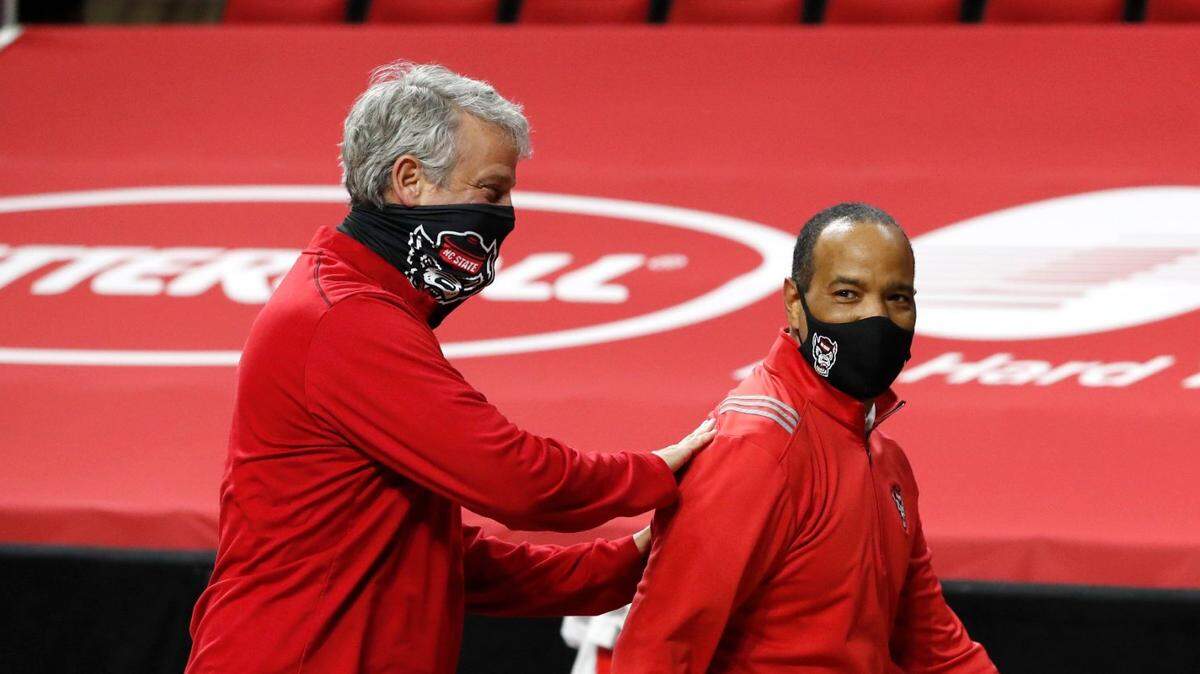
The 2020-21 athletic season was as unorthodox as they come.
The COVID-19 pandemic came and changed the norm, and the effects were felt across the landscape in college sports. In Raleigh, N.C. State athletic director Boo Corrigan, like his counterparts, was trying to help his school navigate tough times.
Corrigan took over for Debbie Yow in 2019 and has settled into his role as the leader of the Wolfpack. During his time in Raleigh Corrigan hasn’t had to worry about making any big-time coaching hires (or firings), but he oversaw the program win its first major conference title (twice) since 1991.
The Wolfpack will return to competition in the fall, with fans in the stands, getting back to a somewhat normal athletic season.
Ahead of the new seasons, Corrigan took some time to sit down with the News & Observer for an exclusive interview.
NOTE: This interview was conducted before the events that took place in Omaha that sent home the N.C. State baseball team and prior to the NIL coming into effect.
N&O: Last year around this time, with the pandemic picking up, how did you think the 2020-21 athletic season would look?
CORRIGAN: “Probably a year ago, I would have thought it was going to be over by July or August and we were going to be back on campus and everything was going to move on. I don’t know that the real concern started until like June, July and it was like: Holy cow, what’s going to happen? Are we even going to play? That to me was the time frame where it was like all right, there’s three buckets: There’s tickets, there’s television and then there’s donations. If all three of those buckets go away I don’t know what we do. So what’s the possibility of keeping the donations bucket open? Then what’s the possibility of keeping the television type bucket open because tickets didn’t look good. That ebb and flow of the summer (makes) you feel good and then you feel bad. I think it was early August and I looked at Fred (Demarest, senior AD for communications ) and was like ‘I just want to feel like I did in July’ when we were all optimistic that we were going to play, maybe not in front of people, but we were going to play. Then that August time frame hit and it was like ‘Oh lord, I don’t think we are going to do anything.”
“August 11 was a big date. I think Swoff (former ACC commissioner John Swofford) did a great job keeping us all together. Big Ten says no (to playing), PAC12 says no, I think everyone thought the SEC was going to play no matter what and then it was up to us and the BIG12 and who was going to do what.”
N&O: August 11 you get the word that you guys are going to play. What was the plan of attack?
CORRIGAN: “I think the first thing was, ‘Do our students want to play?’ Are they all in? Do they feel safe? We went through a couple of different things. Would we have different testing protocols for them and for the coaches? They came back to us and said we want anyone around us to be tested on the same schedule and I was like, ‘OK, seems reasonable.’ We thought we were doing it the way we were supposed to be doing it. Then we had our big scare with a lot of positive tests mid-August and at that point it caused us to question what was going to happen the rest of the year. Miraculously we played 11 (football) games in 12 weeks, which was a tribute to our students. Our whole focus was, where was their head space? Do they want to keep doing this? And it kept coming back: yes. And, what do we do to support them?”
N&O: How did you handle the budget, knowing that as much money wouldn’t be coming into the athletic department as it usually does?
CORRIGAN: “It was hard. Early on we made the decision that we are going to try and affect our students the least. So it became about operations, it became about what we need to do versus what we want to do and all the wants went away immediately. We knew it was going to affect all the coworkers, either in salary cuts or furloughs, and we looked at different kinds of models of what we could do or what we couldn’t do and it had to be approved by the state. We had people making up to $3.5 million a year and people making $30,000 a year. It’s not the same and I wasn’t going to treat it the same. Those who had the most, I went to them and said we’re going to take 20% total compensation cuts. The only way to make it work across the board was to take a 20% compensation cut. I give full credit to Dave (Doeren) to Wes (Moore) and to Kevin (Keatts) because they jumped in right away. We laid out a plan and they all bought in, and boy is it a lot easier when your three highest paid coaches buy into it and it made everything easier from there.”
N.C. State came into the 2020-21 year anticipating a $22.8 million deficit due to COVID. The school was able to balance its budget for the year and completely eliminate any deficit and assume no debt heading into 2021-22.
N&O: What’s the biggest accomplishment coming out of the pandemic?
CORRIGAN: “I think we came together in a time when it could have been really divisive. In a time when it could have been ‘I’m just going to worry about me or I’m just going to worry about my department,’ everyone bought in. We talk about the strength of the pack is the wolf and the strength of the wolf is the pack, I think we lived that this year. I think every coach bought into it, they said ‘We can do this. We can schedule regional games, we can take a bus.’ ”
“I think it helped a lot that we had pre-sold, before everything hit, about $12 million in season tickets and 30-plus percent of them turned in their donations. Fifty-ish percent of them pushed forward their tickets. Out of the whole group we only had to reimburse about 22, 23 percent. We got north of $3.5 million dollars that turned into donations. Our fans buy in, our fans are passionate. We created a group called the Guardian Wolves, it’s a group of 15-16 people, families, couples, that stepped up and donated a significant amount of money that helped us close the gap. That’s because of people taking a salary cut or being furloughed. That’s because Preserve the Pack turned tickets into donations. That’s because we were not spending on wants and only spending on needs. That’s the collective. What I’m most proud of is being the AD at N.C. State where something like that can happen.”
In April the Centennial Authority, which oversees Carter-Finley Stadium, approved a $700,000 upgrade to the concourse and northeast corner of the stadium. The plan also would add premium seating in the north end zone. That plan would remove 1,700 metal bleachers, which are currently used for overflow seating and additional tickets for visiting teams. The loge and suite seating section would include carpeting, tents and tables.
N&O: Are there any big expansions coming to facilities at N.C. State?
CORRIGAN: “We were working on a master facility plan right when all of this hit and probably 60% was done with it when all this hit. Yeah, we need to do something. I think the east stands look eerily familiar to anyone who graduated in the ’80s or ’90s, so I think there are some things we need to do over there. We’ll re engage on the master facility plan in the next couple of months. We thought it was important to do something in the stadium this year. We had the ability through our friends at the Centennial Authority, Don Waddell and Gale Force, this is something we could do that would show the people in the east side of the stands that we just created something that will have opportunities to spread out, different concessions, different restrooms. And in the end zone we believe there to be more people that are interested in a different experience other than sitting in the stands and that gives us an opportunity there as well.”
N&O: Is it slowly starting to feel like things are getting back to normal?
CORRIGAN: “I knew we had been selling tickets and I think (as of May 7) it was up to 29,000 … yeah, hell yeah. When you see a number like that, part of it is ‘We’re going to play, we’re going to be open if the governor sees an opportunity,’ and the second part is, ‘Will the fans come back?’ When you see the number, 29,000, they want to be back, that’s part of the excitement. It’s exciting that campus is going to be open, we have fans that want to come back to games. Our whole thing is we didn’t want to come out of this flat footed. We didn’t want to come out of this going backwards. We wanted to be able to come out of this with some momentum. When you look at eight football wins, men’s (basketball) goes to the NIT, women’s basketball back-to-back ACC championships, swimming and women’s cross country finish second in the nation and wrestling finishes sixth. Men’s cross country is in the top 25, gymnastics has the best year they’ve had in the last 30 years, both tennis (teams) are in the NCAAs (women’s team advanced to their first Final Four). Men’s golf is doing it. In a weird way as challenging a time as you can have we have the potential to come out of this with the highest GPA we ever had, right now coming out of the fall it was the highest GPA with a 3.31. The highest collective cumulative GPA was a 3.23. More teams finishing in the top 25 than we’ve ever had and not losing $22.8 million. It speaks to the collective.”
N&O: Looking back over 2020, is there anything you would have done differently?
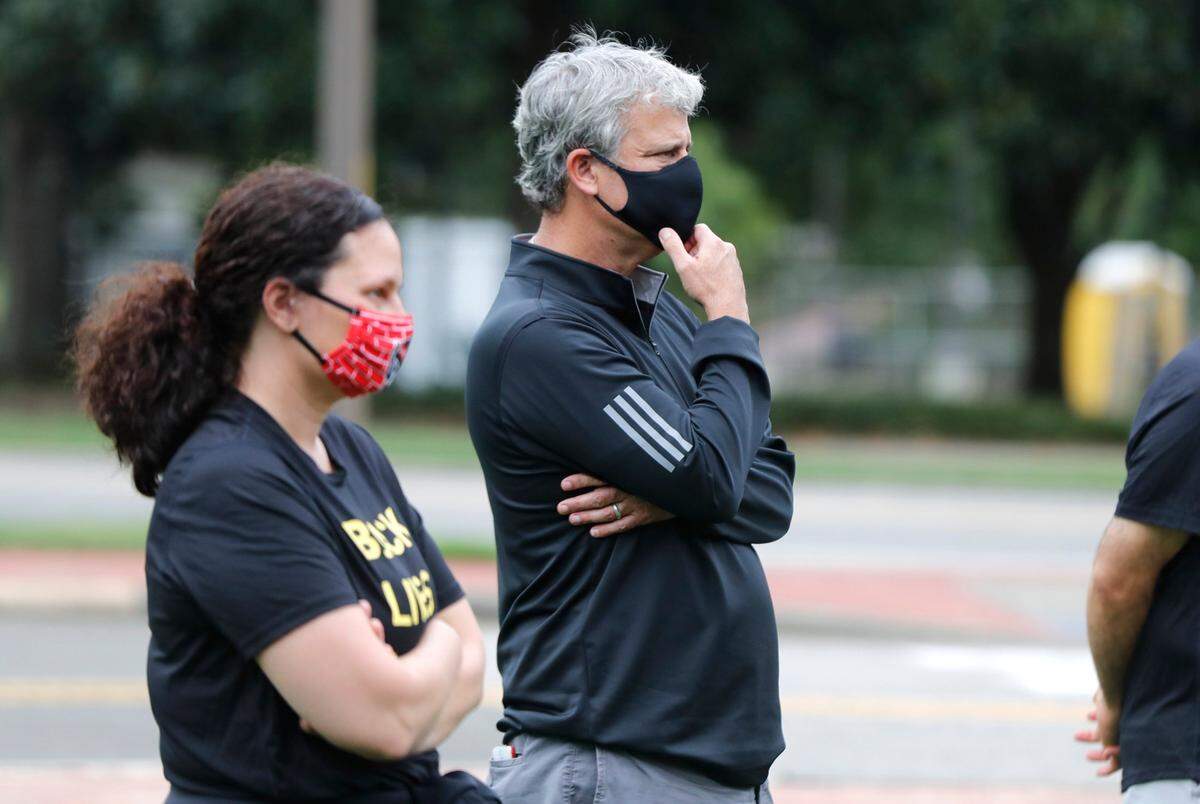
CORRIGAN: “I think it’s a shame that as a result of George Floyd being murdered that we weren’t already doing some of the things that we were doing. That we didn’t already have PackUnited. We did turn our attention to listening to our students more and a lot of that goes back to James Smith Williams, who set the expectation around sexual violence and bad relationships. That was an early decision we made to listen to our students and in the military they say, ‘What interests my boss fascinates me.’ That was our approach, was to listen to them so I think it became a little bit easier and things started to unfortunately intensify around social justice and we had a little bit of credibility with our students. I think they know that we care, they know that we want them to have a voice and not only have a voice but they need to hold us accountable to their voice. That’s something we talked about: trust, accountability and raising your hand if you’re in trouble. Those are things I take seriously, that I feel they need to trust us, they need to hold us accountable and if we don’t we need to answer to it.”
N&O: What are your thoughts on the name, image and likeness law for student-athletes? (The NCAA approved NIL rules on July 1, allowing student-athletes to profit off their own name, image and likeness.)
CORRIGAN: “It’s something we’re going to be really positive about. And as they are provided the opportunity to be able to capitalize on their own personal brands, we’re going to be there to support them. I think part of the concern right now is, there’s not a lot of left and right limits right now. What it does mean is if (a student-athlete) is provided that opportunity (to endorse a business), we’ll be there the best we can to help them out with everything. I still think the value of being on a college campus and the value of a college education is enormous and the opportunity to be around people on a campus, that aren’t just your teammates is still at the core of what we do. This obviously changes that and we’re going to change as we go along with that.”
N&O: Any updates on the NCAA investigation, IARP (Independent Accountability Resolution Process) into the men’s basketball program?
CORRIGAN: “I’m hopeful that it will be dealt with this calendar year. You think of the job Coach Keatts has done … it’s really hard, it’s really hard. I can tell you it’s really hard and it’s really hard to recruit. Kevin’s class just went to a top 25 class. That’s a big deal with everything that’s going on.”
N&O: What are your thoughts on the NCAA transfer portal?
CORRIGAN: “The whole transfer portal and what it is right now, in my heart of hearts, some of this is going to figure itself out based on numbers. If 1,300 kids go into the transfer portal, how many places are there for them to go? At some point if the numbers continue to be too many in the portal, not enough places to go, I think it leads to a more thoughtful process of going into the transfer portal on the front side to figure out. I wish it wasn’t as full as it was for a lot of reasons. I think going through hard times and perseverance are really important lessons to learn in life that maybe you’re not going to learn if your inclination is to transfer immediately, right? I think that struggle is a time of great growth. I think that everyone goes through it. If you are homesick or you miss your girlfriend or boyfriend, I think that perseverance is important. It’s the rules that we have and we are going to support people who want to leave.”
N&O: What’s next for N.C. State?
CORRIGAN: “On the broadest stage, be the best N.C. State we can be and worry about who we are as an institution. We have a phenomenal leader in (Chancellor) Randy Woodson, applications are through the roof and we have a great group of coaches who focus on how great we can be and to win ACC championships in every sport. If you win ACC championships, as competitive as this league is, that will put you in a really good spot nationally. If you’re worried about that bigger one, let’s take care of what we have to do in our league, that’s going to put you in a good position from a national standpoint and not be ashamed of that and not be ashamed to talk about championships in football and basketball and everything that we do.”
This story was originally published July 15, 2021 at 5:00 AM with the headline "How return to normalcy has NC State excited about athletics’ outlook."