
Future golf stars to compete for US Amateur title in Pinehurst
The names weren’t that familiar in 2008, when the U.S. Amateur golf championship was last played at Pinehurst: Rickie Fowler and Patrick Reed, Billy Horschel and Jhonattan Vegas, Brian Harman and Danny Lee.
Lee, the lean New Zealander, would win the Amateur on the historic No. 2 Course at Pinehurst Resort. All would go on to win on the PGA Tour and Reed, considered a surprise semifinalist in the Amateur that year, was the 2018 Masters champion.
The U.S. Amateur returns to Pinehurst this year, continuing a 30-year run of U.S. Golf Association events on the No. 2 Course, the layout famed architect Donald Ross designed and nurtured until his death in 1948.
“When players walk down the first fairway at Pinehurst No. 2, they walk in the footsteps of almost every great player who ever played the game,” Pinehurst president Tom Pashley said at a championship preview this month.
The next Reed or Fowler could be in the Amateur when the 119th championship is held Aug. 12-18. It won’t be Matthew Wolff, who would have been one of the favorites but at 20 has departed amateur golf for the PGA Tour — and already won.
Viktor Hovland won last year’s Amateur at Pebble Beach, and the former Oklahoma State star also has quickly impressed on the PGA Tour at 21, tying for fourth place in the Wyndham Championship in Greensboro. There are other young players who see Wolff’s and Hovland’s rapid ascent in pro golf and want to follow their lead.
Akshay Bhatia, 17, of Wake Forest already has plans to skip college golf, looking to play his way onto the PGA Tour. Recently named to the U.S. Walker Cup team, he won’t turn professional until September, playing in the PGA Tour’s Safeway Open, and will be in Pinehurst contending for the U.S. Amateur’s Havemeyer Trophy.
A year ago, Bhatia tied for 10th in Amateur qualifying at Pebble Beach — at 16 — but lost his first match. Now fourth in the men’s World Amateur Golf Ranking, he’ll be expecting better at Pinehurst.
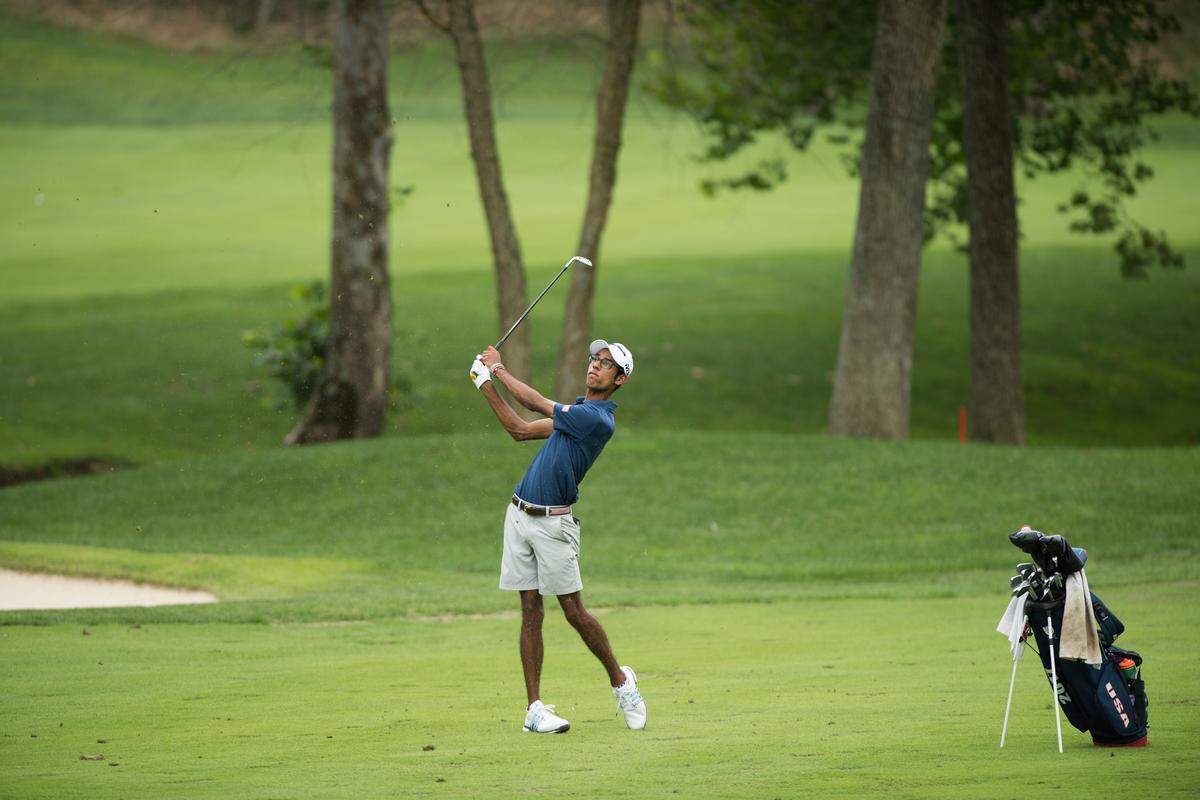
“The kids are coming out younger and younger [on the PGA Tour],” Jason Gore, a former PGA Tour pro who now works for the USGA as director of player relations, said in an interview. “But the U.S. Amateur is still a prestigious event. I think it’s the No. 1 amateur event in the world, and everyone wants to win the U.S. Amateur growing up.
“I think these kids are missing out because they’re turning pro earlier. When I was growing up you weren’t supposed to be good at 23. Now, you’re supposed to be.”
Marvin “Vinny” Giles III recalls feeling old when he won the U.S. Amateur at 29 — in 1972.
“It already had become a young man’s event, even then, although there was a little more diversity in ages,” Giles said in an interview. “It also was stroke play, so it was not as much of an endurance contest as it is today with all the 36-hole days and playing two matches a day.”
The Amateur was decided by four rounds of stroke play from 1965 to 1972, and Giles was the runner-up three consecutive years (1967-69) before winning at Charlotte Country Club. Ben Crenshaw and the late Mark Hayes tied for second in ‘72.
Giles, 76, has won his share of match-play events the past 40 years, and the Richmond, Va., resident often competed in the North & South Amateur on No. 2. He played on four U.S. Walker Cup teams and captained the 1993 team.
“I love match play, but I think to determine the national champion it should always be in stroke play, because you don’t eliminate somebody just because they run into somebody having a hot day,” Giles said.
The Amateur converted back to match play in 1973. Craig Stadler was the winner and other Amateur champions through the years have been Tiger Woods, Phil Mickelson and Bryson DeChambeau. There also were some surprises along the way — 1981 winner Nathaniel Crosby, the son of Bing Crosby, comes to mind (Crosby will captain the U.S. Walker Cup team this year.)
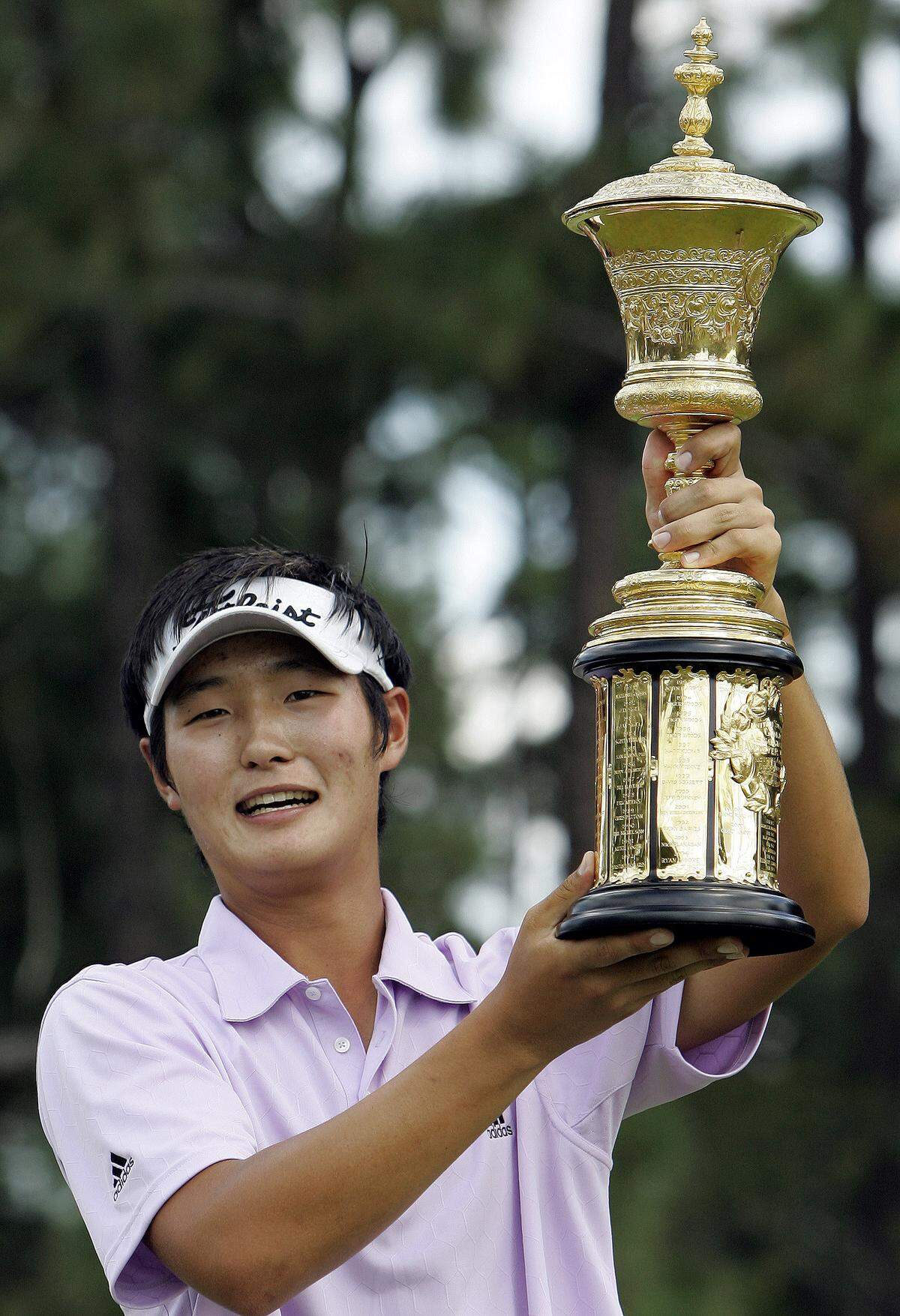
This year’s championship has some unprecedented twists: The scheduled 36-hole final won’t be played entirely on No. 2, and the winner will be eligible to play in the 2020 U.S. Open as either an amateur or a professional.
No. 2 and the newly redesigned No. 4 course will be used for the two stroke-play qualifying rounds, as the top 64 golfers advance to match play. The USGA announced in April that No. 4 would be used for the first 18 holes of the championship final and then decided with an afternoon round on No. 2.
“They’re going to have to think their way through two different examinations instead of 36 holes of one examination,” Gil Hanse, whose Hanse Golf Course Design firm was chosen to reshape the No. 4 course, said at the preview presentation. “Some people like No. 4 but not No. 2 or vice versa. That component of a final has never been examined before.”
The USGA is calling the dual-course final a unique opportunity, although adding it was a “one-off model” with “no plans to do anything similar in the foreseeable future.”
Giles wasn’t sure why the USGA is doing it this year, given the timelessness and greatness of the No. 2 course.
“I hate to be negative, but I think it’s a terrible idea,” he said. “When you’re playing most of the golf on No. 2 and No. 2 being No. 2 and what it’s meant to golf and what a phenomenal test of golf it is, I think to sort of dummy up the final by playing two golf courses doesn’t make any sense.”
What does make sense is the change in the U.S. Open exemption for the winner. Previously, the U.S. Amateur winner had to remain an amateur the following year to claim the exemption.
With Hovland now a pro, a new champion will claim the Havemeyer.
“It’s the pinnacle of amateur golf and obviously there’s the history,” Brandon Wu, a recent Stanford graduate who is sixth in the World Amateur Golf Ranking, said at the preview.
Wu, who helped Stanford win the 2019 national championship, did not qualify for match play in the 2018 Amateur at Pebble but will be back for another try at Pinehurst.
“It’s a long, arduous week, trying to make it through those stroke-play [qualifying] rounds then all the match-play rounds,” Wu said. “But it’s a cool experience.”
2019 U.S. Amateur Championship
When: Aug. 12-18, 2019.
Where: Pinehurst Resort and Country Club
Format: Stroke-play qualifying rounds will be played on the No. 2 and No. 4 courses Aug. 12-13. Match play begins Aug. 14 and the scheduled 36-hole championship match is Aug. 18. All matches will be played on the No. 2 course except for the championship match, which will have the morning round on the No. 4 course and the afternoon round on No. 2.
Tickets: $20 for single-day grounds pass and $100 for weekly pass. Clubhouse packages also available.
Information: Click here for more about the event.
U.S. Golf Association events at Pinehurst Resort
Year, event, winner
1962 — U.S. Amateur (Labron Harris Jr.)
1989 — U.S. Women’s Amateur (Vicki Goetze)
1994 — U.S. Senior Open (Simon Hobday)
1999 — U.S. Open (Payne Stewart)
2005 — U.S. Open (Michael Campbell)
2008 -—U.S. Amateur (Danny Lee)
2014 — U.S. Open (Martin Kaymer)
2014 — U.S. Women’s Open (Michelle Wie)
2017 — U.S. Amateur Four-Ball (Frankie Capan/Shuai Ming Wong)
This story was originally published August 8, 2019 at 5:45 AM with the headline "Future golf stars to compete for US Amateur title in Pinehurst."