
Lauderdale: Fidel Castro still owes quiet Beaufort philanthropist Sumner Pingree Jr.
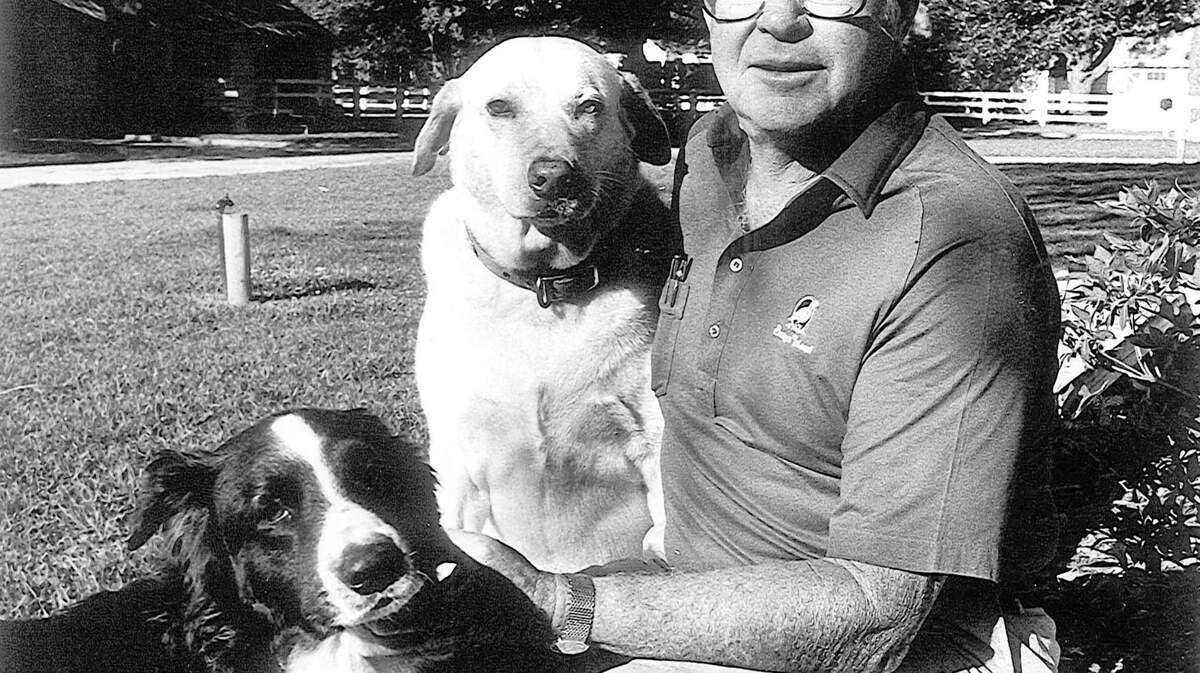
Fidel Castro's loss was Beaufort County's gain.
Castro kicked Sumner Pingree Jr. out Cuba in 1961, expropriating a three-generation Pingree cattle and sugar ranch of 85,000 acres, with more than 9,000 head of cattle, hundreds of horses and 400 miles of fencing.
Pingree sought compensation to the tune of $16 million.
He never saw it in a lifetime that ended quietly Dec. 9 at age 87 on Brays Island near Sheldon.
But Pingree -- a Massachusetts native known here as a gentle and trusting man -- did get an audience with communist revolutionaries Fidel and Raoul Castro and Ernesto "Che" Guevara shortly after they took control of Cuba.
"We met at 4 a.m. at the top of the Hilton Hotel -- Fidel, Che, Raoul and several others -- they had been up all night," Pingree told The Beaufort Gazette in 1991.
"I explained to them that my cattle fed a hell of a lot of Cubans and told them, 'I don't think you people can run this operation.' "
They bought it, but not for long.
Pingree subsequently was given hours to get out of Cuba alive. He told a reporter Fidel Castro was "an irrational man, to put it mildly."
Pingree and his new wife, Virginia "Ginga" Caswell, landed in Beaufort County, at Huspah Plantation. Pingree thought they would be here a short while and then go back to Cuba. He had lived there 12 years, and Ginga, whose father was a Boston banker, was reared there.
But for more than half a century, Pingree was a local rancher-turned-developer, land conservationist and quiet philanthropist.
"He was a very generous man," said Beaufort attorney Colden R. Battey Jr.
'A PISTOL'
Pingree was reared on a dairy farm, gifted early in life as a horseman and later as an expert in animal husbandry.
In the Lowcountry, he bought Brays Island Plantation in 1963 and pieced together some 5,000 acres for farming. He planted row crops, raised cattle, and 650 brood sows produced 10,000 to 12,000 Camborough pigs annually.
Ginga opened a gift shop on Bay Street called Precious Cargo. She also had a nightclub on Boundary Street called the Sans Souci. Pingree served on the S.C. Pork Board, and later the S.C. State Ports Authority board. He was active in Republican politics.
They lived in the 1930s manor house at Brays Island, where they raised their son, Richard, now a Beaufort business owner. They were supporters of Sheldon Academy and the Beaufort Humane Association, but best loved their time on the high seas in the fishing boat, Roulette.
Ginga was a pioneer in the sport of billfishing for South Carolina, catching the second one ever recorded here. She held a state record for three years and won the first Sea Pines Invitational Billfishing Tournament in 1971, besting Colden Battey with a total weight that outgunned his 407-pound blue marlin.
"She was a pistol," he said.
BRAYS ISLAND
When development became a better option than raising hogs on waterfront land, Pingree teamed with a Lowcountry legend to produce his legacy.
Brays Island was planned by landscape architect Robert Marvin in the late 1980s to keep most of the land open for old-fashioned hunting. It would have only 325 homes on 5,000 acres. Property owners were called "colonists" because they each owned a piece of the whole in an unusual, conservation-minded, outdoors-oriented development.
The lots are all circular so the homes face many different ways. The streets are not paved. The houses are hard to find.
Pingree refused to develop like most did in the Lowcountry: slicing the land into tiny tracts to squeeze out the greatest profit.
"They preserved the ambiance of a Lowcountry plantation," said Landon K. Thorne III, one of the early residents. "The result is a premiere residential community in Beaufort County, and up there with the best in the world. You couldn't replicate it today."
Pingree is a hero to the historic preservation movement in Beaufort, as well as the nonprofit Beaufort Memorial Hospital.
Historic Beaufort Foundation executive director Maxine Lutz said The Anchorage on Bay Street was about to be demolished in 1971 "when HBF negotiated a six-month demo delay in order to find a buyer. Twenty-four hours before the deadline, Sumner generously stepped up to secure a loan so that HBF could buy it."
Former HBF executive director Cynthia Jenkins said Pingree once sent her to an auction with instructions to bid whatever it took to keep a significant historic home on The Point from being bought by a developer. No one knew it. She ended up not having to bid. But she said it is an example of the quiet ways Pingree improved the community.
At the hospital, Pingree gave $1 million to kick off a $10 million capital campaign that resulted in the Keyserling Cancer Center. He served on the Beaufort Memorial Hospital Foundation board for almost 20 years, helping build its endowment from scratch to $14 million.
"He would never let us name a building for him," said foundation executive director Alice Moss. But he pushed for an endowment and today donors of significant gifts are inducted into the Pingree Circle.
She said he secretly paid for people from developing countries to have reconstructive surgery in the United States.
He supported AMIKids of Beaufort to give a second chance to young people after a brush with the law.
Ginga died in 2005. Pingree was remarried to Rebecca Smith. He had been in poor health for more than five years and not active in the community.
His friends call him the consummate gentleman. They say he trusted everyone to be the same with him -- including Fidel Castro.
"Those who he touched knew him as a generous and gentle person," Moss said. "Many others have been touched by him and don't even know it."
Follow columnist and senior editor David Lauderdale at twitter.com/ThatsLauderdale and facebook.com/david.lauderdale.16.
This story was originally published December 20, 2015 at 5:57 PM with the headline "Lauderdale: Fidel Castro still owes quiet Beaufort philanthropist Sumner Pingree Jr.."