
Lauderdale: Thanksgiving on a cracked (pecan) shell
Everything you need to be thankful for comes in a pecan.
We made a Thanksgiving run to St. Helena Island Saturday.
We got some of the last of the winter crop of heirloom tomatoes and yellow squash at Dempsey Farms.
That's something to be thankful for, especially when it comes with a personal story. The Dempseys lost a favorite, old dog, but he waited until his master got home from the men's prayer breakfast to die. He didn't have the strength to do it, but he did it to say goodbye.
I'm thankful that there are still places on a Lowcountry island where people farm and take time to talk about their dogs.
We also got 10 pounds of pecans from Sonny Bishop's Yard Farm.
He starts his book, "A Place Called Home," this way:
"On a warm, humid, late summer evening, with a gentle southerly sea breeze from Wallace Creek protecting us from the mosquitoes, my father takes me on a little tour of 'home.' Once the Robert Fuller Plantation (also called Fuller Place) and later called the Yard Farm (in Gullah -- 'de Ya'ad'), there is important history here that I want to capture."
We'll eat part of that history on Thanksgiving day. Sonny said our pecans came from a tree that's 240 years old.
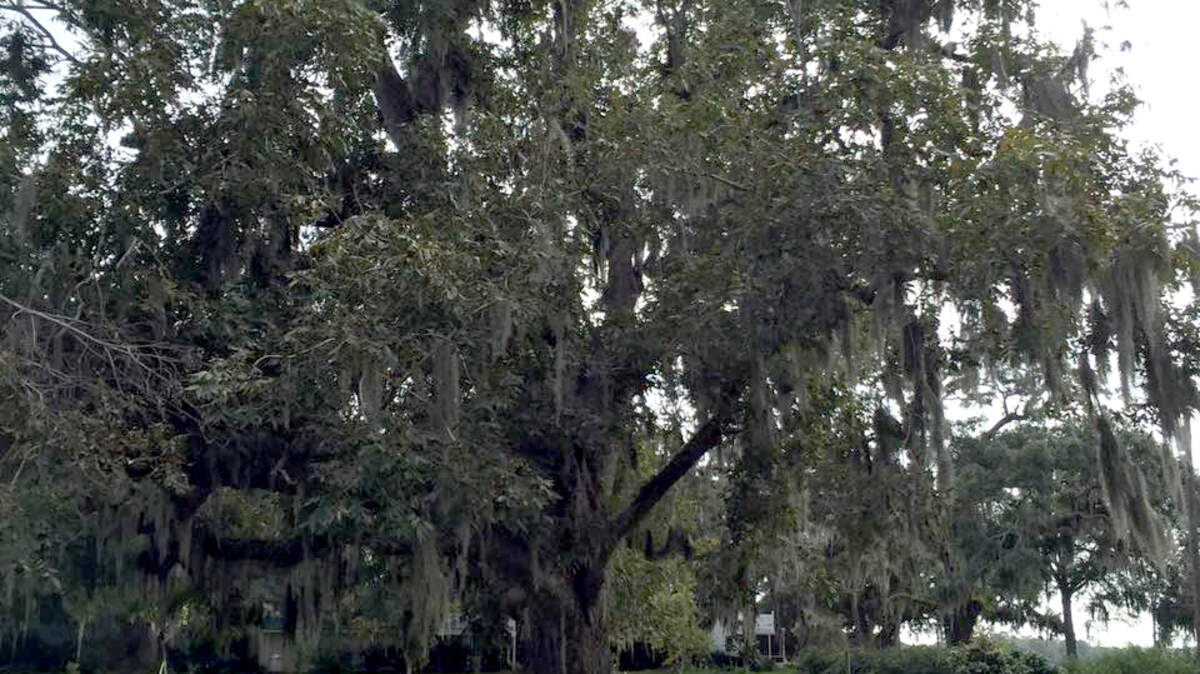
Two of the ancient pecan trees, stout as old live oaks, sprawled over his yard, until one of them recently collapsed in a heavy heap. Who can blame it?
We stood near the survivor, where Sonny tries to outwit the dadgum squirrels with sculptures of birds of prey that move so the dadgum squirrels won't figure them out and eat the crop.
These are the pecans like my great-grandfather planted on his home place in Georgia.
They're like the ones we used to shell with nutcrackers shaped like pliers with fancy decorations on them. They might go in Grandmother's holiday ambrosia, or be served lightly baked with butter and salt, or chopped into cookie dough, or put in to swim with crystallized sugar that magically turns them into pralines.
I'm thankful for all these memories -- and the bet-you-can't-eat-just-one buttery delight of a raw pecan straight out of the shell.
I've heard it said that the first grafting of pecan trees that would turn them into a big-time industry for the South came from an enslaved man named Antoinne on a Louisiana plantation.
I've heard it said that pecan trees are the last evidence of some Lowcountry Gullah family compounds amid today's resorts.
I've heard it said that a pecan tree in the yard meant you could pay your county taxes to keep the place another year. You know this was something to be thankful for.
This Thanksgiving, we'll go back to my great-granddaddy's farm for a big meal together. Things will be different this year with Daddy in the nursing home. But there will be three generations, boyfriends, sisters and brothers.
There will be pecans, tomatoes and squash from St. Helena Island.
And there will be a pack of faithful dogs fighting over sticks when we walk outside to stretch our legs under the old pecan trees.
Follow columnist and senior editor David Lauderdale at twitter.com/ThatsLauderdale and facebook.com/david.lauderdale.16.
This story was originally published November 24, 2015 at 4:07 PM with the headline "Lauderdale: Thanksgiving on a cracked (pecan) shell."