
Lauderdale: How do you define 'Lowcountry'?
Natalie Hefter needs our help.
"Lowcountry folks -- how do you define 'Lowcountry'?"
She asks this on Facebook as part of her job at the Coastal Discovery Museum at Honey Horn on Hilton Head Island.
"We use the term all the time," she says, "but it's pretty hard to pin down. Working on our strategic plan at the museum and we keep saying 'Lowcountry,' but it appears that not everyone has the same definition ..."
It's slippery as pluff mud.
It's kind of like the judge who said he couldn't define obscenity but could tell it when he saw it.
You can tell the Lowcountry when you smell it.
It's the ooze of sweetish, sourish scents that the fiddler crabs stir up in the marsh. For generations, Lowcountry people who went off have known they are home by the aroma when they roll down the windows gliding across the causeway.
If I had a nickel for each time I've head that story, I could buy a new johnboat.
You know it when you smell it because the Lowcountry bathes twice a day in saltwater.
In the Lowcountry, tides are the clock. That means time is a fluid thing. Our clock changes every day. It's an act of God, so get over it all you poor souls imprisoned by a wristwatch.
When I spoke to Emory Campbell on Friday about a Lowcountry honor for Julian Bond, it was a matter of time -- and tides. The late civil rights leader's family asked that anyone wishing to honor him go to their nearest body of water at 3 p.m. Saturday and toss in some flower petals.
Emory sent out an email saying he would be at the Old House Creek Fishing Pier off Spanish Wells Road at the appointed hour. But his Lowcountry clock was set on the time for high tide. He was comforted that there would be enough salty water flowing through the creek to lap up to the dock.
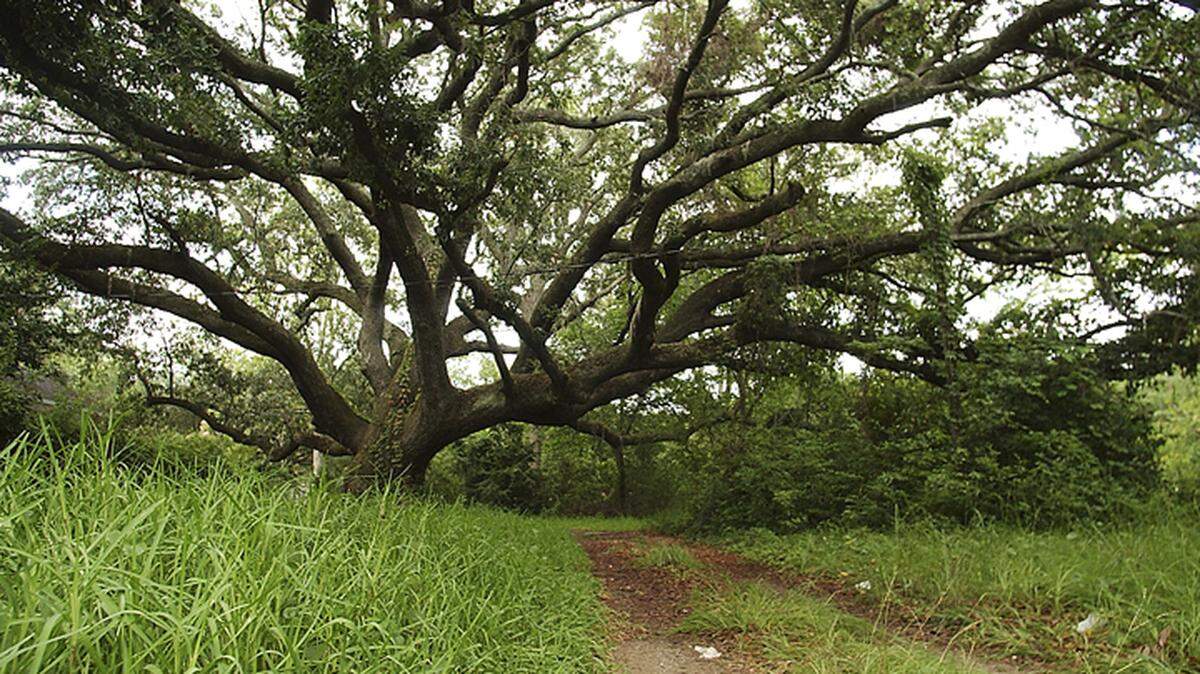
Trees will silently tell you when you're in the Lowcountry. Our rakish palmettos can thrive far away, even on the Capitol grounds in Columbia. But the live oaks of the Lowcountry have left mankind in awe since the beginning of recorded history.
The Lowcountry has always been above all things a sportsman's paradise. Deer, pronounced "diyah," are the bread and butter. They're more numerous than acorns and closer to the common culture than quail, dove, ducks, turkey, wild hogs and coons. If you see eight points nailed to the side of a barn, you might be in the Lowcountry.
Or if you see cast nets, fish fries, blue trim and mustard sauce. Boiled peanuts, sweetgrass baskets, red rice and sulfur water. Blue crabs, Frogmore stew, sand bars and mud flats. Marsh grass, flounder giggin', sunsets and no-see-ums. Okra, tomatoes, oysters and mullet. Dock diving, river baptisms, humidity, heat and pounding surf. Roadside stands, azaleas and camellias. Sweet potatoes, marsh tackies, ribs and hand-clapping.
Shrimp burgers and pilau. Spirituals and hurricanes. Logging trucks and osprey. Gators and snakes. Roots, moss, propane cookers and boats in the yard.
Natalie is right. It's hard to pin the Lowcountry to something as mundane as a map. Or a dictionary.
With any luck in life, you'll know it when you smell it.
Follow columnist and senior editor David Lauderdale at twitter.com/ThatsLauderdale and facebook.com/david.lauderdale.16.
This story was originally published August 22, 2015 at 4:30 PM with the headline "Lauderdale: How do you define 'Lowcountry'?."