
Lauderdale: How Charles Fraser, a bookish hacker, got into the Lowcountry Golf Hall of Fame
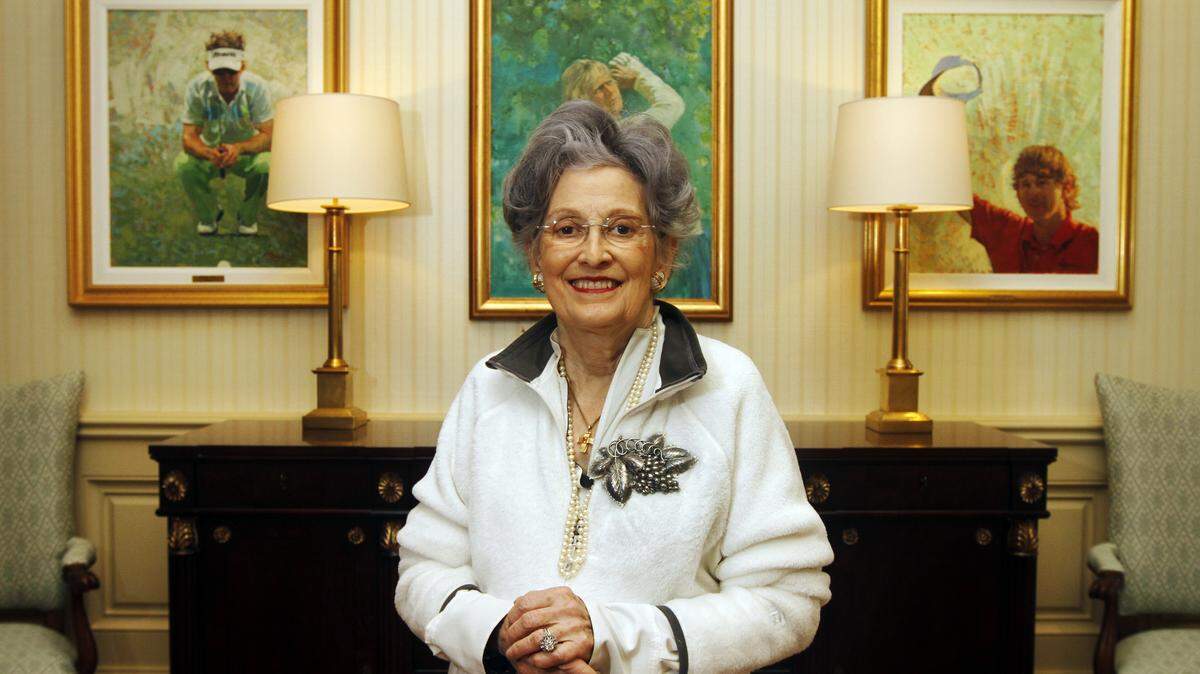
This just in: Sea Pines founder Charles E. Fraser did own a set of golf clubs.
And he even played the game a time or two, though it is uncertain if he ever finished a round.
So how did he get into the inaugural class of the Lowcountry Golf Hall of Fame, which will have its induction ceremony Saturday night?
It's a long story, according to Mary Wyman Stone Fraser, who has come from her home in North Carolina to accept her late husband's honor.
She tells about the time Fraser set out to play a round of golf with the late Donald O'Quinn of Bluffton. O'Quinn was in charge of building the roads in Sea Pines, and he led the construction crew that worked virtually around the clock to build the Harbour Town Golf Links in time for the first Heritage golf tournament on Thanksgiving weekend 1969.
Fraser's audacity in getting the professional tour's permission to stage a tournament before he had a course or a clubhouse tells as much as you need to know why he's going into the Hall of Fame along with his brother, Joe.
Mary tells this about his round of golf with O'Quinn:
"Charles teed off and Donald followed and Charles' ball went into the woods and he went to get it.
"And Charles didn't come out of the woods, and Charles didn't come out of the woods, and Charles didn't come out of the woods, so Donald goes into the woods and finds Charles and Charles says, 'Donald, we can put a road right through here, and you save those trees, Donald. The road goes right through here.
"And Donald said that was the end of golf with Charles. No more playing golf.
"Charles didn't play golf. I didn't play golf."
But when he built Hilton Head Island's first golf course, and brought in a tournament now known as the RBC Heritage Presented by Boeing, he grabbed an alligator by the tail.
A lonely parade
Mary said Charles saw golf as a way to pull people together.
It took everybody in a community of about 3,000 to pull off the golf tournament.
And while Joe Fraser was spreading pine straw to cover all the mud in the grand new venue, Charles was organizing a parade for his tournament with flags flying, bagpipes screeching and a cannon blasting.
"So, here we go," Mary recalls. "The flags are raised, the bagpipes begin, the drums are rolling and everybody is there. And the interesting thing is that there basically wasn't anybody to watch the parade because everybody on the island was in it."
Her point is that the coastal golf industry we take for granted was virtually non-existent in 1969.
And when Arnold Palmer won the first Heritage, the world suddenly saw what the tiny gaggle in the parade had seen four days earlier: a beautiful setting for an interesting game.
"Can you imagine what that did for the knowledge about golf on Hilton Head, in the United States and probably anyplace else?" Mary asks.
Charles Fraser picked up the red stakes as that first tournament began because he thought they were ugly.
But he always saw beauty in statistics, stories, books, maps, history, trends and icons that made the human heart pump faster.
"Charles read law books when he was 11 years old," Mary said. She's surprised he didn't read in the shower. He couldn't walk past her desk without reading what was on it.
Not only did he read volume after volume, he could remember where to find all those germs for his ideas.
Something to do
Charles came to believe golf would help him sell his only asset: land. And it would help create a community.
"He had to have something for people to do," Mary said. He was always researching and thinking about what would attract people to Hilton Head, she said.
"People bought land, but they didn't build," Mary said. "If they don't build, they don't go to a restaurant. If they don't build, they don't play golf."
And a retiree named Donald Hobart, who had been a pioneer in market research, helped Fraser get his alligator by the tail in a most unplanned way.
Fraser wanted to survey property owners on what it would take for them to move to the island. He put on his list the arts and golf and on and on, but Hobart looked at it and said it needed to include medical care. And the No. 1 answer on the survey was medical care. So they had a medical center built.
"Again, Charles is thinking, he's doing," Mary said. "Don Hobart, again, opened up doors."
Golf was not the sweet spot in Fraser's life, though the island now has more than 20 courses.
The sweet spot that got Fraser into the Lowcountry Golf Hall of Fame was his insatiable thirst for ideas and the people who would share them. Even if they were deep in the woods off the first teebox.
Follow columnist and senior editor David Lauderdale at twitter.com/ThatsLauderdale and facebook.com/david.lauderdale.16
This story was originally published March 27, 2015 at 5:58 PM with the headline "Lauderdale: How Charles Fraser, a bookish hacker, got into the Lowcountry Golf Hall of Fame."