
Lauderdale: Why a UGA sorority waved goodbye to the hoop skirt
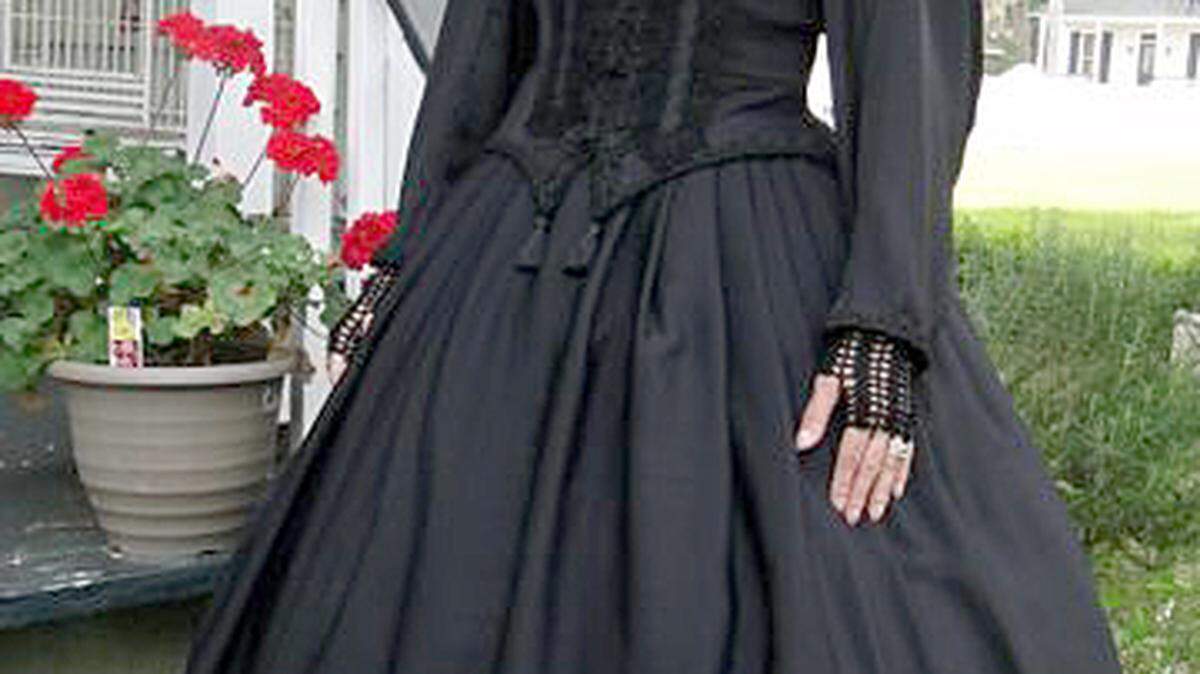
Are hoop skirts racist?
No.
So why were sorority and fraternity leaders at the University of Georgia right this week to ban them as party attire?
It's complicated, but people my age from down South understand it perfectly.
Like most things, it's not totally fair.
I know of one person who was personally offended by the link of hoop skirts to racism, and she is right. Kim Poovey of Beaufort is a "living historian," an actress, storyteller and writer who sews her own period dresses and virtually lives in her beloved Victorian era.
She can be forgiven for her admitted rant on Facebook, where she pointed out that people of all races wore hoop skirts in the 19th century, and that wearing period clothing is not a character flaw.
"How dare anyone infer that those of us dressed in these fashions are racist!!!," she wrote, with agreement from friends both black and white. "UGA declares it 'progress'; I consider it offensive. I am not racist!!! I dress in the fashions and celebrate the era (as everyone knows about me, I do not re-enact the war -- I love the Victorian era and all of its beauty ...)."
She told me the next day: "I have zero tolerance for racism. That's why I got so upset."
She disagrees with the UGA students, and with me. "Hoops: Fashion, not hate," she wrote.
I've seen others dress appropriately in period clothing. The McIntosh County Shouters of Georgia bring a unique Gullah form of singing, dance and worship alive today in old-fashioned clothing. I have seen the same thing with Beaufort's Aunt Pearlie Sue and The Gullah Kinfolk.
So, the cloth and thread are not the issue.
The issue is context. And that's why the student leaders at Georgia can be commended for doing the right thing.
They acted a week after the University of Oklahoma expelled two fraternity members and shut down the fraternity when a hideously racist video by its members went viral.
Georgia had a discussion of Greek events like "Old South Week" and the "Magnolia Ball" and what kind of message can be conveyed by antebellum dress. The university did not want to invite negative attention, the vice president of student affairs told Lee Shearer of Onlineathens.com.
The context also includes decades of dealing with divisive Lost Cause symbols at universities across the South. Slowly, a lot of that stuff has gone with the wind.
They don't play "Dixie" at football games anymore, or wave the rebel flag. Ole Miss' mascot "Col. Reb" was replaced by the "Rebel Black Bear." Fraternity boys no longer wear Confederate uniforms to parties or in horseback parades across campus.
To its credit, the University of Georgia banned the Confederate uniforms four years before a fraternity's national office ordered it in 2010. That came after its chapter at the University of Alabama paraded in front of a black fraternity, Shearer reported.
Today's Georgia students were sensitive to context.
"The student leadership, staff and advisors agree that antebellum hoop skirts are not appropriate in the context of some events," their statement read. "We will continue to review costuming and themes for future events to ensure their appropriateness for our organizations."
People say this is political correctness run amok.
It is not.
In this context, it is common decency late arriving.
Follow columnist and senior editor David Lauderdale at twitter.com/ThatsLauderdale and facebook.com/david.lauderdale.16.
This story was originally published March 19, 2015 at 4:14 PM with the headline "Lauderdale: Why a UGA sorority waved goodbye to the hoop skirt."