
Birds, underbrush and the natural landscape: Teachings from Hilton Head birder Barry Lowes
I hope all you Lowcounty neat freaks can put down your weed eaters long enough to hear about the beauty of scraggly, viny, unkempt underbrush.
Barry Lowes told me about its value, and it’s something that I have not forgotten.
And, unfortunately, I still have reason to think of it often as I see people neatening up the Lowcountry landscape like it’s LaGuardia Airport.
First, a little bit about Barry.
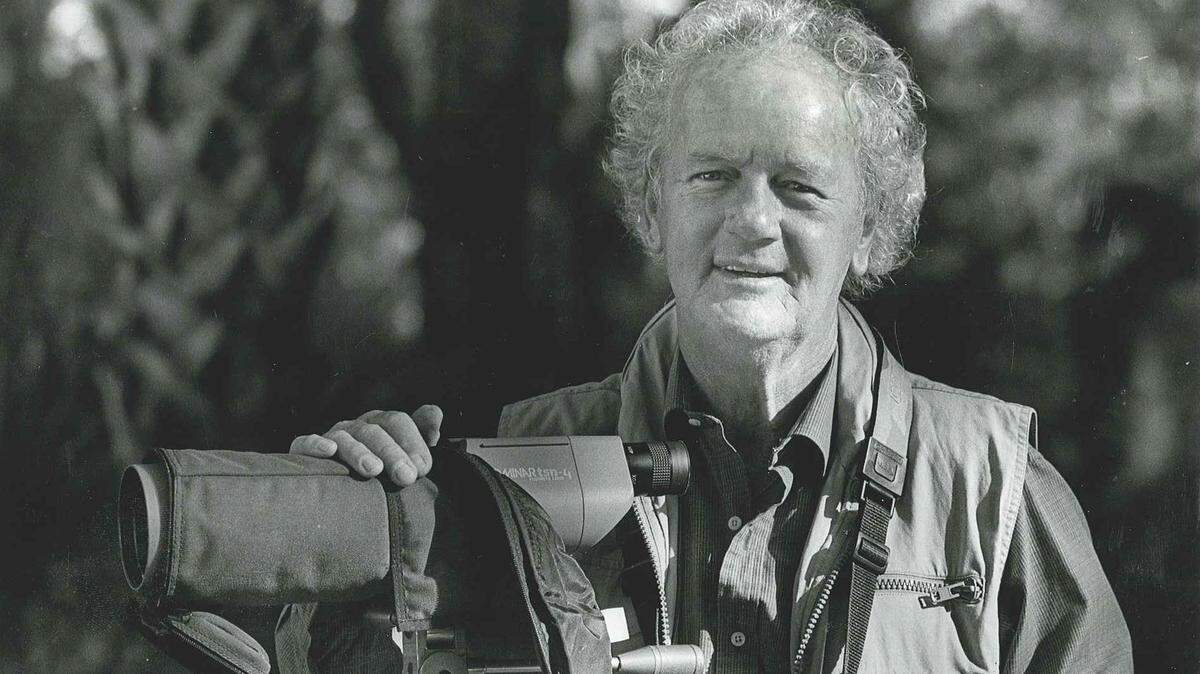
He was a bright-eyed man with a mop of curly white hair who lived among us for 32 years.
He was a Barnabus to me: He was an encourager.
Primarily, Barry was a naturalist, and more specifically a birder.
He was a birder on steroids. He had a life list of more than 3,000 species worldwide.
He led the Hilton Head Audubon Society’s annual Christmas Bird Count from 1983 to 2010.
He also was a photographer.
He divided his time between a home on 1,000 acres and a large lake near Toronto and a home on maybe a quarter of an acre on Baynard Cove Road in Sea Pines on Hilton Head Island.
That was his flight pattern from 1982 to 2014.
Barry died at his place in Canada in 2020 at the age of 93, six years after he was forced to fly north one last time due to the failing health of his wife, Philomena. Phil died in 2015.
Together, they created and ran a summer camp, where they influenced countless children, teaching and showing them the glory of God’s creation. When Barry died, one former camper said, “He taught me that cloudy mornings are silver — not gray — and so much more.”
In the Lowcountry, he preached we were going in the wrong direction when it comes to protecting our birds. And that’s where all the trimming of underbrush is making things worse.
Junior Audubon
Barry is a great example of what our society owes its teachers.
His eighth-grade teacher used his own money to sign up all his students as Junior Audubon members.
Barry said: “Every month we got a colored print (of a bird) and with me, it stuck. I became infected, and like malaria, it has been with me for a life.”
He would end up traveling the world to watch birds, one time following Darwin’s route down through Patagonia to Tierra del Fuego at the tip of South America.
Here at home, Barry told me the incredible story of a piping plover, a tiny speck in the universe but a big part of life.
Year after year, Barry and Phil saw the same little bird show up at about the same time — on the same 200 yards of South Beach. This went on for more than five years.
This little character had flown more than 1,000 miles to get here.
And it weighed less than 3 ounces.
It was banded, so Barry could discover that it traveled from Lake Superior to Hilton Head, and that it was 11 years old.
These little birds fly continuously, and can complete a long-distance migration in 48 hours.
Even very young chicks undertake the journey to the wintering grounds on their own, about 10 days after the male parent leaves.
Barry taught us these amazing things about the easily unseen miracles that surround us. And he taught us that they need our help.
‘It’s all about habitat’
I said Barry was an encourager.
One day he came to The Island Packet office unannounced. I went out to the lobby, and he gave me a large framed photograph of a red and orange sunset over Baynard Cove Creek. It was his backyard, where he had identified hundreds of different types of birds.
He was parceling out things as he prepared to fly north for good.
After Barry left, I read a note he’d taped to the back of the photo.
“The island is under relentless pressure to develop and change this paradise,” he wrote. “Sad — but your voice is quietly firm in defense of this special place. I hope that our trails will cross again one day. Meanwhile, there is digital.
“Embrace each day, David, and share your special gifts with us all.”
Each day I see one more sad reason to give Barry another salvo from our bully pulpit.
He said we’ve ruined the habitat for birds by making yards look neat, by leaving no natural buffer around ponds, by bush-hogging underbrush that birds need to survive and by building on every corner.
“It’s all about habitat,” he said. “It’s as if you knocked down all the houses in a neighborhood and then said, ‘Not as many people live here anymore.’ It’s the same with birds. It’s sad what you’re seeing.”
He said that in a community that prides itself on being “green,” most of the green he saw was money.
BUT … Barry said we each can do our part. And as the Lowcountry morphs into generic suburbia, we need Barry’s voice more than ever.
He said we can have our flower beds, but leave the edges of the yard natural. We can provide water for birds, keep cats inside and keep dogs leashed on the beach.
“You’re not remaking the world,” he said. “But you are leaving a footprint to make the world better. Just do what you can do, and do it well.”
David Lauderdale may be reached at lauderdalecolumn@gmail.com.
This story was originally published March 29, 2026 at 5:00 AM.