
Correct the hot dog stand mentality of development on Hilton Head
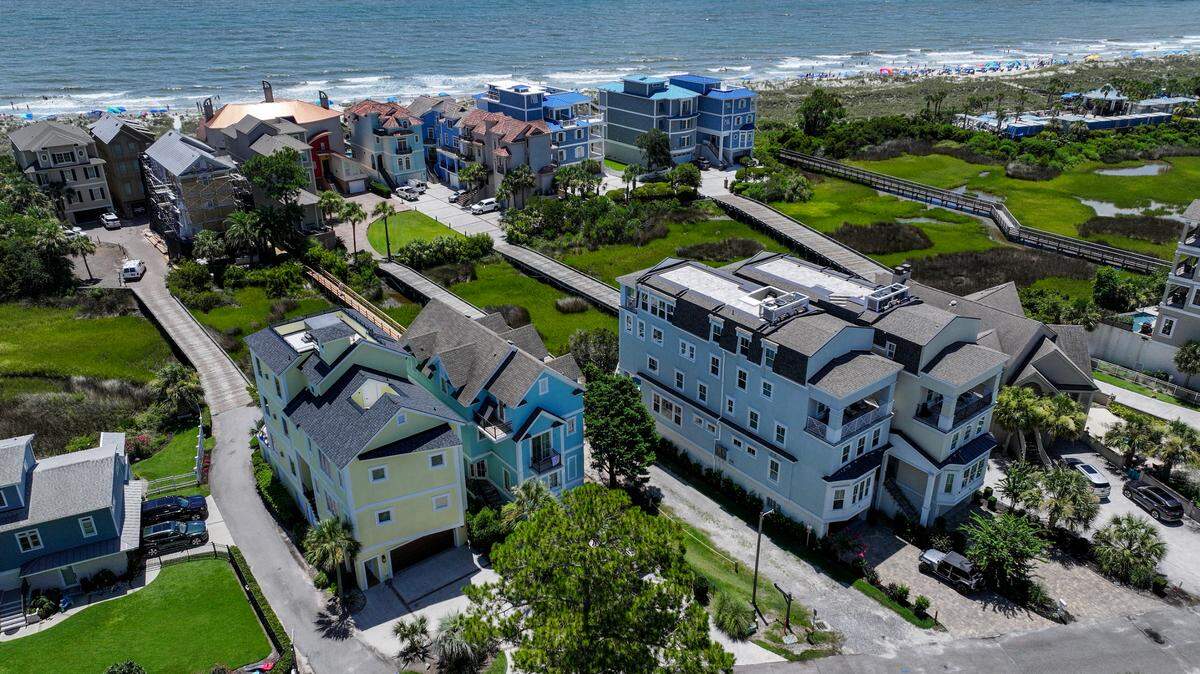
The passing of Don Guscio of Bluffton last month should remind Hilton Head Island to tend to something important: its soul.
Don was a landscape architect. He got his degree from the University of Georgia and moved to the South Carolina Lowcountry in 1971 as an early land planner for Sea Pines on Hilton Head. He was “drawn by the natural beauty and promise of the Lowcountry,” his family said in his obituary.
The important thing is how he treated that beauty over the ensuing decades of quiet influence.
“Don believed deeply that buildings should blend into their natural surroundings,” the obituary read after his passing on Dec. 18 at age 83. “He championed the use of indigenous plants, the preservation of wetlands and waterways and the protection of historic structures. His philosophy favored balance, proportion and restraint, allowing the land itself to lead.”
He was not alone. This mindset was embraced by Sea Pines founder Charles Fraser and a cadre of landscape architects who gave this place its sense of place. They included Ed Pinckney, Robert Marvin, Truitt Rabun, Perry Wood, Jim Tiller and Mark Baker. A crucial planner from afar who laid out Sea Pines was Hideo Sasaki and his associates in Boston.
They brought a variety of influences to projects of Hilton Head, Amelia and Kiawah islands, and beyond.
Rabun, who decided he wanted to work for Fraser after reading about him in “Encounters with the Archdruid” by John McPhee, said Fraser studied the planning by the Sea Island Co. down the coast in Georgia.
The Sea Island plan was laid out by Talmadge M. “Bummy” Baumgardner Jr., who Rabun also worked for.
A major influence born in that era was the book “Design With Nature” by Ian L. McHarg, a Scot who founded the landscape architecture and regional planning department at the University of Pennsylvania.
The New York Times story of his death in 2001 said, “He used any medium available, including books and television, to impart his essential message: that no human action, be it building a highway, city, condominium or park, should proceed without a study of its suitability for the topography, vegetation, waterways, wildlife and other natural features of a site.”
Robert Marvin talked of why that matters in arguing that the South’s landscape runs much deeper than azaleas.
“I once heard Dr. Karl Menninger, world-renowned Kansas psychiatrist, tell the Aspen International Design Conference on Man’s Environment, that a man’s success and happiness are affected as much by his emotional response to his environment as by his physical comfort in it,” Marvin said.
“It was Dr. Menninger’s belief that the answer to mounting problems of mental health lies in the preventive measure of creating living environments which consider the emotional needs of people.”
These voices should be ringing loudly this year at Hilton Head’s Town Hall as a newly-appointed task force looks at potential changes to the town’s Land Management Ordinance.
I don’t know that they’ve said yet exactly what problem they are trying to fix. But we can look around and easily see a problem that crushes the island’s core value to protect a rare slice of nature by blending building with it and hiding them with trees.
Today, we see tract housing that works fine in many places, but not here. We see gargantuan “homes” that fill tree-less lots with no front yard, no sense of scale and such a lack of balance that they destroy entire neighborhoods.
The only feature of many sites that is being considered is how much money can be bled out of it. And how quickly that can happen before I go ruin something else.
People say we can’t look back to the people and principles that are our foundation. They say we must look forward and adjust to the times.
But considering the human soul, and the influences the natural world has on it, is timeless. That IS the essence of looking forward. A fulfilling future will rely on the voices of Don Guscio and all of his colleagues.
The landscape architects – “placemakers” as Rabun calls them, not policy planners – know why things make our heart sing, even when we don’t know why our heart is singing. This is not a policy planning fad du jour.
Somehow, Hilton Head got off track. What is being allowed today by the Town of Hilton Head Island is a pockmark on its very soul. Maybe the task force can correct that.
Maybe they can remember the defining words of Charles Fraser regarding Hilton Head. He said Hilton Head was “too attractive to let it go the way of all typical United States beach developments, which have a way of becoming a hodgepodge of conflicting uses, a joy and delight to all maniac builders and hot dog stand operators, but a nightmare to anyone with reasonable aesthetic standards.”
David Lauderdale may be reached at lauderdalecolumn@gmail.com.