
Hilton Head musical legend Earl Williams to get his own day, and celebration of life
Hilton Head Island has lost a piece of its soul with the passing of Earl Williams.
For four decades, his sultry saxophone and slick showmanship set a tone for an island that will say “thank you” with a free, public celebration of his life from 3 to 7 p.m. Wednesday at the Coastal Discovery Museum at Honey Horn.
And the town has declared Wednesday to be Earl Williams Day on Hilton Head.
“He was the dean of musicians on the island,” said Lavon Stevens, a close friend and host of the celebration along with the Williams family. “He had an impact on all of us.”
But to the non-musicians — the dancers, the listeners, the laughers, the fans — Earl Williams will always be associated with the magic of the Crow’s Nest, that club that clung to the rooftop of the oceanfront Hilton Head Inn in the island’s heyday of live entertainment.
“It was right over the water, it was breezy, it was just a beautiful place, and people loved it,” said his wife, Nettie Williams, a native of the Furman community in Hampton County where she and Earl have lived for a number of years.
She met Williams at the Crow’s Nest. And, like others, she “went back and back and back.”
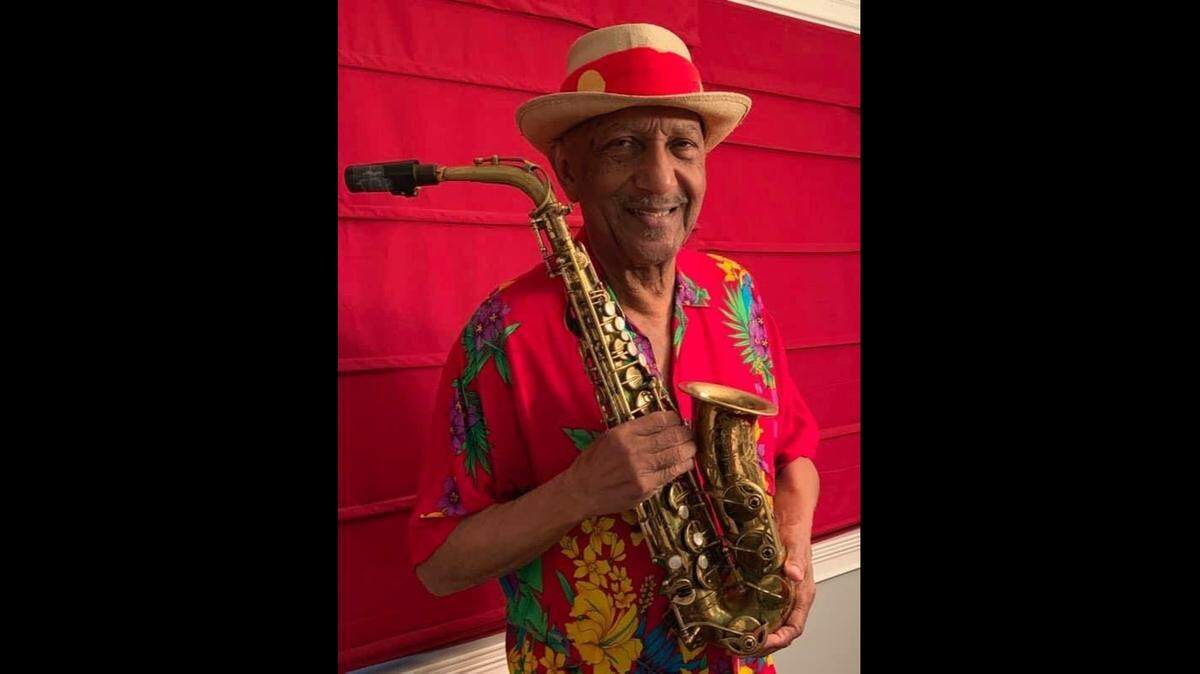
Earl Williams first came to the island from Atlanta in the 1980s. It was an accident, really. Legendary jazz pianist Freddy Cole, an island regular whose smooth baritone voice could remind some of his brother Nat “King” Cole, could not make a date at the Mariner’s Inn (now the Omni) and asked Williams to fill in for him.
“That’s when Earl became one of the hottest bands on Hilton Head because he made people dance and have fun,” Nettie Williams said. “He unarmed them. He would bring them into his show. That’s what people loved about him.”
Earl played soprano sax, alto sax, upright acoustic bass, flute, harmonica, banjo, even the keyboard. He played jazz, blues, R&B and some pop.
He was a regular for almost 20 years at The Jazz Corner and sat in with Sam Gill at Eugene Wiley’s iconic Golden Rose Park. He packed Hinchey’s Chicago Bar and Grill on Monday nights, starting at 11 p.m. and going to 3 a.m. He played for years at the Kingfisher Seafood and Steak House, and jammed at Big Rocco’s and upstairs at Fratello’s Restaurant with other musicians after their gigs.
He and his group — usually a sax, piano, drums and bass — were the house band at The Mockingbird Lounge at the Marriott (now Sonesta).
He also played at island churches, Mount Calvary Missionary Baptist Church and First Presbyterian Church.
And for almost a decade, his sax sent soulful versions of “The Old Rugged Cross” into the chilly air at First Baptist Church’s Easter sunrise services on the beach.
His last gigs were on the porch at The Cottage Café on Calhoun Street in Bluffton, playing with a young man from Estill, Alexander Newton.
Williams died Feb. 19 in Charleston after a couple of years of declining health. He was 81. A funeral was held in Hampton, and he was buried in the Good Hope Baptist Church Cemetery near Estill.
“I remember going as an underage kid after my shows at the Pelican Point to sneak into the Crow’s Nest and watch the master at work,” longtime Shelter Cove entertainer Shannon Tanner posted on Facebook.
“We are all better today as a society on Hilton Head because of the entertainment and love that he so passionately conveyed. Earl enriched our lives … and for that I will be eternally grateful.”
COMMODORES AND ARISTOCRATS
Earl Luelle Williams Jr., affectionately known as “Swan,” was born on July 22, 1940, in Okolona, Mississippi, where his parents were educators.
He played in dance bands at his hometown junior college and was an early musical influence on his younger brother, Milan B. Williams, a keyboardist and composer who was a founding member of The Commodores and composed their breakout hit “Machine Gun” and the classic “Easy Like (Sunday Morning).”
Earl majored in music and got a master’s degree in music theory from Tennessee State University in Nashville. He played in the school’s famous “The Aristocrat of Bands” known for “characteristic precision and distinctly soulful style,” the school web site says.
He marched down Pennsylvania Avenue for John F. Kennedy’s inauguration, part of the first historically Black university band ever to play in an inaugural parade.
But his proudest marching of that era was tied to the Nashville sit-ins for civil rights. He was arrested along with future congressman John Lewis for attempting to integrate a dime-store lunch counter.
By the time Williams found the glow of a Carolina moon over the Atlantic Ocean, he was quite the entertainer.
JERRY FARBER
Jerry Farber wrote a best-selling book called “Sex, Wealth and Power: How to Live Without Them.”
He is a classically-trained pianist who added comedy to his shows to handle hecklers.
And for 14 years, Earl Williams played with Farber at The Lark and Dove restaurant in Atlanta.
In a story about Farber’s 75th birthday bash in 2013, Atlanta Journal Constitution writer Bo Emerson called him “a sort of human Rosetta Stone of Atlanta entertainment.”
Nettie Williams said Farber “was a big part of Earl becoming the person he was as far as an entertainer.”
Williams would work the room, talking to people as he ambled from the door to the stage, or leaving the stage to talk to his audience. He told stories that could make the club owner cringe. He would start playing “Rocky Top” on the banjo, then get people lined up behind him dancing around the room as he switched it into “When The Saints Go Marching In” on the saxophone.
Lavon Stevens recalls that a man once asked Earl to play a country song. He said he didn’t know much country music. The man pulled out a $100 bill.
“Yee-haw,” Williams responded. “I’ll be a country singer.”
And he belted out David Allan Coe’s “You Don’t Have to Call Me Darlin’.”
KEBBI WILLIAMS
Earl’s saxophone is not done yet.
It’s in his son’s hands now.
“You have another horn,” Nettie told Kebbi Williams prior to his performance of an amazing “Amazing Grace” at his father’s funeral.
Kebbi Williams played with OutKast and has won a best-blues-album Grammy with the Tedeschi Trucks Band.
His father’s soprano sax will now travel alongside the 1920s Conn tenor sax that Earl gave Kebbi when he was 12 years old.
His father played that sax on cruise ships, in clubs all over the Southeast and annually in the Magnolia Festival in Mississippi, where he was baptized in a town named Egypt.
But no place suited Earl Williams like Hilton Head. He and Nettie lived on the island for 25 years while she rose to be a top manager at the Marriott hotel under general manager and island legend Angus Cotton, her mentor.
“Earl fell in love with all the island venues and places he played and the people he met,” she said.
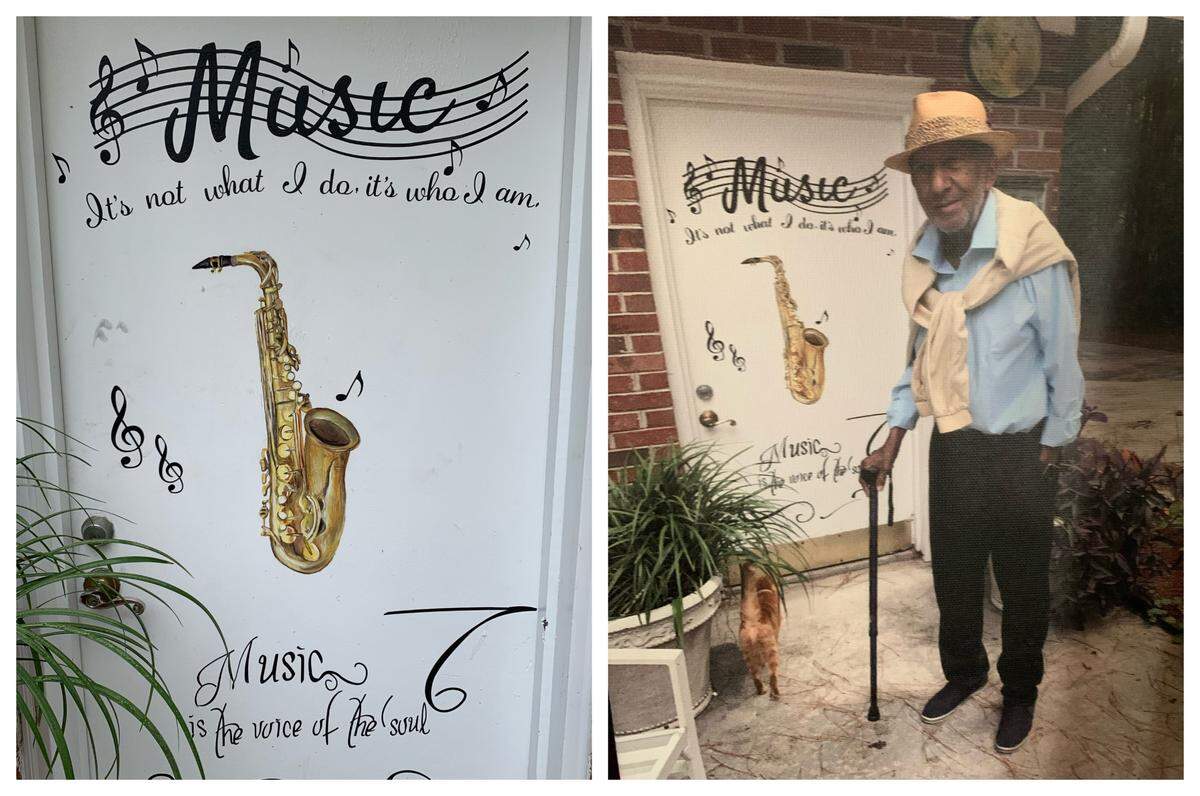
She said his life is best reflected in a new piece of art painted on a shed door at their home in South Carolina’s rural Lowcountry.
After getting home from a recent hospital stay, Earl discovered the work done by artist Callie Schrader.
In the center is his big brass saxophone. Two sayings seem to dance around it.
“Music: It’s not what I do, it’s who I am.”
And, “Music is the voice of the soul.”
David Lauderdale may be reached at LauderdaleColumn@gmail.com.
This story was originally published March 11, 2022 at 12:32 PM.