
Hilton Head’s ‘Tree Lady’ retiring after 35 years as a lightning rod in town conservation
Hilton Head Island’s “Tree Lady” is leaving the building Monday with a strong message for those left behind.
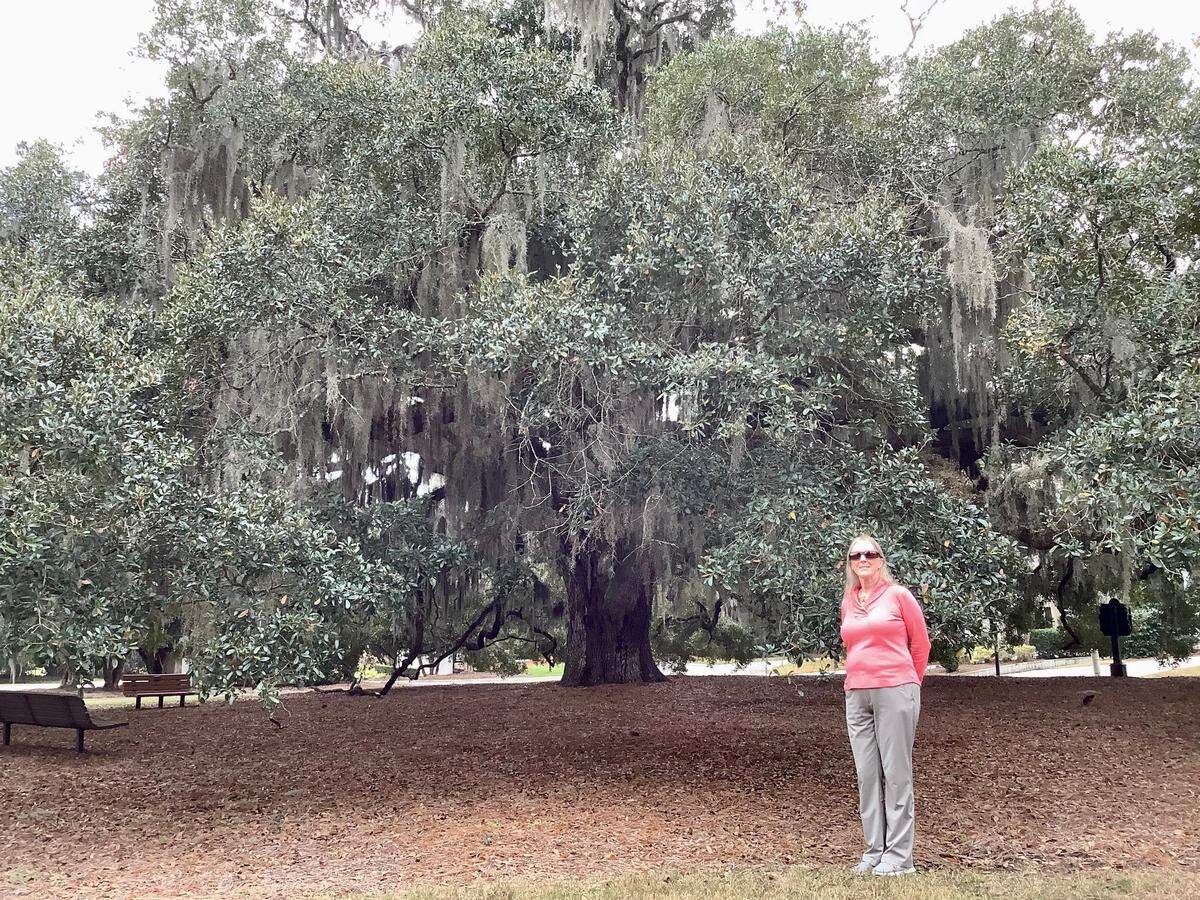
Sally Krebs will retire from the Town of Hilton Head Island after 35 years of sticking up for the island’s fragile environment — particularly its trees.
In the face of the island’s rampant growth in the 1980s and 1990s, Krebs became a lightning rod for insults as she forced developers to stick to the details of one of the nation’s strictest tree-protection ordinances.
Early in her 25-year run as the town’s natural resources administrator (followed by 10 years as sustainable practices coordinator), Krebs became known as “The Tree Lady,” a sometimes derisive label she took as an honor.
As she packs up to leave, she laughs about it, saying she was never threatened or even bribed.
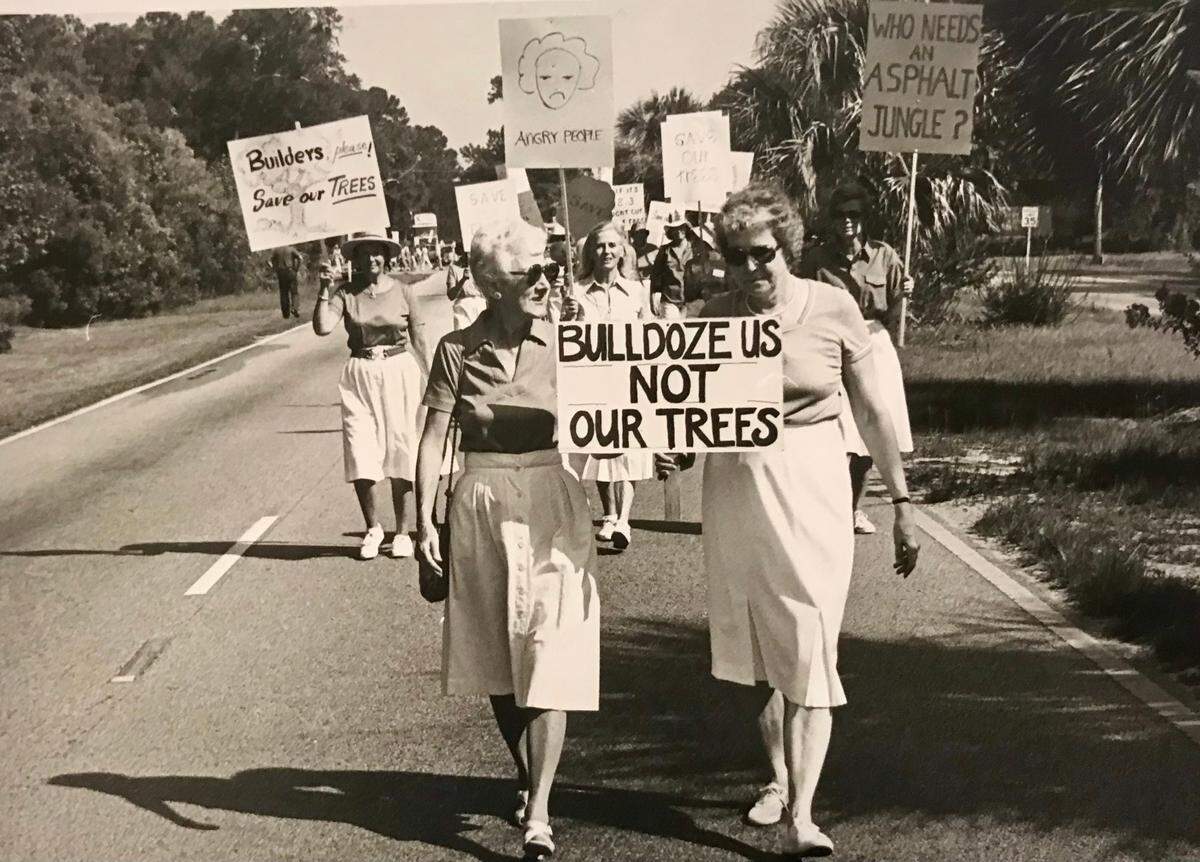
She stepped into a rowdy community struggling to find its way forward, this time with a brand new town government. Islanders voted to incorporate in 1983, clamoring for growth control. But by 1984, little old ladies Katie Callahan and Dorothea Griffin were leading 250 people down Pope Avenue demanding that a town that a year earlier didn’t own a stapler act quicker to protect trees.
The instigators wore white skirts and green blouses. They carried potted plants and even a caged bird. Most carried signs:
“I Think That I Shall Never See a Condo That is as Lovely as a Tree.”
“Down With Paul Bunyan Tactics.”
“Who Needs an Asphalt Jungle?”
One read simply: “Angry People.”
Katie Callahan’s sign read: “Bulldoze Us, Not Our Trees.”
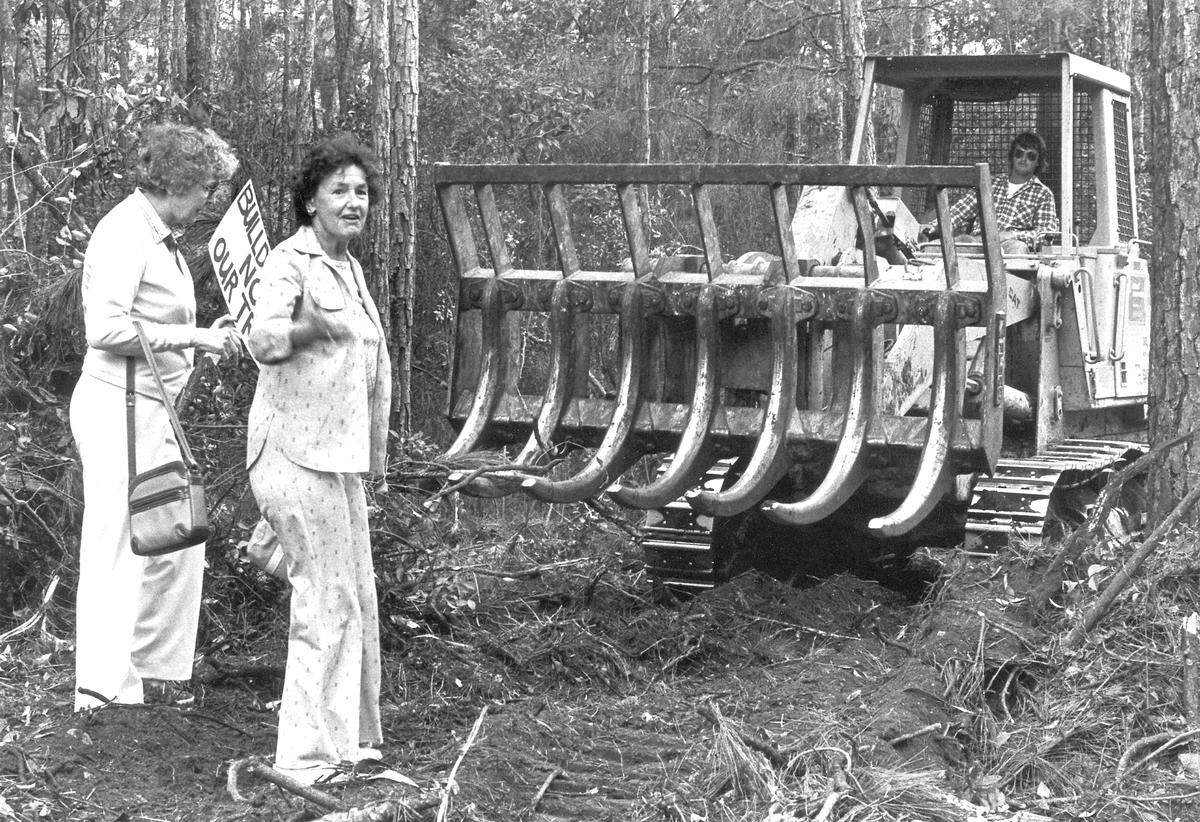
She and Jane Swift had literally stepped in front of a bulldozer clearing land along Palmetto Bay Road for a water main.
Meanwhile, the island’s largest developers bought 125,000 pine seedlings to give out, calling it Project Johnny Appleseed. Callahan responded by accusing the new Town Council of “shilly-shallying” on a tree ordinance.
“Let’s try, for once, to please all of US and hope the builders and developers can adjust to what WE want,” she wrote. “It seems to me they’ve gotten an awful lot of what THEY want in the past.”
Into this crossfire stepped Krebs, a tall, thin biologist with a straightforward delivery who was, at the time, a teacher at Thomas Heyward Academy in Ridgeland.
She was hired in 1986, when Town Hall was an oniony-smelling adjunct to a Huddle House building on the island’s north end. Her job was to help refine and enforce a groundbreaking new town tree ordinance.
She came with a simple message that hasn’t changed.
“We rely on nature to provide us with so many essential services,” she said last week, “and if we lose those essential services, then our quality of life is going to suffer greatly for that.”
Walmart Supercenter
Hilton Head’s initial tree ordinance was more than a year in the making, but it did two main things.
“It was based on quantitative measures,” Krebs said. “So instead of just saying ‘Trees are pretty, and we’d like to have trees here and trees there,’ we actually went around and went to different sites that were not developed and then that were developed and we compared the two and said, ‘We really don’t like the way this site looks, it doesn’t have enough tree cover; we love the way this site looks, it has great tree cover,’ and came up with a standard that everybody across all zoning areas would have to meet, for a certain number of inches of trees for whatever previous acreage they had on the site.”
Also, the ordinance preserved biodiversity.
“The way it did that was that it required that if you took live oaks, for example, off of a site, you had to replace the same species or a very similar species,” Krebs said. “So we broke all the native trees of the island into categories and said, ‘If you take trees out of Category 1, which is the category live oaks are in, you have to put back trees from that same category.’
“So we were preserving the species mix on the site, which was very different from most tree ordinances in the U.S. at the time.”
You can tell it worked by looking at the parking lot at the island’s Walmart Supercenter. Not only can you not see the building from the highway, you can’t see it from the forested parking lot.
“When Walmart came here, I actually worked with the landscape architect that Walmart had hired, and we went out and we actually staked out the parking lot around the trees and everything else,” Krebs said.
“That’s a really good example of if you have a good tree ordinance what you can have as far as shading of a site goes, which keeps temperature down, which keeps ground-level ozone from forming, which is better for the health of people. I mean, we could go on and on with that.”
We also saw that the original ordinance worked after Hurricane Matthew whipped by the island as a Category 2 storm in October 2016.
“I know that you remember seeing the huge piles of tree debris that we had all over the island,” Krebs said, “and yet we still have a very vibrant urban forest left on the island even though we lost tens of thousands of trees in that storm.”
Hilton Head ruined?
Krebs believes Hilton Head’s greatest conservation success is its land-buying program. It went from owning zero land to more than 1,300 acres today, preserving trees and limiting traffic.
Conservation is a conundrum, she said, balancing protection of natural resources with the needs and demands of humans.
I asked her: “True or false: Hilton Head has been ruined.”
“I don’t think it’s been ruined,” she said. “I think that thus far in our evolution as a town we have done a very good job of protecting the natural features of the island.”
But that could all go away.
Those following in the footsteps of a Katie Callahan in the streets or a Sally Krebs in Town Hall once again are in a community at a crossroads, trying to find its way.
“I think that we’re at a point now that we are going to have more and more pressure to redevelop on the island and also to develop the areas that are still undeveloped on the island, and so we’re going to have to really try hard to keep what we have,” Krebs said.
“This island is known for its proximity to nature, the fact that we have been able to, over the years, have economic prosperity and high quality of life for both our residents and our visitors and, at the same time, have really beautiful natural environments.
“So we’ve proven in the past that this can be done.
“Now the challenge is to make sure we stay on that course.”
David Lauderdale may be reached at LauderdaleColumn@gmail.com.
This story was originally published January 2, 2022 at 7:00 AM.