
The Hilton Head boys (and girl) of summer: Where are they 20 years later?
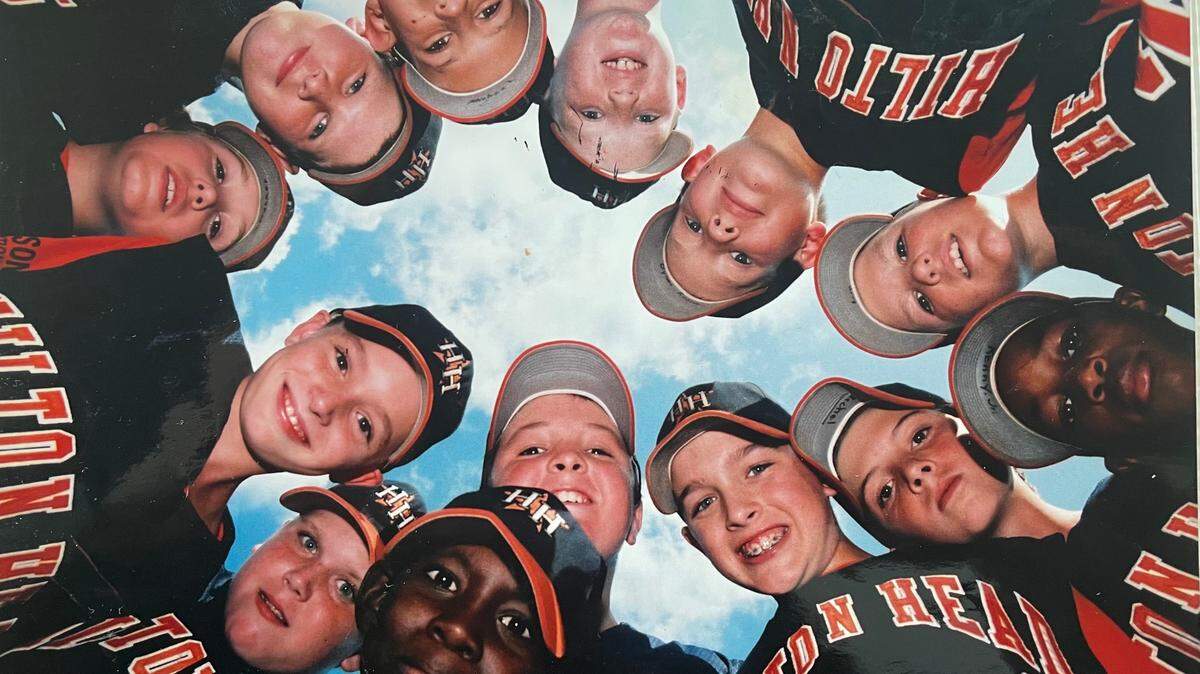
For a moment 20 years ago this month, posh Hilton Head Island, the “world-class resort” and “playground of millionaires,” looked like Mayberry.
We were just a small town in South Carolina with something heartwarming to be proud of — together.
That summer, Hilton Head sent a baseball team of Nintendo Game Boy-toting 10-year-old boys (except one was 9, and another was a girl) to the hills of Virginia to win the Dixie Youth World Series, and they did it.
Signs at the bridge welcomed them home.
Police sirens and blue lights led the crawl of decorated mini-vans under an arch of firetruck ladders to their original field of dreams at The Crossings Park.
Several hundred people were there, with noise-makers that ended up being drowned out by thunder.
For a week, island families had gathered around the television with their children, listening to real estate agent Guy Malool announce the games from Bedford, Virginia.
The team of all-stars had won the district and state tournaments to represent South Carolina in the 11-state World Series.
Malool’s word pictures, which could devolve into him telling a neighbor to go feed the cats because Hilton Head had just won another game, were aired with no visuals nightly on public service channels by both Adelphia and Hargray cable companies.
Malool described Ian Anderson facing a pitch in the bottom of the last inning of the last game. His hit glanced off the shortstop’s glove and scored Alex Hill and Michael Campbell for a 6-5 win over Alabama.
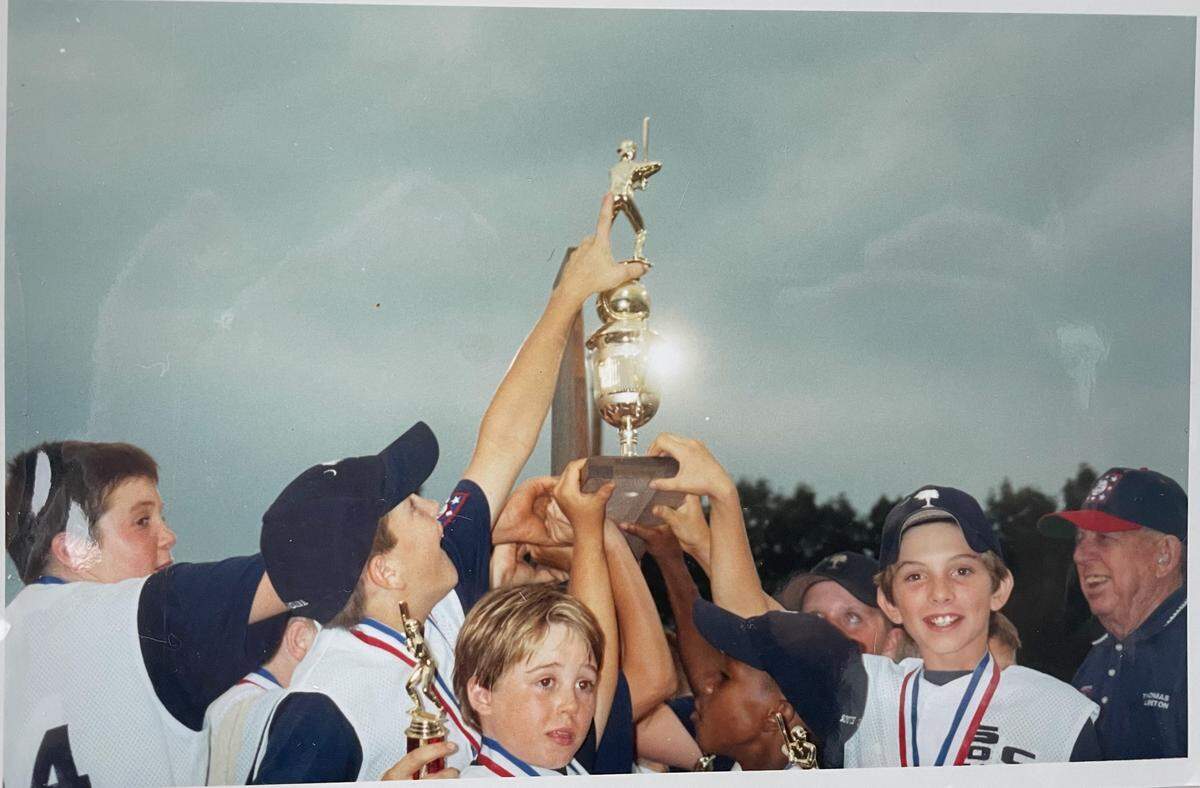
A mosh pit in the Shenandoah Valley clay ended a journey that took all summer for this little pack of nomads.
Today, players and coaches — many of them still living here — recognize it as a journey that began much earlier than that June. They say it was just one more drop in a large bucket of community contributions that got them to that point.
And players, now with children of their own, see what we all hoped. They learned what it takes to be a success.
It takes coaches forcing practice hour after hour.
It takes parents willing to sacrifice.
It takes a community to support them.
What they left us with is not about a baseball game, but about a community that was, for a shining moment, Mayberry.
‘YOU GET SUCCESS’
This was not Hilton Head’s first rodeo.
Two years earlier, Larry Page and Johnny Ussery led a team of 12-year-olds to the county’s first Dixie Youth World Series title in scorching-hot Terrell, Texas.
The ice was broken in 1994 when a team of 13- and 14-year-olds coached by Thomas Lauderdale (no relation) was the first local team to qualify for the World Series in Eufala, Alabama.
Other teams have since made it to the Series, and Bluffton hosted it one year.
This year, both Hilton Head and Bluffton sent teams to the World Series in Laurel, Mississippi.
At The Crossings Park, which many in the posh community thought we couldn’t afford, many placards quietly attest to past successes. The names of people who helped make it happen are everywhere, all helping Randy McGarvey live out his dream and passion for youth baseball teams.
Assistant coach David Lancaster calls this a 5-gallon bucket.
“Every player on this team had a specific job to do,” Lancaster said, “and they knew it, and their parents knew it.
“In life, each of us has different talents, and you pour it all in a 5-gallon bucket, and this is what you get,” he said.
“You get success.”
THE COLONEL
Col. John Parker, the team manager, was not your typical coach.
He was a 54-year-old retired career Marine, and his kids were long gone from home.
But he wanted to pay back coaches who had helped him, and found himself coaching kids soon after coming to the Lowcountry.
He guided his little troops with an old Marine Corps saying: “The more you sweat in peace, the less you bleed in war.”
That means practice.
“For me, it was all about discipline for the players,” he said, “and it was about fundamentals — learning how to play baseball correctly — and that’s what I was really there for. Our practices were very regimented and very scheduled to give them the most at each one.”
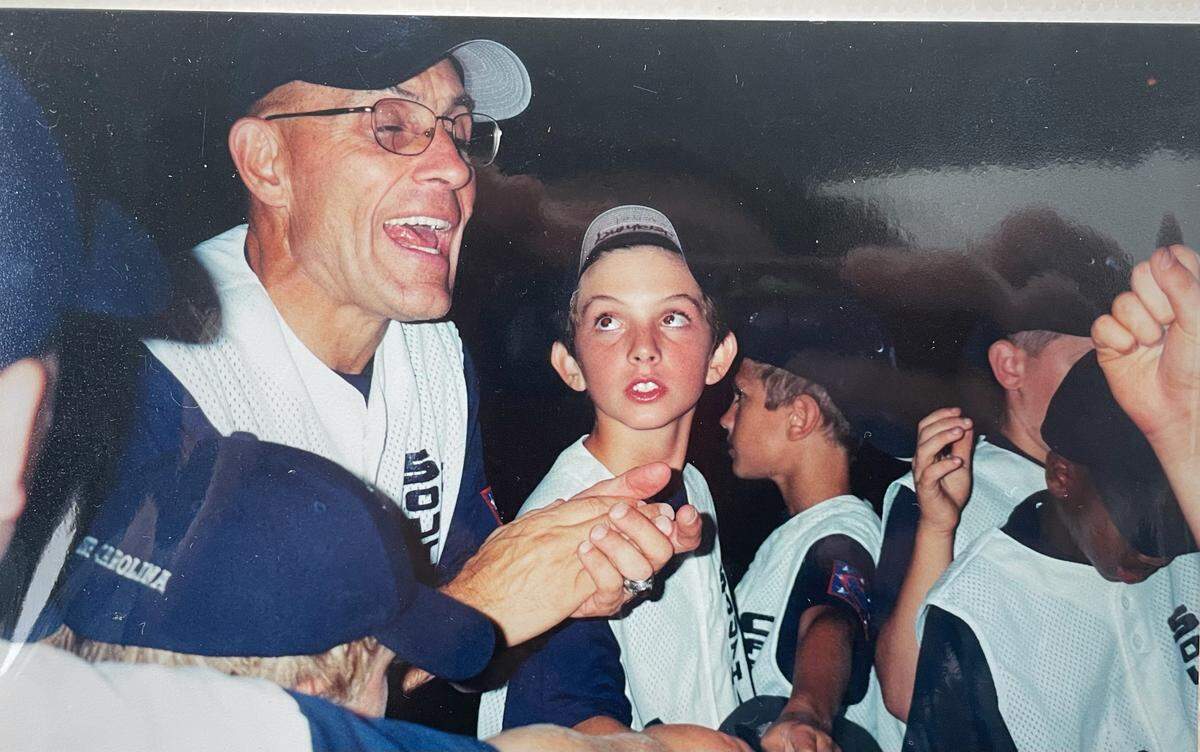
During the World Series, his teams practiced twice a day for a total of 4 ½ hours — all before playing a game that night.
David Lancaster, an assistant coach along with Dr. Mike Campbell and Jamie Harrison, corrects an old adage: “Perfect practice makes perfect,” he said. “Practice makes permanence.”
Before the season, the colonel practiced hitting balls to the infield and outfield so he’d be ready to drill players on what to do in various game situations. He went to spring training in Florida to see how many touches someone like Derek Jeter would get during infield practice.
During the weeklong state tournament in Florence, and the weeklong World Series, the coaches met at 7 a.m. to set the game strategy. They had scouted opposing teams, pitch by pitch.
During that meeting, parents took the players to breakfast together. The first practice was at 8:30 a.m. Then they ate lunch as a team. They practiced again. And then loaded into the vans for the game. Afterwards, they could swim in the motel pool. Before the game, they couldn’t because chlorine could blur their vision.
Parents washed uniforms every night. One dad was in charge of wet towels for the hot days. One was in charge of Gatorade. One dad — Kenny Robinson Sr. — was the cheerleader.
When Rachel Uremovich, the first girl ever to play in the Dixie Youth World Series, would strike out an opponent, Robinson would holler to the crowd: “I say ‘Rachel,’ you say ‘Girlfriend.’ ”
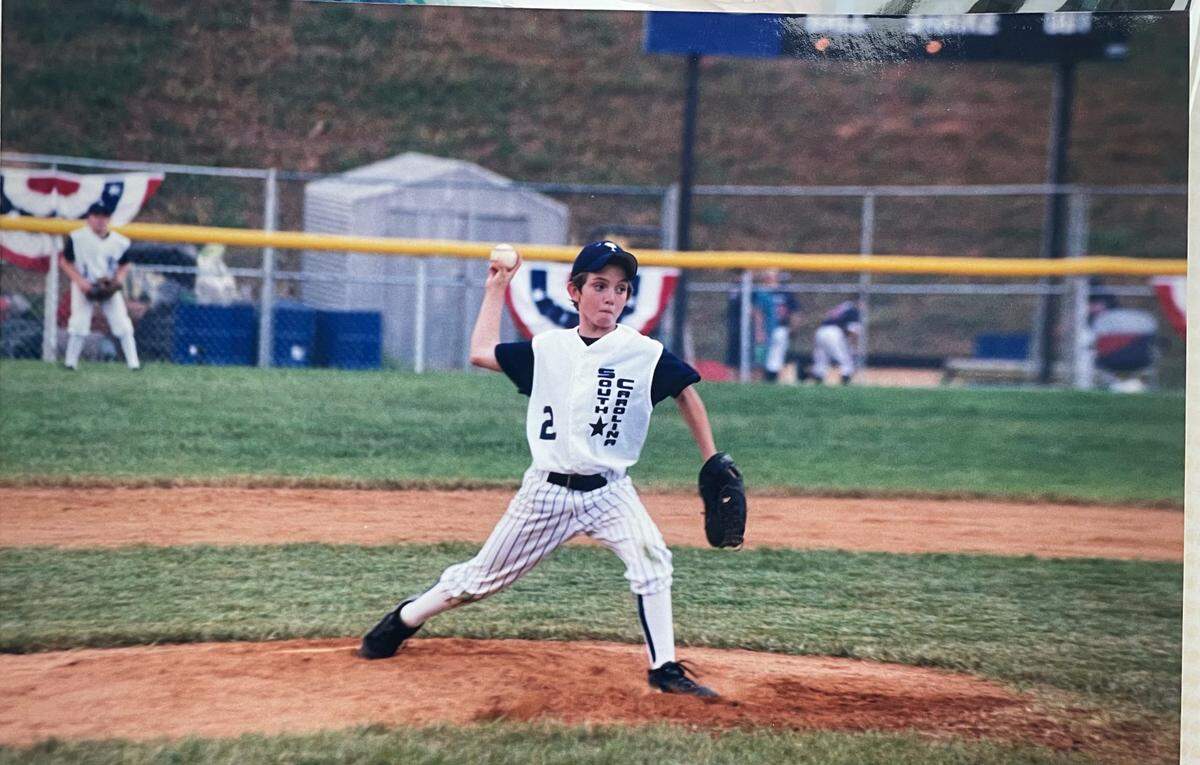
Dad Richard McDonald says today that those parents who were missing work and blowing budgets had more fun that the kids.
“The biggest job we had was to get the kids to the colonel,” he said.
WHERE ARE THEY TODAY?
The journey began June 1 and ended Aug. 18, a week after school started. But players now know the journey really has never ended.
The teammates were Ian Anderson, Michael Campbell, Jaquan Cohen, Greg Harrison, Alex Hill, Josh Lancaster, Corey McDonald, Creighton Quinn, Kenny Robinson, Dylan Rosser, Jerahmey Sorensen, Dylan Taylor and Rachel Uremovich.
Campbell, the winning pitcher against Georgia in a semi-final game the morning of the championship game, is an optometrist and partner with his father in their Optical Solutions business.
“The colonel challenged me as much as I challenged him,” he says about running through the coach’s red light to score the winning run.
“I learned that the effort you put in will determine what you get at the end.”
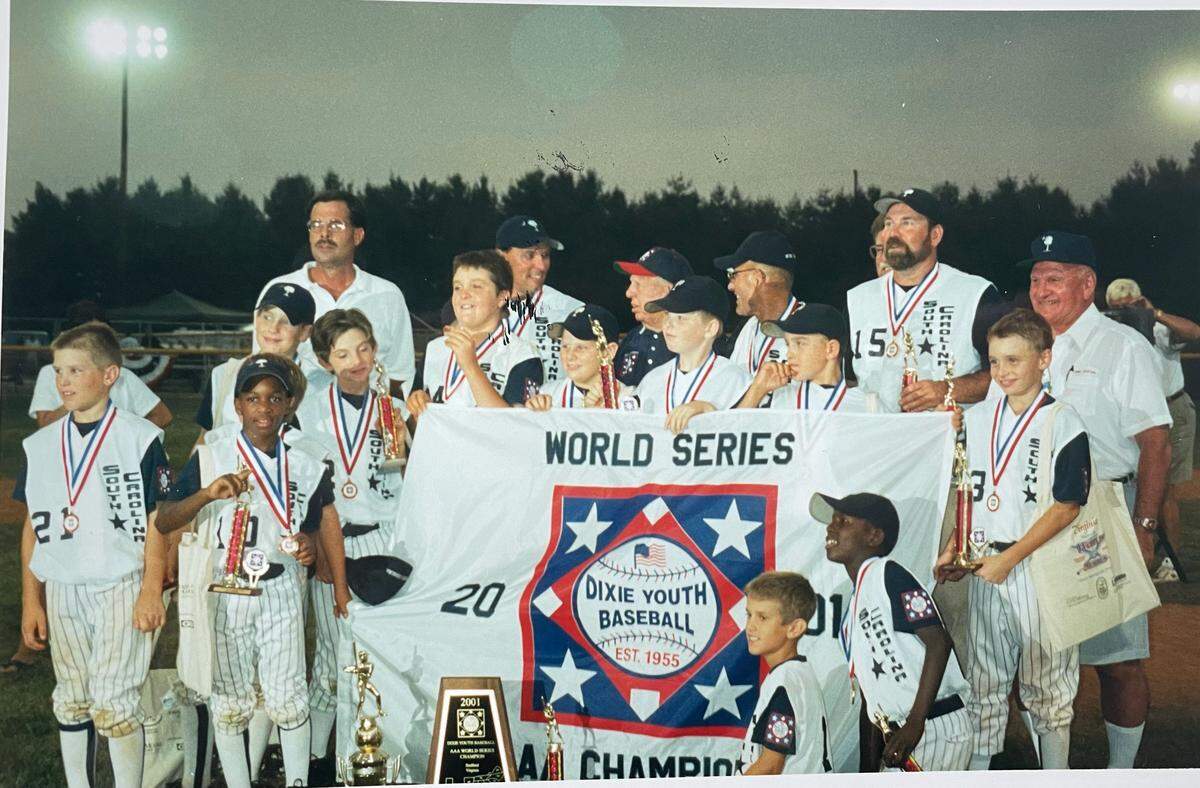
The colonel says Greg Harrison was the best player he ever coached. He pitched complete-game wins in both the state and World Series championship games, and went on to play for the University of South Carolina and then Furman University.
Alex Hill is a Clemson graduate and a Registered Nurse working in the Electrophysiology Lab at Bon Secours St. Francis in Greenville. He and his wife have a 16-month-old daughter.
“As an adult looking back on it, I’m amazed at the sacrifices my parents made, and my siblings made, to make that happen,” he said. “We got to just ride along, show up, and play.”
Mostly, he remembers the special relationships it created for that group of kids.
He remains close friends with teammate Corey McDonald, another Clemson grad who is married and works with Citigroup in Atlanta.
Seared in Hill’s mind is a play that could have ended it all at the district level, before any championships.
Dylan “Big Dog” Taylor chased down an overthrown ball at first base and slung it to the catcher for the game-saving out.
Taylor is a senior firefighter IV with the Bluffton Township Fire District. His wife is a teacher, and they have three children.
“It was not necessarily life-changing,” he said, “but you can see later what it takes to be a team. It wasn’t until I got older that I realized what all it took to accomplish something like that.”
Ian Anderson battled through Tommy John surgery as a 14-year-old to make the University of Kentucky football team as a walk-on. He coached high school and college football for a number of years, and now is a custom home builder in the Hilton Head and Bluffton area.
“I still hang out with a lot of those guys,” he said. “Two weeks ago, I played golf in Sea Pines with Michael Campbell. I was at a wedding with Greg Harrison a month ago.”
The lesson he took from the World Series is that “nobody was selfish or greedy, and that’s why we ended up winning.”
Kenny Robinson Jr. was the only 9-year-old on the team. He was the fastest player in the league, and was invited to play on the all-star team for one purpose: to steal bases as a pinch runner.
“That was my weapon,” he said.
He was a star football player for the Hilton Head Island High Seahawks and made one of Steve Spurrier’s teams as a walk-on at the University of South Carolina.
The Series, he said, “kind of shaped me for playing on that big stage.”
He’s married with a toddler and a 4-month-old. He’s a civil engineer working in construction management in Charleston.
Josh Lancaster, the second baseman, lives in Wyoming and works with troubled youths.
Jaquan Cohen lives on Hilton Head where his family has lived for generations, producing some of its most celebrated athletes. He said he’s working at A Lowcountry Backyard Restaurant.
“I had a lot of fun meeting other people,” he said.
‘GIRLFRIEND’
Rachel Uremovich said she still gets goosebumps thinking about the experience.
And she still thrives in an all-male world as an outside sales representative in the building materials industry in the Boston area.
Her dad, Jim, was a lefty pitcher for the LSU Tigers in his day, and umpired minor league games when Rachel was a child. She calls herself a clone of her father, the longtime head pro at Old South Golf Links in Bluffton.
She was 6 when she played on a girls softball team that wanted the children to have a nice experience but didn’t keep score. Rachel asked the coach afterwards what the score was, and the coach said she didn’t know.
“Can we ask someone who knows?” Rachel asked.
As a 10-year-old, she had short brown hair atop her 4-foot-10, 75-pound body, and opponents often didn’t know she was a girl — until the fans started chanting “Girlfriend.”
“They cried when they found out they got struck out by a girl,” Rachel said.
Rachel, whose married name is Uremovich-Fryxell, said a player from the Virginia team tracked her down recently and said he cried for five days after it happened to him.
At one point a mother from an opposing team whispered to her that she was pulling for her, even though they couldn’t say it out loud.
A scrapbook her mother, Trish, made includes cards of congratulations from women’s clubs, something Rachel did not fully appreciate at the time.
“I always think about the colonel,” she said. “He’s one of those people you can still hear in different situations, whether good or bad.”
She was a high school golf star and got a Division I scholarship before her game hit a big, long rut. She got over it at Division II Lander University in the Upstate, where she got her degree.
“The colonel is the one who taught me that hard work really ends up paying off,” she said.
“I would like to be a Col. Parker to a kid someday.”
David Lauderdale may be reached at LauderdaleColumn@gmail.com.