
Opening doors: Two women show Jasper’s mettle long before PGA Tour comes to the country
We used to ride out that way looking for UFOs.
And now it seems they have landed — in the form of NetJets filled with PGA Tour golfers seeking the Congaree Golf Club in the suburban sprawl of Gillisonville.
The fact that Palmetto Championship at Congaree will bring the high-rollers to a sliver of rural Jasper County we knew as Davant Plantation is honestly every bit as likely as space aliens dropping off the fountain of youth.
It’s all bigger than life.
A couple of billionaires buy a tract that had long been used as a hunting preserve. They craft a private golf course from its sandy soil. And since opening in 2017, it has been judged one of America’s top 50 — and now will host the PGA Tour June 10-13.
On top of that, the golf club’s founding goal is to give money and personal attention to kids who need a hand up in life. Its giving is international in scope, but old-timers here know that they don’t need to look any farther than the county line.
Before the jets and choppers and blimps fill the skies, I want to tell you about two women who scratched inspirational lives from that same Jasper County soil long before it was cool.
They left us with lessons more valuable than holes in one.
THE HELP
Lyda C. Youmans was born in the shadows of the big house at Davant.
She died there 99 years later in 2014, having spent much of her life as “the help” to the wealthy Northeastern family that wintered there to hunt, running prized dogs and riding the horses.
The Berol family created the Eagle Pencil Co., the world’s largest, and ran it for five generations. They owned Davant from 1939-1981.
Life was harsh as the sand gnats for young Youmans.
Her father farmed, cut railroad ties with a huge axe and dug up stumps for 40 cents a day. She could go no further in school than seventh grade. She learned to cook as a 7-year-old because her mother didn’t like to cook.
She had trouble getting her husband to provide a home, or share any of the money that might have come his way through a sawmill or pine tar.
At one point, she took a job a mile and half away to take care of a 2-year-old girl, make lunch, and clean up after lunch for 25 cents a day.
“I would take the guests coffee upstairs and bring the slop bucket down for a 10-cent tip, so that made 35 cents,” she would later write.
She raised chicks to sell eggs and fryers.
She took in wash, hanging dainty handkerchiefs on a barbed wire fence to dry, then pressing them with an iron heated by a wood stove.
That meticulous work ended up getting her a job cooking at Davant. She was coaxed into trying it for two weeks, and stayed 40 years.
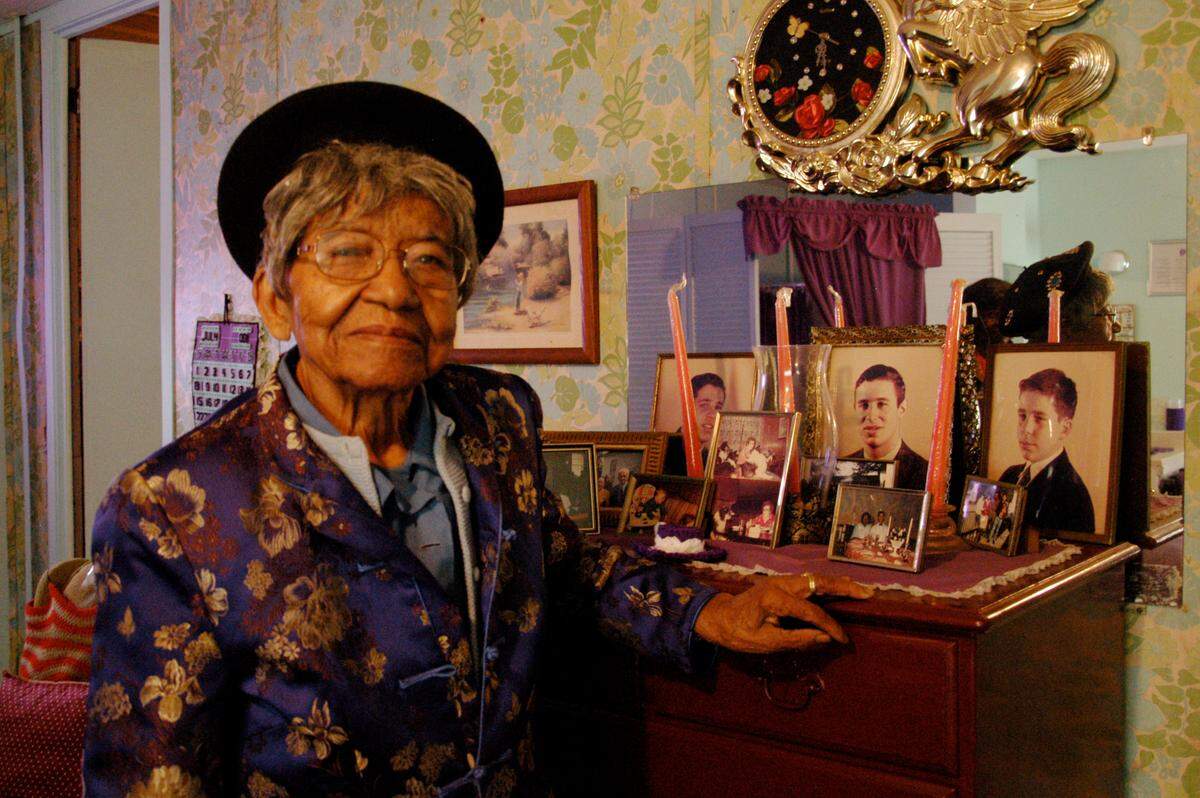
At the age of 96, Youmans wrote a book about her life.
“Blessed Beyond Measure,” she called it.
It’s an inspiration for anyone who feels left out of society but won’t let it define them. It’s an inspiration to anyone trying a small business, or living through a rocky marriage, or recovering from big losses like a house fire, or trying to get along with employers and peers at work.
When the book came out in 2012, she hosted me in her warm home, where she still kept pictures of the Berol family. They supported her long after she was the last one to lock the big house door.
“The Lord has given it to me,” she told me. “The Lord has been working with me, honey.”
That is the theme of her book.
“Even when trouble would come, the Lord always stepped in,” she wrote.
“That is why I truly believe I am blessed beyond measure. Every time the devil meant something for my harm, God turned it around for my good. This is my testimony. And I believe if you look at your life, you have a testimony too.”
THE PHONE COMPANY
Gertrude Gray Harvey was born and reared in Grays, a crossroads community a few miles south of Gillisonville.
She was about 10 when her mother died, and about 13 when her father died. Gertrude was taken in by an aunt.
She never got a high school diploma, but ended up one of the most successful women the Lowcountry ever produced.
She met her husband, Leroy E. Harvey Sr., in a filling station in Gillisonville, and they married young.
He worked at the phone company in Savannah, where he bought his young family a brick duplex near the big globe off Derrene Avenue.
He was a moonlighter who, along with others, strung telephone wire a few feet at a time to Hardeeville. It appeared to be a dismal business opportunity in 1947, and that was before a storm wiped out their hard work.
But Harvey and partner John Cantrell persisted. Cantrell ended up with the phone service in Bluffton, and Harvey took Hilton Head.
He got phone lines buried on the island and was about to flip the switch in 1962 and begin paying back a $412,000 federal loan. But he died unexpectedly. He was only 52.
In stepped “Miss Gertrude.” She pulled in her daughter, Gloria Taggart, and together they made her husband’s hard work pay off, and his dream come true.
As the company prospered, Gertrude Harvey remained the same. She was a woman of few words, but a steel will, especially when it came to the smooth-talkers who wanted to buy her phone company.
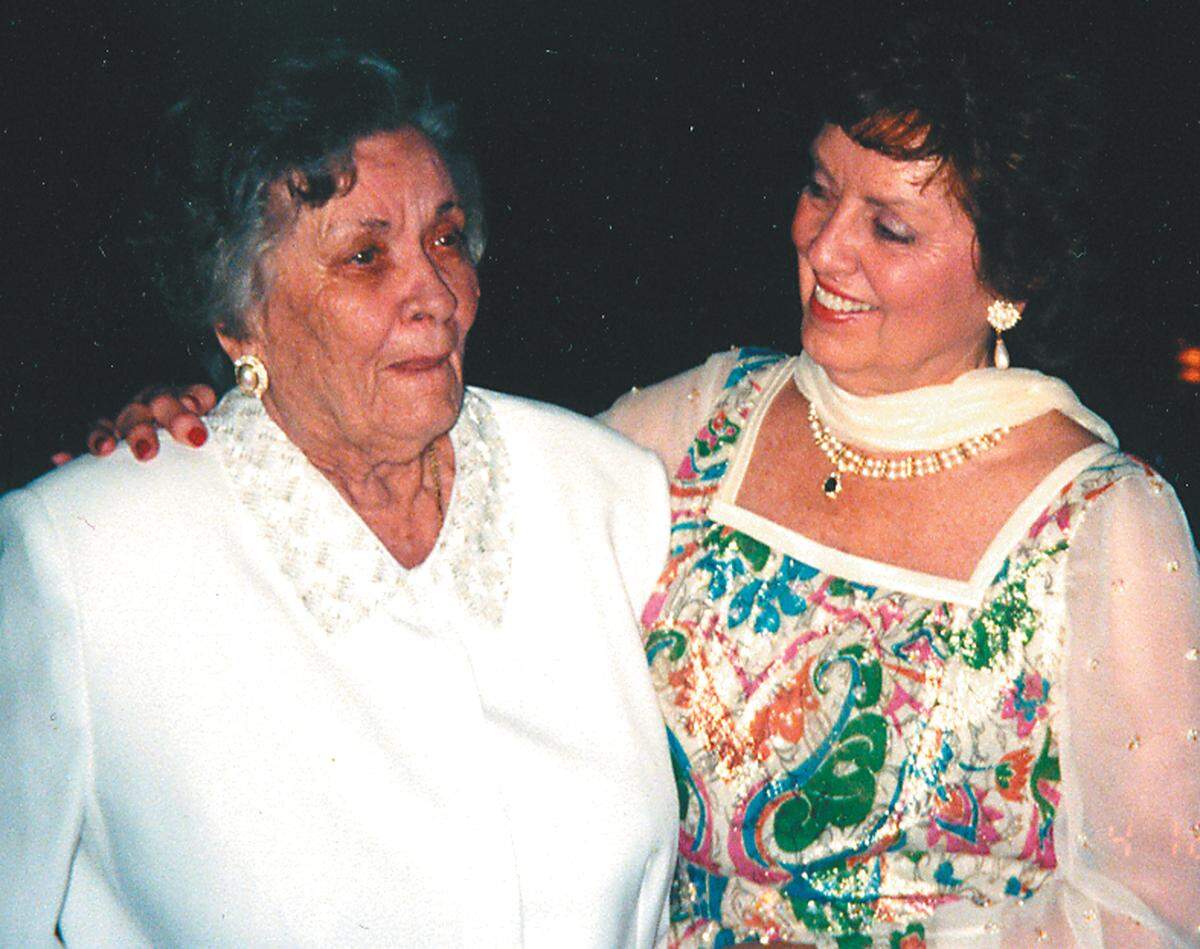
She never moved from the brick duplex, but did enjoy a string of baby-blue Cadillacs.
Before she died in 2007 just short of her 96th birthday, the woman from Grays left a lasting gift to her Lowcountry.
Her family’s $3.5 million gift was the key that opened the door when the University of South Carolina Beaufort wanted to expand to Okatie and become a four-year baccalaureate college.
“She comes from a generation of hard-working people who just put their nose to the grindstone and got to it,” said retired USCB Chancellor Jane Upshaw, who was then in charge.
“Her contribution was huge. It was historic. It was visionary. It got the ball rolling for us.
“But what she and her family were really committed to was opening doors.
“Miss Gertrude wanted to open doors for others that hadn’t been opened to her.”
David Lauderdale may be reached at LauderdaleColumn@gmail.com.