
Come sit a spell on the Lowcountry’s front porch. Appreciate the scenery, silhouettes
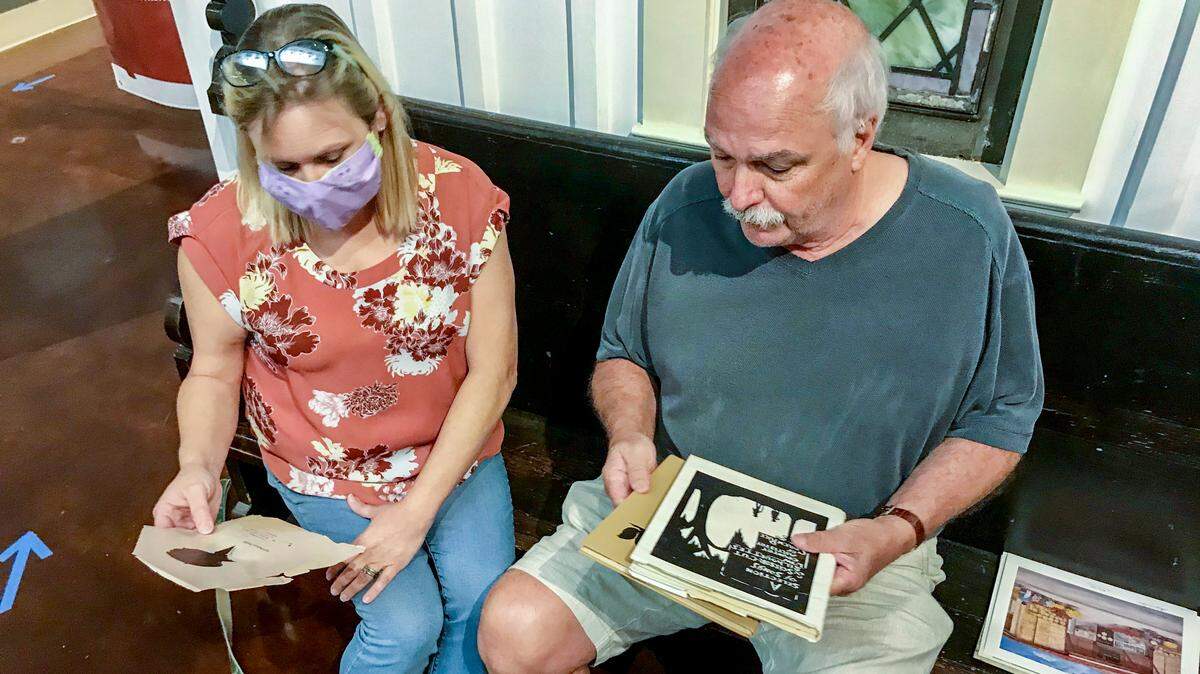
We went to the front porch of the Lowcountry to ring an old bell.
It was a perfect time to go to Walterboro with a special gift for the Colleton Museum and Farmers Market.
I rode with Barry Ginn of Bluffton into the heart of the Lowcountry when the azaleas were afire with flamingo colors and the gray moss and delicate white petals of dogwood trees leaned in to see it. All of it was misted with the sweet aroma of wisteria vines drooping lavender blooms.
Ginn was taking a book to the museum.
It was an autographed copy of a 1961 book by a man buried not far from town. Carew Rice used a tiny pair of scissors, of all things, to show the world in black-and-white silhouettes the seductive beauty of South Carolina’s Lowcountry.
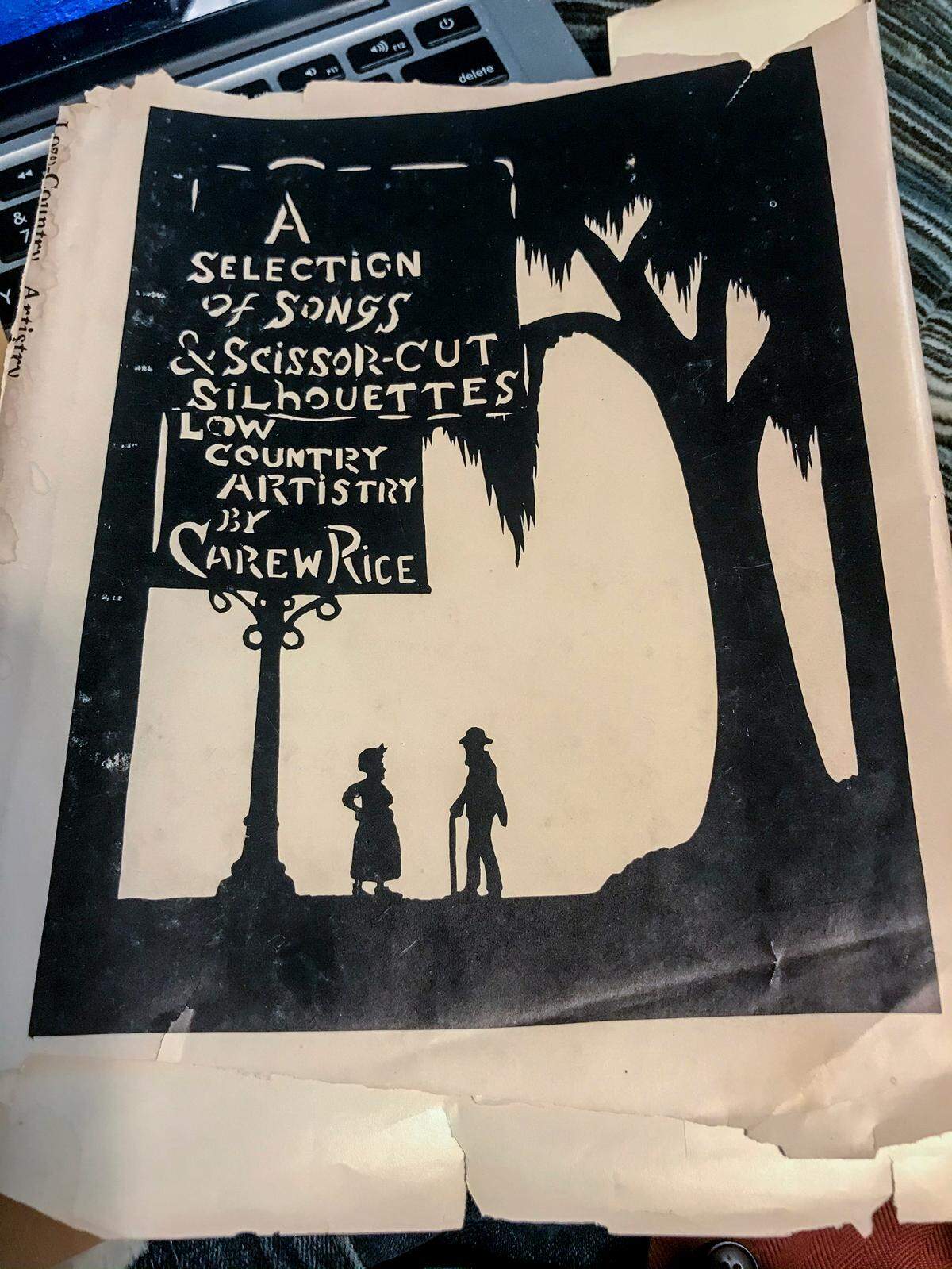
Ginn thought this thin hardback, one of the first off the presses of long ago, belonged in Walterboro. Its story tells a lot about us.
This volume of “A Selection of Songs & Scissor-Cut Silhouettes: Lowcountry Artistry” should fit nicely with the museum’s exhibit on Rice and his famous works.
Most people know Rice for his silhouettes of children — little likenesses he created in a matter of seconds in countless appearances at fairs, five-and-dimes and museums all over the South, and well beyond.
These inexpensive silhouettes found a place in our hearts, framed and passed from generation to generation.
During a career that spanned from the Depression until his death at age 72 in 1971, everyone, it seemed, had a Carew Rice work in a place of honor.
But Rice’s shiny scissors also produced landscapes, church architecture, people in everyday life, wildlife and intricate wrought iron gates of Philip Simmons in Charleston.
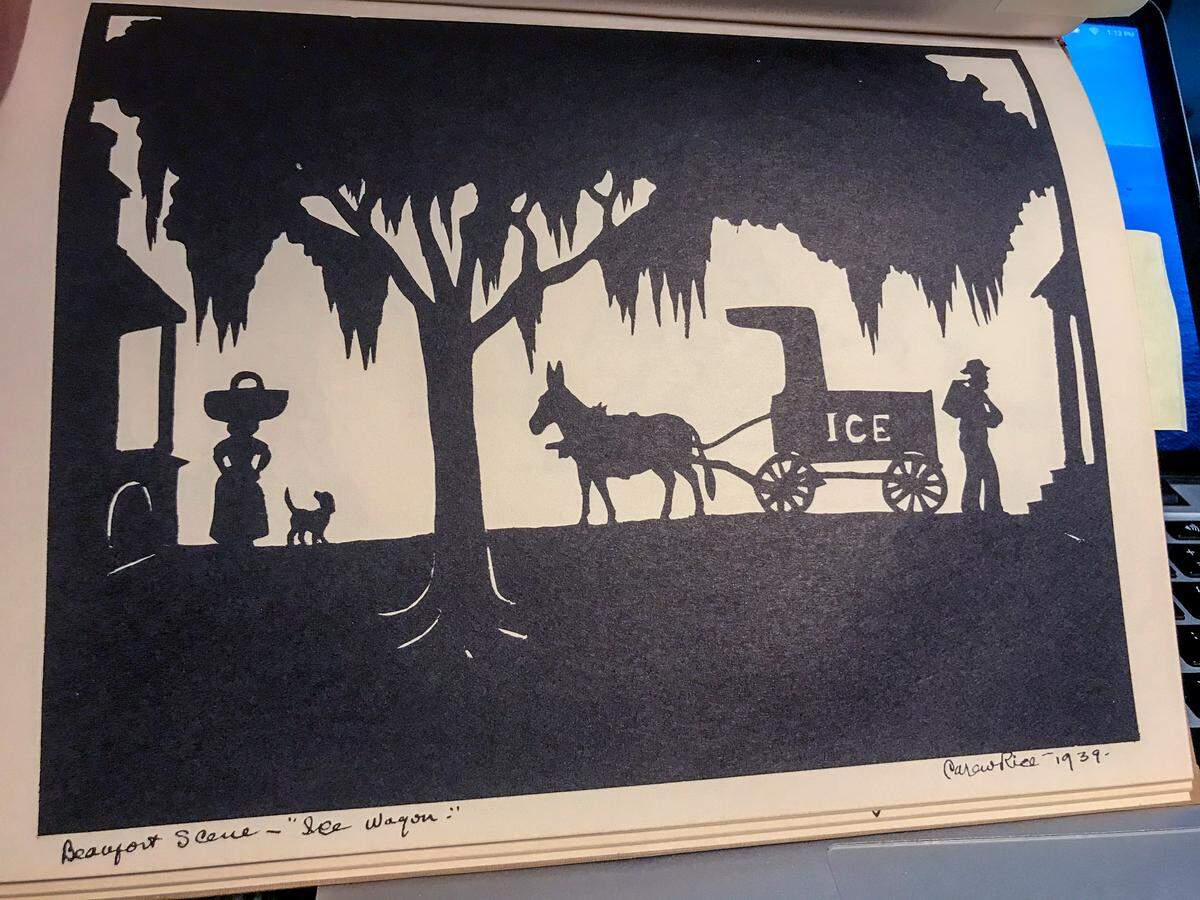
He produced images of the Gullah he knew from childhood, depicting things we don’t see much anymore, like Gullah women smoking corn cob pipes or carrying baskets on their heads.
When the Greenville County Museum of Art did a show of its collection of Rice originals in 2017, it said, “Rice subtly challenged viewers with reductive renditions of Old South nostalgia.
“His cautionary tales were grounded in conservative values, but he liberally embraced the field hands, chain gangs, and working-class lifestyles of marginalized minorities. His Black subjects, sometimes peppered with Gullah dialect, were love letters to people he lived among and respected.”
Jeff W. Grigg, who has made a name for himself as a history buff, preservationist, author and boat shop owner in the Green Pond community in Colleton County, spent a lot of time repairing a large silhouette painted on wood for a big exhibition of Rice works staged in Walterboro in 2010.
He said, “When you look at anything he did, it’s the epitome of the Lowcountry.
“You can’t mistake it for anywhere else in the world. I don’t know of any one artist or style of art that has ever represented an area like his does.”
WALTERBORO
Walterboro markets itself at the “Front Porch of the Lowcountry” because it sits on the edge, out on Interstate 95.
It’s a place you can still slow down and sit a spell, perhaps antiquing or enjoying the S.C. Artisans Center, Tuskegee Airmen Monument, wildlife sanctuary or Rice Festival, featuring its famed high school Band of Blue in the parade.
Anna Lou Marvin — whose husband, Robert, used the sensibilities he learned as a child in rural Colleton County to give the world (especially Hilton Head Island and Beaufort) the true art of landscape architecture — said this:
“If you don’t like Walterboro, you probably won’t like heaven.”
Ginn planned our trip around lunch at Dukes BBQ of Beaufort rather than Dukes of Walterboro. He says it’s better. France can fuss over its wine regions; we’ll dicker over swine regions, thank you very much.
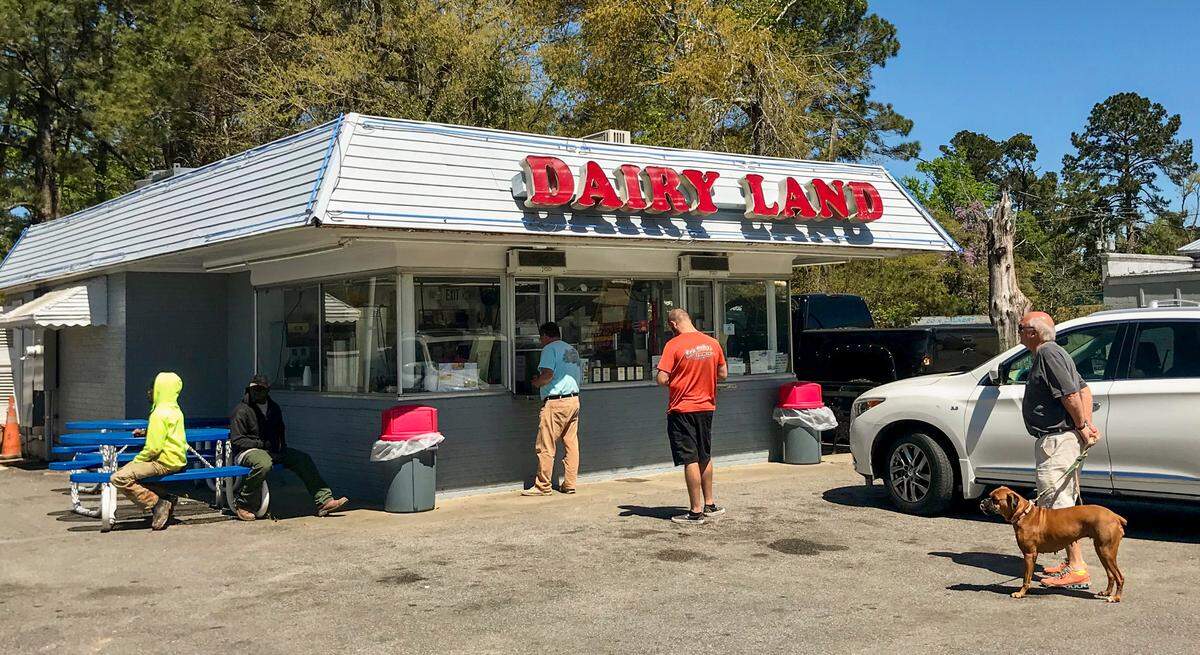
But we ended up at Walterboro’s Dairy Land, which has been slinging burgers and shakes since 1949.
And on the way home we slid by Mac’s Feed and Seed in Round O — that’s the name of the town — to get some stoneground grits and gourmet bacon from Col. Newsom’s in Kentucky. Just the smell of it cooking lifts you right up to the gates of Anna Lou’s heaven.
But how this book made it to Walterboro is itself a Lowcountry treasure.
CONSERVATION
Carew Rice’s father was the real game-changer.
James Henry Rice Jr. was a newspaper editor and columnist, sharpshooter, chess champion, rare book collector, author, speaker and conservationist.
When he died in 1935, his obituary in the Charleston News & Courier said:
“Mr. Rice became interested in conservation work when it became apparent that the annual slaughter of hunters and the ceaseless push of civilization might exterminate entirely all wildlife.”
He was South Carolina’s first game warden and champion of the state’s earliest conservation organizations.
He argued that the coast was more healthful than the mountains.
He described its history, inhabitants, culture and environment in two books, “Glories of the Carolina Coast” and “The Aftermath of Glory.”
But like so many of us in today’s “burn-the-bridge-once-I-get-here” Lowcountry, James Henry Rice the hunter and conservationist also beckoned others to come hither.
A 1928 article in The Charlotte Observer called him “the father of beautiful Myrtle Beach.”
In 1899, it said, he went to Conway “at the invitation of Mrs. F.G. Burroughs” and they drove out to the seashore with her two children.
“The man and the hour had met,” gushed the article. “To Mr. Rice, Myrtle Beach owes its fame and its being, for at that time no one dreamed of a resort there. Mrs. Burroughs was looking for a picnic ground for the Methodist Sunday School.”
In 1925, business leaders there held a banquet in his honor and gave him a car.
By that time, he had bought Brick House Plantation on Cheehaw River in Wiggins, near Walterboro, a part of the suburban sprawl of Green Pond.
That’s where Carew Rice would later live, and where he was buried, long after meeting the Ginns.
THE ARTS
Carew Rice’s childhood was spent in the greater Allendale neck of the Lowcountry.
That’s where Barry Ginn and his brother E.R. “Bobby” Ginn III, the famed developer, were reared.
And in that town, now known for its poverty, lived a couple of angels of the arts — Chuck and Kay Leape, who had moved from Pittsburgh for his job with the Westinghouse Micarta plant.
They became Barry’s godparents, and were supporters of Carew Rice.
In time, Rice would frequent the Ginn home, usually arriving about supper time.
Barry remembers him spending hours encouraging his mother, a seamstress and designer, in her art. Later in life, she would produce a number of beautiful paintings, mostly of Charleston scenes.
Ebbie and Virginia Ginn would sell tens of thousands of dollars worth of her prints out of the back of a station wagon, Barry said.
Carew Rice talks in his book about the challenges of monetizing art.
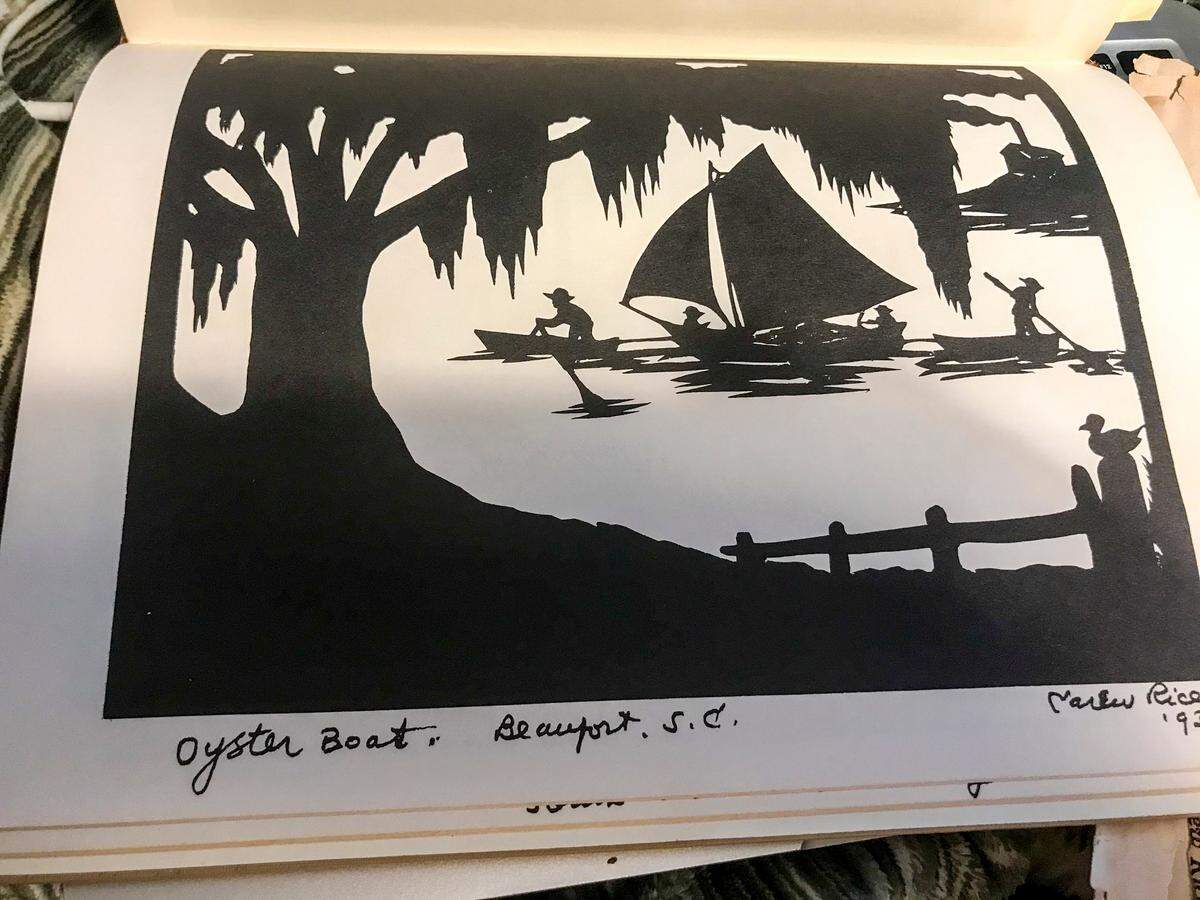
He applied his silhouettes to drinking glasses and stationery, and he was a raconteur, which helped the bottom line.
His grandson, Clay Rice, carries on the silhouette tradition with his own style — traveling to events worldwide but also producing children’s books and doing shows in schools that include his original music.
Long after Chuck Leape had died, Kay Leape’s home in Crystal River, Florida, was inundated with 1 1/2 feet of water in a hurricane.
Barry went to help, and that’s when he found the book.
“The only thing salvageable in the whole house were these three books,” Ginn said. “They were in the very back of a closet.”
The one inscribed to the art angels of the Lowcountry is now where it belongs, on the front porch of the Lowcountry.
David Lauderdale may be reached at LauderdaleColumn@gmail.com.