Salute the Blacks of Beaufort County as leading July 4 patriots. Here’s why | Opinion
Freedom rings louder in Beaufort County than most places.
And on the Fourth of July 2020, it’s a subject of intense national — and local — concern.
No one can better tell why it is so than the statesman Frederick Douglass.
In a speech to abolitionists in 1852 called “What to the Slave is the Fourth of July?” Douglass minced no words.
“The blessings in which you, this day, rejoice, are not enjoyed in common,” he told his large, white audience. “The rich inheritance of justice, liberty, prosperity and independence, bequeathed by your fathers, is shared by you, not by me. The sunlight that brought life and healing to you, has brought stripes and death to me. This Fourth (of) July is yours, not mine. You may rejoice, I must mourn.”
His tart words should help South Carolinians who still don’t understand the pain caused by Confederate relics like the battle flag, statues celebrating to Lost Cause, and Hilton Head Island housing developments still named “plantations” in the 21st century.
“What, to the American slave, is your Fourth of July?” Douglass asked. “I answer: a day that reveals to him, more than all other days in the year, the gross injustice and cruelty to which he is the constant victim.
“To him, your celebration is a sham; your boasted liberty, an unholy license; your national greatness, swelling vanity; your sounds of rejoicing are empty and heartless; your denunciations of tyrants, brass fronted impudence; your shouts of liberty and equality, hollow mockery; your prayers and hymns, your sermons and thanksgivings, with all your religious parade, and solemnity, are, to him, mere bombast, fraud, deception, impiety, and hypocrisy — a thin veil to cover up crimes which would disgrace a nation of savages.”
When freedom rang, the Gullah of Beaufort County embraced the Fourth of July with gusto.
“The Reconstruction years were among the most politically active and patriotic years in Beaufort’s long history,” says our county’s history written by Stephen R. Wise and Lawrence S. Rowland with the late Gerhard Spieler, all of Beaufort.
“Rebellion, Reconstruction, and Redemption, 1861-1893: The History of Beaufort County, South Carolina, Volume 2” tells of great galas on Emancipation Day and Memorial Day.
“The Fourth of July was a major celebration with parades, speeches, balls, and music,” the book says.
Twenty years after Douglass’s ripping speech, the 13-year-old daughter of Robert Smalls read the Declaration of Independence to a large crowd from a veranda high over Bay Street in downtown Beaufort.
Five years later, the Allen Brass Band stepped off the Grand Parade in Beaufort. That evening, there was a dress ball with a string band from Savannah. Crowds from the barrier islands flocked to town with half-price fares on river ferries, the book tells us.
On Hilton Head Island, Emory S. Campbell writes, the Fourth of July was a day for picnics, crop inspections, beach trips and dancing. Children wore new clothes. Veterans displayed American flags in their homes, Campbell writes on his Gullah Heritage Trail Tours website.
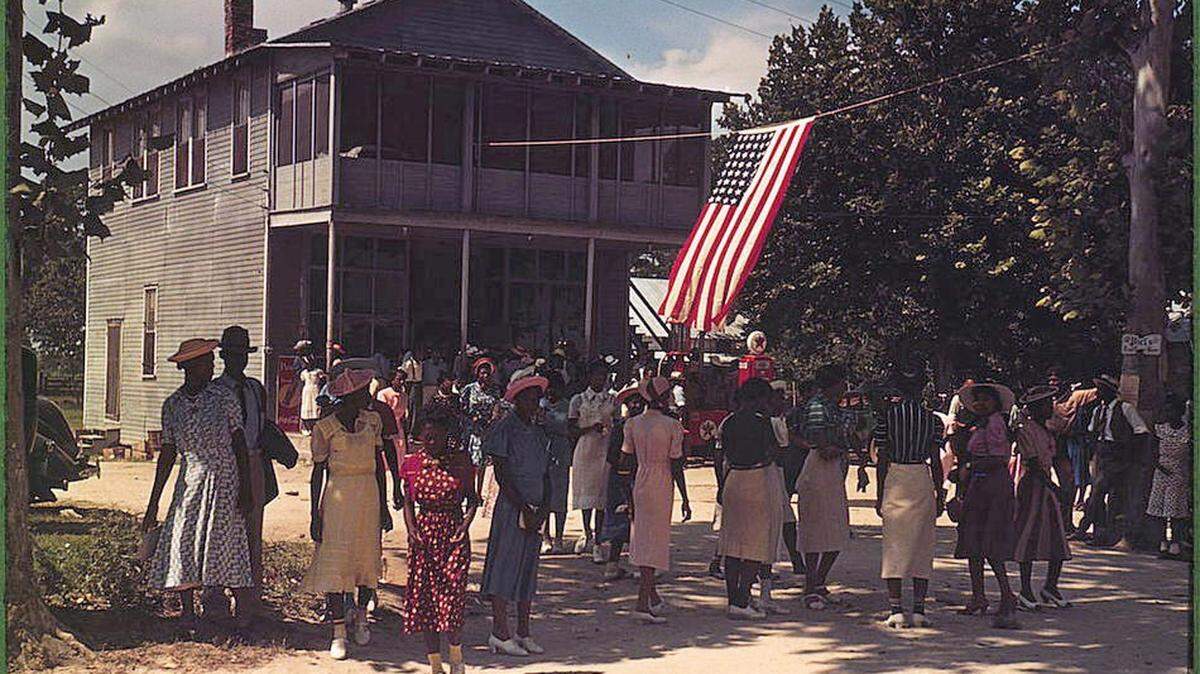
On St. Helena Island, photographer Marion Post Wolcott captured islanders in their Sunday best on July 4, 1939.
She came this way while working for the Farm Security Administration, the Library of Congress tells us, “one of the largest news photography projects in the world. She covered thousands of miles of the United States with her camera to document and publicize the need for federal assistance to those hardest hit by the Great Depression and agricultural blight.”
Bobby Middleton of St. Helena recalls the “grease the pole” contest on the Fourth of July in the book “With Open Arms” by Rosalyn Browne. If you got to the top of the pole, it was good for a dollar.
“Beaufort had much to celebrate during the Reconstruction years,” write our local historians.
Not the least of it was this:
“We hold these truths to be self-evident, that all men are created equal, that they are endowed by their Creator with certain unalienable rights, that among these are life, liberty, and the pursuit of happiness.”
(A version of this column was originally published July 2, 2015.)
This story was originally published July 3, 2020 at 7:00 AM.