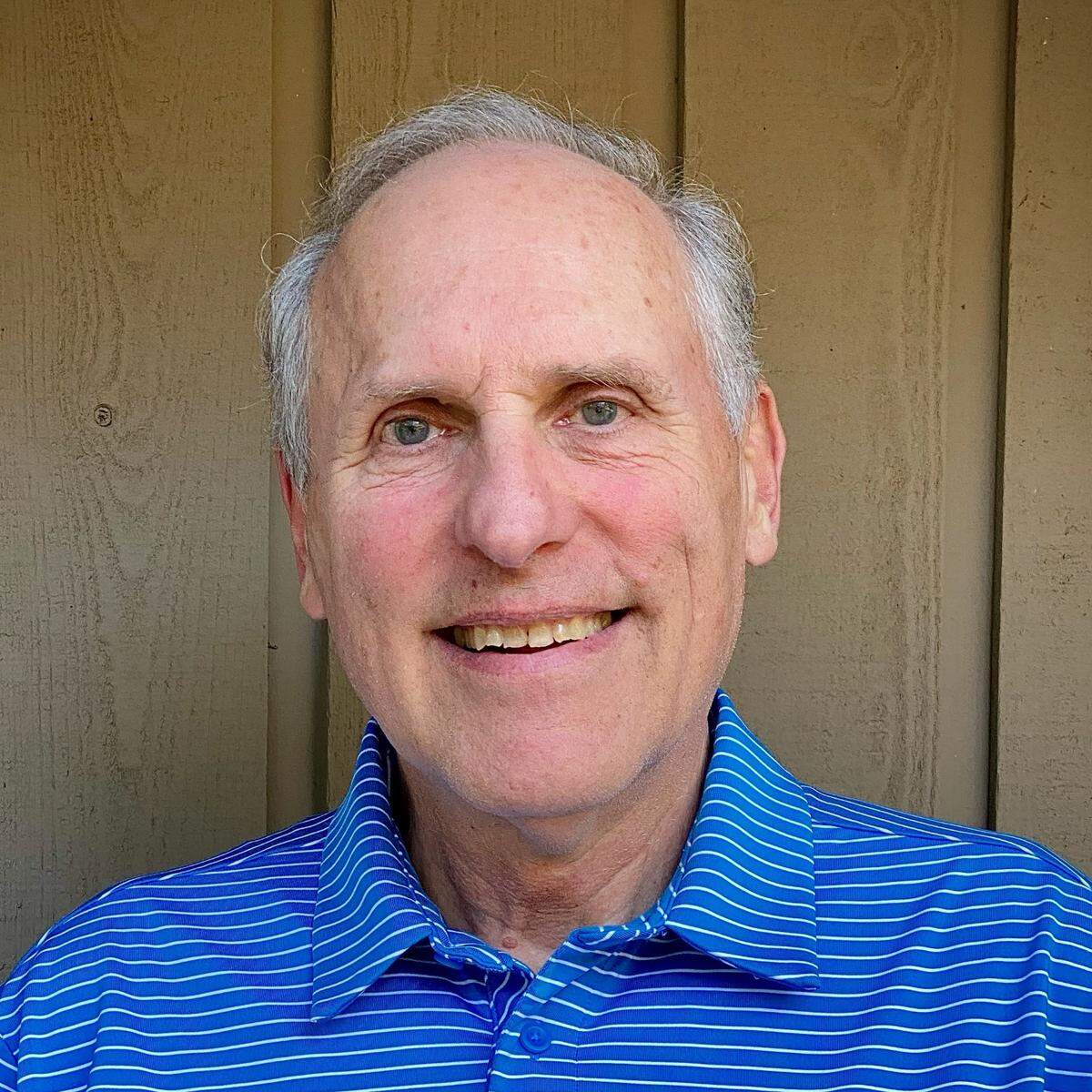
Three years later, he finishes Hilton Head half marathon, but he’s not the same person
.jpg "Jack and Katharine Slemenda at the finish line of the Hilton Head Half Marathon Feb. 8, 2020.")
It took Jack Slemenda three years, two hours and 48 minutes to finish the Hilton Head Half Marathon.
He crossed the finish line of the 13.1-mile course Feb. 8 alongside his wife, Katharine, and son, Jon.
It was a happy moment for the whole family.
But Slemenda was not the same person who started the race in 2017.
Slemenda, a 76-year-old retired educator of the deaf, had a heart attack on the course three years ago and didn’t know it.
“I’m lucky to be alive,” he said this week on the phone.
He started feeling bad about 4 miles in, and it really hit him going up the steep Charles E. Fraser Bridge on the Cross Island Parkway.
He ignored an angel who called out, “Sir, are you OK?”
“That was male pride getting in the way,” he says now. “No more. No more. I certainly know my limits much better.”
Others encouraged the last-place straggler, with “you can do it” ... “hang in there.”
By the time he reached Arrow Road, he plopped down on one of the many pine logs that Hurricane Matthew had left behind four months earlier.
“I just felt so lousy,” he said.
He was at the 7 mile marker.
His wife was nowhere near. She finished third in her age group.
A race volunteer from the Rotary Club drove him to the finish line in his brand new Mustang.
Slemenda said he felt better and thought he was OK.
They went out to dinner. They went dancing.
But when he got back home to Spartanburg, he called his doctor. He was given a treatment for COPD, but two days later he was sent to the emergency room.
He needed triple-bypass heart surgery at Spartanburg Medical Center.
Spartanburg help
Slemenda said he felt so stupid. How could he ignore the obvious signs: an elephant was sitting on his chest, his left arm was numb and tingling, he was short of breath, he felt dizzy.
A college-educated man should know those things, he said, especially one who works routinely in hospitals as a freelance interpreter for the deaf, his part-time work in retirement.
“When I was headed for heart surgery, the lead surgical nurse happened to be my Episcopal minister’s wife,” he said. “She assured me that I would be in excellent hands and that there were people already in prayer.
“Reflecting back, it was such a positive experience to see that the individuals, whom I worked with on a daily basis, became more than just co-workers. They were the very essence of the team that saw me enter triage and leave the hospital better than I arrived.
“That feeling of security, peace and confidence has permeated my spirit over the past three years. Perhaps, just perhaps, that affirmation of seeing and knowing and sensing God’s love in action was something that I have been missing.”
He was in the hospital for the better part of two weeks, and then became a gung-ho rehab patient. Then he was back to his regular workouts at the Spartanburg Athletic Club.
Last fall, he and Katharine started toying with the idea of finishing the race. With his doctor’s permission, he came back. He caught an Uber ride to the point where he stopped three years ago. The race organizer said he was welcomed back, but not to start until all the front-runners had passed.
Katharine ran with him. They walked a lot. They rested a lot. They took pictures at every mile marker. They enjoyed the moment. Their son, Jon, a registered nurse, joined them at the 9-mile marker after finishing the 8K race.
Slemenda begged them at the finish line to just put down “DQ” — that he really didn’t run the full race the he started three years earlier.
“It’s like my Daddy told me: finish what you start,” Slemenda said.
It happened often to his father, a house painter who got spinal meningitis at age 2 and was deaf for life. People might not finish paying his father, but he always finished the job.
A new heart
Slemenda’s mother was born profoundly deaf, and Slemenda gave his life to teaching the deaf, most of it at the S.C. School for the Deaf and Blind in Spartanburg, and then Spartanburg County District 7 School District.
Slemenda said teachers are always nurturers, but it’s different now.
He said he is more cautious in what he says, he’s more thankful, he’s more balanced in what he pays attention to, and he’s more willing to serve with a servant’s heart than he knew he was capable of doing.
He’s more humble.
“I’ve learned to take better care of my overall health needs in terms of eating habits and understanding limitations ... and staying the course to do the little things to live a richer life, regardless of the medical conditions, and to be aware and sensitive to what others may be going through.”
He experienced guilt — wondering why he got a second chance at life when he knows good people who did not.
And the three-year race has left him more spiritual.
“We are vessels, and God uses us to pour out that ‘measure’ of His goodness and grace whenever we are around those we love, or work with, or deal with, regardless.
“Someone told me 50-some years ago that ‘life offers much but promises nothing.’ I think there is a measure of truth to that statement.“
This story was originally published February 19, 2020 at 4:45 AM.