Why Pete Dye mattered: Golf genius part of Hilton Head’s DNA, Beaufort County’s money
The headline in Friday’s New York Times read: “Pete Dye, Picasso of Golf Course Design, Is Dead at 94.”
Dye was a little-known, sort of Picasso wannabe when he first saw Hilton Head Island’s blank canvas in 1969.
But he ended up sculpting a community like Michelangelo.
Hilton Head became synonymous with quality golf, and it would not have happened without Pete Dye and his wife, Alice.
Golf has been gushing cash into Beaufort County — and all of South Carolina — at immeasurable levels since the PGA Tour came to town to play on Dye’s spanking new Harbour Town Golf Links in Sea Pines on Thanksgiving weekend 50 years ago.
The other big headline of that era was chronic poverty in South Carolina, and particularly Beaufort County — with children infested with worms, and precious few jobs for adults.
Property values, the tax base, real estate sales, the tourism industry — all of it benefited greatly from Dye, the “mad scientist” with plans in his head, mud on his boots, a dog at his side and a wry sense of humor.
Jack Nicklaus told Sea Pines founder Charles Fraser he’d produce a PGA Tour-caliber golf course for him if he could bring Dye along.
Their work — Harbour Town — was quickly identified as a Picasso classic in a Norman Rockwell world, and it remains so as Dye is buried.
Dye was like the whole community at the time.
They both took risks. They had a creative drive to stand apart. They aimed high.
Pete Dye is today being praised around the world. But nobody knew him like we did.
Harbour Town
Bill Carson of Hilton Head helped build the Harbour Town course as a Sea Pines employee working under Donald O’Quinn.
He looks back on it as “a course built for tournament play in record time, by people who didn’t know what they were doing, by a relatively unknown architect, before many spectators who had never seen a golf ball.”
Dye told me in 2012 that Fraser, who wanted the PGA Tour to help him sell high-end real estate, “was a nice guy, but he knew about as much about golf as a dog. He knew nothing. Nothing.”
And Dye said that no one involved really knew what he was doing when he schemed out a plan on low, flat land for his tiny greens, narrow fairways and tree limbs dangling everywhere like goblins.
“I don’t know how the hell they didn’t kill me that first year,” Dye said.
Up the road, the more traditional Robert Trent Jones course was under construction in Palmetto Dunes.
“With all respect to Mr. Jones,” Dye told me, “I thought that I had to do the exact opposite. The only way I could create an identity for myself was to do the opposite.”
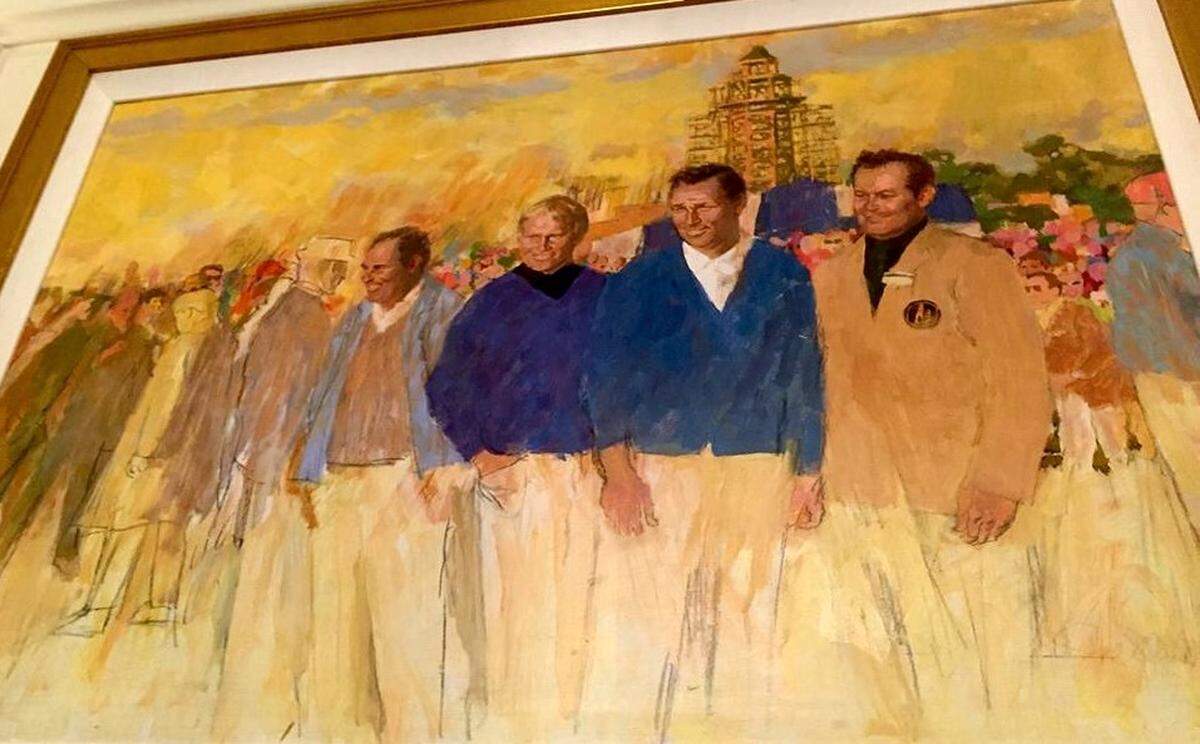
He giggled like a child as I read him parts of a column on his finished product written by Furman Bisher of the Atlanta Journal-Constitution, under the headline “Purgatory with 18 holes.”
Bisher called Harbour Town “the last word in outdoor torture chambers.”
He said it was the “prime fruition of Pete Dye’s philosophy on course designing. ‘Golf wasn’t meant to be a fair game,’ it reads. This is the ultimate achievement in unfair play.”
Bisher wrote of greens the size of a contact lens and trees in the fairway.
“When Dye says rough, he means rough,” he wrote. “When you are in trouble here, you may be in need of last rites.”
“That’s right,” Dye said with glee after every jab. “That’s right!”
After that first Heritage golf tournament, which will be played for the 52nd time in April as the RBC Heritage Presented by Boeing, Dan Jenkins wrote in Sports Illustrated:
“What Dye and Nicklaus have rendered at Hilton Head is a sort of Pine Valley in a swamp, a St. Andrews with Spanish moss, a Pebble Beach with chitlins.”
“It’s different,” says Dye, “but then, so was Garbo.”
Long Cove Club
Dye, as The New York Times reported last week, would go on to “design many of America’s most famous courses and become known as the mad scientist of golf architecture for his imaginative and supremely challenging layouts.”
He bequeathed South Carolina not only Harbour Town but the Ocean Course up the coast on Kiawah Island.
But as Dye told me: “Harbour Town made me. I don’t know why it did, but it jumped me into a different world.”
It could also be said that Dye made us.
After Harbour Town, he built five more courses in southern Beaufort County, including the Long Cove Club and the Dye course at Colleton River Club, which are rated among America’s best.
He did it hands-on, with no computers but a clear vision in his mind down to every possible golf shot, and every blade of grass and mound of dirt.
People who worked with Dye called him an artist, a genius, determined, willing to buy a lot if it would make his tee-box right, and able to convince developers that what was good for the golf course would, in the long run, be good for their pocketbooks.
He was on site for some 200 days during the construction of the Long Cove course, basically living out of a rental car with his German shepherd dog.
David Ames, who was a Sea Pines executive in the 1970s and later a co-developer of Long Cove, said Dye shared the DNA of the early development period on Hilton Head.
“It was a willingness to take risks, to innovate, to think outside the box,” Ames said.
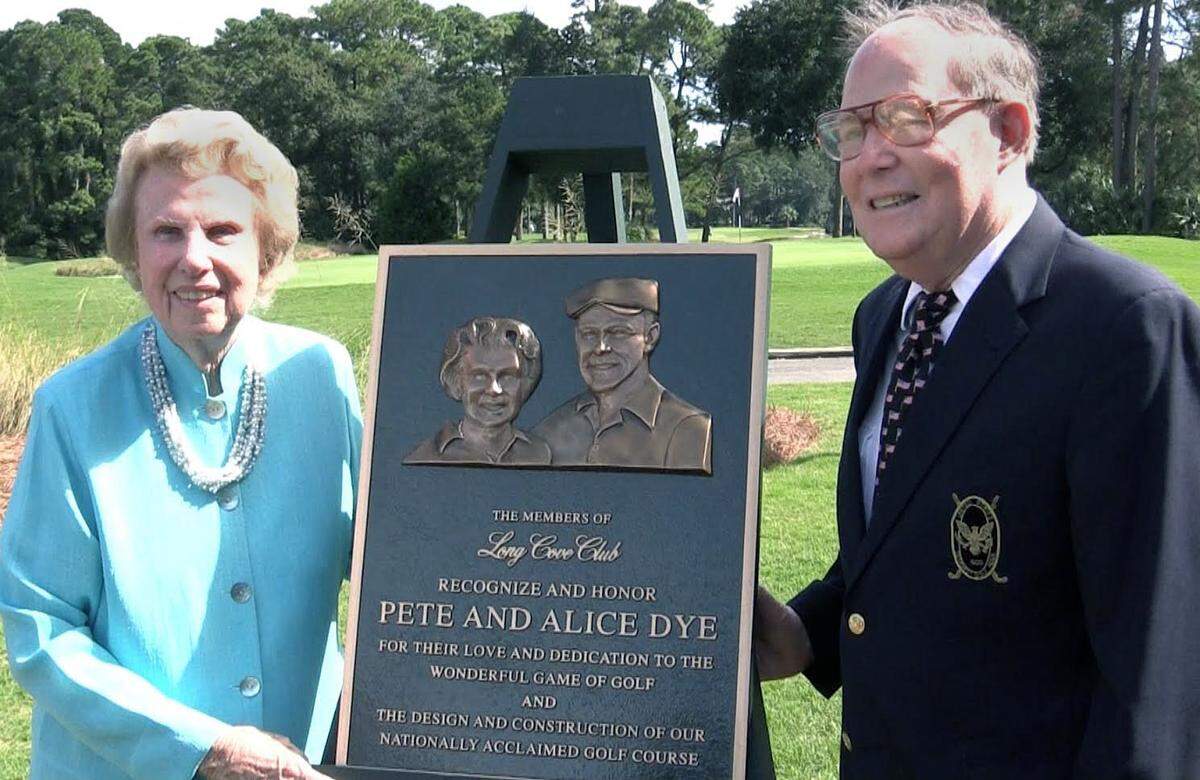
So, the Dyes gave this community more than the diabolical 13th hole at Harbour Town, more than the beautiful views for golf-course real estate, and more than the flow of money and the rise of the tourism industry.
They gave it the spirit to be different.
No matter what the newcomers demand, Hilton Head cannot out-Atlanta Atlanta, or out-Palm Beach Palm Beach.
We instead should dance to a different tune that was pitched by the Dyes.
“As soon as we try to imitate,” Ames said, “we lose our distinctiveness. And our civic pride.”