
Hilton Head soulless? One thing that could help
Think Mitchelville.
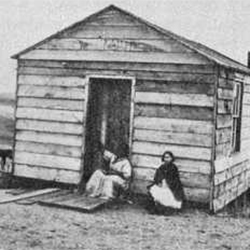
It was a village for self-governing freedmen on Hilton Head Island during the Civil War.
Its buildings, like the Union troops that fueled the rustic economy back then, are long gone.
Still, Mitchelville just might save Hilton Head.
Not as it once did, when it offered the formerly enslaved a roof for tonight and a hope for tomorrow.
It could save Hilton Head if it rallies the “posh,” “soulless,” “deliberately elitist,” “culturally sterile” community into a better understanding of its own DNA.
The understanding can be put this simply: Hilton Head was not created by Charles E. Fraser.
He founded Sea Pines two years after the first bridge opened. It became a gated community (a term that longtime pastor John M. Miller warned was an oxymoron). And it begat a string of gated communities that flowed north to bridge, crossed over to the mainland and was last seen hugging Interstate 95 with a promised “Latitude Margaritaville Hilton Head,” if you can imagine.
Fraser correctly claimed to have changed the island, but he never claimed to have created it. He knew he wasn’t the first one here.
But in my decades of living here and observing the island, the masses act as if Hilton Head started one fine day when a bridge opened. And newcomers arrived from all over, each demanding we burn the bridge behind them because the next carload of newcomers would ruin the place.
Mitchelville is the poster child for the truth that got swamped in half a century of flood-tide development.
The truth is that there’s more to history than what the white guys did. But that part was not recorded so meticulously. It was not covered by newspapers.
And the result is that Hilton Head — like an endless list of other places — has soul, heart and heroes that it does not even know.
Enter, Mitchelville.
Ten years ago, National Geographic called Hilton Head soulless, culturally sterile, overdeveloped, and one of 14 notable islands “in trouble” around the globe.
Reasons for that, and solutions to that, could fill big books.
So let’s focus on Mitchelville.
With the Mitchelville Preservation Project comes one great hope: Hilton Head at-large, white and black, gated and non-gated, can finally grasp that the island was not created in 1956.
It was populated by people of substance, skill, faith, acumen, creativity, intelligence, humor and drive. Their descendants still give the island its soul, with names to include Patterson, White, Grant, Young, Campbell, Cohen, Ford, Barnwell, Brown, Driessen, Singleton, Washington, Chisolm, Chisholm, Ferguson, Mitchell, Simmons, Williams, Drayton, Frazier, Green, Greene, Houston, Bligen, Bryan, Bryant, Allen, Gadson, Holmes, Rivers, Aiken, Wiley, Chaplin, Christopher, Cannick, Smith, Robinson, Elliott, Riley, Jenkins, Jones, Lawyer, Murray, Orage, Wright, Wilborn — you get the point. Many, many, many characters, veterans, entrepreneurs, artists, chefs, teachers, you name it — the heart and soul of a community that was overlooked.
Things are slowly starting to change.
We now have the Heritage Library documenting that part of our history. Likewise, the Gullah Museum of Hilton Head Island. The relatively new Hilton Head Island Hall of Fame has honored foundational players of the overlooked society. Many artists — from Joe Pinckney and Walter Greer in the old days to rappers Quinton Smalls and Anthony Johnson today — have tried to open our eyes. Mayor David Bennett used what little political capital he brought to the office to push sanitary sewer and paved roads in the overlooked island.
But Mitchelville can speed things up.
The last time I walked the site off Beach City Road, it was to meet with the chairman of the Mitchelville Preservation Project’s board. It was Randy Dolyniuk — white and Southern to the bone. A dawg from Georgia. A mainstream banker whose prosperity depends on the thriving new economy ushered in by the bridge.
But he sees beyond the gates and bridges and our so-called sterile culture. He was selling Mitchelville, and what it stands for and what it could do for Hilton Head today, as if it were a penthouse condo overlooking the 18th.
Experience tells me, that’s progress.
David Lauderdale: 843-706-8115, @ThatsLauderdale
June 12, 2015 In Beaufort County after the Civil War, Southern whites felt like a conquered people, reduced to lives of poverty. Many blacks were finally free, with great expectations for a new start as people, not property. A new effort by the National Park Service seeks to tell their seemingly irreconcilable Reconstruction stories. | READ
This story was originally published November 1, 2017 at 11:52 AM with the headline "Hilton Head soulless? One thing that could help."