
Column: Friendship Nine changed the world, but they say change took the courage of hundreds
Watching the Rock Hill Christmas Parade make its way down Main Street, the self-described “old man” waved to the floats rolling by.
He did not make a scene. He did not ask to be in the front of the cheering crowd that was four and five deep, a crowd of all races together, as he stood directly across the street from the dime store where he helped change Rock Hill and America and the world.
The people cheered the parade that included everyone. The cheers were not for David Williamson Jr., part of the Friendship Nine – although he wanted to cry when he saw the people waving, heard the cheers, and was jostled by the joy.
When he was a kid, Rock Hill had a Christmas parade, but nobody who looked like him was allowed to participate in it.
Williamson and so many others overcame bigotry, segregation, and the fear of beatings and even death, so that Rock Hill and America could cheer together on Main Street.
On Wednesday, 16th Circuit Solicitor Kevin Brackett and Circuit Court Judge John C. Hayes III – nephew of the judge who in 1961 sentenced Williamson and nine other black men to hard labor for sitting at a whites-only lunch counter – will close the case, because the laws in use back then were clearly wrong.
The convictions of the Friendship Nine will be vacated.
National TV spotlights will flood the room. Commentators will speak until hoarse, with self-righteousness that few had the guts to muster until there was a chorus.
Cheers will fill Rock Hill’s city courtroom Wednesday morning, when – 54 years late – the state of South Carolina will say that, instead of handcuffs and shackles, prison bars and hard labor on a chain gang, these young black people were right and the state that made segregation the law was wrong. Separate bus stations, schools, bathrooms, water fountains, neighborhoods, lunch counters, churches, day cares, stores, clerks – all were wrong.
David Williamson showed the way.
But he is the first to say, he was just one of hundreds.
When that parade just last month was over, the old man who all of Rock Hill knows as “Scoop” quietly walked to his van. Not once over the past 54 years has he boasted that he and his friends were responsible for that avenue of joy that for so long held so much pain. Main Street, where a young Williamson would look in its windows, past the reflection of his black face and the black faces of his brothers and sisters and mother and father, and see whites eating inside.
The parade was 2014. The vision was 1961, and every year before that from the time Williamson, who was 18 in 1961, was able to walk.
“My whole life I looked in those places, and inside was white and outside was us,” Williamson said. “Blacks. My family. Everybody we knew.”
The fight had gone on for years to change Rock Hill. St. Anne Catholic School integrated in 1954 – the first integrated school in South Carolina – not to the sound of cheers, but of bomb threats and cross burnings. A bus boycott by blacks started in 1958. Nobody cheered.
Protests continued through 1959 and 1960, when Friendship Junior College students were the first in South Carolina to march, conduct sit-ins – and get arrested. The Rev. Cecil Ivory, who led the Rock Hill NAACP from a wheelchair, was thrown in jail after sit-ins at restaurants, bus stations and city hall. Men and women, teens – Williamson’s older sister – marched and were arrested.
Still, no cheers.
In response, Rock Hill tried to ban protests by blacks.
“There was so much hatred then, fear, of blacks,” said Brother David Boone, the white Catholic cleric who helped organize all the protests. Boone, one of the few whites to join the protests, was the white face of righteousness in Rock Hill.
Back then, Boone was the most hated white man in South Carolina, subjected to death threats. But on Wednesday, he will be in that courtroom. Sitting in a wheelchair – a man in his 80s, fighting cancer – he will accept no praise.
“We all did what was right,” Boone said. “No accolades are necessary for doing the right thing.”
‘They dragged me out’
When Williamson and his classmates at all-black Emmett Scott High School enrolled at all-black Friendship Junior College in the fall of 1960, many already had participated in one way or another in protests against segregation in Rock Hill.
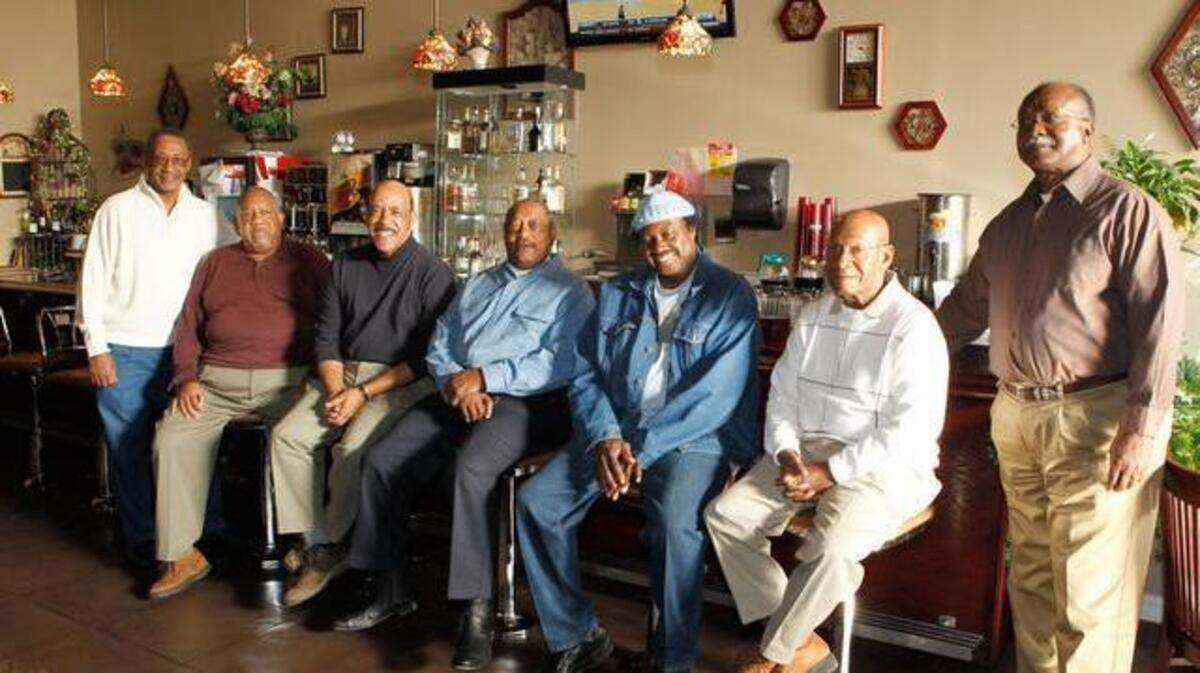
Williamson, Willie T. “Dub” Massey, Clarence Graham, James Wells, Willie McCleod, Mack Workman, John Gaines, Charles Taylor and the late Robert McCullough – all worked with civil rights organizer Thomas Gaither from Great Falls, who already had graduated from college.
On Jan. 31, 1961, those 10 men sat down at the McCrory’s lunch counter on Main Street and asked for service. Each was hauled out – “They dragged me out,” Williamson says – to the jail right behind the restaurant. The charge was trespassing.
The next day at trial, each was found guilty and sentenced to a $100 fine or 30 days in jail. Each chose jail, and nine of them – Taylor ended up paying the fine for fear of losing his athletic scholarship – spent a month at hard labor at York County’s prison farm.
Civil rights in America was reborn that month. The cause of going to jail to prove that segregation was wrong – a strategy that came to be known as “Jail, No Bail” – took hold. The Friendship Nine as a name, a group, a cause, was born.
The media – including The Evening Herald, predecessor of The Herald – barely mentioned the arrests, which should come as no surprise. There were other protests, other arrests in Rock Hill during that time. In each case, very few, if any, newspapers or TV stations took notice.
In March 1960, Rock Hill police arrested 70 blacks, almost all Friendship Junior College students, who had protested at four lunch counters, city hall and two bus stations. It was the largest mass arrest in city history. All but five were convicted.
Following the Friendship Nine’s lead, four black students from other states came to Rock Hill and sat down at segregated lunch counters. They, too, chose a month in jail.
In 1964, just months after passage of the Civil Rights Act, the U.S. Supreme Court overturned the trespassing convictions of Ivory and Friendship student Arthur Hamm, who had sat down at the McCrory’s lunch counter in 1960.
“There were so many people, so many young ladies, who protested, too, who marched and walked and had great courage,” said Mack Workman, who has lived in New York throughout his adult life. “I am elated, we are all elated, that this is being done in the courts. But we really didn’t expect it.
“All those people, so many of them I grew up with, in segregated Rock Hill, are heroes.”
The Friendship Nine went on to live great lives, carrying criminal records to the military and college and jobs. The courts never acted.
It wasn’t until just the past decade that Rock Hill admitted it was wrong, honoring the men with a sign on Main Street commemorating their historic action and a series of events in 2011 to mark the 50th anniversary of their sit-in. And, finally, this week brings the court action and other celebrations surrounding it.
Still, their courage is not always recognized. In 2012, when the Democratic National Convention came to Charlotte – a scant 25 miles away from Rock Hill’s Main Street – to renominate the nation’s first black president, not one person there mentioned the Friendship Nine.
This week’s historic events come nine years after the death of McCullough – described by his fellow Friendship Nine members as their leader, the spark. The 5-foot-5-inch man who stood as tall as any man ever had in America had the nickname “The Little General.”
“I wish so much that Rob was here to see this, as he was the force behind so much,” Workman said. “People forget sometimes that we were just teenagers. We were young.”
Williamson recalls McCullough saying to him the night before the sit-in, when all of these young men were scared: “Don’t be a chicken. Be strong. We are together.”
“Rob McCullough never stopped believing in what we were doing,” Williamson said. “He led all of us.”
Remorse and forgiveness
Over the past 54 years, only two private citizens have ever had the courage to publicly admit to being part of the mobs that harassed the protesters in all those sit-ins. Only two among the hundreds who ridiculed protesters, threw eggs and fruit at them, dumped milkshakes on them, threw ammonia and urine on them.
In 2009, former Ku Klux Klansman Elwin Wilson and retired Rock Hill policeman Steve Coleman first admitted to The Herald and later apologized in person to the Friendship Nine for being at McCrory’s that day in 1961, cheering on the cops as they dragged the protesters out. They apologized for calling them those terrible names that slice like daggers into black skin.
Wilson also admitted to beating up Freedom Rider John Lewis – now a congressman from Georgia – at Rock Hill’s Greyhound bus station in May 1961.
Wilson died in 2013, four years after the hate that had filled his heart was already dead.
Many people, Lewis and Williamson among them, are proud to have known the changed Elwin Wilson. Lewis and Wilson became national symbols for the ability to change.
And it all started on Rock Hill’s Main Street where the marchers marched, the protesters protested ... where the cheers are now cheered.
The black men and women didn’t hesitate to forgive Wilson and Coleman, who admitted as a teenager that he skipped school to be part of the mob that taunted Friendship College protesters and who spent much of his life hating blacks. It wasn’t until he became a grandfather that he realized how wrong his hatred has been.
Coleman and Wilson’s apology in The Herald became an international news story about hatred, remorse and forgiveness. Just days before he died, Wilson told The Herald that apologizing for a lifetime of hate was the greatest thing he ever did.
“We forgave everybody a long time ago,” Williamson said. “They were taught wrong. The problems toward blacks were taught. That way, separate, was accepted. It was in the law and how people lived and what people knew and were told was the way things should be. Nobody is born with it.”
No praise for famous men
Workman and Williamson deflect any recognition for a lifetime of trying to make equality accepted. That is what men do, they say; they stand up for all.
Williamson has spent so many years – with his own children and grandchildren, with thousands of kids as a substitute teacher and speaker after years in banking and property management in New Jersey – refusing congratulations. Since coming back from New Jersey, Williamson has made a point of talking about so many others who protested, too.
“We did what we did for every other person, no matter what they look like, where they come from,” he said. “Equal means equal – everybody.”
Workman, who has been friends with Williamson for almost 70 years, said Wednesday will be an important day – not just for him, but for America.
“This has been a long, at times hard, journey,” said Workman, retired after decades of helping troubled children in social services in New York.
The cheers this week in court and during a Saturday re-enactment parade and play about the Friendship Nine, Williamson and Workman said, should also be for every person who stood up for what was right and risked so much for others. Hundreds before them in Rock Hill, and after, too. Segregation did not end in Rock Hill until the schools fully integrated in 1970.
“Those people deserve praise,” Williamson said. “It was a movement.”
Solicitor Kevin Brackett will accept no praise, either.
“I am doing what is right,” he said. “These men deserve the praise for what they did, not me. I am doing something that should have been done so long ago.”
Judge John C. Hayes III will accept no praise for doing what is fair and just and right. He has spent his whole life working in the law, doing what is right. The Rock Hill and South Carolina that Hayes grew up in refused to admit for so long that blacks and whites were the same. Not just in 30 years as a judge, but for a lifetime, Hayes has tried to help make that wrong right.
The cheers of all races on Main Street in Rock Hill are not quiet. America is noticing.
Right, not wrong, has won.
Reach Rock Hill Herald reporter and columnist Andrew Dys at (803) 329-4065 or by email at adys@heraldonline.com.
This story was originally published January 26, 2015 at 9:00 AM with the headline "Column: Friendship Nine changed the world, but they say change took the courage of hundreds."